
Spotting and Avoiding Government Grant Scams
Learn how government grant scams work, the warning signs to watch for, and practical steps to protect your money and personal information.
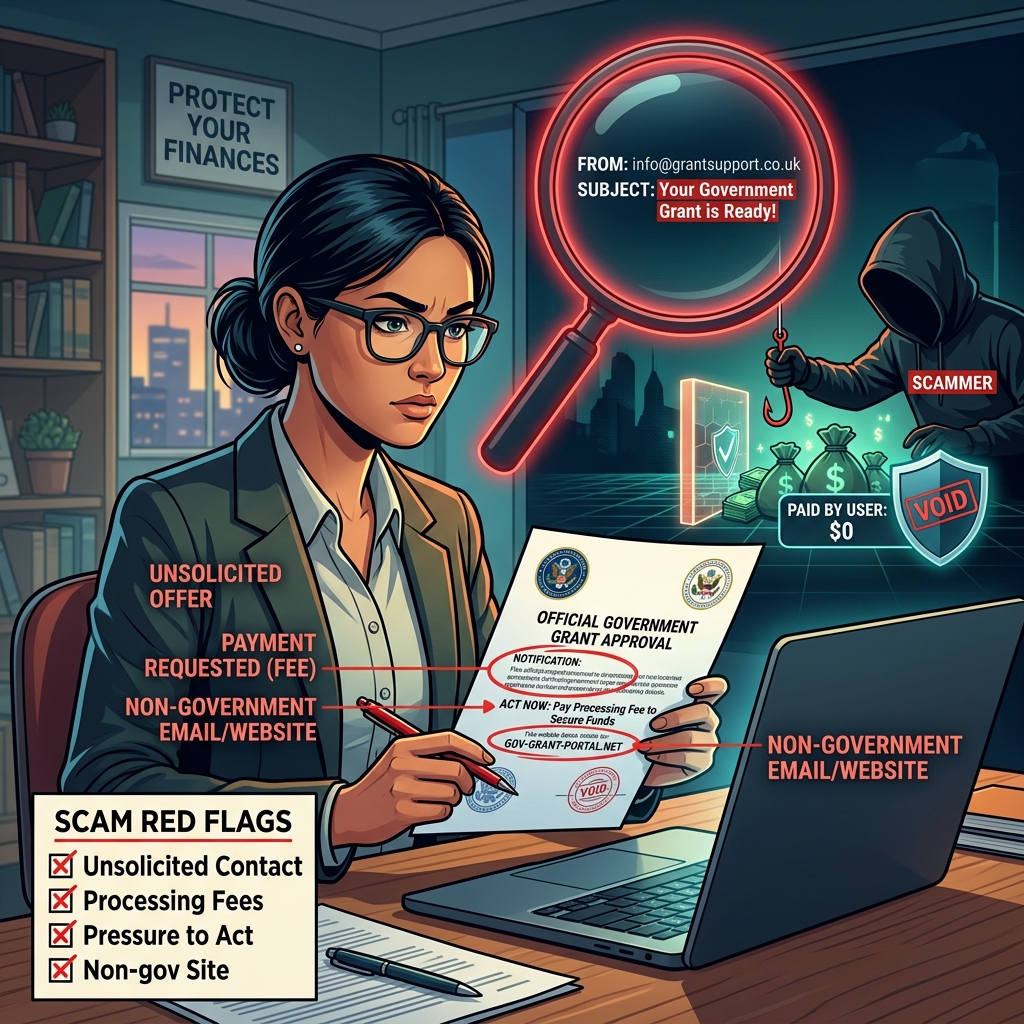
Offers of free government grant money for your personal expenses may sound like a dream, but they are almost always scams. Government agencies do award grants, yet they do not hand out funds to pay credit card bills, home repairs, or everyday living costs, and they never charge you to apply. Understanding how these scams operate and how legitimate grants work is essential to protecting your finances and identity.
Why “Free Government Money” Is Almost Always a Scam
Real government grants are created for specific public purposes, like research, community programs, or infrastructure projects, and they usually go to organizations, not individuals. Scammers take advantage of confusion around grants and benefits, promising “no-strings-attached” cash for your personal needs.
According to official guidance from the Federal Trade Commission (FTC) and other agencies, the government does not offer grants for personal expenses such as rent, medical bills, or debt payments. Any unsolicited offer claiming that a government agency has chosen you for a personal grant is a clear warning sign.
- No grants for everyday bills: Federal grants are targeted at specific projects, not household expenses.
- Applications are required: Genuine grants require you to apply and meet strict eligibility criteria.
- Information is free: Official listings of federal grants are available at no cost through government portals.
How Government Grant Scammers Typically Contact You
Fraudsters use a variety of channels to reach potential victims and often pretend to represent legitimate agencies. The FTC notes that the government will not contact you out of the blue to offer a grant. If someone does, you should immediately be skeptical.
Common Contact Methods Used in Grant Scams
- Unexpected phone calls: Callers may claim to be from a made-up office like the “Federal Grants Administration” or use a Washington, D.C. phone number to appear official.
- Text messages and emails: Messages may say you are “pre-approved” for a grant if you respond or click a link.
- Social media messages: Impersonated accounts or fake profiles might contact you with grant offers, sometimes pretending to be friends or public figures.
Scammers often combine these contact methods with high-pressure tactics. They might say you must act immediately or lose the grant, or claim that the funds are guaranteed once you verify your information or send a fee.
Typical Red Flags That Signal a Grant Scam
While scammers constantly change their stories, the core warning signs remain similar. Recognizing these red flags makes it easier to walk away before you lose money or personal data.
Key Warning Signs
- Unsolicited “approval” for a grant: You are told you qualify for or have already been awarded a grant even though you never applied.
- Requests for sensitive data up front: The caller asks for your Social Security number, bank account, or credit card information to “confirm eligibility” or “release funds.”
- Up-front fees for a free grant: You are asked to pay processing fees, registration costs, or taxes using cash, wire transfer, gift cards, prepaid cards, or cryptocurrency.
- Fake agency names and look-alike contacts: The person claims to work for an official-sounding office that doesn’t exist, or uses email addresses and caller ID designed to mimic real agencies.
- Pressure and urgency: You are told the offer will disappear unless you decide immediately or keep the conversation secret.
Scam Red Flags vs. Legitimate Grant Features
| Scam Characteristics | Legitimate Grant Characteristics |
|---|---|
| You are contacted out of the blue and told you qualify for money. | You discover the grant through an official source and submit an application yourself. |
| Caller asks for your bank or Social Security number immediately. | Eligibility screening happens through formal applications; sensitive data is handled through secure, documented processes. |
| You must pay fees with cash, gift cards, wire transfers, or cryptocurrency. | Application information is free; official agencies do not require up-front payments to receive grants. |
| Agency name isn’t listed on government sites or directories. | The funding agency is clearly identified and verifiable through government portals like Grants.gov or USA.gov. |
How Real Government Grants Work
Knowing the basics of legitimate grants helps you distinguish truth from scams. Official sources emphasize that grant information and applications are free, and that government grants serve specific public purposes.
Core Features of Authentic Grants
- Specific goals: Grants are designed to fund targeted initiatives, such as research projects, community services, or infrastructure, not personal bills.
- Structured application process: Applicants submit detailed proposals, budgets, and documentation, and must meet eligibility criteria.
- Transparent rules: Funding conditions, timelines, and requirements are published upfront on official websites.
- Free access to information: Listings of federal grants and instructions are available at no cost on government platforms.
The primary hub for federal grants is Grants.gov, which provides a searchable database of programs and application guidance. Other agencies also list opportunities on their official sites, but they follow similar standards of transparency and do not contact you unexpectedly to offer personal funding.
Protecting Your Personal and Financial Information
Your bank details, Social Security number, and other identifiers are valuable targets for scammers. Once they obtain this information, they can attempt to drain your accounts or steal your identity. Preventing this begins with a cautious approach to unsolicited communication and offers.
Practical Safety Tips
- Ignore unsolicited grant offers: If you did not search for or apply for a grant, assume any surprise offer is fraudulent.
- Never share sensitive data with unknown contacts: Do not provide Social Security numbers, bank account details, or credit card information in response to calls, texts, emails, or social media messages, regardless of who they claim to be.
- Verify agencies independently: Look up the organization’s official website or phone number through government directories rather than using contact information provided in the message.
- Refuse payment by untraceable methods: Legitimate agencies will not ask you to pay fees with gift cards, wire transfers, prepaid cards, or cryptocurrency.
- Use official portals: Rely on trustworthy websites like Grants.gov and USA.gov to explore authentic government programs.
What To Do If You Already Paid or Shared Information
Even careful people can get caught off guard by sophisticated scams. If you realize you have sent money or provided personal information, acting quickly can reduce the damage and improve the chances of recovery.
Steps To Take After Sending Money
- Contact the payment provider immediately: If you paid using a wire transfer, gift card, prepaid card, or cryptocurrency exchange, inform the company that the transaction was fraudulent and ask if it can be reversed.
- Notify your bank or credit card issuer: Explain that your accounts or card data may have been compromised; they may place fraud alerts, change account numbers, or monitor for unauthorized activity.
- Check for other suspicious activity: Review statements and credit reports to see whether new accounts have been opened or transactions appear that you do not recognize.
Steps To Take After Sharing Personal Information
- Update passwords and security settings: Change passwords on financial and email accounts and enable multi-factor authentication where possible.
- Consider fraud alerts or credit freezes: Depending on local guidance, you may be able to place alerts with credit bureaus if identity theft is suspected.
- Report the incident: Filing a report with consumer protection agencies helps them track patterns and may support enforcement actions.
Where and How To Report Government Grant Scams
Reporting scams is important not only to address your own situation but also to prevent others from being harmed. Several official channels accept complaints about government grant fraud.
Key Reporting Channels
- Federal Trade Commission (FTC): The FTC collects reports of fraud and misuse of personal information via its online portal for reporting scams.
- Grants.gov and agency hotlines: If you believe someone is misusing the name of Grants.gov or a federal agency, some departments, such as Health and Human Services (HHS), offer fraud hotlines and email contacts for reporting.
- Local law enforcement: When you have lost money or suspect criminal conduct, contacting local authorities can support investigations and documentation.
- Financial institutions: Reporting the scam to your bank, credit card provider, or payment service helps them secure your accounts and potentially prevent further losses.
Practical FAQs About Government Grant Scams
FAQ 1: Can the government call me to offer a grant?
No. Government offices do not call, text, email, or message you out of the blue to offer personal grants. If you receive such a contact, it is extremely likely to be a scam.
FAQ 2: Is it ever legitimate to pay a fee to get a grant?
Legitimate federal grants do not require up-front fees to apply or receive funds. If someone demands payment to access a list of grants or to unlock your award, you are dealing with a scam.
FAQ 3: How can I verify a grant offer?
Start by checking whether the grant is listed on an official government website, such as Grants.gov, or on the site of the agency supposedly offering the program. Use contact details found independently on those sites, not those provided in an unsolicited message, to ask questions.
FAQ 4: Are there any real programs that help with bills?
Some government programs provide benefits or assistance for eligible individuals, but these are not grants dressed as “free money” for anything you choose. Information about legitimate benefits and aid programs is published through official portals, and you should always access them directly rather than through unsolicited offers.
FAQ 5: What if someone says they are from the “Federal Grants Administration”?
Names like “Federal Grants Administration” are examples of made-up agencies that scammers use to sound official. Verify every agency name through recognized government directories; if you cannot find it, the offer is almost certainly fraudulent.
References
- Grant Scam & Fraud Alerts — Grants.gov. 2024-05-01. https://www.grants.gov/learn-grants/grant-fraud/grant-scam-fraud-alerts
- Government Grant Scams — Federal Trade Commission. 2023-08-10. https://consumer.ftc.gov/node/77443
- Avoid Grant Scams — U.S. Department of Health and Human Services. 2023-03-15. https://www.hhs.gov/grants-contracts/grants/avoid-grant-scams/index.html
- Avoid “Free Money” from the Government Scams — USA.gov. 2023-11-30. https://www.usa.gov/no-free-money
- How to Identify a Legitimate Grant: Tips to Avoid Scams — GrantStation. 2022-09-20. https://grantstation.com/gs-insights/how-to-identify-legitimate-grants-avoid-scams
- Avoiding Government Grant Scams — U.S. Department of Transportation. 2023-06-05. https://www.transportation.gov/rural/grant-toolkit/funding-and-financing/avoiding-scams
Similar Articles








Read full bio of medha deb




