
How to Spot and Avoid eJuror and Jury Duty Email Scams
Scammers are impersonating courts and the eJuror system to steal data and money—learn how to recognize, avoid, and report these frauds.
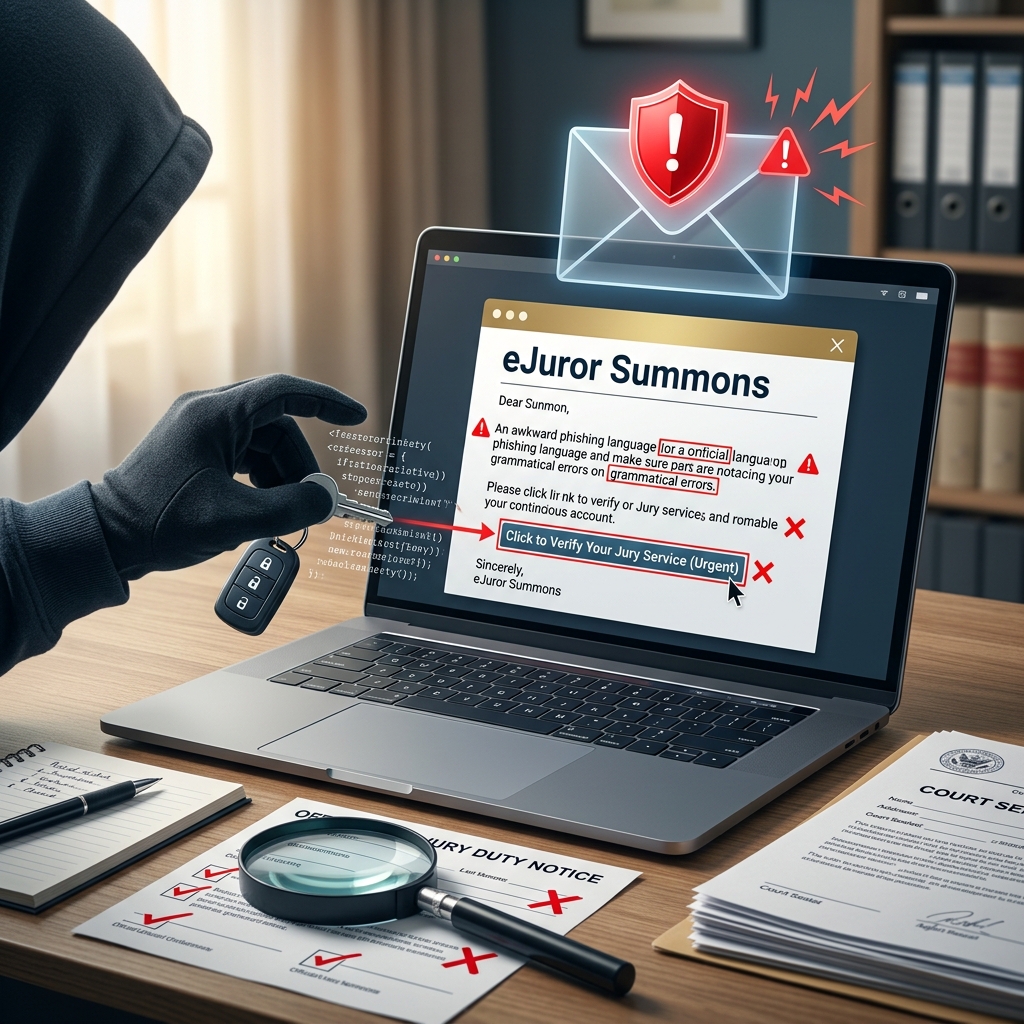
Digital communication has made it easier for courts to manage jury service, but it has also created new opportunities for scammers. In recent years, criminals have increasingly impersonated federal courts and the eJuror online system, sending fake emails, texts, and phone calls that appear official but are designed to steal money and personal information. Understanding how these scams work—and how real courts operate—is essential to protecting yourself from identity theft and financial loss.
Why Jury Duty and eJuror Scams Are So Effective
Jury service is a core civic duty. Many people feel anxious about the idea of missing jury duty or disobeying a court order, and scammers exploit this anxiety by creating messages that sound urgent and authoritative.
Common psychological tactics used in these scams include:
- Fear of legal consequences: Threats of fines, arrest, or jail if you do not respond or pay immediately.
- Sense of urgency: Pressure to act “right now” before you have time to verify the message.
- Authority impersonation: Use of official-sounding titles such as “U.S. Marshal,” “court clerk,” or references to the eJuror program.
- Apparent legitimacy: Inclusion of real court names, addresses, or logos copied from public websites.
Because many people are unfamiliar with the exact process of jury summons, they may assume that any communication mentioning jury duty is legitimate. That uncertainty is precisely what scammers count on.
How Legitimate Courts Contact Jurors
To recognize a scam, it helps first to know how real courts typically communicate. The federal judiciary and many state courts have published clear guidance on standard jury contact procedures.
| Communication Method | What Legitimate Courts Do | What Scammers Often Do |
|---|---|---|
| Most federal jury summons are sent through the U.S. Postal Service with official court letterhead and instructions. | Scammers may reference a “missing” mailed notice you never received, then demand payment or data by phone or email. | |
| Phone calls | Courts may call to clarify scheduling or logistics, but they do not ask for sensitive data (like Social Security numbers) or demand payment over the phone. | Scammers threaten arrest or heavy fines and instruct you to pay immediately or share personal information. |
| Email / eJuror portals | Some courts use secure online systems like eJuror to complete questionnaires, but they direct you to an authenticated site and do not request personal identifiers in an email reply. | Scammers send emails that ask you to reply with sensitive data or click unsafe links posing as eJuror. |
| Payment | Courts do not accept payment via gift cards, payment apps, cryptocurrency, or wire transfers to avoid arrest. | Scammers insist you can only pay using these high-risk methods and refuse safer alternatives. |
According to the Administrative Office of the U.S. Courts, eJuror never asks that personal identification information be sent directly in an email response; instead, you are instructed to access a secure portal from formal written correspondence.
Recognizing a Fake eJuror or Jury Duty Message
While scammers constantly change specific wording and details, their messages usually share some recognizable features. Federal courts and state court systems have documented common patterns you can watch for.
Red Flags in Emails and Text Messages
- Unexpected contact about jury service when you have not recently received an official summons by mail.
- Threatening language claiming that you will be arrested, fined, or jailed if you do not respond or pay.
- Requests for sensitive data, such as:
- Social Security number
- Driver’s license or passport number
- Bank account or credit card number
- Mother’s maiden name or other identity-verification details
- Payment demands using gift cards, payment apps, cryptocurrency, or wire transfer services like Western Union or MoneyGram.
- Unverified links or attachments that you are urged to open immediately to avoid penalties.
- Generic sender addresses that do not match official court domains (for example, commercial email providers instead of .gov or a verified court website).
Red Flags in Phone Calls
- Caller insists they are a law enforcement officer, U.S. Marshal, or court official and demands immediate payment or personal data.
- Caller refuses to let you hang up and independently verify the court’s contact information.
- Caller claims you missed jury duty and must pay a “fine” immediately, even though you never received a summons.
- Caller demands payment through unconventional or high-risk channels and discourages you from contacting the court directly.
How to Safely Verify a Jury Duty or eJuror Communication
When you receive any message about jury duty, your first step should be to verify its authenticity using information you obtain yourself, not via the message.
Step-by-Step Verification Checklist
- Do not respond immediately. Ignore pressure tactics to act at once—legitimate courts do not require instant payment or decisions.
- Use official contact information. Look up your local federal or state court using a trusted source, such as the Federal Court Finder or your state judiciary’s official website.
- Contact the clerk’s office directly. Call the clerk using the number listed on the official site and ask whether the communication is genuine.
- Confirm via mailed summons. Ask whether a jury summons was actually issued to you and what the proper procedure is.
- Check the web address. If you are directed to an online portal (such as a juror questionnaire site), verify that the URL matches the court’s official domain and appears in a secure, authenticated format (HTTPS).
If the court clerk confirms that the message is fraudulent, follow their instructions on next steps and consider reporting the scam to appropriate authorities.
Protecting Your Personal Information
Because many jury duty scams are aimed at identity theft rather than immediate payment, protecting sensitive information is critical. Courts emphasize that they do not collect detailed personal identifiers via unsolicited phone calls or emails.
Best Practices for Security
- Never share sensitive data (Social Security number, bank account details, full date of birth, passwords) in response to unsolicited messages.
- Limit what you post online, especially on social networks, about your address, phone number, and other personal details that could be used in targeted scams.
- Use strong, unique passwords and enable multi-factor authentication for email and banking accounts, reducing the impact if one account is compromised.
- Keep software and antivirus tools up to date to better detect malicious links and attachments often used in phishing campaigns.
If You Already Responded to a Scam
If you have provided personal or financial information in response to a fraudulent juror or eJuror message, courts and consumer protection agencies recommend taking immediate steps to mitigate harm.
- Contact your local court clerk to report what happened and confirm that your communication was fraudulent.
- Notify major credit bureaus and consider placing a fraud alert or credit freeze to make it harder for scammers to open new accounts in your name.
- Monitor bank and credit card statements closely for unauthorized transactions and report them to your financial institutions immediately.
- Change passwords for email, financial, and other sensitive accounts that may be linked to information you shared.
- Report the scam to the Federal Trade Commission through its fraud reporting portal, which helps authorities track nationwide patterns.
Legal Consequences for Impersonating Court Officials
Impersonating a federal court employee or falsely representing yourself as a court official can be a federal crime. The judiciary has stated that it views such offenses seriously and cooperates with law enforcement to address them.
Key points include:
- False representation of authority to obtain money or data can violate federal fraud and impersonation statutes.
- Use of official titles or seals without authorization can aggravate penalties and trigger separate offenses.
- Multi-jurisdiction investigations may occur when scams are reported across several court districts, as has happened with juror email schemes.
While individual victims may not see immediate prosecutions, consistent reporting to courts and federal agencies improves the chances that organized scam operations can be identified and disrupted.
Role of Federal and State Courts in Public Education
Recognizing that juror scams exploit gaps in public knowledge, courts have started issuing public alerts and educational materials to help people distinguish legitimate communications from fraud.
Examples of proactive measures include:
- Publishing online guidance on how jurors are contacted and what types of information courts will never request by phone or email.
- Clarifying how official programs, such as eJuror, operate and emphasizing that they rely on secure portals rather than unsecured email replies.
- Encouraging anyone suspicious about a message to contact the local clerk’s office and report the incident.
- Coordinating with consumer protection agencies, such as the Federal Trade Commission, to promote awareness of jury duty scams.
By making communication practices more transparent, courts aim to reduce the effectiveness of impersonation scams.
Frequently Asked Questions (FAQs)
1. Can a court ever email me about jury duty?
Yes, some courts use email to supplement traditional mail, particularly in jurisdictions that have implemented online juror systems. However, legitimate emails will typically:
- Reference a summons you already received by mail or other verified channels.
- Direct you to a secure court website or portal rather than asking you to reply with sensitive information.
- Use official domains associated with the court or judiciary.
If an email about jury duty appears out of the blue, contains threats, or requests personal data in a reply, treat it as suspicious and verify with the court directly.
2. What should I do if a caller says I missed jury duty and must pay a fine?
Courts and consumer protection agencies warn that such calls are a common scam. Real courts do not demand payment over the phone, and they do not require payment via gift cards, payment apps, cryptocurrency, or wire transfers.
You should:
- Refuse to provide any payment or personal information.
- Hang up and independently look up the court’s official phone number.
- Call the clerk’s office to confirm whether you actually missed jury duty.
- Report the scam to the Federal Trade Commission.
3. How can I tell if an eJuror message is legitimate?
A legitimate eJuror communication will be rooted in a real summons process and will guide you to an authenticated, secure online system. The Administrative Office of the U.S. Courts notes that the eJuror program does not ask jurors to email back personal identification information.
To verify an eJuror message:
- Confirm that you have received a formal summons directing you to use eJuror.
- Check that the web address of the portal is on an official court domain and begins with HTTPS.
- Contact the clerk’s office using verified contact details if you have any doubts.
4. Where can I report a suspected jury duty scam?
You can report suspected scams to multiple entities:
- Local court clerk’s office, so they are aware of impersonation attempts.
- Federal Trade Commission, via its fraud reporting tools, which help track and combat national scam patterns.
- Local law enforcement, especially if you have suffered financial loss or identity theft.
5. If I ignore a suspicious message, could I still be in trouble with the court?
If the message is fraudulent, ignoring it will not create a legal obligation. Courts base jury service requirements on official summonses and procedures, not on scam emails or calls. If you are concerned that you might have missed a legitimate notice, contact the court directly using official contact information. This simple step ensures compliance with real legal duties while protecting you from scammers.
Key Takeaways for Staying Safe
- Most initial jury duty communications from federal courts arrive by mail, not out-of-the-blue emails or phone calls.
- Courts and the eJuror program do not ask for sensitive personal information to be sent directly in an email reply or given over the phone.
- Any demand for immediate payment, especially via gift cards, payment apps, cryptocurrency, or wire transfer, is a strong indicator of a scam.
- When in doubt, always verify by contacting your court’s clerk office using contact information you locate yourself on an official website.
- Reporting scams helps protect others and supports broader enforcement efforts against fraud.
References
- Juror Scams — United States Courts. 2024-02-01. https://www.uscourts.gov/court-programs/jury-service/juror-scams
- Public Alert: Beware of “Court” Scams — Maryland Judiciary. 2014-08-15. http://www.mdcourts.gov/media/news/2014/pr20140815
- Call or email saying you missed jury duty and need to pay? It’s a scam — Federal Trade Commission Consumer Alerts. 2025-03-20. https://consumer.ftc.gov/consumer-alerts/2025/03/call-or-email-saying-you-missed-jury-duty-need-pay-its-scam
- Protect Yourself Against Jury Duty Scams — New Jersey Courts. 2023-06-01. https://www.njcourts.gov/jurors/protect-yourself-against-jury-duty-scams
- Public Alert: New Juror Scams — Herman, Katz, Gisleson & Cain. 2014-07-31. https://hkgclaw.com/practice-areas/public-alert-new-juror-scams/
- Beware of recently circulated emails from “EJuror Program” that ask personal information — Alsop & Associates. 2014-08-01. https://www.alsopelderlaw.com/beware-recently-circulated-emails-ejuror-program-ask-personal-information-scam-not-respond/
Similar Articles








Read full bio of Sneha Tete


