
South Dakota School Records Privacy Laws
Understand who may access student records, when consent is required, and how privacy rights are protected under South Dakota and federal law.
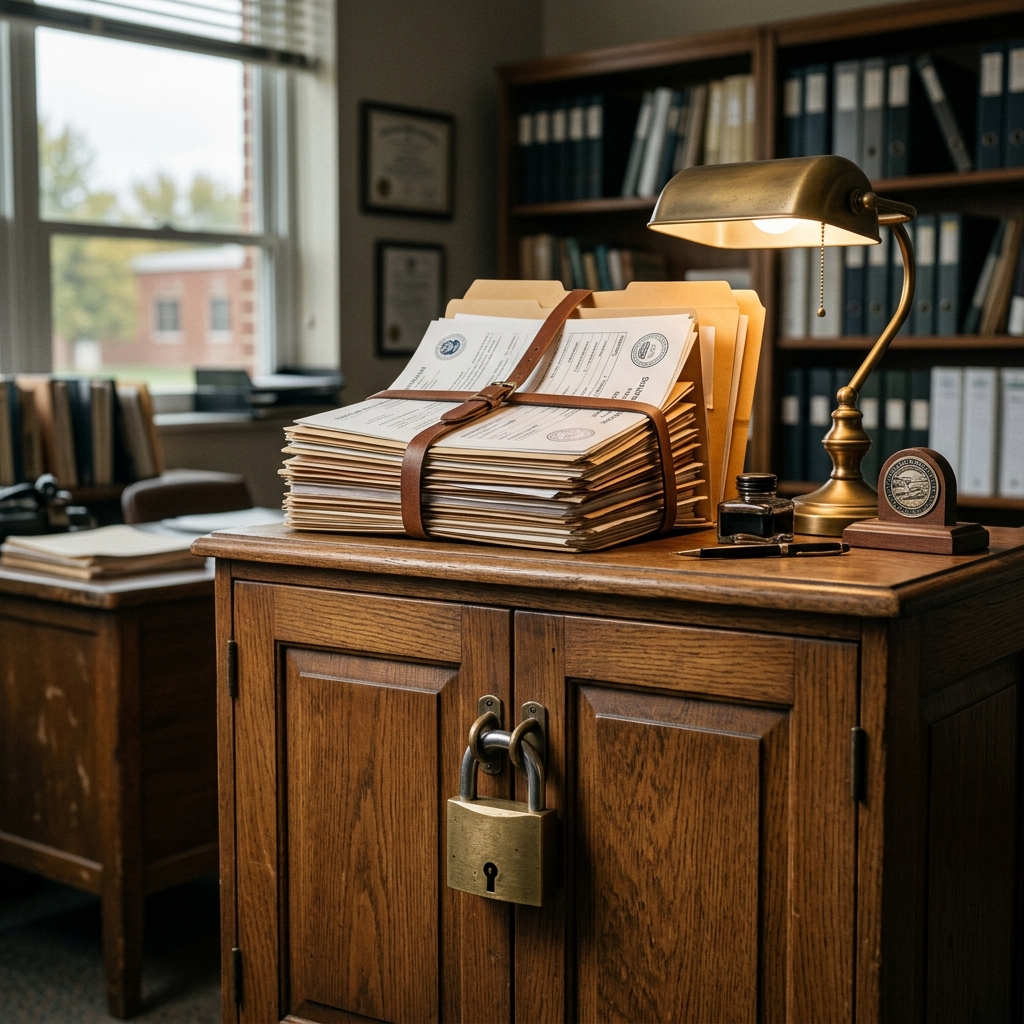
How South Dakota Protects Student Education Records
South Dakota schools must treat student education records as confidential and limit disclosure to people and organizations that have a lawful reason to see them. The state’s approach is built on the federal Family Educational Rights and Privacy Act, commonly known as FERPA, which gives parents and eligible students important control over education records and personally identifiable information.
In practice, that means schools cannot freely share grades, Social Security numbers, disciplinary information, or similar identifying data with outside parties. Access is allowed only in limited situations, such as with written consent, for legitimate educational purposes, or when another legal exception applies. South Dakota law reinforces those federal protections and requires schools and educational agencies to preserve confidentiality.
What Counts as a Protected School Record?
Not every piece of school-related information is treated the same way. The law focuses on education records, which are records maintained by a school or educational agency that relate directly to a student. These can include academic files, attendance information, disciplinary records, and other documents tied to the student’s experience in school.
Protected records also include personally identifiable information, or PII. This is information that can identify a student either directly or indirectly. Examples commonly include:
- Student names and identification numbers
- Social Security numbers
- Grades and transcripts
- Disciplinary records
- Addresses, birth dates, and other identifying details
School systems must be careful not to disclose PII unless an exception under FERPA or state law permits it.
Who Can Review a Student’s Records?
Access to student records is not limited to the student alone. FERPA and South Dakota practice generally allow several categories of people to inspect or receive records when the law permits it.
- Parents may review records of minor students.
- Legal guardians may also have access when they stand in the parent’s place.
- Eligible students gain the rights that FERPA gives to parents once they reach adulthood or attend postsecondary school.
- School officials may access records when they have a legitimate educational interest.
- State and local education officials may review records for authorized purposes.
- Courts and persons with court orders may obtain records when required by law.
South Dakota sources also note that authorized personnel may include members of school-based teams, such as an interdisciplinary child information team, when their duties justify access.
When Consent Is Required Before Disclosure
As a general rule, schools need written consent before releasing a student’s education records to third parties. This requirement is central to both FERPA and South Dakota’s privacy framework. Consent gives families control over who sees a student’s private information and for what purpose.
To be valid, written consent should identify the records to be released, explain why the records are being released, and name the person or group that will receive them. Schools should also keep a record of the disclosure and explain any restrictions on re-release when the records are sent to outside recipients.
This consent requirement matters because even well-meaning sharing can create privacy risks. Once records leave the school environment, the school has less control over how the information is used or circulated.
Exceptions That Allow Sharing Without Consent
FERPA includes several exceptions that allow schools to disclose records without first getting permission. South Dakota law follows the same basic structure. These exceptions are limited and are supposed to serve a specific educational or legal purpose.
| Disclosure situation | Is consent required? | Typical reason |
|---|---|---|
| School officials with legitimate educational interest | No | Authorized staff need the information to do their jobs |
| Transfer to another school | No, in some cases | Information helps with enrollment or placement |
| Compliance with a subpoena or court order | Usually no | The law requires disclosure |
| Directory information | No, unless opted out | Basic information may be disclosed unless restricted |
Even when disclosure is allowed, schools still must follow procedural safeguards. They should limit access to what is necessary and avoid unnecessary sharing of sensitive details.
Directory Information and Why It Matters
FERPA allows schools to release certain categories of information called directory information without obtaining prior consent, unless a parent or eligible student opts out. Directory information generally covers basic details that are not usually considered highly sensitive on their own.
Typical examples may include a student’s name, grade level, participation in activities, or similar routine information. However, schools must clearly identify what they treat as directory information and give parents or eligible students notice and an opportunity to refuse disclosure where applicable.
Even when something qualifies as directory information, schools should remain cautious. Releasing too much information in combination can still reveal private details that the law seeks to protect.
Rights of Parents and Eligible Students
FERPA gives parents and eligible students several key rights over education records. South Dakota schools must operate in a way that respects these rights and provides a process for exercising them.
- The right to inspect and review education records
- The right to request amendment of inaccurate or misleading records
- The right to consent before disclosure of PII in most cases
- The right to review the record of disclosures in appropriate circumstances
- The right to file a complaint if the school fails to follow FERPA
These rights are designed to give families meaningful oversight of what the school keeps on file and how those records are used.
How to Request Changes to a Record
If a parent or eligible student believes a school record is inaccurate, misleading, or improperly maintained, they may request an amendment. The request should be made in writing and should clearly identify the part of the record that needs correction and explain why the change is justified.
If the school refuses the request, the parent or eligible student should be offered a hearing. If the dispute is still unresolved after the hearing, the person challenging the record may be allowed to place a statement in the file explaining the disagreement. That statement becomes part of the educational record and may travel with it if the school later discloses the file in a permitted context.
How Federal and State Rules Work Together
South Dakota does not replace FERPA; it works alongside it. FERPA creates the baseline national privacy rule for education records, and state law builds on that framework by emphasizing confidentiality and authorized access. Schools in South Dakota therefore need to satisfy both sets of obligations.
This layered system matters because a school may be allowed to share information under one exception but still need to follow state procedures or district policy. Administrators should train staff carefully, limit access to appropriate personnel, and document disclosures when required.
In other words, compliance is not just about avoiding obvious mistakes. It also requires good recordkeeping, careful judgment, and a consistent privacy policy.
Practical Examples of Permitted Access
Understanding the rules becomes easier when you look at everyday school situations. For example, a teacher may access a student’s schedule or academic record if needed to support instruction. A counselor may review certain files to help with student services. Another school may receive records when a student transfers and needs enrollment support.
By contrast, a school cannot casually share a student’s grades with an unrelated third party, post identifying disciplinary details publicly, or release a file simply because someone asks for it. The key question is always whether the person requesting the information has a lawful basis for receiving it.
What Happens if a School Violates Privacy Rules?
Violations of student record privacy rules can lead to serious consequences. At the federal level, schools that fail to comply with FERPA may face enforcement action from the U.S. Department of Education. In serious cases, the school risks losing federal funding.
Individuals responsible for unauthorized disclosure may also face internal discipline or other consequences under school or district policy. The purpose of these penalties is not only to punish violations, but also to encourage careful handling of sensitive student information.
Because privacy breaches can be difficult to undo, schools are expected to prevent them before they happen.
Where to Turn if You Think a Privacy Violation Occurred
Parents and eligible students who believe a school improperly disclosed education records may file a complaint with the U.S. Department of Education’s Student Privacy Policy Office. That office handles complaints involving FERPA compliance and can review whether a school followed required procedures.
Before filing a complaint, it is often useful to gather basic details such as the records involved, who received them, when the disclosure happened, and why the disclosure appears improper. Clear documentation can make the complaint process more effective.
Frequently Asked Questions
Can a school give out my child’s records without permission? In most situations, no. Schools usually need written consent unless a FERPA exception applies, such as a legitimate educational interest, a transfer to another school, or a legal order.
Do parents always have access to their child’s records? Parents generally have access while the student is a minor, subject to limited exceptions. Rights transfer to the student once the student becomes an eligible student under FERPA rules.
What is legitimate educational interest? It means a school official needs the information to perform a job-related duty, such as teaching, counseling, administration, or student services.
Can schools share directory information? Yes, but only if the information has been designated as directory information and the parent or eligible student has not opted out when the law gives that option.
What should I do if I find a mistake in a record? Submit a written request to the school asking for an amendment, explain the problem, and keep a copy of your request for your records.
Why These Rules Matter for Families and Schools
School records can contain some of the most sensitive information about a child’s life. Privacy rules help prevent misuse, embarrassment, identity theft, and unnecessary exposure of academic or disciplinary information. At the same time, they still allow schools to function by giving staff and officials access when they truly need it.
For families, the law provides a way to stay informed and to challenge inaccurate records. For schools, it creates a clear framework for sharing information responsibly. When both sides follow the rules, student privacy is protected without interfering with legitimate educational needs.
References
- South Dakota Privacy of School Records Laws — FindLaw. 2026-07-09. https://www.findlaw.com/state/south-dakota-law/south-dakota-privacy-of-school-records-laws.html
- Family Educational Rights and Privacy Act (FERPA) — South Dakota Department of Education. 2026-07-09. https://doe.sd.gov/ferpa.aspx
- South Dakota Codified Laws § 26-16 — South Dakota Legislature. 2026-07-09. https://sdlegislature.gov/Statutes/26-16
- Student Privacy Policy Office — U.S. Department of Education. 2026-07-09. https://studentprivacy.ed.gov/
Similar Articles








Read full bio of medha deb


