
South Dakota Probate Alternatives: Practical Ways To Avoid Court
Discover efficient ways to bypass traditional probate in South Dakota, saving time, money, and stress for your loved ones.
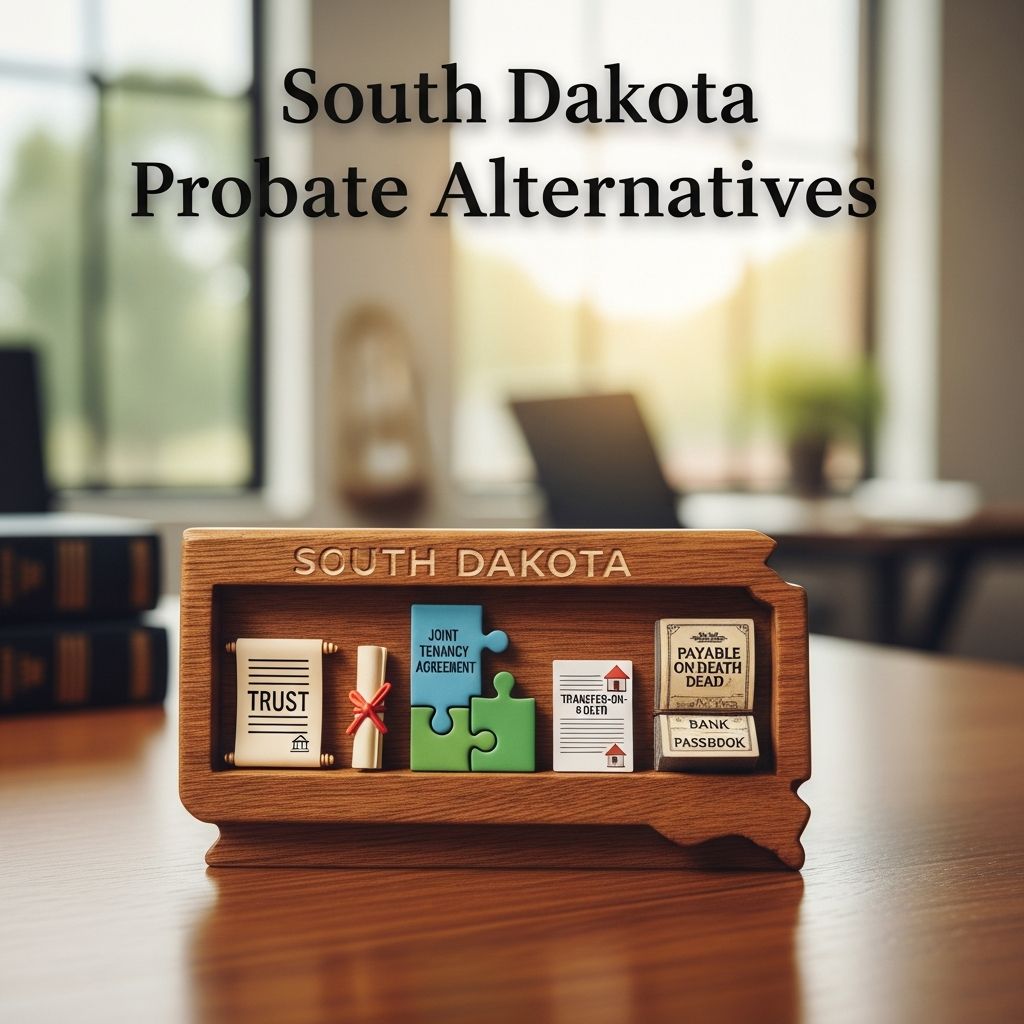
In South Dakota, the probate process ensures orderly asset distribution after death, but it can be time-consuming and costly. Many individuals seek alternatives to transfer property directly to heirs without court involvement, reducing delays and expenses.
Why Avoid Full Probate Proceedings?
Full probate in South Dakota follows the Uniform Probate Code, involving court validation of wills, asset inventory, debt payment, and distribution, often lasting 6-24 months depending on estate complexity. This process incurs court fees, attorney costs, and public disclosure of estate details, which can burden families. Probate shortcuts allow assets to pass outside court supervision, ideal for modest estates or specific property types.
These methods promote efficiency, privacy, and lower costs while complying with South Dakota Codified Laws (SDCL) Title 29A. They work best when combined with comprehensive estate planning.
Affidavits for Modest Estates
For smaller estates, South Dakota permits simplified procedures via affidavits, bypassing formal probate. Under SDCL 29A-3-1201, heirs can use a small estate affidavit if the total probate assets do not exceed $50,000 (excluding jointly owned or beneficiary-designated property).
The process requires waiting at least 30 days after death. The affidavit, signed by heirs or the personal representative, lists assets and confirms no formal probate is needed. Banks, brokers, or title companies accept it to release funds or transfer real estate. This method suits estates with bank accounts, vehicles, or minor real property.
- Eligibility: Total value under $50,000; no real estate exceeding limits unless simplified.
- Steps: Gather death certificate, asset list, heir consents; file affidavit with institutions.
- Benefits: Quick resolution in weeks, minimal fees.
Joint Ownership and Survivorship Rights
Property held in joint tenancy with right of survivorship automatically transfers to the surviving owner upon death, avoiding probate entirely. South Dakota recognizes this for real estate, bank accounts, and securities under SDCL 43-25.
Upon the first owner’s death, the survivor provides a death certificate to retitle assets. This is common for spouses but requires clear titling during life. Caution: It ends individual control over the share and exposes assets to the co-owner’s creditors.
| Asset Type | Probate Impact | Requirements |
|---|---|---|
| Real Estate | Bypassed | Deed specifies ‘joint tenants with right of survivorship’ |
| Bank Accounts | Bypassed | Account titled as joint |
| Personal Property | May need affidavit | Proof of joint ownership |
Payable-on-Death and Transfer-on-Death Designations
South Dakota allows POD (payable-on-death) for bank accounts and TOD (transfer-on-death) for vehicles and securities. These designations name beneficiaries who inherit automatically upon death, without probate.
SDCL 51A-4-45 governs POD accounts; heirs present a death certificate and ID to claim funds. For vehicles, SDCL 32-3A-20 permits TOD registration with the DMV. Brokerages offer TOD for stocks and bonds. The owner retains full control during life and can change beneficiaries anytime.
- Advantages: Simple setup, no court, private transfer.
- Limitations: Not available for real estate (use deeds instead); ineffective if beneficiary predeceases.
Revocable Living Trusts for Comprehensive Avoidance
A revocable living trust holds assets during life and distributes them post-death via a successor trustee, entirely outside probate. The grantor (creator) acts as initial trustee, retaining control.
To fund the trust, retitle property (deeds, accounts) into the trust’s name. Upon death, the successor trustee follows trust instructions, handling real estate, investments, and out-of-state assets seamlessly. South Dakota’s Uniform Probate Code supports trusts without special formalities.
Trusts excel for larger or complex estates, privacy, and incapacity planning. Setup involves an attorney drafting the document, typically costing $1,500-$3,000, but saves probate fees averaging 3-7% of estate value.
Special Rules for Real Property Transfers
Real estate often triggers probate unless shortcut methods apply. Beyond joint tenancy, an
affidavit of heirship
under SDCL 29A-3-120 can transfer modest homesteads or small parcels without court.For larger properties, a
transfer-on-death deed
(TODD) is available in South Dakota per SDCL 43-25-12 (effective recent years), allowing designation of beneficiaries on real estate deeds revocably. Record the deed during life; it becomes effective only at death, bypassing probate.When Probate Cannot Be Avoided
Not all assets qualify for shortcuts. Solely owned real estate, business interests, or estates over $50,000 may require formal or informal probate. South Dakota offers
informal probate
for uncontested wills, faster than formal proceedings (SDCL 29A-3).In intestate cases (no will), courts apply succession rules: spouse inherits all if no descendants; otherwise, shared with children (SDCL 29A-2-102). Guardianship may arise for minor heirs under the Guardianship and Conservatorship Act.
Planning Tips for South Dakota Residents
Consult an estate attorney early to assess your situation. Review titling, update beneficiaries, and consider a pour-over will to catch forgotten assets into a trust.
- Inventory all assets and ownership types.
- Execute necessary deeds and designations.
- Fund trusts fully to maximize benefits.
- Communicate plans with heirs to avoid disputes.
Frequently Asked Questions
What is the small estate limit in South Dakota?
The threshold is $50,000 for affidavits, excluding non-probate assets like joint property or POD accounts.
How long does informal probate take?
Typically 6-12 months for simple cases, longer with disputes or creditor claims.
Can out-of-state property use South Dakota shortcuts?
No; ancillary probate may be needed. Use a trust to consolidate management.
Does joint ownership protect against probate fully?
Yes for the decedent’s share, but confirm survivorship language on titles.
Is a lawyer required for these alternatives?
Not always for simple affidavits or PODs, but recommended for trusts and deeds to ensure validity.
Potential Pitfalls and Best Practices
Avoid common errors like unfunded trusts or mismatched beneficiary designations. Creditors can claim non-probate assets if not separated properly. Regularly update plans after life events (marriage, birth).
For multi-state assets, trusts prevent multiple probates. Incapacitated beneficiaries require conservatorship, adding steps.
References
- What Are the Stages of Probate in South Dakota? — Stilwell Law. 2024. https://www.stilwell.law/blog/what-are-the-stages-of-probate-in-south-dakota
- Understanding the Probate Process in South Dakota — Alvine Law Firm. 2024. https://alvinelaw.com/litigation/understanding-the-probate-process-in-south-dakota/
- South Dakota Probate Attorneys — Aspen Legacy Planning. 2024. https://www.aspenlegacyplanning.com/our-services/court-proceedings/probate/
- Probate Process Timeline — Legacy Law Firm PC. 2024. https://www.legacylawfirmpc.com/blog/a-timeline-of-the-probate-process
- Probate – Legal Help & Info — State Bar of South Dakota. 2024. https://findalawyerinsd.com/pages/areas-probate
- Codified Law 29A-3 — South Dakota Legislature. 2024. https://sdlegislature.gov/Statutes/29A-3
Similar Articles








Read full bio of Sneha Tete


