
South Carolina Lease and Rental Agreement Basics
Understand key South Carolina rules on leases, deposits, repairs, rent, and eviction before signing or renting out a home.
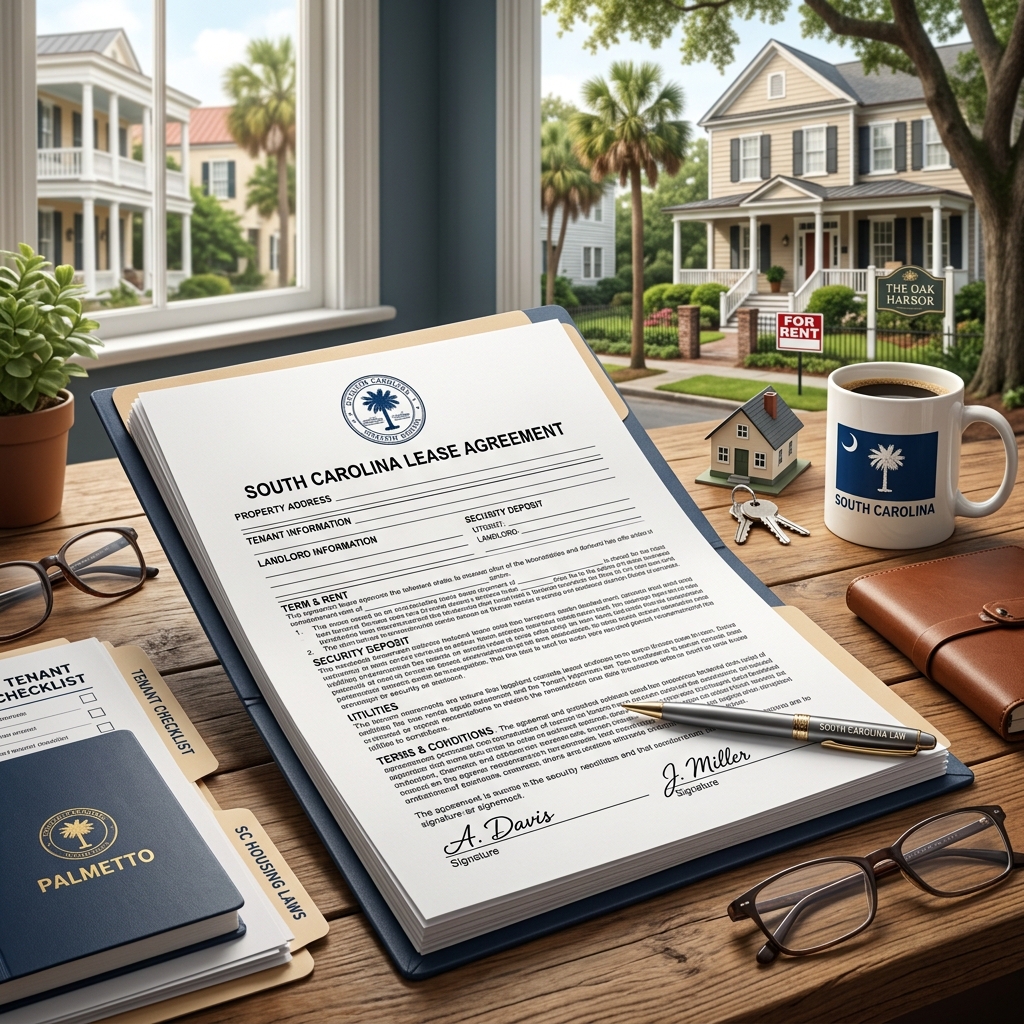
South Carolina has a detailed set of rules that govern how residential landlords and tenants must treat each other. Most of these rules come from the South Carolina Residential Landlord and Tenant Act, found in Title 27, Chapter 40 of the South Carolina Code of Laws. Understanding these rules before you sign or renew a lease can prevent misunderstandings, unexpected costs, and court disputes.
This guide explains the major legal points that affect everyday rental situations in South Carolina, including leases, deposits, repairs, rent, access to the property, and eviction procedures.
1. What Law Governs Residential Leases in South Carolina?
South Carolina’s main landlord–tenant statute is the Residential Landlord and Tenant Act, codified at S.C. Code Ann. §§ 27-40-10 through 27-40-940. It applies to most residential rental arrangements, whether or not you have a written lease. Roomers, apartment tenants, and many renters in government-assisted housing are generally covered, with some exceptions for specific kinds of housing.
The Act sets minimum standards that you cannot waive in a lease. A rental agreement cannot legally take away basic rights such as a tenant’s right to a habitable dwelling or a landlord’s right to receive rent.
1.1 Written vs. Oral Rental Agreements
South Carolina law recognizes both written and oral leases as valid agreements. However, written leases offer clearer evidence of the parties’ obligations and are strongly preferred for anything beyond a very short-term stay.
- Without a written lease, courts will look at what was said, payment history, and the statute to decide terms.
- Even with an oral agreement, required legal protections (like habitability and proper notice of termination) still apply.
2. Key Elements of a South Carolina Rental Agreement
While leases can vary, certain core terms should appear in a South Carolina rental agreement to reduce disputes:
- Names of landlord and tenants (and any authorized property manager)
- Property address and description of the dwelling
- Rent amount, when it is due, and how it must be paid
- Term of the tenancy (month-to-month, fixed-term, weekly, etc.)
- Security deposit amount and conditions for return
- Rules on utilities, repairs, and maintenance responsibilities
- Pet policies, parking rules, and other house rules
- Process for notices (address and method for written notices)
Even if a lease omits certain details (for example, how much notice is needed to end a month-to-month tenancy), the state statutes will fill in those gaps.
3. Security Deposits: Amounts, Handling, and Return
South Carolina does not set a specific dollar cap on security deposits, but landlords must comply with statutory rules about handling and returning them.
3.1 Deposit Rules and Timing
- Landlords may charge a deposit in any amount that is not unconscionable, subject to general contract law.
- At the end of the tenancy, the landlord must return the deposit (minus lawful deductions) within 30 days after the tenant vacates.
- Any deductions must be explained in a written, itemized statement sent to the tenant’s last known address.
3.2 Lawful Uses of a Security Deposit
Common lawful uses for deposit funds include:
- Unpaid rent or late fees allowed under the lease
- Costs to repair damage beyond ordinary wear and tear
- Other charges explicitly permitted by the rental agreement that are consistent with state law
Normal wear, such as minor scuffs on walls or aging carpet, typically cannot justify deposit forfeiture. If a landlord fails to return a deposit or provide an itemized list within the statutory period, tenants may seek damages in court under the Act.
4. Landlord Duties: Habitability, Repairs, and Safety
South Carolina landlords must provide and maintain housing that meets basic safety and health standards. The statute requires landlords to keep the dwelling in a “fit and habitable” condition and comply with applicable building and housing codes. Legal aid organizations in the state emphasize that landlords must make all repairs needed to keep a unit safe and livable.
4.1 Obligations to Maintain the Property
Under the Act and related guidance, landlord responsibilities include:
- Keeping the property in a habitable condition, including working heat, plumbing, and electrical systems
- Maintaining roofs, walls, structural components, stairs, and railings in safe condition
- Keeping common areas—such as hallways, stairwells, yards, and parking lots—reasonably clean and safe
- Ensuring essential services like water, electricity, and heat are available, unless the tenant is directly responsible and has failed to pay the provider
4.2 What Tenants Should Do When Repairs Are Needed
If serious problems arise that affect health, safety, or the condition of the property, tenants should:
- Notify the landlord in written form describing the issue and the requested repairs
- Keep a copy of the letter and a record of when and how it was delivered
- Allow reasonable access for the landlord or repair professionals to fix the problem
South Carolina legal aid organizations explain that, where serious health and safety issues exist, the landlord generally must make repairs within about 14 days of written notice, or at least start repairs within that time and complete them within a reasonable period, depending on the severity of the condition.
Tenants usually must keep paying rent while repair disputes are pending; unilaterally withholding rent can lead to eviction unless done under a legally recognized remedy.
5. Tenant Responsibilities and Everyday Rules
Tenants have their own statutory obligations under the South Carolina Act. These duties mirror what most leases already require and are reinforced by state bar guidance.
5.1 Core Tenant Duties
- Pay rent on time, in the amount agreed, using the method specified in the lease
- Keep the unit reasonably clean and dispose of trash properly
- Use plumbing, electrical, and appliances in a reasonable manner
- Avoid damaging the property and be responsible for guests’ behavior
- Follow reasonable rules and regulations issued for safety, welfare, and convenience of all tenants
5.2 Respecting Neighbors and Landlord Access
Tenants must not unreasonably disturb neighbors and cannot block the landlord from entering the unit for legitimate reasons. Examples of permissible entry include showing the unit to prospective buyers or tenants, performing repairs, conducting inspections, or responding to emergencies.
Except for emergencies, South Carolina guidance indicates landlords generally should give about 24 hours’ notice before entry and visit at reasonable times of day.
6. Rent, Increases, and Notice to End a Tenancy
6.1 Rent Amount and Due Date
Rent is the payment for the use of the rental unit and usually excludes security deposits and some other charges. If a lease does not specify rent clearly, courts can still enforce the agreement based on the parties’ conduct and the statute.
6.2 Rent Increases
South Carolina has no statewide rent control, so landlords generally may raise rent when a lease term ends, as long as they provide any required notice and do not act in a discriminatory or retaliatory way. Some local governments may have additional notice requirements, so landlords and tenants should check municipal rules.
6.3 Ending Periodic Tenancies
How much notice is required depends on the type of tenancy. Under South Carolina law and legal aid guidance:
- Week-to-week tenancies: about 7 days’ written notice is typically required to terminate.
- Month-to-month tenancies: 30 days’ written notice is usually required.
Fixed-term leases normally end on the date stated in the contract without additional notice, unless the lease itself imposes a notice requirement for non-renewal.
7. Landlord Entry, Lockouts, and Self-Help
Even though the landlord owns the property, South Carolina law recognizes that tenants have a right to quiet enjoyment of the premises while their lease is in effect. This means landlords cannot interfere with a tenant’s lawful use of the unit.
7.1 Rules on Entry
- Landlords may enter at reasonable times for repairs, inspections, and showings to prospective renters or buyers.
- Except in emergencies, landlords generally should give prior notice, often around 24 hours, before entry.
- Tenants may not unreasonably refuse the landlord or authorized workers access for these purposes.
7.2 Illegal Lockouts and Utility Shutoffs
South Carolina prohibits “self-help” evictions such as changing the locks, removing doors, or shutting off utilities to force tenants out. If a landlord unlawfully removes a tenant or intentionally interrupts essential services like water, electricity, or heat, the tenant may seek relief in Magistrate Court, including possession of the unit, termination of the lease, and monetary damages.
8. Nonpayment, Breach of Lease, and Eviction
Eviction in South Carolina must go through the courts; landlords cannot bypass legal procedures. The South Carolina Residential Landlord and Tenant Act outlines notice requirements and processes depending on the nature of the violation.
8.1 Common Legal Grounds for Eviction
- Failure to pay rent when due
- Material violations of the lease (for example, unauthorized pets, major property damage, or serious rule violations)
- Staying past the end of the lease term
- Illegal activity at the property
8.2 Notice Requirements Before Filing in Court
Typical notice periods under South Carolina law and practical guidance include:
- Nonpayment of rent: landlords generally must give a written 5-day notice to pay or quit before filing for eviction, unless the lease clearly states that rent is due with no further notice.
- Other lease violations: the tenant usually has 14 days after written notice to fix the violation (if it can be cured) before the landlord can terminate the lease and seek eviction.
- Month-to-month termination without cause: typically requires 30 days’ written notice, as discussed above.
8.3 Court Process and Prohibited Tactics
If the tenant does not resolve the issue within the applicable notice period, the landlord can file an application for ejectment in Magistrate Court. The court will schedule a hearing, and both sides may present evidence. If the landlord wins, the court issues an order allowing the sheriff to remove the tenant if they do not leave voluntarily.
South Carolina law makes it clear that landlords cannot:
- Change locks without a court order
- Remove the tenant’s belongings without legal authority
- Disconnect utilities as a way to force the tenant out
9. Discrimination and Retaliation Protections
Landlords in South Carolina must comply with federal fair housing laws, which prohibit discrimination based on race, color, national origin, religion, sex, familial status, and disability. State and local law may add more protected categories. Denying housing or applying different rental terms because of a tenant’s protected status can lead to serious penalties.
In addition, the Act limits retaliatory conduct. For example, a landlord generally cannot raise rent, reduce services, or attempt eviction solely because a tenant has complained in good faith about conditions to a code enforcement agency or has asserted their legal rights.
10. Quick Comparison Table: Landlord vs. Tenant Duties
| Issue | Landlord Duties | Tenant Duties |
|---|---|---|
| Property Condition | Provide habitable unit, follow housing codes, maintain common areas, keep systems safe and working. | Keep unit reasonably clean, avoid damage, follow safety rules, report serious problems. |
| Rent | Accept rent as agreed, give required notices for nonpayment before eviction. | Pay rent on time and in full as agreed in the lease. |
| Access | Give reasonable advance notice (except emergencies) and enter for lawful reasons only. | Allow reasonable entry for repairs, inspections, and showings; not unreasonably deny access. |
| Security Deposit | Return deposit with itemized deductions within 30 days of move-out. | Leave unit in good condition, provide forwarding address, and request return if necessary. |
| Eviction | Use court process; no lockouts or utility shutoffs; serve proper notices. | Respond to notices, attend court hearings, and vacate if ordered by the court. |
11. Frequently Asked Questions (FAQs)
11.1 Do I need a written lease in South Carolina?
No. Both written and oral rental agreements are valid in South Carolina, and the Residential Landlord and Tenant Act applies to both. However, a written lease provides clearer evidence of rights and responsibilities and is strongly recommended.
11.2 How long does a landlord have to return a security deposit?
Generally, the landlord must return the security deposit, with any itemized deductions, within 30 days after the tenancy ends. Failing to do so can expose the landlord to legal claims for damages.
11.3 Can my landlord raise my rent at any time?
South Carolina has no statewide rent control, so landlords can usually raise rent at the end of a lease term, provided they give proper notice and do not discriminate or retaliate. For month-to-month tenancies, 30 days’ written notice is typically required for changes like rent increases.
11.4 What can I do if my landlord refuses to make serious repairs?
Start by giving written notice describing the problem and requesting repairs. If the issue significantly affects health or safety and the landlord does not start or complete repairs within the time allowed by law, you may have options such as moving out (in severe cases) or asking Magistrate Court to order repairs and award damages. Tenants should not simply stop paying rent without understanding the legal risks.
11.5 Can my landlord change the locks without going to court?
No. Self-help evictions such as lock changes, removing doors, or cutting off utilities to force you out are illegal in South Carolina. A landlord must follow the statutory eviction process through Magistrate Court.
11.6 What happens if I do not pay rent on time?
If you miss a rent payment, the landlord typically must serve a written demand giving you 5 days to pay or move out before filing for eviction, unless your lease clearly states otherwise. If you pay within that period, the landlord generally cannot proceed with an eviction based solely on that missed payment.
11.7 Who can help me understand my rights?
Tenants and landlords can consult the full text of the South Carolina Residential Landlord and Tenant Act on the state legislature’s website, as well as guidance from the South Carolina Bar and local legal aid organizations. Speaking with an attorney is advisable for complex disputes or potential litigation.
References
- South Carolina Code Title 27, Chapter 40 – Residential Landlord and Tenant Act — South Carolina Legislature. 2025. https://www.scstatehouse.gov/code/t27c040.php
- Landlords & Tenants — South Carolina Bar. 2023-06-01. https://www.scbar.org/for-the-public/quicklinks/landlords-tenants/
- Landlord & Tenant Law in South Carolina — South Carolina Appleseed Legal Justice Center. 2022-09-15. https://www.scjustice.org/brochure/landlord-tenant-law-south-carolina/
- Getting Your Landlord to Make Repairs — South Carolina Legal Services. 2022-05-10. https://sclegal.org/brochures/getting-your-landlord-to-make-repairs/
- Overview of Landlord-Tenant Laws in South Carolina — Nolo. 2023-08-01. https://www.nolo.com/landlord-tenant/landlord-tenant-laws-south-carolina.html
- South Carolina Tenant-Landlord Rental Laws & Rights for 2026 — Hemlane. 2025-11-20. https://www.hemlane.com/resources/south-carolina-tenant-landlord-law/
- South Carolina Landlord Tenant Rental Laws & Rights 2025 — Innago. 2025-02-14. https://innago.com/south-carolina-landlord-tenant-laws/
Similar Articles








Read full bio of Sneha Tete


