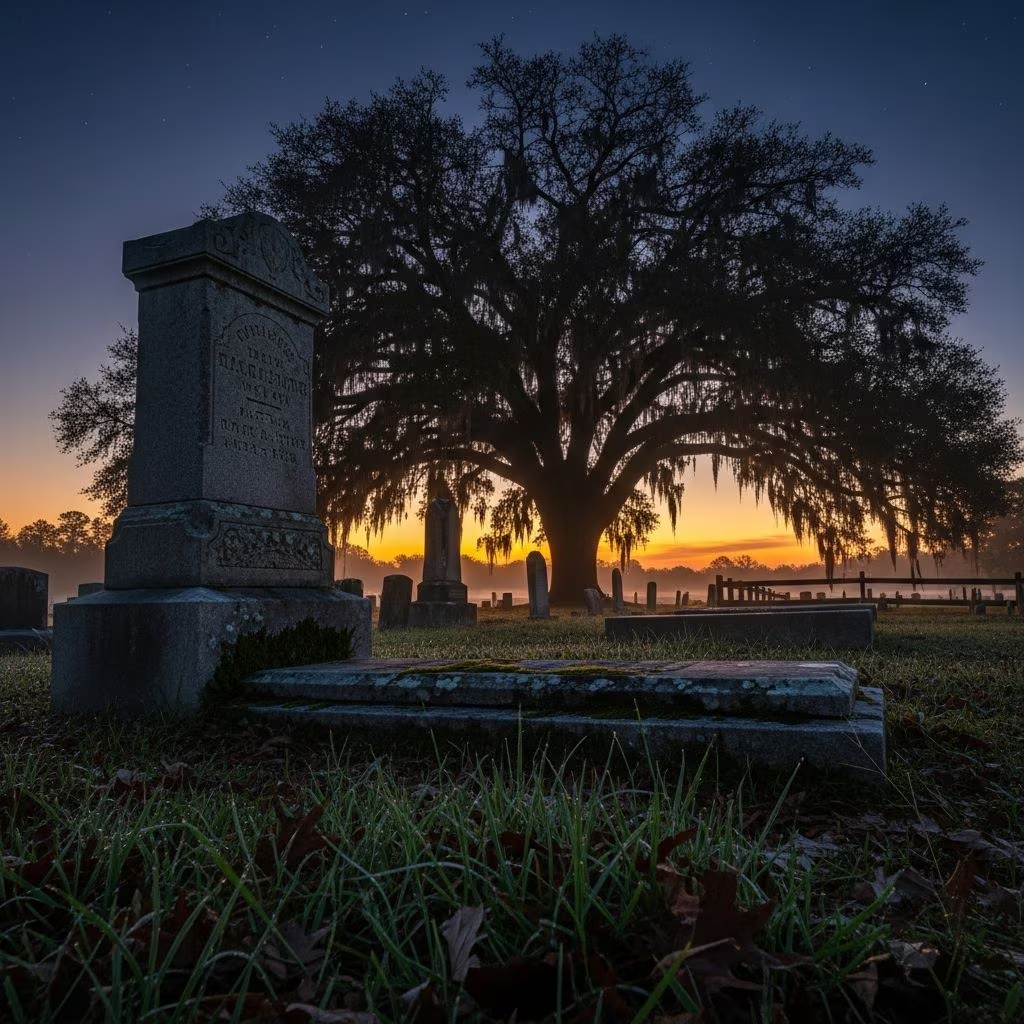
Navigating the loss of a loved one involves making informed decisions about final arrangements. In South Carolina, state statutes and regulations outline clear procedures for burial, cremation, and alternative dispositions to ensure respect, safety, and legality. Families must obtain specific permits, adhere to timelines, and respect the hierarchy of decision-makers.
Legal Authority for Final Arrangements
Determining who holds the right to authorize disposition is foundational. South Carolina law prioritizes the deceased’s pre-death directives, such as a signed cremation authorization or appointed agent. Absent such instructions, authority passes to the surviving spouse, adult children, parents, siblings, or other kin in descending order of relation.
If multiple eligible family members exist within the same priority class, consensus is required for cremation; majority rule applies among reasonably available members if disputes arise. Pre-planning via legal documents prevents conflicts and delays.
Essential Permits and Documentation
All dispositions require key documents. The death certificate must be filed within five days, typically by the funeral director or person assuming custody, gathering personal data from next of kin and medical certification from the attending physician within 48 hours.
- Burial-Removal-Transit (BRT) Permit: Issued by the county coroner, deputy, or subregistrar within 48 hours. Mandatory for transporting remains out of county or state, or before final disposition.
- Cremation Permit: Obtained from the coroner or medical examiner after presenting a death certificate or abstract. Required prior to cremation.
- Cremation Authorization Form: Signed by the authorized person, detailing instructions for remains.
Failure to secure permits constitutes a misdemeanor.
Cremation Procedures and Timelines
Cremation offers a popular, space-efficient option but follows strict protocols. At least 24 hours must elapse post-death before proceeding, ensuring all paperwork—including death certificate, BRT permit, and authorization—is complete.
Safety measures mandate removal of pacemakers, implants, or hazardous devices to avert explosions during high-heat processing. Families or funeral homes must coordinate this.
Some crematories accept direct family deliveries without a funeral director, but confirmation is essential. Post-cremation, remains must be managed per Section 32-8-345.
| Step | Requirement | Timeline |
|---|---|---|
| Death Pronouncement | Physician certification | 48 hours for medical section |
| Permit Acquisition | BRT and cremation permits | Within 48 hours |
| Cremation | 24-hour wait; device removal | After all docs |
| Remains Disposition | Per authorization | Within 60 days if unclaimed |
Handling Cremated Remains
Options for ashes include burial in graves or crypts, placement in columbaria, scattering on private land with owner consent, or per cemetery guidelines. Public lands or waters demand compliance with state and federal rules.
At sea, the Clean Water Act stipulates scattering at least three nautical miles offshore, with EPA notification within 30 days. Inland waters may require agency permits.
Unclaimed remains allow crematories 60 days to dispose lawfully before final handling.
Traditional Burial Guidelines
Most burials occur in licensed cemeteries enforcing rules on liners, vaults, monuments, and perpetual care. Private property burials are permissible absent state prohibition, but local zoning, health, and setback requirements apply—often 150-500 feet from water sources.
A BRT permit is indispensable for transport. Embalming is optional unless public viewing or multi-day delays necessitate it; confirm with cemeteries.
Home Funerals and Family-Led Arrangements
South Carolina permits home funerals without mandatory funeral director involvement. Families may care for the body at home, conduct viewings, and handle transport with proper permits.
Exemptions allow uncompensated individuals acting for family to file death certificates electronically. Obtain BRT from institutional subregistrars or coroners promptly.
- Secure death certificate within 5 days.
- Apply for BRT before movement.
- Follow hygiene and refrigeration if delays exceed 24 hours.
Green burials emphasizing natural decomposition suit eco-conscious families, often in designated cemeteries.
Role of Funeral Directors and Ethical Standards
Licensed directors manage arrangements at permitted establishments, including transportation and merchandise sales. They must disclose pricing, review benefits, and provide itemized statements.
Ethics demand respect for family beliefs, clergy input (absent dogma conflicts), and non-discrimination. Violations like false statements or improper prearrangements invite penalties.
Organ Donation and Special Cases
Donation is facilitated with documentation; revocable pre-death. Post-recovery, standard disposition laws apply.
Crime or violence-related deaths trigger coroner holds; next-of-kin notification precedes release.
Frequently Asked Questions
Can families scatter ashes anywhere in South Carolina?
No. Private property needs consent; public areas follow state/federal laws. Sea scattering requires 3 nautical miles offshore.
Is embalming required by law?
Not routinely; only if mandated by transport, viewing, or cemetery rules.
How soon after death can cremation happen?
Minimum 24 hours post-death with all permits.
Who files the death certificate?
Funeral director or custodian, within 5 days.
Are home funerals legal?
Yes, with BRT permit and timely filings.
Planning Ahead: Pre-Need Arrangements
Advance directives clarify wishes, easing burdens. South Carolina regulates prefinancing, prohibiting certain insurance assignments except preneed contracts.
Families benefit from documenting agents, disposition preferences, and veterans’ benefits reviews.
References
- Understanding South Carolina Burial & Cremation Laws — Sosebee Mortuary. 2024. https://sosebeemortuary.com/understanding-south-carolina-burial-cremation-laws
- South Carolina – NATIONAL HOME FUNERAL ALLIANCE — Home Funeral Alliance. 2024. https://www.homefuneralalliance.org/south-carolina.html
- Arranging a Funeral or Cremation Service in South Carolina — US Funerals. 2024. https://www.us-funerals.com/funeral-guide/south-carolina/
- Board of Funeral Service – South Carolina Legislature — SC State House. 2024-02-09. https://www.scstatehouse.gov/code/t40c019.php
- South Carolina Home Funeral Laws — Nolo. 2024. https://www.nolo.com/legal-encyclopedia/south-carolina-home-funeral-laws.html
- Burial and Cremation Laws in South Carolina — Nolo. 2024. https://www.nolo.com/legal-encyclopedia/burial-cremation-laws-south-carolina.html
- S.C. Code Regs. § 57-13 – Code of Ethics — Cornell Law. 2024. https://www.law.cornell.edu/regulations/south-carolina/R-57-13