
Sole Proprietorship vs. LLC: Which Structure Fits Your Business?
Compare sole proprietorships and LLCs to find the ideal business structure for your growth and asset protection needs.
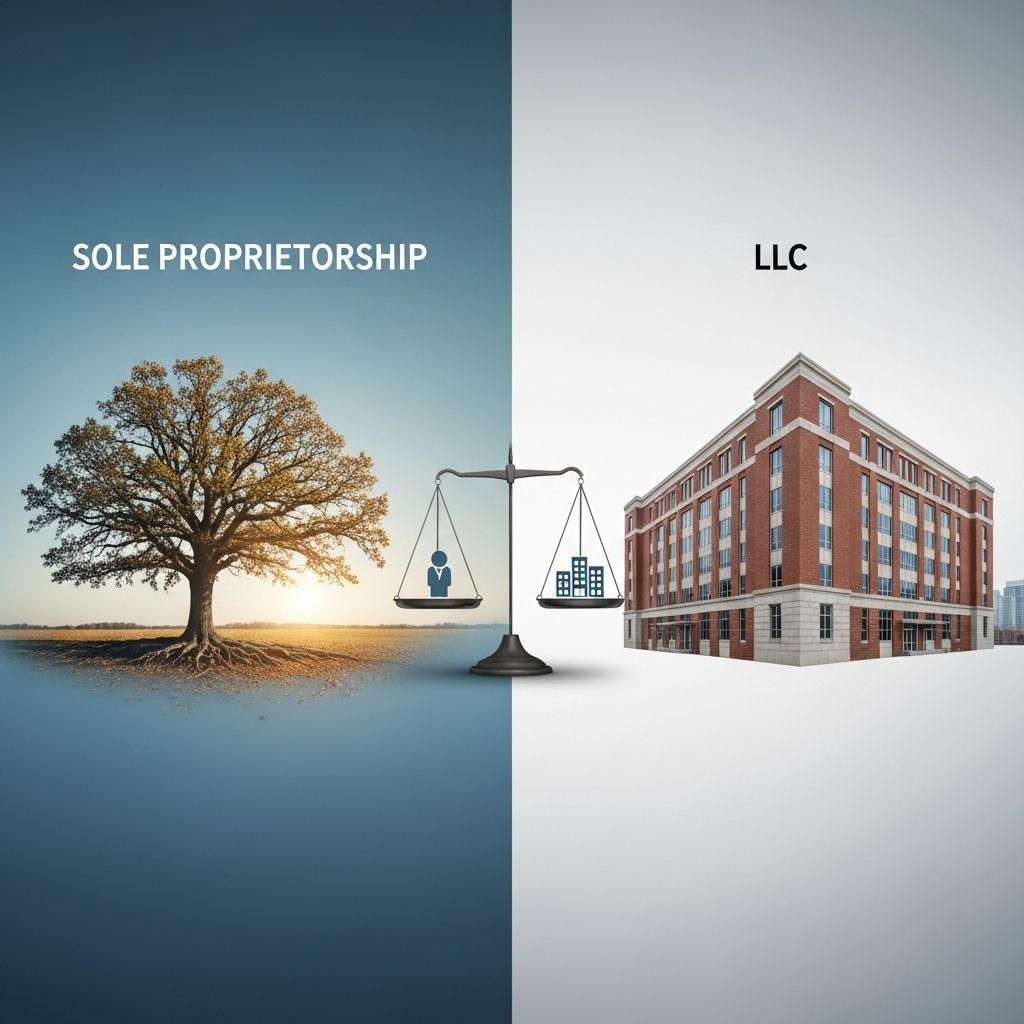
Understanding Two Fundamental Business Structures
When launching a new business venture, one of the earliest decisions entrepreneurs must make involves selecting the appropriate legal structure. Two of the most commonly chosen frameworks are the sole proprietorship and the limited liability company (LLC). Each model presents distinct advantages and disadvantages that directly impact how your business operates, how you pay taxes, and what personal risk you assume. Understanding these differences enables business owners to make informed decisions aligned with their long-term objectives and current circumstances.
The Foundation: What Separates These Two Models
A sole proprietorship represents the simplest form of business organization. In this structure, you and your business are legally one entity—there is no separation between personal and business interests. The owner maintains complete control over all operations, decision-making, and financial management. Conversely, an LLC establishes a distinct legal entity separate from its owner or owners. This separation creates a buffer between personal assets and business liabilities, though the business itself remains a distinct organization in the eyes of the law.
The fundamental distinction between these structures becomes particularly evident when examining how each handles legal responsibility. A sole proprietor bears unlimited liability for all business debts, obligations, and legal claims. If your business incurs substantial debt or faces a lawsuit, creditors can pursue your personal savings, home, vehicle, and other assets to satisfy business obligations. An LLC member, however, enjoys limited liability protection that shields personal assets from business-related claims. This protective barrier represents one of the most significant practical differences between the two structures.
Liability Protection and Personal Asset Safeguarding
Liability protection stands as perhaps the most compelling reason entrepreneurs choose LLCs over sole proprietorships. When operating as a sole proprietor, you assume full personal responsibility for every aspect of your business. This means that if your business faces a lawsuit, experiences financial difficulties, or accrues significant debt, your personal wealth and property remain vulnerable to creditors and claimants.
Consider a practical scenario: suppose you operate a consulting business as a sole proprietor and face a substantial lawsuit from a dissatisfied client. If the judgment exceeds your business assets, creditors can seize your personal bank accounts, home equity, retirement savings, and other personal property. This exposure to unlimited liability represents a significant financial risk.
An LLC structures your business differently. Members’ personal assets—including homes, savings accounts, vehicles, and investments—are typically protected from business obligations. If your LLC faces a lawsuit or debt, the liability generally extends only to the assets held within the LLC itself. This separation provides meaningful protection for your personal wealth, making it an attractive option for entrepreneurs concerned about risk exposure.
It is important to note that LLC protection is not absolute. Courts may pierce the corporate veil in situations where owners commingle personal and business finances, fail to maintain proper records, or engage in fraudulent activity. Nevertheless, maintaining proper LLC formalities typically ensures that personal assets remain protected from business liabilities.
Tax Treatment and Financial Implications
Both sole proprietorships and LLCs typically employ pass-through taxation, meaning business income flows directly to the owner’s personal tax return rather than being taxed at the business level. However, LLCs offer substantially greater tax flexibility than sole proprietorships.
For sole proprietorships, tax treatment is straightforward and inflexible. Business income and expenses are reported on Schedule C of Form 1040. The owner pays personal federal income tax, state income tax, local income tax, and self-employment taxes on all business profits. This approach involves no additional tax filings beyond the standard personal return, which simplifies the tax process but eliminates flexibility regarding tax strategy.
Single-member LLCs receive identical tax treatment to sole proprietorships by default—income passes through to the owner’s personal return via Schedule C. However, the owner can elect to be taxed as an S Corporation or C Corporation if such an election proves advantageous for their specific situation. This flexibility allows LLC owners to optimize their tax liability based on their unique circumstances.
Multi-member LLCs are taxed as partnerships by default, with each member reporting their share of business income on their personal returns via Form 1065. Like single-member LLCs, multi-member LLCs can elect to be taxed as corporations if that structure produces tax benefits.
The ability to elect corporate taxation provides meaningful advantages in certain situations. For example, an LLC with substantial profits might benefit from electing S Corporation taxation, as this allows business owners to reduce self-employment tax obligations on distributions above a reasonable salary amount. This tax flexibility represents one of the most valuable advantages LLCs offer compared to sole proprietorships.
Formation, Registration, and Setup Requirements
The ease and cost of formation differ dramatically between these two structures. Establishing a sole proprietorship requires minimal effort and expense. In most cases, you can begin operating a sole proprietorship immediately without filing any paperwork with state authorities. You may need to obtain local business licenses or permits depending on your industry and location, but formal state registration is not required. This simplicity makes sole proprietorships attractive to individuals testing business ideas with minimal investment or those seeking to earn supplemental income alongside employment.
Forming an LLC involves substantially more administrative requirements. You must file articles of organization with your state’s Secretary of State office, pay filing fees, and potentially create an operating agreement that governs how the business operates. Depending on your state and the complexity of your LLC arrangement, these initial costs might range from modest to several hundred dollars. Pennsylvania charges relatively reasonable LLC formation fees compared to other states, though costs vary based on specific requirements and whether you hire professional assistance.
Beyond formation, sole proprietorships generally require no ongoing state paperwork or filings. You simply operate your business and report income on your annual tax return. LLCs, however, typically require annual or biennial filings to maintain good standing with the state. These ongoing compliance requirements—which might include annual reports, franchise tax payments, or registered agent fees—involve additional administrative burden and expense compared to sole proprietorships. In 2025, annual LLC maintenance fees vary considerably by state, ranging from $7 in Pennsylvania to $500 in Massachusetts.
Ownership Flexibility and Business Growth Considerations
Sole proprietorships, by definition, have a single owner. You cannot add partners or outside investors while maintaining sole proprietorship status. If you wish to bring in partners or investors, you must restructure your business into a partnership, corporation, or LLC.
LLCs offer substantially greater flexibility regarding ownership and membership. An LLC can have multiple members, unlimited in number, including individuals, corporations, other LLCs, trusts, pension plans, and even foreign entities. This flexibility enables business expansion and diversification of ownership interests without fundamental restructuring. Additionally, LLC members can establish different membership classes with varying rights and responsibilities, allowing for sophisticated ownership structures that a sole proprietorship cannot accommodate.
This ownership flexibility proves particularly valuable as businesses grow. An LLC can more easily accommodate outside investors, facilitate the entry of new partners, or implement employee ownership programs. The ability to bring in capital without restructuring your entire business entity represents a significant advantage of the LLC structure for entrepreneurs planning growth.
Business Continuity and Succession Planning
A critical but often overlooked distinction between these structures involves what happens when the owner exits the business. A sole proprietorship has no independent existence separate from its owner. If you retire, sell your business, or pass away, the sole proprietorship legally ceases to exist. This lack of continuity creates significant challenges for succession planning and business sale negotiations.
An LLC, because it is a legally distinct entity, can continue operating even when ownership changes. Members can transfer their ownership interests to other parties, the business can be sold with the LLC structure intact, and the entity persists through management transitions. This continuity proves valuable for long-term business planning, makes the business more attractive to potential buyers, and facilitates more efficient succession planning if you intend to eventually pass the business to family members or sell it to interested parties.
Professional Credibility and Funding Access
The business structure you choose influences how potential customers, suppliers, and financial institutions perceive your enterprise. A sole proprietorship, while legitimate, may be viewed as a less formal or less established business arrangement. An LLC, by contrast, conveys greater professionalism and formality, which can enhance your credibility with clients, suppliers, and partners.
This perception extends to funding and financing opportunities. Banks and investors often view LLCs as more substantial business entities than sole proprietorships. If you anticipate needing business financing, an LLC structure may make it easier to qualify for loans or attract investment capital. The additional formality and legal separation inherent in the LLC structure appeal to lenders who view such entities as more creditworthy than sole proprietorships.
Comparative Analysis Table
| Feature | Sole Proprietorship | Limited Liability Company (LLC) |
|---|---|---|
| Liability Protection | No protection; personal assets fully exposed | Limited protection; personal assets generally shielded from business liabilities |
| Formation Process | Minimal paperwork; no state registration required | File articles of organization; state registration and fees required |
| Setup Costs | Minimal; mainly local licenses if required | State filing fees plus potential professional assistance costs |
| Ongoing Compliance | No annual filings or state requirements | Annual or biennial state filings and potential renewal fees |
| Tax Flexibility | Pass-through taxation only; no election options | Pass-through by default; can elect S or C Corporation taxation |
| Ownership Structure | Single owner only | Unlimited members; can establish multiple membership classes |
| Business Continuity | Business dissolves upon owner exit | Entity continues independent of ownership changes |
| Professional Image | Less formal appearance | Greater perceived legitimacy and formality |
| Access to Capital | More challenging to attract investors or financing | Generally easier to qualify for loans and investments |
Determining the Right Structure for Your Situation
Choosing between a sole proprietorship and an LLC requires honest assessment of your business goals, risk profile, and growth projections. A sole proprietorship may be appropriate if you are testing a business concept with minimal capital investment, pursuing supplemental income while maintaining other employment, or operating a low-risk service business without substantial liability exposure. The simplicity and minimal cost of sole proprietorship formation make it ideal for entrepreneurs who are uncertain about their business’s future viability.
An LLC becomes the more prudent choice if you seek meaningful personal asset protection, anticipate growth or expansion, plan to bring in investors or additional owners, desire tax flexibility for optimization purposes, or intend to build a business with long-term continuity. The additional formality and compliance requirements of an LLC are worthwhile investments for entrepreneurs committed to building substantial enterprises.
Frequently Asked Questions
Q: Can a sole proprietorship be converted to an LLC?
A: Yes. Converting a sole proprietorship to an LLC involves filing articles of organization with your state and paying associated fees. Upon conversion, the business becomes a separate legal entity. Some business assets may require title transfer or reassignment to the new LLC entity, and you should verify that existing contracts or licenses remain valid under the new structure.
Q: What happens to my sole proprietorship if I pass away?
A: The sole proprietorship ceases to exist upon your death. Your heirs inherit the business assets, but the business entity itself terminates. This creates complications for family members attempting to continue operations or sell the business. An LLC would instead pass to heirs as a continuing entity, simplifying succession.
Q: Does an LLC completely shield my personal assets?
A: LLCs provide substantial protection, but not absolute immunity. Courts may pierce the LLC veil if you commingle personal and business finances, fail to maintain proper records, use the LLC for fraudulent purposes, or underfund the entity. Maintaining clear separation between personal and business finances and following proper LLC formalities ensures maximum protection.
Q: Are LLC members required to pay self-employment taxes?
A: Yes, single-member and multi-member LLCs taxed as partnerships or sole proprietorships must pay self-employment taxes on business income. However, if an LLC elects S Corporation taxation, members can reduce self-employment tax by paying themselves a reasonable salary and taking distributions, which are not subject to self-employment tax.
Q: Which structure is better for hiring employees?
A: Both structures can hire employees. However, sole proprietors may face slightly higher unemployment insurance costs, as they must contribute to the system even if they have no employees. LLCs and sole proprietorships both require employer tax withholding and reporting for employee compensation.
Q: How much does it cost to form an LLC in Pennsylvania?
A: Pennsylvania charges relatively modest LLC formation fees—among the lowest in the nation at $7 annually for registered agents in some instances, though formation filing fees vary. Most states charge between $50 and $200 for initial LLC formation, with Pennsylvania remaining on the lower end of that spectrum. Professional formation services may charge additional fees if you choose not to file independently.
References
- LLC vs. S-Corp: Choosing the Right Business Structure in PA — Paoli Law. https://www.paolilaw.com/library/llc-vs-s-corp-choosing-the-right-business-structure-in-pa.cfm
- Sole Proprietorship vs. LLC: What’s Best For Your Business? — Salesforce. https://www.salesforce.com/blog/sole-proprietorship-vs-llc/
- Sole proprietorship vs LLC: Which is right for your business? — GoDaddy. https://www.godaddy.com/resources/skills/sole-proprietorship-vs-llc
- Sole Proprietorship vs. LLC: Pros and Cons — SoFi. https://www.sofi.com/learn/content/sole-proprietorship-vs-llc/
- Sole Proprietorship vs LLC: What’s The Difference? — Collective. https://www.collective.com/guides/sole-proprietorship-vs-llc
- Business Structure: Sole Proprietorship vs LLC — City of New Castle, Pennsylvania. https://www.newcastlepa.org/work/open-a-business/business-structure-sole-proprietorship-vs-llc/
- LLC vs Sole Proprietorship: Which one is best for your business? — Duquesne Small Business Development Center. https://www.sbdc.duq.edu/Blog-Item-Limited-LLC-vs-Sole-Proprietorship
Similar Articles








Read full bio of Sneha Tete


