
Solar Power for Your Home: A Practical Buyer’s Guide
Learn how to evaluate, compare, and safely buy a home solar system so you get real savings instead of costly surprises.
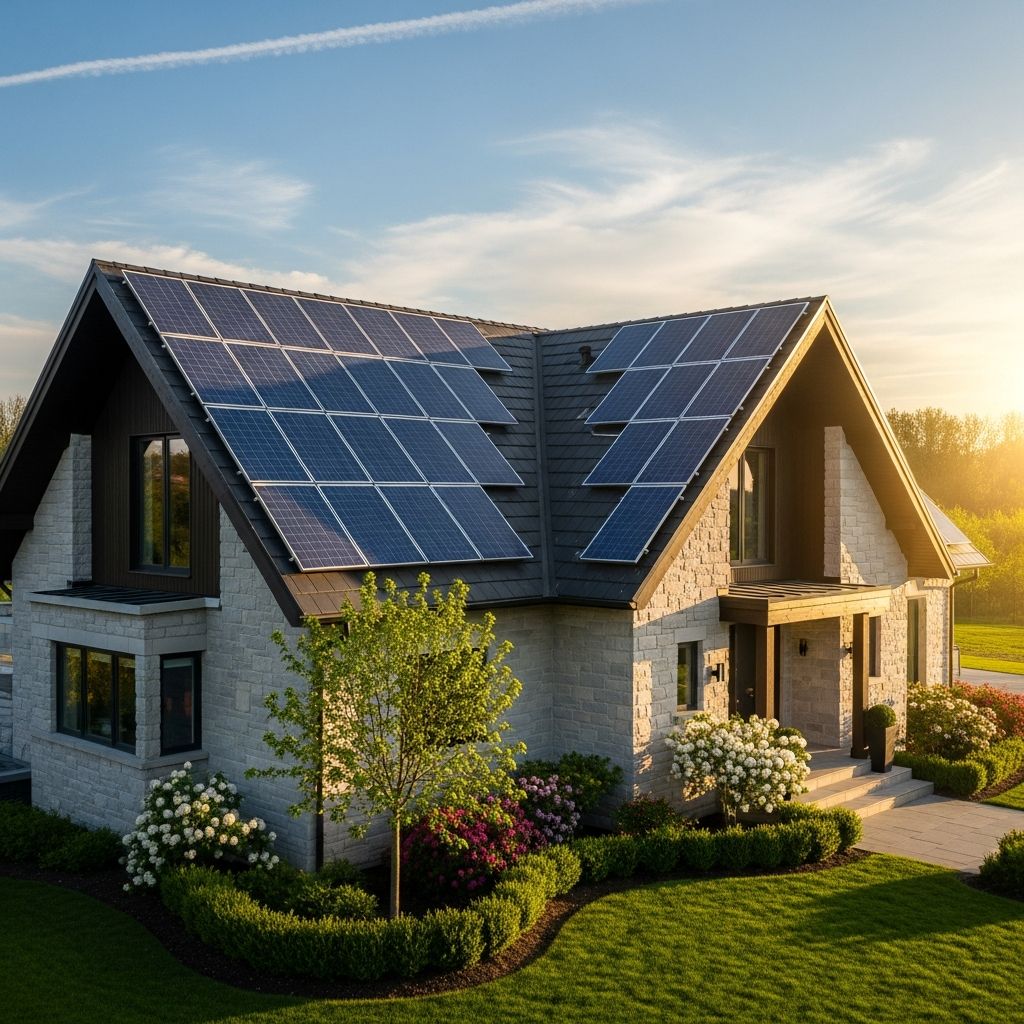
Solar power can reduce your electricity bills and your carbon footprint, but only if you understand what you are buying and how the deal is structured. This guide walks you through the essential decisions, documents, and questions so you can evaluate offers with confidence and avoid expensive mistakes.
1. Understanding What a Home Solar System Really Does
Before you talk to salespeople or sign anything, it helps to know the basics of how rooftop solar works and what it can (and cannot) do.
- Solar panels (modules) generate direct current (DC) electricity when exposed to sunlight.
- Inverters convert DC electricity to alternating current (AC) that your home uses.
- Racking and mounting hardware attach panels to your roof or ground structure.
- Monitoring equipment tracks how much electricity your system produces.
- Optional batteries store energy for backup or for use when the sun is not shining.
In a typical grid-tied system, the solar array is connected to your local utility grid. When your system produces more power than you use, the extra electricity flows to the grid. Depending on your state’s rules and your utility, you may receive bill credits through net metering or a similar program.
Important limits to understand:
- Most standard rooftop systems do not automatically provide power during a grid outage unless you also have special equipment or battery storage.
- Solar offsets electricity use but does not remove fixed charges, connection fees, or non-energy charges from your bill.
- Your savings depend on your usage patterns, local rates, utility programs, and changes in policy over time.
2. Is Your Home a Good Solar Candidate?
Not every home will benefit equally from rooftop solar. Evaluate these factors before seeking quotes:
- Roof condition: If your roof needs major repairs or replacement soon, address that first so you don’t pay to remove and reinstall panels later.
- Roof orientation and tilt: In the U.S., south-facing roofs usually capture the most sun, but east- and west-facing roofs can also work with slightly lower output.
- Shading: Trees, adjacent buildings, chimneys, and dormers can significantly reduce production. Ask installers to provide shading analyses.
- Available space: A small or complex roof may limit system size, which may limit your potential savings.
- Local rules: Homeowners associations and historic districts may impose aesthetic or placement restrictions, although many states limit how far they can go.
If your roof is not a good fit, alternatives include ground-mounted systems, shared/community solar programs, or improving efficiency instead of adding generation.
3. Estimating Costs, Incentives, and Payback
The total price for a residential solar system typically includes equipment, labor, permitting, and interconnection. Costs vary by state, installer, and system size.
| Cost / Value Element | What It Is | Why It Matters |
|---|---|---|
| System price (before incentives) | Total cost of panels, inverters, labor, and permits | Base for calculating tax credits and payback period |
| Federal tax credit | Percentage of eligible system costs you can deduct from your federal tax liability | Significantly reduces the net cost if you have enough tax liability to use it |
| State & local incentives | Rebates, performance-based incentives, or additional tax credits | Can shorten payback and improve return on investment |
| Utility bill savings | Lower energy charges and possible bill credits through net metering or similar programs | Primary long-term benefit; depends on rates and solar output |
| Financing costs | Interest and fees for loans or leases | Can dramatically change net savings over time |
Use official calculators, such as those recommended by the U.S. Department of Energy, and review your last 12 months of utility bills to estimate potential savings and realistic payback timelines.
4. Comparing Ways to Pay: Cash, Loans, Leases, and PPAs
How you finance solar often affects your total cost more than the equipment you choose. Common options include upfront purchase, loans, solar leases, and power purchase agreements (PPAs).
| Option | Who Owns the System? | Typical Pros | Typical Cons |
|---|---|---|---|
| Cash purchase | You | No interest; you keep incentives; highest lifetime savings if you stay in the home | Large upfront payment; payback takes several years |
| Solar loan | You (subject to lender’s lien) | Low or no upfront cost; you still claim eligible incentives | Interest increases total cost; monthly payments may offset some bill savings |
| Solar lease | Solar company or third party | Little or no upfront cost; predictable payments; company usually maintains system | You do not own equipment or claim most incentives; payments may escalate over time |
| PPA | Solar company or third party | You pay only for power produced; potential immediate bill reduction | Per-kWh price and escalators may reduce or erase savings; complex contracts |
For any financing option, ask for the total amount you will pay over the full term and compare it with an equivalent cash quote. Check whether payments are fixed or increase annually and how long the contract lasts.
5. Reading the Fine Print in Solar Contracts
The contract you sign is often more important than the brand of panels on your roof. Take time to read and understand all documents, and consider consulting an attorney or consumer protection agency if the terms are unclear.
Key Contract Topics to Review Carefully
- System description: Equipment brands and models, number of panels, system size (in kW), location, and estimated annual production.
- Total price and payment schedule: All charges, when they are due, and what triggers each payment (e.g., milestones like installation or utility approval).
- Performance estimates: Annual production projections, underlying assumptions (sun hours, shading, system losses), and whether there are production guarantees.
- Escalation clauses: For leases and PPAs, whether payments rise every year, and by how much.
- Utility and policy risk: Some contracts acknowledge that changes in net metering, tariffs, or rate design could affect your savings.
- Change orders: How changes in scope or unexpected conditions are priced and approved.
Warranties and Service Obligations
Solar projects come with several overlapping warranties:
- Panel warranty: Covers defects in materials or workmanship and often guarantees a minimum power output for 20–25 years.
- Inverter warranty: Typically shorter (10–15 years), though some premium equipment offers extended coverage.
- Workmanship or installation warranty: Covers roof penetrations, wiring, and labor issues for a period defined by the installer.
Ask in writing:
- Who handles warranty claims (installer, manufacturer, or a third party)?
- Who pays shipping, diagnostic, or labor costs when equipment is replaced?
- What happens if the installer goes out of business?
6. Working With Installers and Avoiding High-Pressure Sales
Because solar is a major purchase, treat it like any other large home improvement project.
- Get multiple quotes: Aim for at least three written proposals from licensed, insured installers in your state.
- Check credentials: Confirm licenses, check state contractor databases, and ask if the company has certifications from recognized training programs.
- Review complaint history: Look up companies with your state attorney general, local consumer protection office, or public utility commission.
- Beware of unsolicited offers: Be cautious of door-to-door sales, aggressive telemarketing, or claims that you must sign “today” to get a special incentive.
- Ask for a shade and production analysis: Reputable installers can provide modeling that shows expected production and how they derived the numbers.
Be skeptical of claims that you will “eliminate your bill” or “get solar for free.” Programs may reduce your costs, but you will likely still pay some utility charges and, if financed, your solar payments.
7. Permits, Inspections, and Utility Interconnection
Most residential solar projects require approvals from your city or county and from your electric utility. Many installers handle these steps, but you should understand what they involve.
- Building permits: Local authorities review system design for structural and electrical safety standards.
- Inspections: After installation, inspectors verify that the system meets code and matches approved plans.
- Interconnection agreement: Your utility must authorize connection of your system to the grid and may require specific safety equipment.
- Permission to operate (PTO): You usually cannot energize the system until the utility grants PTO in writing.
Your contract should clearly state who is responsible for each permit and approval, what happens if approvals are delayed or denied, and whether your payments depend on successful interconnection.
8. Long-Term Considerations: Maintenance, Moving, and Roof Work
Solar systems are relatively low-maintenance, but not maintenance-free.
- Monitoring: Use the provided monitoring tools or apps to periodically review production and quickly catch equipment issues.
- Cleaning: In many climates, rainfall keeps panels reasonably clean; in dusty or heavily polluted areas, occasional professional cleaning can help.
- Repairs: Inverter replacement is common over a 20–25 year system life, and warranties may not cover all labor.
If you need to replace your roof or plan to sell your home during the contract term, review:
- Who pays to remove and reinstall panels during roof work.
- Whether leases or PPAs can be transferred to a new owner, and under what conditions.
- Any fees for early termination, buyout, or transfer.
9. Essential Questions to Ask Before You Sign
Use this checklist to structure conversations with installers and financing providers:
- How much electricity will the system produce each year, and what assumptions are used in the estimate?
- What is the total cost over the full term, including interest, fees, and escalations?
- Who owns the equipment, and who claims tax credits and other incentives?
- What warranties apply to panels, inverters, and workmanship, and who services them?
- How will changes in utility rates or net metering rules affect my savings?
- What happens if I move, refinance my home, or need to replace the roof?
- Can I review all documents, including financing agreements, before any installation is scheduled?
Frequently Asked Questions About Home Solar
Q1: Will solar panels completely eliminate my electric bill?
Solar can reduce your bill substantially, but most homeowners still pay some charges, such as fixed connection fees, minimum bills, or charges for usage beyond what the system offsets. Your actual results depend on your usage, system size, local rates, and net metering or similar programs offered by your utility.
Q2: Is it better to buy or lease a solar system?
Buying (with cash or a loan) usually provides higher lifetime savings because you own the equipment and can typically use tax credits and other incentives. Leases and PPAs may be suitable if you cannot or do not want to finance an upfront purchase, but they involve long contracts, payment escalators, and limits on your control over the system.
Q3: How long does a home solar installation take from start to finish?
The physical installation often takes only one to three days, but the overall process—site evaluation, design, permitting, utility approvals, and final inspection—can take several weeks to a few months, depending on local permitting timelines and utility processing times.
Q4: Will my solar system work if the power goes out?
Standard grid-tied solar systems typically shut down automatically during a grid outage to protect utility workers. To have power during outages, you need a system specifically designed for backup, usually with battery storage and compatible inverters and transfer equipment.
Q5: How can I verify that my installer is reputable?
Check state contractor licensing databases, verify insurance, and look up complaints with your state attorney general, consumer protection office, or public utility commission. You can also ask for recent customer references and confirm that the company has completed similar projects in your area.
References
- Homeowner’s Guide to Going Solar — U.S. Department of Energy, Office of Energy Efficiency and Renewable Energy. 2023-06-01. https://www.energy.gov/eere/solar/homeowners-guide-solar
- Generating Your Own Power: Solar Power Basics — Southern California Edison. 2024-01-15. https://www.sce.com/clean-energy-efficiency/solar-generating-your-own-power/solar-power-basics
- Getting Started with Solar — Pacific Gas and Electric Company (PG&E). 2023-09-10. https://www.pge.com/en/clean-energy/solar/getting-started-with-solar.html
- Solar Panels 101: A Guide to Solar Energy and Systems — Unbound Solar. 2022-11-20. https://unboundsolar.com/solar-information/solar-power-101
- How to Install Solar Panels in 2025 — EnergySage. 2025-02-05. https://www.energysage.com/solar/solar-panel-installation-guide-what-should-you-expect/
Similar Articles








Read full bio of medha deb


