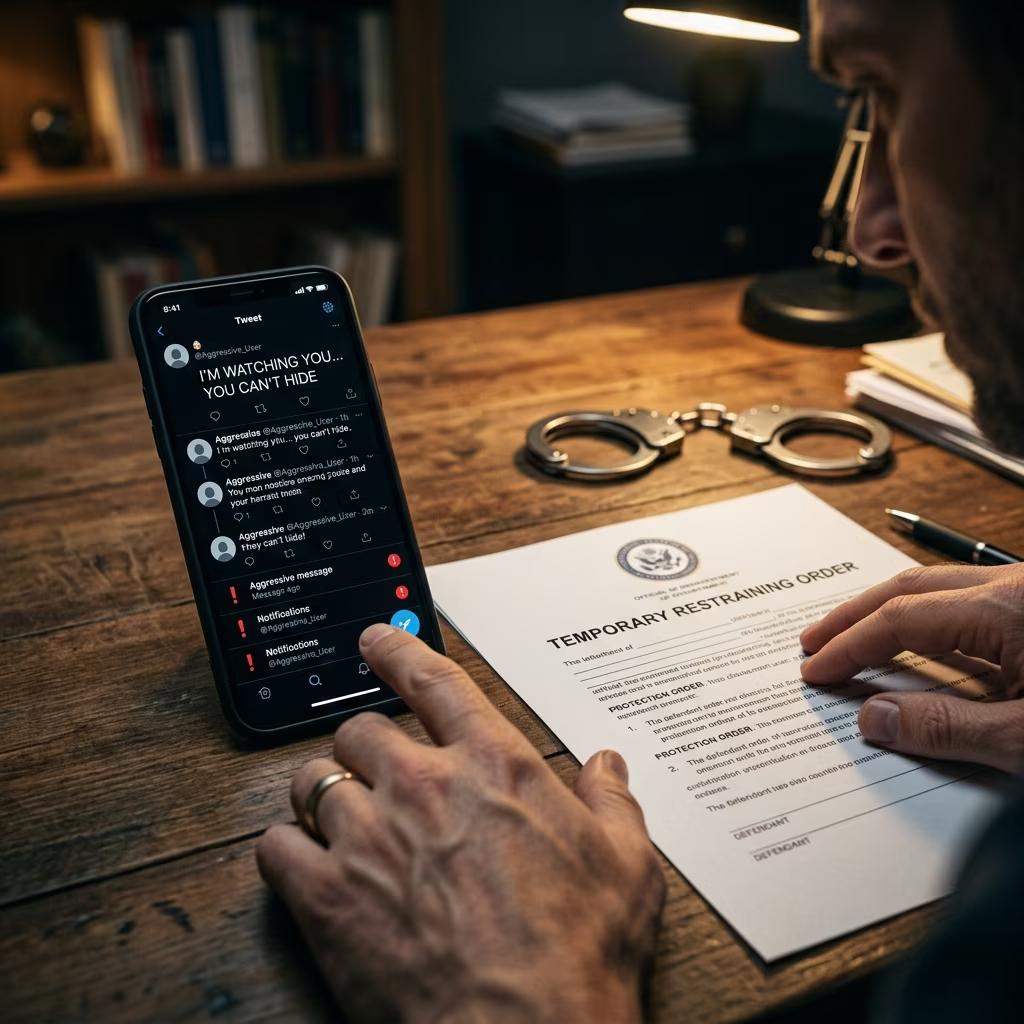
Online platforms have transformed how people communicate, but they have also created new ways to threaten, harass, and intimidate others. In many jurisdictions, a single tweet, direct message, or public post can be enough to support a restraining order when it crosses the line into unlawful behavior. In recent years, courts and lawmakers have increasingly recognized that digital communication can be just as harmful—and just as legally significant—as words spoken face-to-face.
From Tweets to Court Orders: How We Got Here
Traditional restraining orders were designed for physical encounters and direct, in-person harassment. As social media use expanded, judges began seeing cases where the alleged abuse occurred almost entirely online—through Twitter threads, Facebook posts, Instagram comments, and text messages. Rather than ignoring this shift, courts started interpreting existing laws to apply to digital conduct.
In many cases, this required no change in statutory language. If a law already prohibited harassment, threats, or stalking “by any means,” judges increasingly treated social media as just another method of communication, rather than a special category. This approach allowed victims of online abuse to seek protection without waiting for new legislation.
What Is a Restraining Order in the Online Context?
A restraining order (often called a protective order) is a court directive that limits what a person may do, or orders them to refrain from certain conduct. When online harassment is involved, these orders typically focus on stopping any further abusive communication.
- Purpose: To prevent continued contact, threats, or harassment that create fear or emotional distress.
- Scope: May cover phone calls, texts, emails, social media posts, and other digital channels.
- Duration: Can be temporary (short-term) or long-term, depending on the case and jurisdiction.
Courts often issue two main types of orders in online-abuse cases:
- Temporary restraining orders (TROs): Emergency orders that provide immediate but short-term protection when the risk of harm is urgent.
- Long-term protective orders: Issued after fuller hearings and evidence, these can remain in place for months or years.
When Can a Tweet or Post Support a Restraining Order?
Online speech does not automatically lead to a restraining order. Courts look for specific elements that show the conduct is serious enough to justify legal intervention. While exact standards vary by state, many jurisdictions require some combination of:
- Knowing or willful behavior: The perpetrator intentionally sends or posts content directed at a specific person.
- Repeated conduct: A pattern of posts, messages, or interactions—not just one rude comment—forming a “course of conduct.”
- Threats or serious harassment: Content that a reasonable person would view as menacing, threatening, or dangerously intrusive.
- Impact on the victim: Fear for personal safety or significant emotional distress caused by the abuse.
Under these conditions, tweets like “I will find you” or repeated messages implying harm might be treated as threats. Courts have also considered whether the perpetrator has a history of conflict with the victim, whether the messages include details suggesting the ability to carry out the threat, and whether the perpetrator has ignored prior requests to stop.
How Courts Interpret Online “Contact”
Many restraining orders include a “no contact” provision. With social media, the question becomes: what counts as contact? Judges have taken a broad view, often including:
- Direct messages: Private messages sent through platforms like Twitter, Facebook, or Instagram.
- Public mentions: Using another person’s handle in a tweet or tagging them in a post, even in a public forum.
- Comments and replies: Posting on the protected person’s profile, thread, or public content.
- Indirect but targeted posts: Messages that do not name the person but clearly refer to them and are likely to reach them or their network.
In one widely discussed case, a court concluded that tagging someone on Facebook violated a protective order because the tag generated a notification, effectively reaching out to the protected person. Courts in other states have similarly held that “by electronic or any other means” language in orders includes social media platforms.
Key Legal Concepts: Harassment, Stalking, and Threats
To understand why tweets or posts can lead to restraining orders, it helps to review the underlying legal concepts commonly used in these cases.
| Concept | Typical Elements (Generalized) | Online Examples |
|---|---|---|
| Harassment | Repeated unwanted contact causing substantial annoyance or emotional distress. | Daily insulting tweets directed at a victim, ignoring requests to stop. |
| Stalking / Cyberstalking | A course of conduct that causes fear for safety or serious emotional distress. | Tracking a victim’s location via posts, sending them messages about where they are, and implying harm. |
| Threats | Statements that convey intent to cause physical harm or serious damage. | Tweeting “I’m coming to your house tonight” alongside violent imagery. |
When such behavior occurs online, it can still meet the legal thresholds for harassment or stalking, even if the perpetrator never appears in person.
Evidence: How Online Abuse Is Proven in Court
Successful restraining order applications almost always rely on documentation. Because digital communication creates a record, online abuse can often be proven more easily than verbal threats made in private. However, victims still need to be systematic in collecting evidence.
- Screenshots: Capture tweets, posts, direct messages, comments, and replies, including usernames, dates, and times.
- Platform logs: Some services allow users to download archives of their account activity, which can be presented in court.
- Witnesses: Friends, family, or colleagues who saw the posts can testify to their content and impact.
- Impact documentation: Medical or psychological records, workplace reports, or other evidence showing emotional distress or safety concerns.
Courts typically expect the victim to show that they will suffer “immediate and irreparable injury” if an order is not issued, especially in the context of a temporary restraining order. Statements from the perpetrator about their intention to continue the behavior—such as “I won’t stop”—can be particularly powerful evidence.
Consequences for Violating an Order Online
Violating a restraining order is generally treated the same way whether the contact is in person or online. In many states, an intentional violation of a protective order is a criminal offense. Sending a single message or tagging a protected person after an order has been issued can be enough to trigger legal consequences.
- Arrest: Law enforcement can arrest a person suspected of violating an order through social media activity.
- Criminal charges: Violations may lead to misdemeanor or felony charges, depending on the jurisdiction and severity of conduct.
- Additional restrictions: Courts can extend or strengthen the order, impose stricter no-contact provisions, or add new rules specific to digital communication.
- Impact on future cases: A history of violations can influence sentencing, custody decisions, or future protective-order hearings.
Some courts and attorneys advise individuals under restraint to assume that any comment about the protected person, even indirect, could come into evidence and potentially be viewed as a violation. As a practical matter, avoiding any reference to the person on social media—and blocking them entirely—may be the safest route.
Practical Guidance for Victims of Online Threats
For those facing serious abuse or threats on Twitter or other platforms, legal remedies can seem intimidating. Yet restraining orders can provide meaningful relief when online behavior crosses into criminal territory.
Steps victims can consider:
- Document everything early: Begin saving screenshots and logs as soon as the behavior starts, not just when you decide to go to court.
- Use platform tools: Block the abusive account, report the behavior using built-in mechanisms, and adjust privacy settings to limit exposure.
- Consult legal counsel: Speak with an attorney or legal aid organization familiar with restraining orders and cyber harassment in your jurisdiction.
- Consider a TRO: If the abuse poses an immediate safety risk, ask about temporary orders that can provide fast, short-term protection.
- Plan for safety: Combine legal steps with practical ones, such as informing trusted contacts and reviewing your digital security practices.
Advice for Individuals Accused of Online Violations
For people who learn that a tweet or post has led to a restraining order—or that they are accused of violating one—the situation is serious. Courts seldom accept ignorance of social media law as a defense.
Key points to keep in mind:
- Do not contact the protected person: Avoid direct messages, mentions, tags, comments, or indirect posts aimed at them.
- Review the order carefully: Understand its exact terms, including whether it prohibits indirect communication or references on social media.
- Check automatic settings: Ensure apps are not automatically sharing stories, photos, or posts with the protected person.
- Seek legal counsel promptly: An experienced attorney can explain your rights, evaluate evidence, and help you respond appropriately.
Even unintentional contact—such as an automatically shared post—can be treated as a violation if it reaches the protected person. Careful review of your digital behavior and settings is therefore essential.
Balancing Free Speech and Protection From Harm
Any discussion of restraining orders based on tweets or posts raises questions about free speech. Courts must distinguish between legitimate expression—even if offensive—and unlawful threats or harassment. This balance is not always easy. However, legal systems generally treat true threats and serious harassment as outside the protection of free speech rights.
Judges consider context, tone, patterns of behavior, and the reaction of a reasonable person when deciding whether a tweet crosses the line. While a single angry comment might not qualify, repeated threatening statements or messages implying violence are much more likely to justify a restraining order.
Frequently Asked Questions (FAQs)
Can one tweet lead to a restraining order?
In exceptional cases, a single tweet may support a restraining order if it constitutes a clear, serious threat or fits within broader evidence of harm. More commonly, courts look for repeated or escalating behavior.
Does tagging someone violate a “no contact” order?
Many courts have held that tagging or mentioning a protected person on social media counts as contact, because it can send notifications and draw their attention to the post. Violating such a provision can lead to criminal penalties.
Is indirect posting about someone covered by an order?
Even indirect communication may fall within the scope of some restraining orders, especially where the language prohibits both direct and indirect contact. Posts clearly referring to the protected person may be treated as violations.
Can social media activity be used as evidence in court?
Yes. Courts routinely consider social media posts, messages, and interactions as evidence in restraining order proceedings and related cases. Screenshots and archives often play a central role.
What should I do if I’m being harassed online right now?
Document every incident, use platform tools to block and report the behavior, and seek legal advice about whether a restraining order or other remedy is appropriate in your jurisdiction.
References
- Restraining Orders & Online Harassment — PEN America. 2023-02-15. https://onlineharassmentfieldmanual.pen.org/restraining-orders-online-harassment/
- Can Online Messages or Usage of Social Media Lead to a Restraining Order in New Jersey? — Sarno & Company. 2022-06-10. https://sarnolawfirm.com/blogs/can-online-messages-or-usage-of-social-media-lead-to-a-restraining-order-in-new-jersey/
- When Restraining Orders Cover Social Media Communication — Early Sullivan Wright Gizer & McRae LLP / Law360 summary. 2016-03-01. https://www.earlysullivan.com/when-restraining-orders-cover-social-media-communication-law360
- Can You Violate Restraining Order Through Social Media? — Wallin & Klarich. 2020-09-14. https://www.wklaw.com/can-violate-restraining-order-social-media-pc-273-6/
- Social Media and Restraining Orders: What You Need to Know in Colorado — Hanchey Law. 2021-08-05. https://hancheylaw.com/social-media-and-restraining-orders-what-you-need-to-know-in-colorado/
- Social Media Violations of Protective Orders in Connecticut — The Law Offices of Mark Sherman, LLC. 2019-11-20. https://markshermanlaw.com/connecticut-domestic-violence-lawyer/protective-orders/violations/social-media-and-text/