
Social Media Policies and Employee Free Speech
How employers can regulate social media use while respecting free speech, privacy rights, and modern workplace realities.
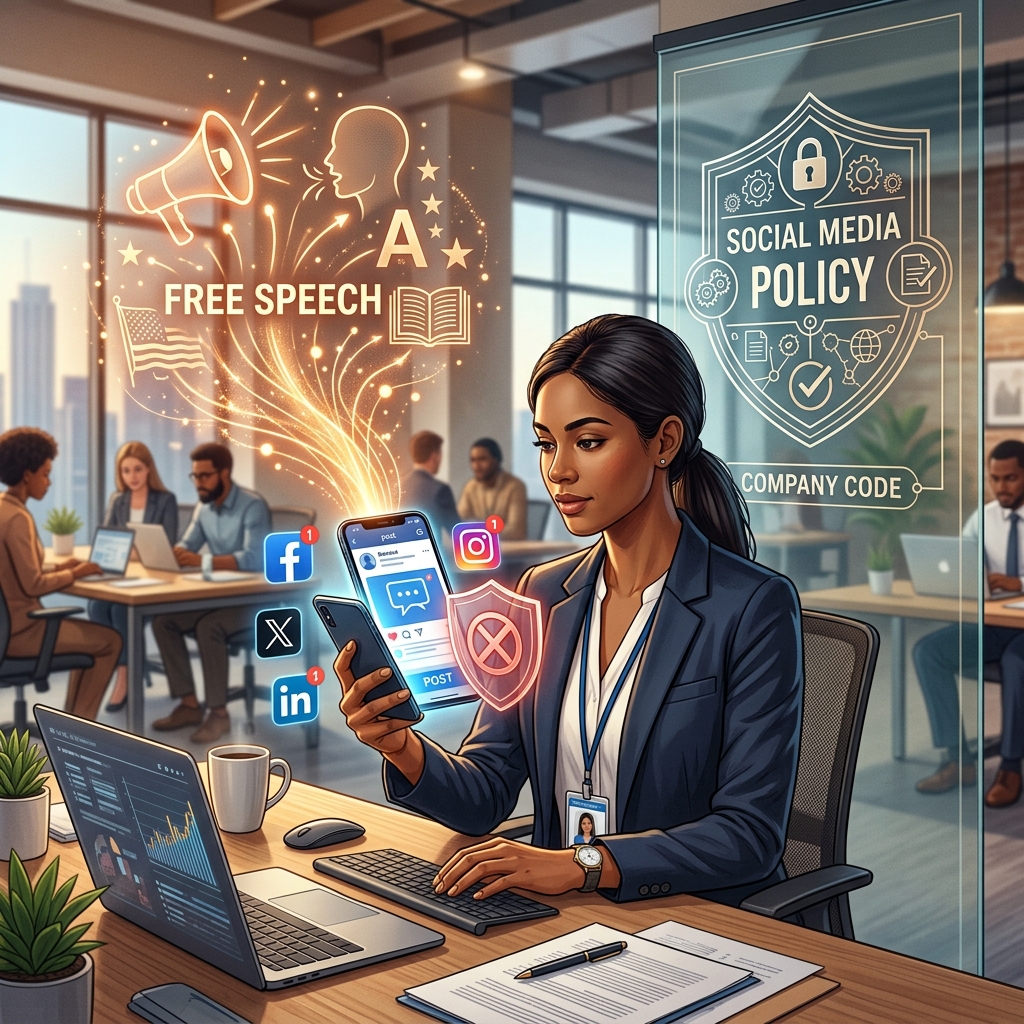
Social media has blurred the lines between work and personal life, forcing employers to rethink how they manage online behavior without unlawfully restricting employee rights. A well-crafted social media policy can protect an organization’s reputation and confidential information while still honoring free speech, privacy protections, and labor laws.
This article offers a practical, legally informed framework for designing, implementing, and enforcing social media policies that recognize employees as both private individuals and representatives of their employers.
Why Social Media Policies Matter in Modern Workplaces
Nearly every employee interacts with social platforms, whether to network professionally, promote their employer, or share opinions about work and society. That visibility creates opportunities and risks for organizations.
- Brand and reputation protection: Employee posts can be perceived as reflecting the employer’s values, even when not officially authorized.
- Legal and regulatory compliance: Missteps online may violate privacy, discrimination, securities, or trade secret laws.
- Workplace culture and conflict: Online harassment, bullying, or inflammatory comments can spill over into the workplace and trigger legal claims.
- Employee rights: Overbroad rules can infringe on legally protected activity, including discussing wages and working conditions.
The goal is not to eliminate risk by banning online expression, but to manage it through clear expectations, legally sound boundaries, and consistent enforcement.
Core Legal Principles That Shape Social Media Policies
Effective social media policies are grounded in law. HR and leadership need at least a basic understanding of the main legal constraints before drafting detailed rules.
Employee Speech and Labor Rights
In many jurisdictions, employees have rights to discuss wages, benefits, and working conditions, including on social media. In the United States, overly broad social media rules that prohibit such discussion can conflict with the National Labor Relations Act (NLRA).
- Employees may legally complain about supervisors, pay practices, or scheduling online when doing so as part of concerted activity.
- Policies that broadly ban “negative comments about the company” risk being deemed unlawful if they would reasonably discourage such protected discussion.
Therefore, social media policies should be carefully worded to address legitimate concerns (harassment, disclosure of trade secrets, etc.) without forbidding lawful criticism or discussion of workplace issues.
Privacy and Access to Personal Accounts
Some employers are tempted to monitor personal accounts or request login credentials; however, many laws and public policies now restrict that practice.
- Several U.S. states limit or prohibit employers from demanding personal social media passwords or access.
- Even where not prohibited, requesting such access may raise serious privacy and employee relations concerns.
A sound policy clearly states that employees are not required to provide passwords or allow employer access to private accounts, while explaining how public content may be monitored for legitimate business reasons.
Confidentiality, Trade Secrets, and Proprietary Information
Employers have strong, legally recognized interests in protecting confidential information, intellectual property, and trade secrets from being disclosed online.
- Prohibiting the posting of trade secrets, client data, internal financial reports, or privileged legal communications is both lawful and necessary.
- Policies should define what counts as confidential or proprietary, using concrete examples such as customer lists, unreleased product details, or internal pricing models.
Clear definitions help employees understand what must never appear in social posts, avoiding overbroad, vague restrictions.
Anti-Discrimination, Harassment, and Online Misconduct
Anti-harassment and anti-discrimination laws apply to online behavior that affects the workplace. Employers may discipline employees whose social media activity creates a hostile work environment or violates equal employment obligations.
- Policies should forbid hate speech, discriminatory remarks, bullying, or targeted harassment toward colleagues or customers.
- Guidelines must be enforced consistently to avoid claims of favoritism or retaliation.
Distinguishing Official and Personal Social Media Use
One of the most important distinctions in any social media policy is between what employees do as official representatives of the organization and what they do in a personal capacity.
| Aspect | Official Use | Personal Use |
|---|---|---|
| Authority to speak | Authorized employees speak on behalf of the organization. | Employees speak only for themselves and must not claim to represent the employer. |
| Content standards | Strict brand, legal, and regulatory rules apply; approvals often required. | Must still respect confidentiality, law, and anti-harassment rules, but may express personal opinions. |
| Monitoring | Employer may closely monitor official channels for compliance and risk management. | Monitoring typically limited to publicly available information; private accounts remain private. |
| Disclaimers | Corporate accounts may include disclaimers about moderation and comment removal. | Employees may be encouraged to state that views are their own when referencing employer. |
Key Elements of a Balanced Social Media Policy
Although every organization’s policy will differ, most effective frameworks contain a similar set of elements that clarify expectations and manage risk.
1. Purpose and Scope
The policy should begin with a brief explanation of why it exists and who it covers.
- State that the purpose is to guide responsible social media use and protect employees, customers, and the organization.
- Identify whether the policy covers all employees, contractors, interns, and temporary staff.
- Clarify that it applies both to official channels and to personal social media activity that references the employer.
2. Access and Use During Work Hours
Employers may regulate use of social media during work time and on company equipment, provided they do so consistently and lawfully.
- Specify whether personal social media use is permitted during breaks or on company devices.
- Remind employees that work time should primarily be devoted to job duties, not personal online activity.
- Explain any technical controls (blocking certain sites, limiting bandwidth) and the reasons for them.
3. Acceptable and Unacceptable Content
Policies must explain what employees can and cannot post, using practical examples rather than vague prohibitions.
Common unacceptable content includes:
- Disclosure of confidential information, trade secrets, or customer data.
- Hate speech, discriminatory comments, or harassment directed at individuals or groups.
- Defamatory or knowingly false statements about the organization, colleagues, or customers.
- Content that violates privacy rights or shares personal information without consent.
- Plagiarized material or copyrighted content posted without proper rights.
Acceptable content should be framed positively:
- Honest, respectful opinions expressed in a personal capacity.
- Professional networking, thought leadership, and sharing industry news with appropriate disclaimers.
- Celebrating company achievements or events, where permitted and consistent with confidentiality rules.
4. Employee Identification and Disclaimers
When employees reference their employer online, it is useful to have guidance on how they identify themselves and clarify whose views are being expressed.
- Encourage employees, when discussing work-related topics, to make clear that they speak for themselves, not on behalf of the employer.
- Advise against using official logos or branding on personal accounts without permission.
- For official accounts, include disclaimers regarding moderation and the right to remove offensive or inappropriate comments.
5. Monitoring, Privacy, and Enforcement
Transparency about monitoring is essential to avoid surprises and protect trust.
- Explain that the organization may review publicly available social media content that references the employer or employees.
- Clarify that private accounts and password-protected content will not be accessed without lawful reason and in compliance with applicable regulations.
- Outline possible consequences for policy violations, ranging from coaching and warnings to termination, depending on severity.
- Emphasize consistent enforcement to avoid perceptions of selective discipline or retaliation.
6. Alignment With Other Policies and Laws
A social media policy should not exist in isolation. It needs to align with existing codes of conduct, anti-harassment rules, information security policies, and legal obligations.
- Cross-reference applicable workplace policies, such as confidentiality, IT use, and anti-discrimination.
- Include a statement that nothing in the social media policy is intended to restrict legally protected activities, including discussing wages or working conditions.
- Encourage employees to raise questions with HR or legal if unsure how the policy applies to a specific situation.
Practical Steps for Developing a Social Media Policy
Creating a social media policy is both a legal and cultural exercise. Involving the right stakeholders and communicating clearly are crucial.
Involve Cross-Functional Stakeholders
Social media touches many parts of an organization. Policy development should involve:
- HR and legal: to address employment law, labor rights, privacy, and enforcement.
- Communications and marketing: to align with brand voice and official messaging.
- IT and security: to manage technical controls and cybersecurity risks.
- Managers and employees: to surface real-world scenarios and gain buy-in.
Draft Clear, Accessible Language
Legal precision is important, but overly complex language reduces understanding.
- Avoid jargon and legal expressions that employees may not understand.
- Use specific examples to explain abstract concepts like “confidential information” or “offensive content”.
- Distill key principles (e.g., “be respectful,” “protect confidential information,” “speak only for yourself unless authorized”) into short bullet points employees can remember.
Train, Communicate, and Review Regularly
Policies are only effective when employees know about them and understand how they apply.
- Introduce the policy during onboarding and provide refresher training as platforms and risks evolve.
- Use real case studies or anonymized examples to illustrate acceptable and unacceptable behavior.
- Review and update the policy periodically to reflect new technologies, legal developments, and workplace practices.
Frequently Asked Questions (FAQs)
Can an employer forbid employees from criticizing the company online?
Employers may prohibit unlawful defamation, disclosure of confidential information, or harassment. However, many labor laws protect employees who discuss wages, working conditions, or workplace issues, even if the tone is critical. Policies should be carefully drafted to avoid banning lawful, protected speech.
Is it legal for an employer to demand access to an employee’s social media passwords?
In some jurisdictions, especially several U.S. states, laws restrict or prohibit employers from asking for personal social media login information. Even where not expressly illegal, demanding passwords raises serious privacy and employee relations concerns and is generally discouraged.
What kind of social media content can lead to discipline or termination?
Discipline may be appropriate when posts disclose confidential or proprietary information, violate anti-harassment or anti-discrimination rules, contain threats or unlawful activity, or clearly misrepresent the employee as speaking on behalf of the employer without authorization. Consequences should be proportional and consistently applied.
Should employees use disclaimers when talking about work online?
Many employers encourage statements such as “opinions are my own” when employees publicly discuss work-related topics or refer to their employer. While disclaimers are not a complete shield from consequences, they can help clarify that the employee is not speaking officially for the organization.
How much monitoring of employee social media activity is appropriate?
Organizations commonly review publicly accessible content to protect their brand and manage risk, but monitoring should be limited, purposeful, and respectful of privacy. Policies should explain what kind of monitoring occurs and avoid intrusive practices, such as demanding passwords or accessing private accounts, especially where restricted by law.
References
- Social Media Workplace Policies & Employees’ Legal Rights — Justia. 2023-05-01. https://www.justia.com/employment/hiring-employment-contracts/privacy-in-employment/social-media-policies/
- The dos and don’ts of employer social media policies — Fuse Workforce. 2022-03-10. https://www.fuseworkforce.com/blog/the-dos-and-donts-of-employer-social-media-policies
- Social Media Policy: 6 Key Elements to Include — PowerDMS. 2021-11-15. https://www.powerdms.com/policy-learning-center/six-elements-of-a-good-social-media-policy
- Crafting an Effective Social Media Policy for Employees — Bond Schoeneck & King PLLC. 2021-07-08. https://www.bsk.com/uploads/07-08-21-Crafting-an-Effective-Social-Media-Policy-for-Employees-Cybersecurity-IM-copy2.pdf
- Social Media Use Policy – Texas Guidebook for Employers — Texas Workforce Commission. 2020-09-01. https://efte.twc.texas.gov/social_media_use_policy.html
- How to Create an Effective Social Media Policy — Society for Human Resource Management (SHRM). 2019-10-30. https://www.shrm.org/topics-tools/news/employee-relations/how-to-create-effective-social-media-policy
- Social Media Guidelines — Stanford University Communications. 2022-04-12. https://ucomm.stanford.edu/policies-and-guidance/social-media-guidelines
Similar Articles








Read full bio of medha deb




