
Digital Missteps: Critical Social Media Pitfalls for Law Students
Navigate the digital landscape safely: Essential guidelines for protecting your legal career online.
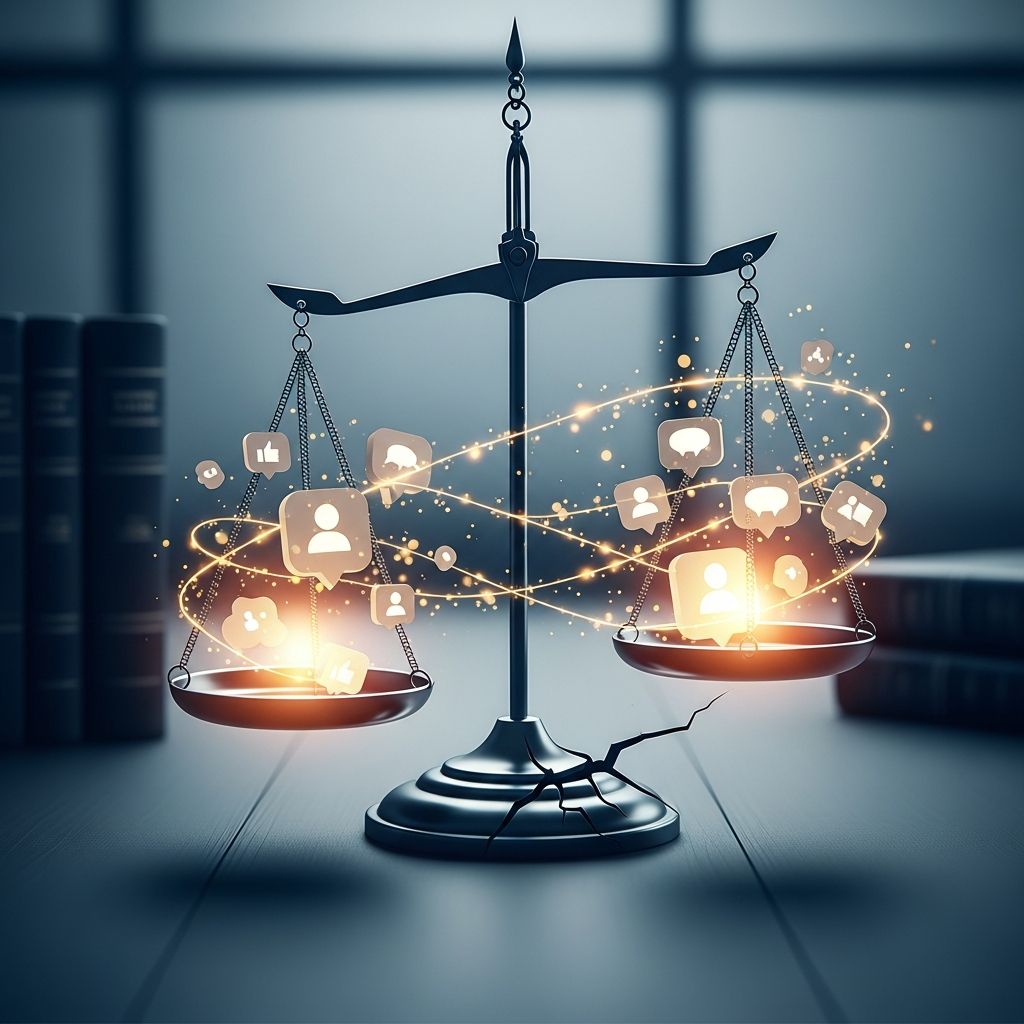
Understanding the Digital Footprint: Why Social Media Matters for Aspiring Lawyers
In today’s interconnected world, social media has become an inescapable part of professional life. For law students navigating the transition from academic life to the legal profession, the digital choices made online can have lasting consequences that extend far beyond a simple “delete” button. Prospective employers, bar associations, and professional networks routinely examine social media profiles when evaluating candidates. This reality makes understanding the boundaries of appropriate online conduct not merely advisable but essential for anyone pursuing a legal career.
The challenge facing modern law students is multifaceted. Unlike previous generations who could compartmentalize their personal and professional lives, today’s digital natives must be constantly aware that their online presence creates a permanent record. What might seem like a harmless post, a candid photograph, or a heated comment in the moment can resurface years later, potentially undermining career aspirations and professional credibility. The legal profession, in particular, values judgment, discretion, and trustworthiness—qualities that are directly reflected in one’s digital behavior.
The Professional Judgment Test: Evaluating What You Share Online
One foundational principle should guide all social media decisions: would you be comfortable explaining this post to a prospective employer, judge, or ethics committee? This simple internal check serves as a powerful filter for the types of content law students should publish or engage with on social media platforms.
The legal profession operates under strict codes of professional conduct that extend into the digital realm. Before posting anything on social media, law students should pause and ask themselves several critical questions: Does this reflect the professionalism expected of a legal practitioner? Could this content be misinterpreted by those unfamiliar with my personal circumstances? Might this violate any confidentiality, privacy, or ethical standards? Does this align with the values of the legal field I wish to enter?
This deliberative approach transforms social media from a space for spontaneous expression into one requiring thoughtful consideration. The difference between successful law students and those who damage their prospects often comes down to this single discipline: pausing before posting.
Controversial Statements and Political Advocacy: Where to Draw the Line
Law students frequently struggle with balancing personal beliefs and professional expectations on social media. While freedom of expression is a cherished value, the legal profession demands a particular level of neutrality and impartiality, especially as one prepares for roles that may involve serving clients with diverse viewpoints or sitting in judgment of others.
Inflammatory political posts, divisive social commentary, or strongly worded opinions on contentious issues can alienate potential employers or create concerns about a candidate’s ability to maintain professional objectivity. This does not mean law students must suppress their values or remain silent on matters they care about deeply. Rather, it requires approaching such topics with nuance, respect for opposing viewpoints, and an awareness that online statements are permanent.
Particular caution should be exercised regarding posts that:
- Attack specific individuals or groups based on protected characteristics
- Employ inflammatory language or inflammatory tone in discussing political or social issues
- Make sweeping generalizations about entire professions, genders, races, or religions
- Demonstrate bias toward vulnerable populations or marginalized communities
- Show contempt for the legal system, judiciary, or law enforcement without constructive context
Law firms conducting background checks increasingly examine candidates’ social media to assess their judgment and potential cultural fit. A candidate who appears to harbor biases or lacks the temperament for legal practice may be eliminated from consideration regardless of their academic credentials.
Personal Revelations and Privacy Boundaries: What Should Remain Private
The shift toward authentic, personal branding on social media has blurred the lines between public and private disclosures. Law students sometimes feel pressure to present a relatable, human side of themselves online. While this impulse is understandable, certain categories of personal information should remain off-limits from public social media platforms.
Oversharing personal struggles, mental health challenges, relationship difficulties, or substance-related issues on social media creates unnecessary vulnerability. These revelations, while they may feel cathartic in the moment, can be weaponized against law students during the bar admission process. Bar associations in many jurisdictions conduct character and fitness evaluations that explicitly consider social media activity. Posts suggesting struggles with alcohol, drug use, mental health crises, or moral lapses can trigger formal investigations.
Similarly, law students should carefully consider location-based sharing. Constant check-ins at restaurants, bars, clubs, or vacation destinations can create a narrative of someone more focused on leisure than legal studies. More concerning, they reveal patterns and locations that compromise personal security and can be used to verify alibis or challenge claims made in professional contexts.
Photographs and Visual Content: The Image Problem
Visual content presents a particularly acute challenge for law students. A photograph that seemed appropriate for a social gathering—even if posted to a “private” account—can circulate beyond its original audience. The proliferation of screenshots and reposting means that deleting problematic images after the fact provides limited protection.
Images that should never appear on law student social media include:
- Photos from parties or social events where alcohol is prominently featured
- Pictures showing inappropriate behavior or poor judgment
- Scantily-clad or sexually suggestive photographs
- Images with offensive content, symbols, or messages in the background
- Photos that suggest illegal activity or unsafe conduct
- Screenshots of confidential conversations or private information
The visual literacy of hiring partners and bar examiners means that even seemingly innocent photographs can be misinterpreted. A photo from a costume party might be taken out of context; a candid shot from a vacation could be perceived as frivolous during a time when studies should be the priority. Law students should adopt a conservative standard: if there is any possibility an image could be misunderstood or mischaracterized, it should not be posted.
Violations of Confidentiality and Client Privacy: Ethical Red Lines
Once law students begin internships or work experiences in legal settings, protecting client confidentiality becomes not just a professional expectation but a legal obligation. Yet the temptation to share interesting details about cases, clients, or firms can be strong. Social media makes such violations trivially easy: a quick post about an interesting legal issue, a photo from a firm event, or a casual mention of a client matter can constitute serious ethical violations.
Law students must understand that:
- Any identifiable information about clients is off-limits, regardless of how minor it seems
- Details about pending cases, legal strategies, or case outcomes cannot be discussed publicly
- Even anonymized case information can sometimes be de-identified by those familiar with a case
- Behind-the-scenes firm photographs must not show client files, confidential documents, or other privileged materials
- Discussions of firm matters should not reveal internal strategies, challenges, or attorney disagreements
Violating confidentiality through social media can result in immediate termination from a legal position, damage to professional relationships, ethics complaints, and potentially impact bar admission. The consequences far outweigh any momentary satisfaction from sharing on social media.
Spreading Misinformation: The Accuracy and Source Problem
Law students should recognize that their emerging status as legal professionals means their posts may be perceived as authoritative by general audiences. Sharing legal “tips,” commentary on current events, or interpretations of recent court decisions carries an implicit claim to accuracy. When such posts are factually incorrect, misleading, or taken out of context, they damage both the individual’s credibility and potentially mislead others about their legal rights.
Before sharing legal content on social media, law students should:
- Verify that any cited cases or legal principles are accurately described
- Ensure that legal advice, if offered, comes with appropriate disclaimers that it is not personalized counsel
- Fact-check news articles before sharing them, especially legal analysis or commentary
- Acknowledge the limits of one’s knowledge and avoid presenting opinions as established fact
- Cite original sources rather than relying on secondary summaries or social media interpretations
The viral nature of social media means that misinformation can spread rapidly and be difficult to correct. A law student who becomes known for sharing inaccurate legal information damages their professional reputation and may face skepticism throughout their career.
Engaging in Online Arguments and Unprofessional Debates
The anonymity and distance provided by social media platforms can embolden people to engage in confrontational exchanges they would never attempt in person. Law students should recognize that participating in heated arguments, engaging in personal attacks, or becoming involved in social media “call-outs” conflicts with the professional demeanor expected of legal practitioners.
The specific dangers of argumentative social media engagement include:
- Creating a visible record of poor judgment and inability to handle disagreement professionally
- Demonstrating a combative approach to opposing viewpoints rather than reasoned discourse
- Associating oneself with inflammatory rhetoric or provocative online personalities
- Becoming the subject of screenshots and negative commentary that spread beyond the original exchange
- Establishing a reputation within the legal community as someone difficult to work with or unreasonable
Law students should adopt a straightforward rule: if a conversation on social media is becoming heated, argumentative, or personal, the appropriate response is to step away. No point scored in a Twitter argument is worth the damage to professional reputation.
Discriminatory Language and Bias: Unconscious and Explicit
Perhaps no social media behavior is more disqualifying for law students than evidence of bias, discrimination, or contempt for protected groups. The legal profession commits itself to serving all clients and upholding principles of equality before the law. Candidates who post content suggesting bias against any group—whether based on race, gender, religion, sexual orientation, disability status, or other protected characteristics—will almost certainly be eliminated from consideration by legal employers.
This extends beyond explicitly hateful content to include:
- Jokes or memes that demean any group
- “Devil’s advocate” arguments that minimize discrimination or injustice
- Sharing of content created by individuals or organizations known for extremism
- Stereotyping comments framed as observation or humor
- Statements suggesting that certain groups are undeserving of legal protections or rights
Law firms and legal employers view such content as direct evidence that a candidate lacks the judgment, values, and professional character necessary for legal practice. The stakes are correspondingly high.
Misrepresenting Credentials and Expertise: The False Authority Problem
The desire to present oneself as accomplished and knowledgeable sometimes leads law students to inflate credentials or present themselves as having expertise they have not yet developed. On social media, this can take forms such as:
- Describing oneself as a “legal expert” or “attorney” before bar admission
- Claiming specialization in practice areas where one has limited or no experience
- Overstating the significance of student achievements or honors
- Implied endorsement of legal strategies or approaches based on hypothetical knowledge
- Accepting recognition for team accomplishments as if they were individual achievements
Bar associations increasingly scrutinize social media for evidence of unauthorized practice of law or misrepresentation of credentials. Law students should represent their actual status accurately—as students, interns, or recently licensed attorneys—and be honest about the scope of their knowledge and experience.
Failing to Secure Account Privacy Settings: Technical Oversights
Law students sometimes fail to recognize that even privately posted content can become public through screenshots, account breaches, or changes to platform privacy policies. The technical infrastructure of social media platforms is not static; privacy settings can be altered by the platforms themselves, and content thought to be private may become discoverable.
Basic security practices for law student social media accounts include:
- Using strong, unique passwords for each social media account
- Enabling two-factor authentication where available
- Regularly reviewing and adjusting privacy settings
- Limiting friend requests to people known personally or professionally
- Avoiding the use of public WiFi when accessing social media accounts
- Periodically reviewing past posts and removing those that no longer reflect professional standards
Even with these precautions, law students should operate under the assumption that any content they post could potentially become public. This assumption encourages more conservative choices overall.
Neglecting to Understand Employer and Professional Policies
Law students in internships or early-career positions may not be fully aware of their employer’s social media policies or the professional rules governing attorney conduct on social media. These policies vary significantly by firm, jurisdiction, and practice area. Some firms have explicit prohibitions on discussing the firm or work on personal social media accounts, even in anonymized form. Others have concerns about potential ethical violations related to attorney advertising or confidentiality.
Law students should:
- Ask employers explicitly about social media policies during the onboarding process
- Review state bar association guidance on attorney social media conduct
- Understand the particular ethics rules in the jurisdiction where they are licensed or seeking admission
- Consult firm policies before posting any content related to the firm, clients, or cases
- Maintain awareness that rules continue to evolve as bar associations develop new guidance
Ignorance of these rules provides no protection if violations occur. The responsibility rests with the individual to educate themselves about applicable standards.
Building a Professional Social Media Foundation Instead
Understanding what not to do on social media is essential, but law students should also recognize that thoughtful use of these platforms can advance their career development. The key is approaching social media with intentionality rather than spontaneity. Creating a content strategy that highlights legal learning, shares relevant industry insights, engages professionally with legal communities, and builds a reputation for judgment and professionalism can provide significant career benefits.
Law students who navigate social media carefully—avoiding the pitfalls discussed above while maintaining an active, professional presence—position themselves favorably for internships, job offers, and long-term career success. The discipline to think before posting, the judgment to recognize content boundaries, and the awareness of how digital choices impact professional standing are themselves valuable skills in legal practice.
Frequently Asked Questions
Q: Can law schools and employers see my “private” social media accounts?
A: While nominally private, social media content can be shared, screenshotted, or accessed through mutual connections. Many employers request access or ask candidates to provide credentials. It’s safest to assume that anything posted could potentially be seen by professional audiences, regardless of privacy settings.
Q: What should I do if I’ve already posted problematic content?
A: Remove the content immediately and consider whether any screenshots or reposts already exist. For serious violations, consider whether to provide context or explanation if directly questioned by employers or bar admissions authorities. Going forward, adopt stricter standards for all social media activity.
Q: Can I discuss my law school experiences on social media?
A: Yes, but carefully. You can share that you’re a law student, discuss your own learning experiences, celebrate academic achievements, and reflect on the law school journey. However, avoid sharing identifying information about specific classmates, professors, or any confidential law school matters.
Q: Are there platforms I should avoid entirely as a law student?
A: No specific platform must be avoided, but some are more professionally-oriented than others. LinkedIn is the most explicitly professional choice, while platforms known for personal, casual, or anonymous content require more careful curation. The key is ensuring your presence on any platform reflects professional standards.
Q: How often should I clean up my old social media posts?
A: Conduct a thorough review at least annually, particularly before applying for bar admission, internships, or permanent positions. Remove any posts that don’t reflect your current professional judgment or could be misinterpreted by professional audiences.
Q: What’s the safest approach to sharing legal commentary on social media?
A: Always verify accuracy, cite original sources, include appropriate disclaimers that you’re not providing legal advice, acknowledge the limits of your knowledge, and avoid presenting opinions as established fact. Legal professionals will assess your reliability based on the quality and accuracy of what you share.
References
- Building a Digital Presence: Social Media Strategies for Law Students — Law Crossing. Retrieved from https://www.lawcrossing.com/article/900056606/Building-a-Digital-Presence-Social-Media-Strategies-for-Law-Students/
- How Law Students Use Social Media to Build Relationships and Get Ahead — Good2bSocial. Retrieved from https://good2bsocial.com/how-law-students-use-social-media/
- The Complete Guide to Social Media for Lawyers and Law Firms — Clio. Retrieved from https://www.clio.com/resources/digital-marketing-lawyers/social-media-lawyers/
- Social Media 2.0: Transitioning From Law Student to Professional — New York State Bar Association. Retrieved from https://nysba.org/social-media-2-0-transitioning-from-law-student-to-professional/
- Social Media: Law, Ethics and Current Awareness — Florida State University College of Law Research Guides. Retrieved from https://guides.law.fsu.edu/SocialMediaLaw/CurrentAwareness
- Social Media Guide — Columbia Law School. Retrieved from https://www.law.columbia.edu/about/departments/communications/social-media-guide
Similar Articles








Read full bio of medha deb


