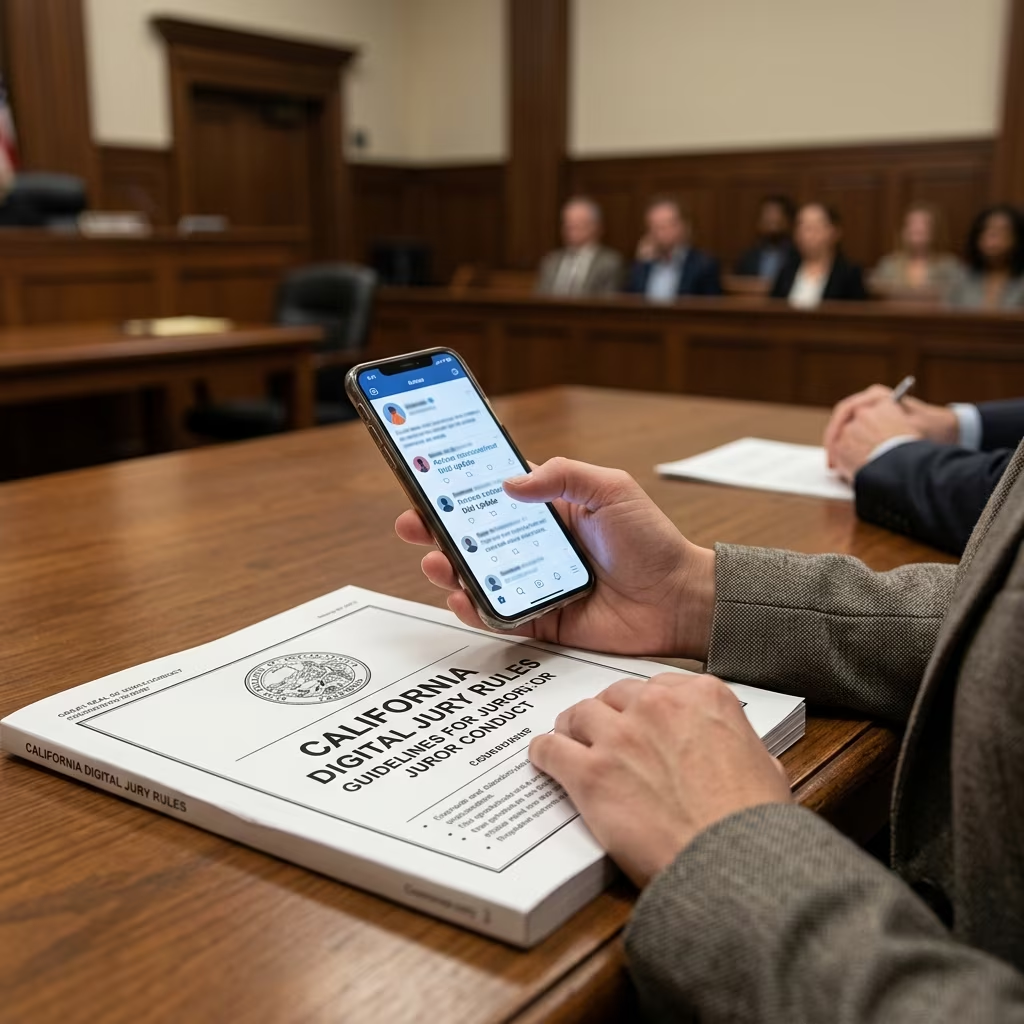
Smartphones and social media have transformed how people communicate, search for information, and share their daily experiences. Those same tools, however, pose serious risks inside the courtroom. In California, misuse of social media by jurors is not just discouraged—it can amount to criminal misconduct when it violates a judge’s instructions. This article explains what conduct is forbidden, how California and other courts have responded, and what jurors, lawyers, and judges need to know in the digital age.
Why Juror Social Media Use Became a Legal Flashpoint
Jurors are expected to decide cases solely on the evidence presented in court and the law as explained by the judge. The rapid rise of social media and constant connectivity has made that expectation harder to enforce. Jurors can:
- Post comments about an ongoing trial to friends or followers.
- Search online for facts, news coverage, or legal concepts not introduced in evidence.
- Receive outside opinions via messages, comments, or replies about the case they are hearing.
Courts across the United States have experienced mistrials and appeals based on jurors tweeting, posting on Facebook, or conducting online research during trials. These incidents undermine the integrity of the verdict and can force expensive retrials.
The Traditional Rule: No Outside Information or Communications
Long before social media existed, jurors were instructed not to talk about the case outside the jury room and not to consult outside sources, such as newspapers or encyclopedias. That core rule is simple:
- No discussions with non‑jurors about the case while it is ongoing.
- No independent research on facts, law, or parties involved in the case.
- No receiving information from media reports or third parties about the matter.
Modern technology did not change the rule—it changed the risks. Now, a single tweet or post can reach hundreds or thousands of people instantly, and search engines can surface vast amounts of information outside the evidentiary record.
California’s Legal Framework: From Admonition to Crime
California relies on a combination of statutes and judicial instructions to regulate juror conduct. A key provision is the state’s Penal Code section governing juror misconduct, which allows criminal charges when a juror willfully disobeys a court’s order. When a judge clearly instructs jurors not to use social media or electronic communication about the case, violating that order can be treated as willful disobedience.
Researchers analyzing California law have noted that in 2011 the state acted to explicitly address social media misuse by jurors, recognizing that traditional remedies like dismissing a juror or declaring a mistrial were often inadequate deterrents. Criminalization is intended to signal the seriousness of the obligation and protect the legitimacy of the jury system.
Admonitions Cover “All Forms of Electronic and Wireless Communication”
California courts are required to clearly explain to jurors that they must not converse, conduct research, or disseminate information on any subject connected with the trial through any electronic or wireless means, including social media. Typical admonitions now explicitly list:
- Text messages and instant messaging apps.
- Emails and web‑based messaging.
- Social networking sites like Facebook, X (formerly Twitter), Instagram, TikTok, and similar platforms.
- Blogs, online forums, and chat rooms.
Because the admonition is so broad, a juror who posts even a seemingly harmless update about serving on a jury can be accused of misconduct if it violates the court’s specific instructions.
Examples of Juror Misconduct in the Social Media Era
Cases from California and other jurisdictions illustrate how easily jurors can cross the line and how courts respond. While details vary, common patterns include:
- Posting comments about the case on Facebook or other platforms, potentially exposing deliberative issues or revealing confidential information.
- Tweeting during trial or deliberations, sometimes using hashtags that make the content widely visible.
- Googling parties, witnesses, or legal concepts, then sharing what they found with fellow jurors.
In some instances, courts find the misconduct prejudicial, meaning it likely affected the verdict, leading to mistrials or reversals. In others, appellate courts have concluded that although the juror clearly misbehaved, the error did not change the outcome, so the verdict stands.
| Type of Misconduct | Risk to Trial | Possible Court Response |
|---|---|---|
| Posting about case on social media | Influence from outsiders; disclosure of confidential information | Juror dismissal; contempt or misconduct proceedings; mistrial in severe cases |
| Online research about facts or law | Verdict based on evidence outside the record | Curative instruction; new deliberations; mistrial or reversal if prejudice is shown |
| Messaging parties or witnesses | Direct contact; significant bias and fairness concerns | Immediate removal; potential criminal sanctions; mistrial |
| Sharing memes or jokes about the trial | Perceived disrespect; risk of exposure of case details | Investigation into intent; possible admonishment or removal |
Federal and Other State Courts Tighten Jury Instructions
California is not alone. Federal courts and multiple states have revised their model jury instructions to directly reference social media and internet use. The Judicial Conference of the United States approved additions to federal model instructions that specifically prohibit tweeting, texting, and using technology to research the case. The Ninth Circuit Court of Appeals, which includes California, has similarly updated its criminal jury instructions.
These instructions typically stress that jurors must:
- Avoid all online research about the case, parties, and legal issues.
- Refrain from communicating about the case via any electronic means, including emails, texts, or social networking sites.
- Report any misconduct by fellow jurors to the court.
Other states, such as New York and Florida, have likewise incorporated explicit references to blogs, social networking sites, and tweeting into their jury instructions, recognizing the practical reality of how people use technology today.
Penalties: Fines, Contempt, and Criminal Liability
Courts have multiple tools to respond to juror misconduct. The choice of sanction depends on factors such as the juror’s intent, the scope of the violation, and whether the misconduct affected the verdict.
- Contempt of court: Judges may hold a juror in contempt for violating a clear order, which can carry fines or, in rare cases, jail time.
- Criminal charges: Under California law, a juror who willfully disobeys a judicial admonition by using social media can be prosecuted for misconduct.
- Administrative fines: Some legislative proposals have sought to authorize judges to impose civil fines—similar to traffic citations—for specified social media and internet‑use violations during jury service.
- Removal from the jury: Judges often address less severe misconduct by excusing the juror from further service.
While criminal charges remain relatively rare, their availability is meant to deter jurors from taking court instructions lightly, particularly in high‑profile or sensitive cases.
Why Courts Are So Strict: Protecting Fair Trials
Courts take social media misconduct seriously because even small breaches can fundamentally alter the fairness of a trial. Key concerns include:
- Exposure to inadmissible information: Online sources may contain rumors, prior criminal records, or other facts that judges have excluded to protect fairness.
- Influence from third parties: Comments from friends, followers, or strangers can sway a juror’s view of the case.
- Loss of confidentiality: Juror postings can reveal sensitive details about deliberations or witness testimony.
- Public perception: Widely publicized misconduct undermines trust in the judicial system.
For these reasons, judges emphasize that jurors must decide the case only on the evidence presented in court and the law, not on information or opinions encountered online.
Managing Digital‑Age Jurors: Strategies for Courts and Attorneys
Because most jurors routinely use smartphones and social media, courts and attorneys must actively manage the risk of misconduct. Legal commentators and practitioners have suggested several practical measures.
Improved Admonitions and Education
- Plain‑language explanations: Judges should explain not just what is forbidden but why online activity threatens a fair trial.
- Specific examples: Rather than generic warnings, courts can list common platforms and behaviors, such as posting on Instagram or searching on Google.
- Repeated reminders: Admonitions at the start of trial, during breaks, and before deliberations reinforce the message.
Screening Jurors About Technology Use
- Voir dire questions: Attorneys may ask prospective jurors how often they use social media, whether they have blogged about jury duty in the past, and how comfortable they are disconnecting from online platforms during the trial.
- Attitudes toward rules: Responses can reveal whether a juror is likely to respect strict instructions about communication and research.
Control Measures During Trial
- Limiting device use: Some courts restrict or confiscate phones during trial sessions to discourage live posting.
- Monitoring public posts: In high‑profile cases, attorneys sometimes monitor social media for references to the trial that might suggest juror misconduct.
- Encouraging reporting: Jurors can be instructed to inform the court if they observe a fellow juror violating the rules.
What Jurors Need to Know Before They Post or Search
For individuals called to jury service in California, the safest approach is straightforward: treat any instruction from the judge about communications and research as absolute. In practice, that means:
- Do not post anything online about the case, the people involved, or your opinions about the evidence until after the trial is over and you have been discharged.
- Do not research the case, the parties, or relevant law online, even out of curiosity.
- Do not read news articles or comment threads about the case during trial.
- Ask the judge if you are unsure whether a particular activity is allowed.
Violating these rules can lead to personal consequences—such as fines or criminal proceedings—and can jeopardize the fairness of the trial itself.
Frequently Asked Questions (FAQ)
1. Is it always a crime for a California juror to use social media?
No. A California juror is not automatically committing a crime simply by using social media in general. The issue arises when a juror willfully disobeys a clear court instruction by posting about the case, discussing it online, or conducting related research. The key factors are the content of the judge’s admonition and the juror’s intent.
2. Can a juror post that they have jury duty without saying anything about the case?
It depends on the judge’s instructions. Some courts permit generic references to jury service, while others prohibit all public postings until the trial is over. In California, admonitions often emphasize that jurors should avoid posting about their jury service altogether to reduce risk of inadvertent disclosure. When in doubt, jurors should avoid posting and ask the court for guidance.
3. What happens if another juror is seen tweeting about the case?
Jurors are typically instructed to inform the court if they become aware of misconduct. The judge may question the offending juror, remove them from the panel, or investigate whether the misconduct prejudiced the case. In serious situations, the court may consider contempt or criminal proceedings.
4. Why can’t jurors research the law or scientific issues online to better understand the case?
Jurors must decide the case based solely on the evidence admitted in court and the legal instructions provided by the judge. Online materials may be inaccurate, incomplete, or based on facts not in evidence. Courts worry that outside information will unfairly influence jurors or introduce bias beyond what both sides had the opportunity to address.
5. Are there national standards on juror social media use?
There is no single national statute, but federal courts and many states have updated their jury instructions to explicitly address social media and internet use. The Judicial Conference of the United States and circuits like the Ninth have adopted model language that bars tweeting, texting, blogging, emailing, or posting about the case and prohibits online research.
Key Takeaways for the Digital Jury Box
- Social media misconduct by jurors is taken seriously, and in California can lead to criminal charges when it violates clear court orders.
- Modern jury instructions are explicit about banning tweets, posts, texts, and online research related to the case.
- Court responses vary from warnings and removal of the juror to mistrials, fines, or contempt proceedings.
- Jurors should err on the side of caution by avoiding any online activity connected to their jury service until they are formally discharged.
- Judges and attorneys must adapt by educating jurors, monitoring for misconduct, and tailoring procedures to a technology‑saturated world.
References
- Criminalization Of Juror Misconduct Arising From Social Media Use — Notre Dame Journal of Law, Ethics & Public Policy. 2014-01-01. https://scholarship.law.nd.edu/ndjlepp/vol28/iss1/7/
- Clipping Jurors’ Wings: New Jury Instructions Say No Tweets — FindLaw Legal Blog. 2010-01-01. https://www.findlaw.com/legalblogs/strategist/clipping-jurors-wings-new-jury-instructions-say-no-tweets.html
- POINTS AND AUTHORITIES – Juror Misconduct During Trial — ACLU of Northern California. 2017-05-30. https://www.aclunorcal.org/sites/default/files/2017-05-30_san-luis-obispo-county_juror-misconduct-during-trial-pdf.pdf
- Facebook Jurors Gone Wild! Sacramento, California Criminal Defense Lawyer — The Rosenfeld Law Firm. 2011-01-01. https://www.therosenfeldlawfirm.com/article7.htm
- Millennial Jurors and the Internet — Plaintiff Magazine. 2013-01-01. https://plaintiffmagazine.com/recent-issues/item/millennial-jurors-and-the-internet
- Jury Misconduct: Can Courts Enforce a Social Media and Internet Ban on Jurors? — Journal of Technology Law & Policy, University of Florida Levin College of Law. 2012-01-01. https://scholarship.law.ufl.edu/jtlp/vol17/iss2/3/
- Jury Service — Judicial Branch of California. 2023-01-01. https://courts.ca.gov/courts/jury-service