Can Social Media Posts Lead to Defamation Lawsuits?
Uncover how social media posts like tweets can cross into defamation territory, sparking legal battles over reputation harm.
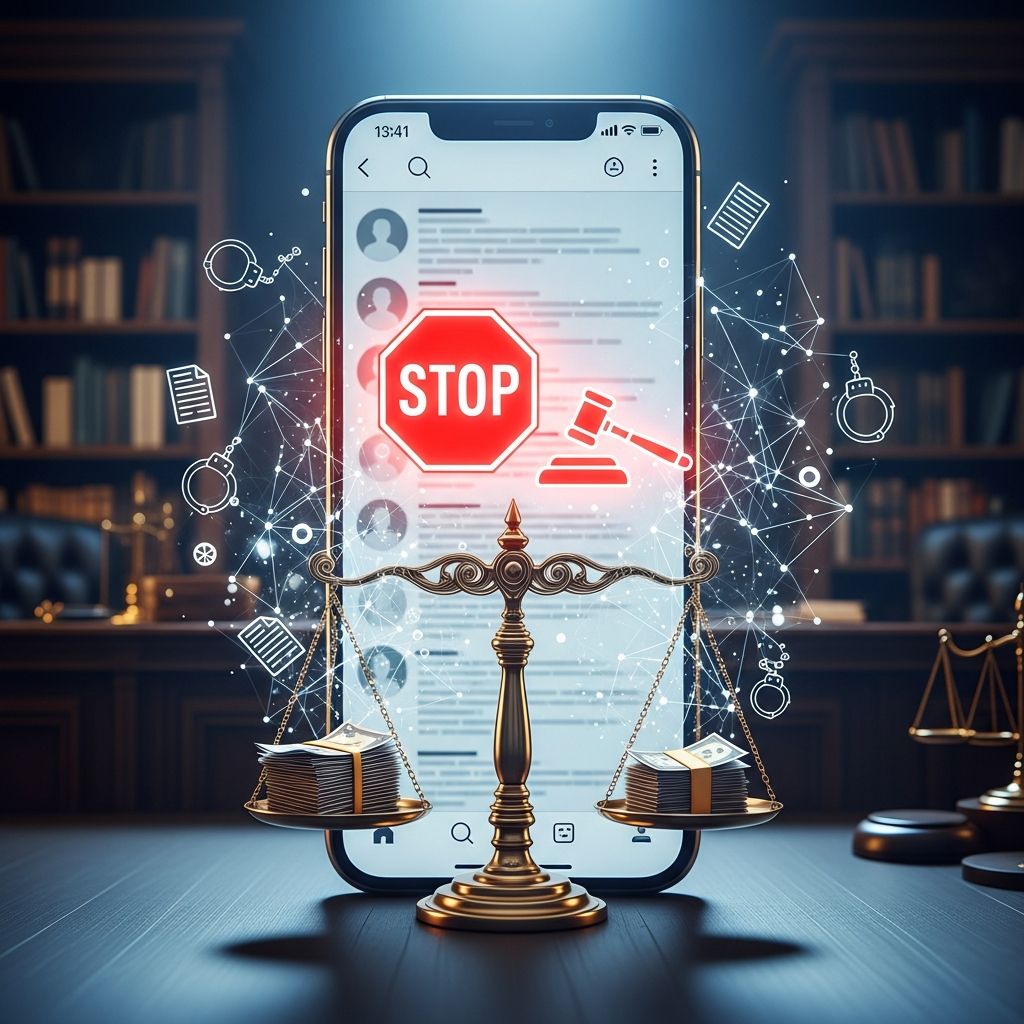
In today’s hyper-connected world, social media platforms serve as public forums where billions share thoughts instantly. However, what starts as a casual tweet or post can escalate into a costly defamation lawsuit if it falsely harms someone’s reputation. Defamation law, rooted in protecting individuals from reputational damage, applies fully to online content, treating tweets as written libel rather than fleeting speech. This article delves into the legal framework, breaking down when online expressions become actionable, essential proof requirements, common defenses, and practical tips for navigating digital discourse safely.
Understanding the Basics of Defamation Law
Defamation encompasses false statements that injure a person’s standing in the community, dividing into libel for written forms and slander for spoken ones. In the U.S., it’s primarily governed by state laws, but constitutional safeguards from the First Amendment impose limits, especially post-1964 Supreme Court rulings like New York Times v. Sullivan. Online, platforms like X (formerly Twitter) amplify risks because posts reach vast audiences rapidly, satisfying publication requirements easily.
A core principle is that not all criticism qualifies as defamatory; mere opinions or hyperbole don’t count. Courts assess context: a statement must assert verifiable facts, not subjective views, to trigger liability. For instance, calling someone “incompetent” might be opinion, but claiming they “embezzled funds” implies a provable crime, potentially defamatory.
Key Elements Required to Prove Defamation
To succeed in a defamation claim, plaintiffs must establish several interconnected elements, varying slightly by jurisdiction but universally demanding clear evidence. Here’s a structured overview:
- Identification of the Plaintiff: The statement must clearly refer to the claimant, either by name or context making identity obvious to readers. Vague references like “that shady local lawyer” may suffice if circumstances pinpoint the individual.
- Publication to Third Parties: The false remark must reach at least one other person besides the maker and target. Social media inherently meets this, as posts are public by default. Retweets or shares count as republications, potentially restarting statutes of limitations.
- Defamatory Nature: The content must expose the subject to hatred, ridicule, or contempt, harming personal or professional reputation. Courts distinguish per se statements—those inherently damaging, like accusations of crime or professional misconduct—from per quod, requiring proof of specific harm.
- Falsity: Plaintiffs bear the burden of proving the statement untrue, reversing older common-law presumptions. Truth remains an absolute defense.
- Fault by Defendant: Private figures need only show negligence; public figures must prove “actual malice”—knowledge of falsity or reckless disregard.
- Damages: Harm must be demonstrated, though per se cases presume it, easing the burden.
| Element | Description | Online Example |
|---|---|---|
| Identification | Refers to specific person | Tweet naming “@JohnDoe stole from clients” |
| Publication | Seen by third party | Post with 100 likes/views |
| Falsity | Provably untrue | Claim of arrest never happened |
| Fault | Negligence or malice | Posted without verification |
| Damages | Reputation/economic loss | Lost job opportunities |
Digital Twist: Tweets as Libel in the Modern Era
Character limits don’t exempt tweets from scrutiny; brevity often heightens impact, making false claims punchier and more viral. U.S. courts uniformly classify social media posts as libel because they’re fixed in writing, unlike ephemeral speech. High-profile cases illustrate this: celebrities and executives have sued over viral accusations, with platforms sometimes subpoenaed for user data.
Republication via retweets poses unique challenges. Each share may constitute a new publication, extending liability timelines. Algorithms boosting controversial content exacerbate spread, but users remain primarily responsible—platforms enjoy Section 230 immunity unless they edit posts. In states like Maryland, fault standards hinge on plaintiff status, with public officials facing steeper hurdles.
Distinguishing Fact from Protected Opinion
Not every harsh online comment invites a lawsuit. The First Amendment shields opinions, pure hyperbole, and rhetorical emphasis. Courts use factors like verifiability: “I think X is terrible” is opinion; “X committed fraud” is fact. Context matters—satire or parody often escapes liability if reasonable readers recognize it as such.
Defenses bolster this: truth absolves entirely; privilege protects fair reports of public proceedings. Substantial truth suffices—no need for perfect accuracy if the “gist” holds.
Navigating Fault Standards Across Plaintiff Types
Fault varies by status. Private individuals prove negligence: failure to check facts reasonably. Public figures, including limited-purpose ones like local business owners in niche scandals, must show actual malice—a high bar demanding evidence of intent or recklessness. Recent cases emphasize this, dismissing suits against media for good-faith errors.
For businesses, defamation targets trade libel, focusing on economic losses from false product claims. Plaintiffs must preserve evidence like screenshots, as posts can vanish.
Potential Consequences and Remedies
Successful claimants may secure compensatory damages for emotional distress and lost income, punitive awards for malice, and injunctions. Retractions mitigate harm but don’t always bar suits. Criminal defamation exists rarely, prosecuted in extreme cases.
Defendants risk countersuits for abuse if claims lack merit, plus attorney fees. Settlement often resolves matters quietly via non-disclosure agreements.
Protecting Yourself: Best Practices for Online Posters
- Verify facts before posting—cross-check sources.
- Stick to opinions: use “I believe” or “seems like.”
- Avoid absolutes implying fact; qualify statements.
- Understand platform policies; delete if erroneous.
- Consult counsel for heated disputes.
For targets: document everything, assess elements quickly, and consider demand letters before litigating.
Frequently Asked Questions (FAQs)
Do anonymous posts avoid defamation liability?
No, courts can subpoena platforms to unmask users via IP logs or accounts.
Is retweeting someone else’s false statement defamatory?
Potentially yes, if you endorse or amplify without verification.
What if the post is deleted quickly?
Damage may persist via screenshots; publication occurred upon initial view.
Can companies sue over bad reviews?
Yes, if factually false and harmful, not mere dissatisfaction.
Does free speech protect all online criticism?
No, false factual statements harming reputation fall outside protections.
State Variations and Evolving Trends
While elements align nationally, nuances differ: Texas statutes define libel explicitly; Maryland distinguishes per se/quod rigorously. Anti-SLAPP laws in many states deter frivolous suits via early dismissal and fee recovery. As AI-generated content rises, courts grapple with authorship, but core principles endure.
Global users note U.S. law applies extraterritorially if harm occurs here, complicating international posts.
References
- Defamation and the First Amendment — Foundation for Individual Rights and Expression (FIRE). 2023. https://www.thefire.org/research-learn/defamation-and-first-amendment
- Elements of Defamation — Buckingham, Doolittle & Burroughs, LLC. 2023-10-01. https://bdblaw.com/elements-of-defamation/
- Defamation Law in Maryland — Maryland People’s Law Library. 2024. https://www.peoples-law.org/defamation-law-maryland-libel-slander
- The Five Elements of Defamation Explained — Colorado Law. 2024-06-01. https://www.colo-law.com/blog/2024/06/the-five-elements-of-defamation-explained/
- Defamation: Think Before Speaking, or Filing Suit — Boston Bar Association. 2023. https://bostonbar.org/journal/defamation-think-before-speaking-or-filing-suit/
- Texas Law and Defamation — Freeman Law. 2024. https://freemanlaw.com/defamation/
Similar Articles








Read full bio of medha deb