Posting a picture of your marked ballot online may feel like a simple way to celebrate voting, but that single image sits at the center of a complex legal and constitutional debate. As voters increasingly use social media to document and share their civic participation, states are reexamining how traditional rules about ballot secrecy and polling-place decorum apply to ballot selfies.
This article explains what ballot selfies are, why they matter, how different states regulate them, and how free speech and voter privacy collide whenever a smartphone camera enters the voting booth.
From Secret Ballots to Public Posts: How We Got Here
Secret ballots became a cornerstone of modern elections to protect voters from intimidation, bribery, and retaliation. Many U.S. state constitutions and statutes still emphasize that no one should be able to see how a particular person voted, and polling places are designed to shield each ballot from public view.
Smartphones and social media radically changed the environment around that secrecy principle. A voter can now:
- Take a photo of their marked ballot in seconds.
- Share that image instantly with thousands of people online.
- Combine the image with political commentary, hashtags, and get-out-the-vote campaigns.
According to election law and public policy research, ballot selfies emerged in the late 2000s as smartphones became ubiquitous and voters started documenting their ballots as part of online political participation. At the same time, most states had not yet updated their election laws to address this new behavior, creating uncertainty and uneven enforcement.
What Exactly Is a Ballot Selfie?
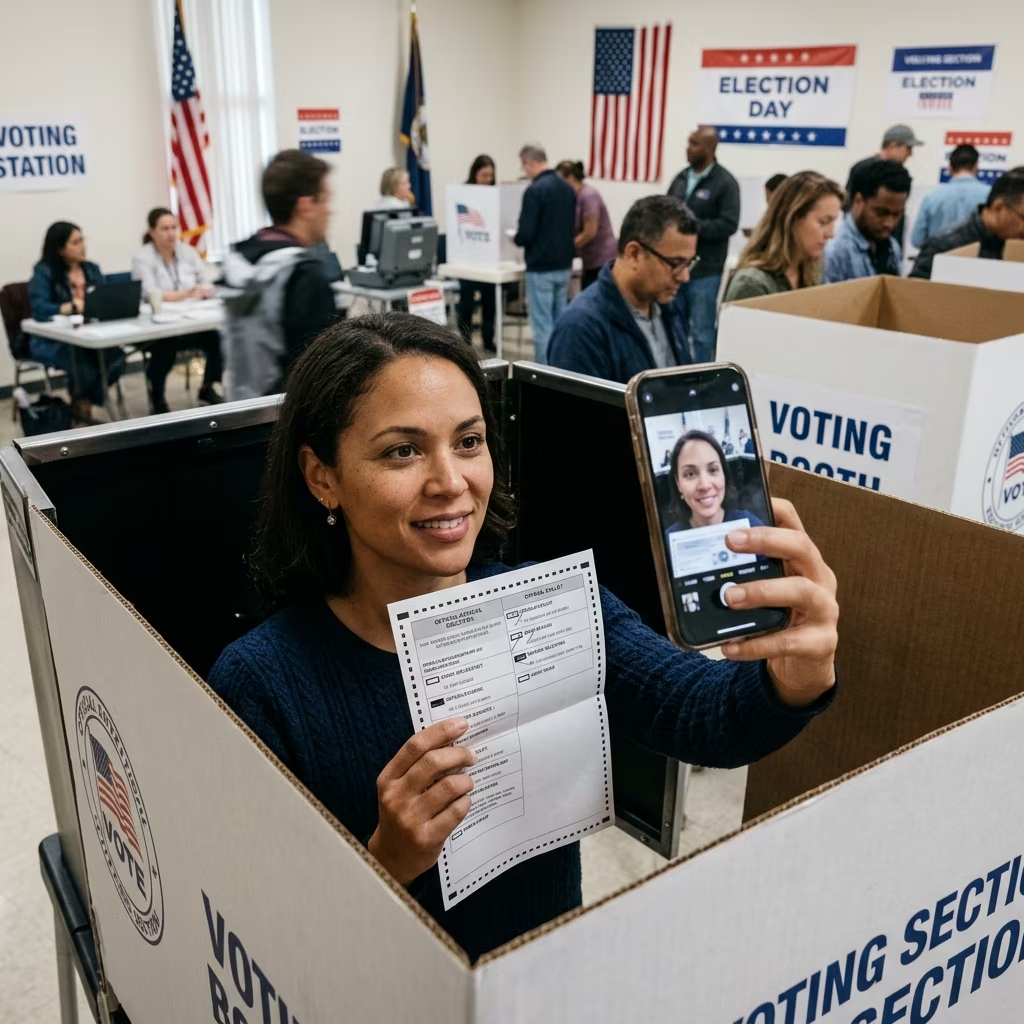
A ballot selfie is generally understood as a photograph that shows a completed ballot and is shared, often on social media, by the voter who cast that ballot.
Common forms include:
- A picture of the voter holding a marked paper ballot, with candidate selections visible.
- An image of the ballot itself (without the voter’s face), taken at home when voting by mail.
- A photo of a voting machine screen showing the voter’s choices.
These images typically serve to:
- Signal civic engagement (“I voted”).
- Express support for particular candidates or ballot measures.
- Encourage friends and followers to vote by making participation look easy and socially valued.
Why Do Ballot Selfies Raise Legal Concerns?
On the surface, ballot selfies look like straightforward political speech. But election officials and lawmakers point to three main risks:
- Voter privacy: If photos are taken inside polling places, other people’s ballots or identities might be captured without consent, undermining secrecy protections.
- Vote buying and coercion: A photograph of a marked ballot could serve as proof to someone paying or pressuring voters, enabling bribery and intimidation schemes that secret ballots were meant to prevent.
- Polling-place disruption: Cameras and social media content creation can slow down voting lines, distract poll workers, or create crowding in already constrained spaces.
Because of these concerns, many states have long-standing rules against photography or recording inside polling locations, even if those rules were written before smartphones existed.
Federal Law vs. State Law: Who Decides?
There is no federal statute specifically banning or permitting ballot selfies. Federal law generally leaves detailed regulation of election procedures, including ballot secrecy and polling-place conduct, to the states.
As a result, each state can:
- Ban photography of ballots entirely.
- Allow ballot selfies under specified conditions.
- Permit photos of absentee or mail ballots while prohibiting cameras inside physical polling places.
This decentralized approach produces a patchwork of rules, where a voter’s social media behavior may be lawful in one state and a potential offense in another.
Different Approaches Across the States
State laws today generally fall into four broad categories.
| Category | Typical Rule | Practical Effect on Voters |
|---|---|---|
| Broadly allow ballot selfies | Voters may photograph and share their own marked ballots, subject to general polling-place decorum and privacy rules. | Selfies are legal, especially with absentee or mail ballots; voters can post openly about their choices. |
| Allow only outside polling places or for absentee ballots | Photography is banned inside the polling location but permitted for ballots completed at home or after leaving the polls. | Voters can post images, but must avoid using cameras while casting their ballot in person. |
| Explicitly prohibit ballot selfies | Statutes define photographing marked ballots or sharing images as illegal, sometimes with criminal penalties. | Posting a marked ballot image may be treated as a violation; enforcement varies by jurisdiction. |
| Unclear or ambiguous rules | Laws restrict photography or protect ballot secrecy but do not clearly address posting images or selfies. | Voters face uncertainty; local election officials may offer guidance that is cautious or noncommittal. |
Research from election law organizations and policy groups indicates that, as of recent years:
- More than two dozen states permit ballot selfies in some form.
- A significant number explicitly prohibit them, at least in polling places.
- Several states allow photographs of absentee ballots but bar cameras at physical voting sites.
Some states, like California and Colorado, have moved toward clearer rules allowing voters to share images of their own ballots, often while maintaining bans on photographing other voters or causing disruptions inside polling locations.[10]
First Amendment Issues: Are Ballot Selfies Protected Speech?
The constitutional debate centers on whether taking and sharing a ballot selfie is a form of protected political expression under the First Amendment. Courts and legal scholars have argued that these images often convey a clear political message: not just “I voted,” but “I voted for specific candidates or causes.”
Key points in the free speech analysis include:
- Political expression: A marked ballot image can communicate support or opposition to particular candidates or measures, which lies at the core of protected speech.
- Viewpoint-neutral restrictions: States defending bans argue they are not targeting any particular viewpoint but instead regulating how and where voters may display their choices to protect secrecy and integrity.
- Tailoring and alternatives: Courts examine whether bans are narrowly tailored to prevent bribery and coercion, and whether less restrictive measures could address those concerns without silencing speech.
Academic analyses generally support the idea that ballot selfies, especially when taken by voters themselves and shared voluntarily, qualify as political speech. Some scholars conclude that broad bans are difficult to justify under modern First Amendment doctrine, particularly when there is limited evidence that selfies lead to widespread vote buying or intimidation.
Case Law: When Courts Review Ballot Selfie Bans
In recent years, courts have confronted the constitutionality of ballot selfie restrictions in specific states. One widely discussed example involved a challenge to a state law that prohibited taking digital images of marked ballots and sharing them, including on social media.
In that case, as in others, the court weighed:
- The state’s interest in preserving ballot secrecy and preventing fraud.
- The expressive value of a voter’s decision to show how they voted.
- Whether existing anti-bribery statutes and coercion rules already address most of the risks without requiring a complete ban on images.
These decisions have influenced legislative debates in other states and prompted civil liberties groups to argue for more speech-protective approaches, such as allowing ballot selfies with clear safeguards against photographing other voters.
Ballot Selfies as a Tool for Civic Engagement
Despite legal controversy, many advocates view ballot selfies as a powerful form of civic engagement, especially for younger voters. According to a report by a public-interest legal organization, posting ballot selfies can be a “popular and effective” way to encourage friends and followers to vote, by making participation visible and socially rewarding.
Potential benefits include:
- Social proof of voting: Seeing peers share their ballots can normalize voting, counter apathy, and reduce perceived barriers.
- Grassroots campaigning: Ballot selfies often include commentary about candidates or policies, functioning as micro-campaign messages that travel organically across social networks.
- Authentic political discourse: Images of real ballots may feel more personal and persuasive than generic campaign material.
These engagement arguments often appear in legislative testimony and court briefs when restrictions on ballot selfies are challenged.
Privacy and Ethical Considerations for Voters
Even where ballot selfies are legal, voters should consider the privacy and ethical dimensions of online posting:
- Protecting others: Avoid capturing other voters, poll workers, or identifying information in your photos, particularly in crowded polling places.
- Long-term visibility: A ballot selfie publicly signals your political preferences at a particular moment; that information may be searchable and visible long after the election.
- Workplace and social consequences: Public political statements, including how you voted, may have implications for professional or social relationships.
Election officials in some states explicitly advise voters, even where selfies are permitted, to take pictures outside polling places or at home to avoid interfering with the voting process or inadvertently revealing other people’s ballots.[10]
Best Practices for Sharing Your Vote Online
If you live in a jurisdiction that allows ballot selfies or photographs of absentee ballots, consider the following best practices:
- Verify current election rules on your state’s official election website before taking any photographs.
- Use photos taken at home with mail or absentee ballots rather than inside polling locations, where additional rules usually apply.
- Focus on your own ballot and avoid capturing others in the frame.
- Be mindful of posted signs at polling places regarding photography and recording devices.
These measures can help you exercise expressive rights while respecting privacy and ensuring that voting remains smooth and orderly for everyone.
Why Some States Are Updating Their Laws
Legal analyses suggest that states with older, broad anti-photography rules may be rethinking their approach. Policy proposals from advocacy organizations recommend updating laws to explicitly allow voters to take and post ballot selfies, while reinforcing protections against voter bribery and coercion.
Modernized frameworks often aim to:
- Recognize ballot selfies as a form of political speech.
- Distinguish voluntary self-expression from forced disclosure or proof of compliance with unlawful demands.
- Restrict photography that reveals another voter’s ballot or disrupts polling-place operations, rather than banning all images.
By drawing these distinctions, states seek to preserve the secrecy and integrity of the ballot without unnecessarily limiting how voters communicate about their own choices.
Frequently Asked Questions (FAQs)
Are ballot selfies always illegal inside polling places?
No. Some states explicitly allow voters to take photos of their ballots, while others prohibit cameras or ballot images inside polling locations. Many states apply general rules against photography in the voting room but permit images of absentee ballots taken at home.
Can posting a ballot selfie violate voter privacy laws?
Posting a picture of your own ballot usually does not violate another person’s privacy, but if your photo reveals another voter’s ballot or personal information, it may implicate secrecy protections and local rules. That risk is one reason many jurisdictions discourage or ban photography inside polling places.
Do ballot selfies increase the risk of vote buying?
Election officials worry that a photo of a marked ballot could serve as proof of compliance in a vote-buying or coercion scheme. However, legal scholars note that existing anti-bribery and intimidation laws already target such behavior and question whether blanket selfie bans are necessary to address this risk.
Is there any federal law that either permits or bans ballot selfies?
No federal statute specifically addresses ballot selfies. Regulation of ballot secrecy, polling-place conduct, and photography is primarily handled by state law.
Do ballot selfies help increase voter turnout?
Evidence is still developing, but public-interest organizations and civic groups argue that ballot selfies can be an effective, informal way to encourage peers to vote, particularly among younger and highly connected voters who respond to social cues and visible participation.
What Voters Should Remember
As social media continues to reshape political communication, ballot selfies sit at the crossroad of free expression, election integrity, and privacy. For voters, the most important steps are:
- Understand your state’s current rules about photography and ballot secrecy.
- Respect fellow voters’ privacy and the orderly operation of polling places.
- Recognize that sharing your ballot online is a public political statement that may have lasting visibility.
In many jurisdictions, voters can celebrate and promote participation online while still honoring the foundational principle of a secret ballot, simply by focusing on their own choices and following site-specific guidance from election officials.
References
- Summary: Secrecy of the Ballot and Ballot Selfies — National Conference of State Legislatures. 2016-10-07. https://www.ncsl.org/elections-and-campaigns/secrecy-of-the-ballot-and-ballot-selfies
- Ballot Selfies Report — Lawyers for Good Government. 2020-10-01 (approx.). https://www.lawyersforgoodgovernment.org/ballot-selfies-report
- Ballot selfies — Ballotpedia. 2024-09-01. https://ballotpedia.org/Ballot_selfies
- Ballot selfies — The First Amendment Encyclopedia, Middle Tennessee State University. 2021-05-01. https://firstamendment.mtsu.edu/article/ballot-selfies/
- New Hampshire’s Ban on Ballot Selfies and First Amendment Scrutiny — William & Mary Bill of Rights Journal. 2017-02-01. https://scholarship.law.wm.edu/cgi/viewcontent.cgi?article=1791&context=wmborj
- Why Ballot Selfies are Protected by the First Amendment — SMU Science and Technology Law Review. 2017-01-01. https://scholar.smu.edu/cgi/viewcontent.cgi?article=1019&context=scitech
- Are ballot selfies allowed in California? Know your voting rights — KCRA / Hearst Television. 2024-03-05. https://www.kcra.com/article/california-election-rules-ballot-selfies-prop-50/69242109