
Smart Ways to Pay Over Time: BNPL, Rent-to-Own, Lease-to-Own and Layaway
Understand buy now, pay later, rent-to-own, lease-to-own and layaway so you can spread payments over time without hurting your budget.
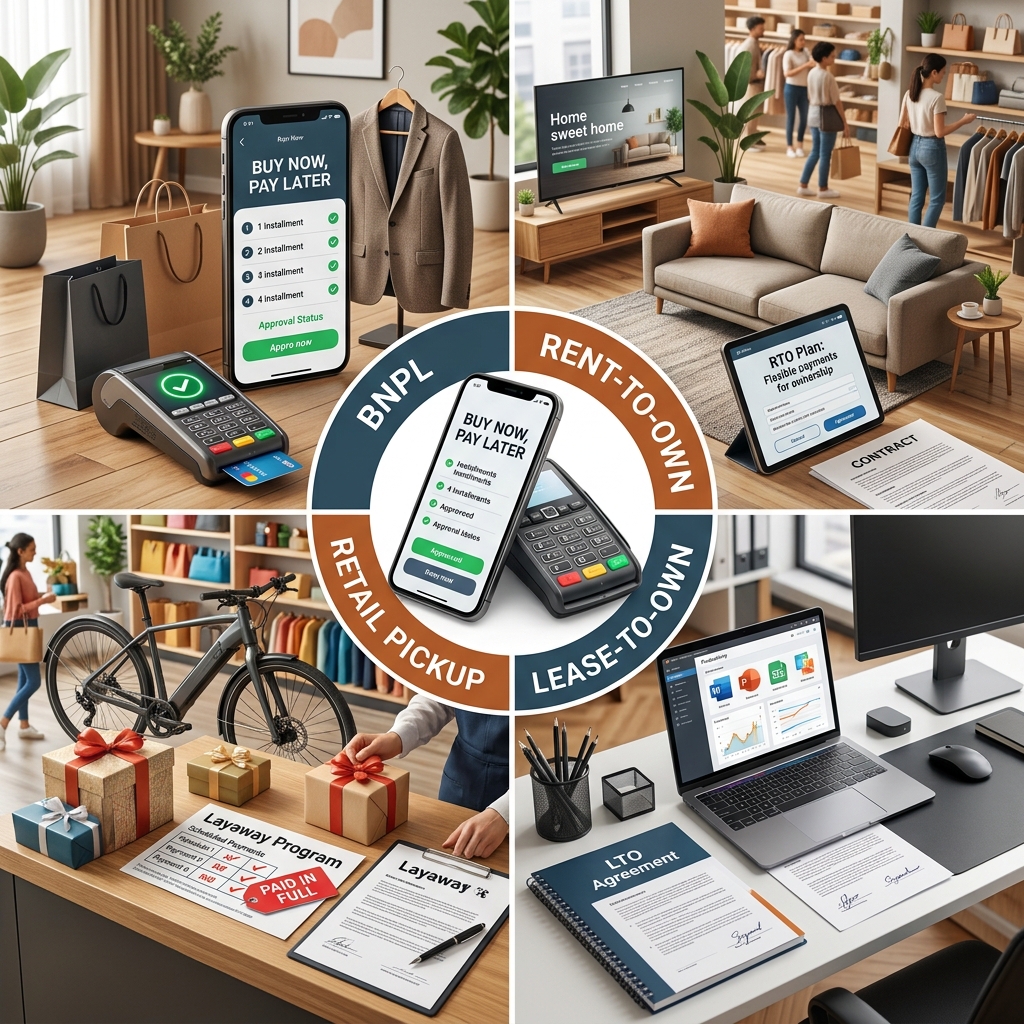
Spreading payments over time can make big purchases feel more manageable. But plans like buy now, pay later, rent-to-own, lease-to-own, and layaway all work differently and carry very different risks.
This guide explains how each option works, what it really costs, and how to protect yourself so you do not end up paying far more than you expected or damaging your finances.
At a Glance: Four Ways to Pay Over Time
All four plans let you avoid paying the full price at checkout, but they differ in ownership, fees, and legal protections.
| Plan type | When you get the item | Is it credit? | Can you return to stop paying? | Typical use |
|---|---|---|---|---|
| Buy Now, Pay Later (BNPL) | Immediately, after first payment | Yes, usually short-term credit | Normally no, debt remains | Online or in-store retail purchases |
| Rent-to-Own | Immediately, as a renter | No loan; it is a lease with option to buy | Often yes, you can return and stop paying | Furniture, appliances, electronics |
| Lease-to-Own | Immediately, under a lease | Generally a lease, not a traditional loan | Depends on contract; usually some exit options | Big-ticket items where credit is limited |
| Layaway | Only after full payment | Not credit; more like a payment hold | Often yes, but fees or cancellation penalties may apply | Seasonal or in-store purchases, gifts |
Buy Now, Pay Later: Fast, Flexible, But Still Debt
Buy now, pay later (BNPL) is typically offered at online checkout or by apps that split purchases into several payments. Many plans promote zero interest and fast approval, but they are still a form of credit.
How BNPL Works
- You pick BNPL at checkout or through a separate app.
- You pay part of the purchase price immediately, often 25% of the total in a “pay-in-four” plan.
- You receive the item right away; the BNPL company pays the merchant in full.
- You repay the BNPL provider over time, usually over a few weeks or months, by card or bank transfer.
Short-term plans, such as paying in four installments over six weeks, usually charge no interest. Longer-term BNPL arrangements that last many months can carry annual percentage rates up to about 36% and may include various fees.
Costs and Risks of BNPL
Even when interest is advertised as zero, BNPL can still become expensive.
- Late fees: Many providers charge late fees that can be capped as a percentage of the purchase price.
- Payment change fees: Some charge for rescheduling or modifying due dates.
- Failed payment fees: If your card or bank transfer fails, you may owe extra charges.
- Multiple plans at once: It is easy to stack several BNPL plans and lose track of total obligations.
Regulators often treat BNPL as consumer credit, which means you may have fewer protections than with traditional credit cards but still carry a binding repayment obligation.
When BNPL Might Make Sense
BNPL can be a tool when used carefully:
- You have a stable income and can clearly afford the installment schedule.
- The plan is short-term, interest-free, and you understand all fees.
- You prefer not to use a credit card but still want payment flexibility.
BNPL is generally not a good choice to cover recurring expenses, like rent or groceries, because missed payments accumulate quickly and may hurt your financial stability.
Rent-to-Own: Access Now, Optional Ownership Later
Rent-to-own (RTO) is commonly used for essential household goods such as furniture, mattresses, appliances, or electronics. Instead of taking out a loan, you sign a rental agreement that gives you the option, but not the obligation, to eventually own the item.
How Rent-to-Own Works
- You sign a rental-purchase agreement with a store or RTO company.
- You take the item home right away, but you are considered a renter, not an owner.
- You make regular payments, often weekly or monthly, for as long as you keep the item.
- If you complete all payments or exercise an early purchase option, ownership transfers to you.
- You can typically return the product at any time and stop future payments, though you will not be refunded what you already paid.
Legally, rent-to-own is treated as a lease with a purchase option, not a loan. Many U.S. states have specific statutes governing rent-to-own transactions.
Costs and Benefits of Rent-to-Own
Rent-to-own companies often include services beyond the item itself, such as delivery and repairs, but the total cost can be high.
- Higher overall price: Completing the full term may cost 1.5 to 2.5 times the cash price of the item.
- Early purchase options: Some agreements offer reduced payoff amounts if you buy the item earlier, which can significantly lower your total cost.
- No traditional credit check: Rent-to-own usually does not require a credit score evaluation because it is not a loan.
- Return flexibility: If your budget changes, you can often return the item and avoid further obligations.
Rent-to-own can be helpful for people who need essential items quickly and cannot qualify for conventional financing. However, it is important to focus on the long-term cost compared with saving up or seeking lower-cost credit.
Lease-to-Own: Similar Structure, Different Branding
Lease-to-own arrangements are closely related to rent-to-own, and in practice the two terms are often used interchangeably. The core idea is the same: you lease an item now and have the option to purchase it later.
Key Features of Lease-to-Own
- You enter into a leasing agreement for an item such as electronics, furniture, or appliances.
- You gain immediate use, paying regular lease payments.
- At specified points, you may choose to buy the item, usually by paying a defined purchase price or meeting total payment requirements.
- Some programs allow you to return the item and end future payments, subject to contract terms.
Since the transaction is structured as a lease, it is generally not treated like a conventional loan. That can make lease-to-own attractive for consumers with limited credit history, but they should still compare the total payoff amount to the item’s cash price.
When Lease-to-Own Might Be Useful
Lease-to-own can be practical in situations where:
- You need a large item immediately and do not qualify for traditional financing.
- You value the ability to test the product for a period before committing to ownership.
- You plan to use early purchase options to limit how much you pay over time.
Despite marketing claims that lease-to-own is always a good idea, its value depends on your budget and whether you can realistically complete or strategically shorten the payment schedule.
Layaway: Old-Fashioned, Low-Risk Payment Planning
Layaway is one of the oldest ways to spread out payments. Instead of taking an item home immediately, the store sets it aside while you pay in installments.
How Layaway Works
- You choose an item and ask the store to put it on layaway.
- You pay a deposit and possibly a service or storage fee.
- You make regular payments over a defined period, often a few weeks or months.
- Only after you pay the full amount do you receive the item.
Layaway is not a form of credit. The store does not lend you money, and you do not owe interest on the unpaid balance. However, the store may charge fees, and if you cancel, you may lose part of what you have paid.
Pros and Cons of Layaway
- No interest charges: You pay the sticker price, plus any fees, but not finance charges.
- Budget discipline: Layaway functions like a structured savings plan tied to a specific item.
- Delayed gratification: You wait to receive the product until you have fully paid for it.
- Cancellation policies: Some stores may charge cancellation fees or retain part of your deposit.
Layaway works best if you want to avoid debt entirely, can plan ahead, and do not need the item immediately.
Legal Protections and Your Rights
Consumer protection laws treat these plans differently. Understanding your rights can help you resolve problems and spot unfair practices.
State Laws and Oversight
- Many states have specific statutes that govern rent-to-own, lease-to-own, and layaway programs.
- Buy now, pay later is usually regulated as a type of consumer credit or installment financing.
- State attorneys general and consumer protection agencies can provide information on your rights and handle complaints.
Because rules vary by state and product type, it is important to read your agreement carefully and, when in doubt, consult official consumer resources before signing.
How to Compare and Choose the Safest Option
Choosing between BNPL, rent-to-own, lease-to-own, and layaway starts with clarity about your budget and how soon you need the item.
Key Questions to Ask Before You Commit
- Can I afford all payments? Add up the total you will pay, including fees and potential interest.
- What happens if I miss a payment? Ask about late fees, penalty rates, and whether missed payments could be reported to credit bureaus.
- Can I return the item and stop paying? This is a major difference between rent-to-own and BNPL.
- Do I own the item now or later? Layaway delays ownership; BNPL often transfers ownership immediately; rent-to-own and lease-to-own treat you as a renter until conditions are met.
- What are my consumer rights? Look up your state’s laws and review official guidance before signing a contract.
General Safety Tips
- Slow down at checkout if you feel pressured to pick a payment plan; pressure is a warning sign.
- Read the full terms, including the fine print on fees, returns, and ownership.
- Avoid stacking multiple BNPL or lease obligations at the same time.
- Prefer shorter, simpler plans over long-term arrangements with unclear costs.
- Keep all records of your agreement, payments, and communications with providers.
Frequently Asked Questions
Is buy now, pay later the same as layaway?
No. With BNPL you usually get the item immediately and pay it off over time as a credit obligation, while layaway holds the item until you pay in full and does not involve a loan.
Does rent-to-own affect my credit score?
Rent-to-own is structurally a lease, not a loan, so traditional credit checks may not be required and it may not show up in the same way as a credit card or BNPL plan. However, practices vary by provider, so you should ask how they report information before signing.
What happens if I return a rent-to-own item?
In many rent-to-own agreements, you can return the item and stop future payments, but you will not get back the money you have already paid. That past amount usually covers the rental period and associated services.
Can I cancel a layaway plan and get my money back?
Some stores allow cancellation but may charge a fee or keep part of your deposit. Because policies differ, always check the store’s layaway terms before you sign up.
Where can I learn more about my rights with these plans?
You can contact your state attorney general or local consumer protection agency for guidance on laws that apply to BNPL, rent-to-own, lease-to-own, and layaway in your state.
References
- Buy Now, Pay Later, Rent-to-Own, Lease-to-Own, and Layaway — Federal Trade Commission. 2023-08-01. https://consumer.ftc.gov/articles/buy-now-pay-later-rent-own-lease-own-and-layaway
- What Is Buy Now, Pay Later (BNPL)? — NerdWallet. 2024-01-10. https://www.nerdwallet.com/personal-loans/learn/buy-now-pay-later
- Rent-to-Own vs. Buy Now, Pay Later (BNPL) — Association of Progressive Rental Organizations (APRO). 2023-05-15. https://www.rtohq.org/rent-to-own/101/consumer-option-comparisons/rent-to-own-vs-buy-now-pay-later-bnpl/
- RTO vs BNPL vs Store Financing Compared — VRTO. 2024-03-20. https://www.vrto.com/guide/rto-vs-buy-now-pay-later-vs-in-house-financing-a-complete-comparison
- Is Lease to Own a Good Idea? — Katapult. 2023-06-05. https://katapult.com/katapult-konnect/is-lease-to-own-worth-it/
- Is Buy Now, Pay Later the Same as Layaway? — The Charlotte Observer. 2023-11-30. https://www.charlotteobserver.com/careers-education/is-buy-now-pay-later-the-same-as-layaway/
Similar Articles








Read full bio of medha deb




