
Smart Ways to Pay for School and Avoid Education Scams
Learn how to finance education safely, spot common tuition and scholarship scams, and protect your money from fraud.
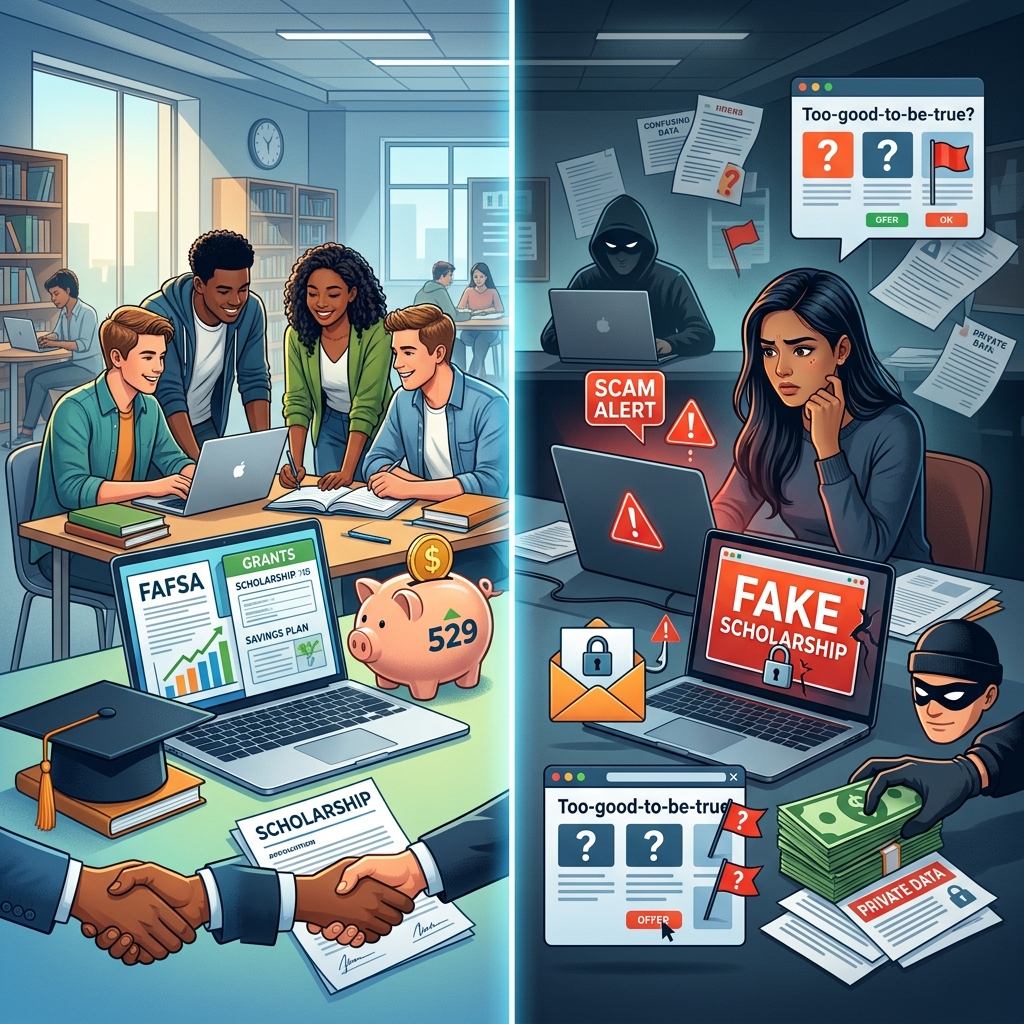
Rising education costs push many families and students to search urgently for ways to pay for school. That urgency is exactly what scammers exploit. Understanding legitimate options to finance education and recognizing common scam tactics can help you protect your money, your identity, and your future.
Understanding the Real Cost of Education
Before you can build a safe plan to pay for school, you need a clear picture of what it will cost. Colleges and training programs generally divide costs into several categories:
- Tuition and fees – The core charge for instruction and mandatory institutional fees.
- Room and board – Housing and meals for students who live on or near campus.
- Books and supplies – Course materials, lab fees, and required equipment.
- Transportation – Commuting costs or trips between home and campus.
- Personal expenses – Everyday costs such as toiletries, phone service, and incidentals.
Schools typically publish a “Cost of Attendance” estimate that includes these items. Use that estimate as a starting point, then adjust based on your personal situation (for example, living at home versus in a dorm).
Core Ways to Pay for School Legitimately
There are several legitimate pathways to finance education. Combining them thoughtfully can reduce reliance on high-interest loans and lower your overall risk.
1. Federal Financial Aid
In many countries, including the United States, federal aid is often the safest and most affordable foundation for paying for school. In the U.S., most federal aid starts with the Free Application for Federal Student Aid (FAFSA), which determines eligibility for grants, work-study, and federal student loans.
- Grants – Need-based aid that typically does not have to be repaid if you meet program requirements.
- Work-study – Part-time jobs related to your studies or community service that help cover expenses.
- Federal student loans – Government-backed loans with standardized terms and consumer protections such as income-based repayment and options for deferment.
Legitimate federal aid programs do not require upfront fees to apply or receive funds.
2. Institutional Scholarships and Grants
Many colleges, universities, and training programs provide their own scholarships and grants based on academic merit, financial need, or specific talents. These are usually administered by the school’s financial aid or scholarship office.
- Check the school’s official website or contact the aid office directly.
- Be cautious of any third party claiming guaranteed awards at the institution for a fee.
- Confirm deadlines, eligibility criteria, and whether awards are renewable.
3. Private Scholarships
Foundations, companies, community organizations, and nonprofits also offer scholarships. These can significantly reduce out-of-pocket costs when they are legitimate.
- Use reputable scholarship databases operated by governments, schools, or known nonprofits.
- Avoid sites that require large fees to “unlock” lists of scholarships.
- Never pay a company that claims it can guarantee scholarship approval.
4. Savings and Family Contributions
Personal savings, education savings plans, and family contributions still play an important role. When using these sources, consider:
- Keeping funds in secure account types like insured bank accounts.
- Setting realistic budgets for living and discretionary expenses.
- Reassessing costs each term to avoid unnecessary borrowing.
5. Responsible Use of Student Loans
Loans may be necessary for some students, but they should be approached carefully.
| Loan Type | Key Features | Risks |
|---|---|---|
| Federal student loans | Standardized interest rates, income-driven repayment options, potential forgiveness, consumer protections. | Debt must be repaid; excessive borrowing can limit future choices. |
| Private student loans | Provided by banks or lenders; terms and rates vary widely; often require credit checks. | Higher or variable interest rates; fewer protections; may need a co-signer; limited repayment flexibility. |
Before taking on any loan, estimate your expected income after graduation and ensure monthly payments will be manageable.
Why Education Scams Are So Effective
Scammers know that families are anxious about tuition, and students may be inexperienced with financial decisions. Common tools used by education fraudsters include:
- Urgency – Claims that you must act “today” or lose funding.
- Authority – Impersonating school officials, government agencies, or scholarship foundations.
- Confusion – Exploiting the complexity of financial aid rules and loan terms.
- Emotional pressure – Playing on fear of missing out on college or disappointing family.
Knowing the main categories of education-related scams will help you spot them quickly.
Common Scams Related to Paying for School
1. Fake Tuition and “Unpaid Bill” Calls
One widespread scam involves someone calling or emailing parents or students and claiming there is an unpaid tuition bill that must be settled immediately. The caller may pose as a “billing office” or “registrar” representative.
- They insist on payment through wire transfer, gift cards, or a payment app instead of standard channels.
- They may threaten class cancellation, enrollment holds, or legal action if you refuse.
- They discourage you from contacting the school directly to verify the charge.
Legitimate schools typically send official billing statements and offer secure payment options through their own websites or office. They do not require you to pay by gift card or anonymous cash transfers.
2. Scholarship and Grant Fraud
Scholarship scams target both students and parents searching online for financial help. According to consumer protection agencies, common red flags include:
- Requests for an upfront “processing” or “application” fee to access scholarship funds.
- Promises of guaranteed approval regardless of grades or financial need.
- Claims that you must pay to receive government grants or complete standard aid forms.
Authentic scholarship programs may have competitive selection processes, but they do not sell guaranteed awards or charge large upfront fees merely to be considered.
3. Fraudulent Student Loan Services
Another category involves companies that contact borrowers offering to reduce, erase, or restructure student debt for a substantial fee. Some pretend to be connected to government programs or well-known lenders.
- They advertise “instant loan forgiveness” or “guaranteed approval”.
- They pressure you to share sensitive information, such as your student aid login or Social Security number.
- They charge high fees for services you can often complete yourself through official channels.
Official loan programs and government agencies do not cold-call borrowers to sell fee-based relief services. Genuine income-driven plans and forgiveness options are administered directly by your loan servicer or government portal.
4. Housing, Supplies, and Back-to-School Shopping Scams
As students prepare to start a term, scammers also target housing and school supply purchases:
- Fake rental listings – Advertisements for apartments or dorm sublets that require large deposits before you can visit the property.
- Counterfeit or non-delivery online stores – Websites offering unusually cheap electronics or school supplies that never arrive or steal your payment information.
- Gift card or cash-app demands – Sellers who only accept payment through non-reversible methods (gift cards, person-to-person transfer apps) instead of secure cards.
The Federal Communications Commission notes that school shopping scams are a recurring theme each back-to-school season, often promoted via social media and email.
5. Too-Good-to-Be-True Student Job Offers
Some fraudsters use fake employment offers to exploit college students. According to consumer advisories, these schemes commonly involve remote or flexible “assistant” jobs that require minimal work for high pay.
- You are sent a check and instructed to send part of it to a “supplier” or “equipment vendor”.
- The original check later bounces, leaving you responsible for the full amount.
- You may be asked to provide bank account details to receive payments.
Real employers follow standard hiring processes, including interviews and written job descriptions. They do not ask new hires to process payments with personal accounts.
Key Warning Signs of Education-Related Scams
While specific schemes vary, most education scams share common warning signs. Be cautious when you encounter:
- Pressure to act immediately – Threats that your enrollment, housing, or funding will vanish if you take time to think.
- Unusual payment methods – Requests for payment via gift cards, cryptocurrency, wire transfer, or person-to-person apps instead of official school portals or bank cards.
- Requests for excessive personal information – Demands for Social Security numbers, bank login credentials, or copies of sensitive documents for routine matters.
- Guaranteed promises – Assurances of “certain” scholarship awards, loan approval, or instant forgiveness.
- Contact out of the blue – Calls, texts, or emails from unknown senders claiming to represent your school, lender, or a government agency.
Practical Strategies to Protect Yourself
Students and families can greatly reduce their risk by following a few practical habits whenever they handle education finances.
Always Verify Directly with the School or Agency
- Use official phone numbers and email addresses from the institution’s website.
- Contact the financial aid or billing office to confirm any unexpected charges.
- Ask for written documentation of bills or scholarship offers.
Check Website and Communication Security
- Look for secure connection indicators (such as “https” and a lock icon) when entering financial details online.
- Be skeptical of websites with spelling errors, missing contact information, or confusing web addresses.
- Avoid clicking payment links from unsolicited emails or messages; access accounts by typing the web address yourself.
Research Before Sharing Personal or Financial Data
- Search the company or program name along with terms like “scam” or “complaint” to see whether others have reported problems.
- Review privacy policies to understand how your information will be used.
- Limit information you share on forms; provide only what is strictly necessary.
Use Safe Payment Methods
- Prefer credit cards over cash or debit for online purchases, as they may offer dispute and fraud protections.
- Keep receipts and confirmation emails for all tuition and housing payments.
- Avoid sending cash or gift cards to individuals you have never met in person.
Talk Openly with Family and School Officials
- Encourage students to share suspicious offers or emails with parents or trusted adults.
- Consult school counselors or financial aid advisors when unsure about a loan, scholarship, or job opportunity.
- Attend any orientation sessions on financial literacy or consumer protection.
What to Do If You Suspect a Scam
If you think you may be dealing with a scam—or have already shared information or money—taking quick action can limit the damage.
- Stop all communication with the suspected scammer.
- Contact your bank or card issuer to report unauthorized charges and ask about dispute options.
- Change passwords and enable multi-factor authentication on important accounts.
- Notify your school so they can flag your account and alert others if needed.
- Report the incident to relevant authorities, such as consumer protection agencies or law enforcement, to help track patterns and protect others.
Frequently Asked Questions (FAQs)
Do I ever have to pay to apply for government financial aid?
No. Official government financial aid applications, such as the FAFSA in the United States, are free to complete. If a company asks you to pay simply to file the form or gain access to government grants, that is a strong sign of a scam.
How can I tell if a scholarship offer is real?
Legitimate scholarships are usually sponsored by recognized institutions, nonprofits, or companies and are transparent about eligibility criteria. They do not guarantee awards for everyone, and they do not require large advance payments to receive money. Verify the sponsor’s identity and look for the program on the organization’s official website.
Is it safe to respond to calls saying I owe a “student tax” or education-related fee?
Be extremely cautious. Consumer advisories note that fraudsters sometimes invent taxes or fees tied to student status, then attempt to collect payment by phone or text. Government agencies generally communicate first by official mail, not unexpected phone calls demanding immediate payment.
What should I do if I paid a tuition bill through a suspicious method?
Contact your bank or card issuer immediately, explain the situation, and ask if the charge can be reversed or disputed. Then speak with your school’s billing office to confirm whether any legitimate payment is still outstanding. Finally, file reports with appropriate consumer protection bodies so authorities can investigate.
Are social media posts about incredible deals on laptops or housing a red flag?
They can be. School shopping scams often start with advertisements or personal messages offering unusually low prices on electronics, supplies, or rentals. Always verify the seller, check reviews, and use secure payment methods. If a deal sounds too good to be true, slow down and examine it carefully before paying.
References
- Back to School Scams — Federal Communications Commission. 2021-08-03. https://www.fcc.gov/back-to-school-scams
- Beware of Scams targeting College and Graduate Students — Pennsylvania Office of Attorney General. 2020-09-01. https://www.attorneygeneral.gov/protect-yourself/consumer-advisories/beware-of-scams-targeting-college-and-graduate-students/
- Beware: Back-to-School Scams — Quorum Federal Credit Union. 2022-08-15. https://www.quorumfcu.org/learn/cybersecurity-and-privacy/beware-back-to-school-scams/
- How to Spot and Avoid Back-to-School Scams — Golden 1 Credit Union. 2022-08-10. https://www.golden1.com/blog/how-to-spot-and-avoid-back-to-school-scams
- 4 Back-To-School Scams To Watch Out For — Rollstone Bank & Trust. 2023-08-01. https://www.rollstonebank.com/back-to-school-scams/
Similar Articles








Read full bio of Sneha Tete




