
Smart Tech in Rentals: Legal Rules for Landlords
Understand how landlords can legally use smart locks, cameras, thermostats and other connected devices in rental properties while respecting tenant privacy.
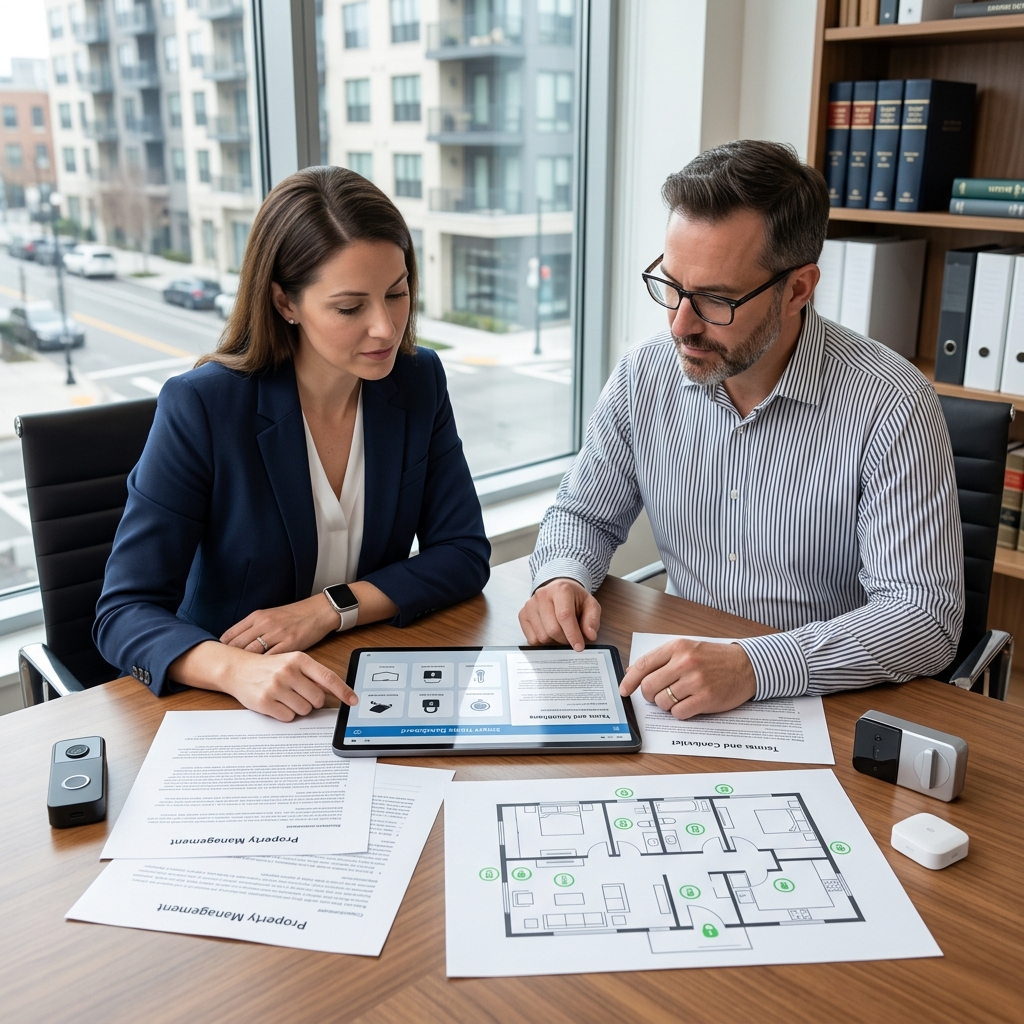
Smart locks, connected thermostats, doorbell cameras, and other smart home devices are increasingly common in rental properties. Landlords see them as tools to improve security, convenience, and energy efficiency, while tenants worry about privacy, surveillance, and data collection. The legal framework around these technologies is evolving, and both sides need to understand how existing landlord–tenant and privacy laws apply to connected devices.
This guide explains the main legal issues raised by smart tech in rentals, including who may install and control devices, when consent is required, how privacy and data protection laws apply, and what best practices help avoid disputes.
What Counts as Smart Tech in Rental Properties?
In a rental context, smart technology typically refers to internet-connected devices that collect data or can be controlled remotely. Many of these gadgets blend security, convenience, and automation, but they also create detailed logs about how a home is used.
- Smart locks – electronic or app-controlled door locks that may record entry times and user identities.
- Video doorbells – devices that capture video (and often audio) of people approaching the door.
- Security cameras – indoor or outdoor cameras, sometimes combined with motion detectors.
- Smart thermostats – systems that regulate heating or cooling and track occupancy and usage patterns.
- Environmental sensors – leak detectors, smoke sensors, or air quality monitors that send alerts to landlords or property managers.
These devices are generally legal to install, but legality depends on where they are placed, who controls them, whether tenants have been informed and consented, and how data is handled.
Ownership and Control of Smart Devices
In most rental situations, smart devices installed by the landlord form part of the property’s fixtures and remain the landlord’s asset. However, control and access are often more important than ownership when legal questions arise.
| Aspect | Typical Landlord Position | Typical Tenant Concern |
|---|---|---|
| Device ownership | Landlord owns devices they install (e.g., smart lock, thermostat). | Uncertainty about removal or replacement at move-out. |
| Configuration rights | Landlord wants ability to manage settings, updates, or user access remotely. | Fear of sudden changes or lockouts without notice. |
| Data access | Landlord may receive logs, video clips, or alerts through an app. | Concern about continuous monitoring and profiling of daily life. |
Clear agreements in the lease about who can control devices, under what circumstances, and how data will be used reduce misunderstandings and help both parties stay within the law.
Where Smart Devices Can Be Installed
The legality of smart tech in rentals is closely tied to location and expectations of privacy. Many privacy and surveillance laws distinguish between public or semi-public areas and places considered private.
Areas Generally Acceptable for Landlord-Controlled Devices
- Exterior entrances, such as main doors, gates, or parking lot access points.
- Common areas in multi-unit buildings, including lobbies, hallways, and shared laundry rooms.
- Utility spaces, where leak sensors or smart meters monitor building systems.
Devices in these locations still need to comply with relevant privacy and data protection rules, but they usually do not violate a tenant’s core right to private life inside the home.
Areas That Are Legally Sensitive or Generally Inappropriate
- Inside living spaces, such as living rooms or bedrooms, when the landlord has access to video, audio, or occupancy data.
- Bathrooms and other highly private rooms, where any surveillance is likely unlawful or strongly restricted.
- Audio recording devices installed where the landlord is not party to conversations, which may violate wiretap or communications laws in some jurisdictions.
For example, under certain U.S. state and federal wiretap laws, recording conversations without the consent of at least one party can be criminally unlawful. That risk increases when audio devices are embedded in cameras or doorbells inside the rental unit and used without informed consent.
Consent, Disclosure, and Lease Terms
Smart tech changes the traditional balance between landlords’ interests in protecting property and tenants’ rights to privacy and quiet enjoyment. To stay within the law, landlords typically need to provide clear disclosure and obtain consent for any device that collects personal data or alters how tenants access their home.
Key Elements of Proper Disclosure
- Identify each device by type and location (e.g., smart lock on front door, camera at building entrance).
- Explain the device’s functions, including whether it records video, audio, or logs entry and exit times.
- Describe data handling – who can access data, how long it is stored, and whether it is shared with third parties.
- Clarify tenant controls, such as the ability to change settings or opt out of certain features where legally possible.
Best practice is to include a dedicated smart tech clause in the lease or an attached schedule, signed by both parties, so there is written evidence of consent and understanding.
When Written Consent Is Especially Important
- Devices that record video or audio in or around the tenant’s home.
- Systems that track occupancy or movement, such as motion sensors tied to security platforms.
- Smart locks that log entry/exit events and may reveal patterns of daily life.
- Devices that may send data to third-party service providers or cloud platforms.
In jurisdictions with strong privacy and data protection laws, consent needs to be informed, specific, and freely given, not bundled with unrelated terms or made a surprise condition after signing.
Privacy, Data Protection, and Legal Risks
Smart home devices can generate highly sensitive information: when tenants are home, who visits them, conversations at the door, energy use patterns, and more. Many legal systems treat this information as personal data subject to privacy and data protection rules.
Common Privacy and Data Protection Duties
- Lawful basis for processing: Landlords need a legal reason (such as consent or legitimate interest) to collect and use tenant data.
- Data minimization: Only data strictly necessary for the device’s function should be collected and retained.
- Security measures: Devices and platforms must be protected against unauthorized access and data breaches.
- Access and correction rights: Tenants may have rights to see what data is held about them and correct inaccuracies.
- Restrictions on sharing: Passing data to law enforcement or other third parties often requires legal authority or a warrant, depending on the jurisdiction.
Improper use of smart data can lead to legal claims, including complaints to data protection authorities, civil actions for invasion of privacy, or challenges based on the home not being fit for safe and private habitation.
Smart Thermostats and Habitability Standards
Smart thermostats and connected heating systems raise a different set of concerns: habitability and comfort. Landlords may use these devices to manage energy costs or prevent damage, but they must still ensure the property meets minimum health and safety standards.
- Smart thermostats installed by landlords are generally legal, provided they do not result in unsafe living conditions.
- If a landlord retains remote control and sets temperatures too low or fails to provide heating when necessary, tenants may argue the property is not fit for human habitation under applicable housing laws.
- In serious cases, tenants may seek court orders or compensation to restore adequate heating or gain control over the system.
To avoid disputes, landlords should clearly explain how the smart thermostat works, whether tenants can adjust it freely, and any automated schedules or limits that could affect comfort.
Smart Locks, Access Rights, and Safety
Smart locks can improve security and simplify key management, but they also generate detailed entry logs and create risks if access is mismanaged. Civil society groups have raised concerns about landlords using lock data to track tenants’ movements or facilitate evictions.
Important Considerations for Smart Locks
- Alternative access: Tenants should have a reliable way to enter their home even if the smart system fails, sometimes via a physical key backup.
- No forced tracking: Policy advocates argue tenants should not be compelled to accept lock-based tracking as a condition of tenancy, and should be allowed a non-tracking option without penalty.
- Limited data use: Entry logs should not be used to harass tenants, infer personal behavior for non-security purposes, or be shared without legal justification.
- Warrant requirements: Privacy experts recommend that disclosure of smart lock data to law enforcement require a warrant and prompt notice to tenants.
Although specific legal rules vary by jurisdiction, these principles reflect emerging expectations for responsible smart lock deployment in rental housing.
Best Practices for Landlords Using Smart Tech
To reduce legal risk and maintain positive tenant relationships, landlords should treat smart devices as part of a broader compliance strategy that covers privacy, transparency, and habitability.
- Audit existing infrastructure and document every smart device installed in each unit or building.
- Develop a written smart tech policy that addresses installation, access control, data retention, and incident response.
- Include smart tech clauses in leases, specifying devices, purposes, and tenant rights, and obtain written consent where required.
- Avoid surveillance inside private living areas, especially where audio recording is possible or where the landlord has direct access to footage.
- Use secure platforms with strong authentication and limit staff access to data to those who truly need it.
- Train property managers on privacy laws and appropriate use of smart device data.
- Monitor legal developments around smart devices, as legislation and enforcement practices are evolving.
Practical Tips for Tenants Living With Smart Tech
Tenants can protect their privacy and rights by being proactive about smart technology before signing a lease and during their tenancy.
- Ask for a list of all smart devices in the unit and building, including locations and capabilities.
- Review smart tech clauses carefully in the lease, and negotiate terms that feel overly intrusive or unclear.
- Request clarification on data usage, retention periods, and who can access logs or recordings.
- Seek an alternative to highly invasive devices, such as opting for a traditional lock where feasible.
- Document concerns in writing and raise them promptly with the landlord or property manager.
- Consult legal advice if they suspect surveillance or data collection violates privacy or housing laws.
Frequently Asked Questions
Are smart cameras and doorbells legal for landlords to use?
Smart cameras and doorbells are generally lawful when installed in appropriate locations, such as building entrances or common areas, and when tenants are informed about their presence and purpose. However, cameras inside private living spaces or audio recording without consent can raise serious legal issues, including potential violations of wiretap and privacy laws.
Can a landlord control my smart thermostat remotely?
Landlords may legally install and manage smart thermostats, but they must ensure the property still meets minimum heating and habitability standards. If remote control results in unsafe or unreasonably cold conditions, tenants may have grounds to challenge the arrangement or seek legal remedies under housing laws.
Do landlords need my consent to install smart locks?
Where smart locks change how tenants access their homes or generate detailed entry logs, best practice is for landlords to obtain written consent and explain how the system works. Some legal systems may require consent for processing lock data, especially when it can be linked to identifiable individuals.
What happens if smart devices collect my personal data?
When smart devices collect personal data, landlords are typically subject to privacy and data protection duties, including having a lawful basis for processing, minimizing data collection, and protecting it from misuse or unauthorized disclosure. Tenants may have rights to object to certain processing, access their data, or complain to regulators if laws are breached.
Can I refuse smart tech in my rental?
The ability to refuse smart tech depends on local laws and the lease terms. Some advocates argue tenants should always have the option to use non-tracking alternatives, particularly for smart locks. In practice, tenants can negotiate terms before signing, seek alternatives to intrusive devices, and consider legal advice if they feel compelled to accept disproportionate monitoring.
References
- Smart tech in residential rental property — Rocket Lawyer. 2023-09-20. https://www.rocketlawyer.com/gb/en/property/rent-residential-property/legal-guide/smart-tech-in-residential-rental-property
- Smart Home Technology and Privacy Laws: Essential Insights for Arizona Tenants and Landlords — Gottlieb Law. 2025-08-05. https://gottlieblawaz.com/2025/08/05/smart-home-technology-and-privacy-laws-essential-insights-for-arizona-tenants-and-landlords/
- Smart Home Technology and Legal Considerations for Landlords — Rent Easy NOLA. 2024-03-12. https://www.renteasynola.com/blog/smart-home-technology-and-legal-considerations-for-landlords
- The Legal Implications of Smart Home Technology in Rental Properties — Evans Law. 2023-06-01. https://www.msevanslaw.com/the-legal-implications-of-smart-home-technology-in-rental-properties/
- Smart Locks Endanger Tenants’ Privacy and Should Be Regulated — Electronic Frontier Foundation. 2023-04-26. https://www.eff.org/deeplinks/2023/04/smart-locks-endanger-tenants-privacy-and-should-be-regulated
- Why installing smart home technology in rental properties is a good investment — Rently. 2022-11-10. https://use.rently.com/blog/why-installing-smart-home-technology-in-rental-properties-is-a-good-investment/
Similar Articles








Read full bio of medha deb


