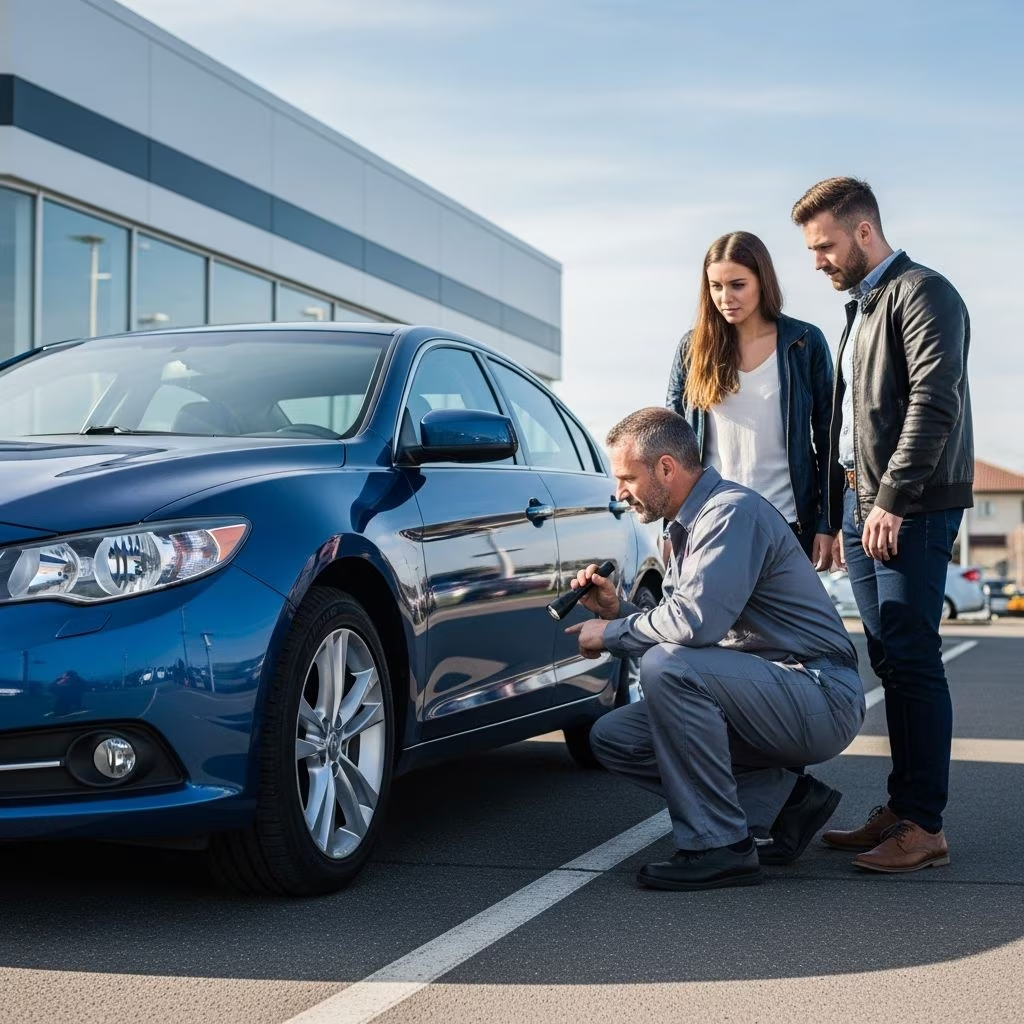
Buying a used car can save you thousands of dollars compared with a new vehicle, but it also comes with risks if you rush the process or skip critical checks. This guide walks through how to prepare, evaluate vehicles, understand dealer disclosures and warranties, and close the deal in a way that protects your money and your safety.
Clarify Your Needs and Budget Before You Shop
Before stepping onto a lot or browsing online classifieds, take time to decide what you actually need and how much you can safely afford. Careful planning reduces pressure at the dealership and makes misleading sales pitches easier to spot.
Define How You Will Use the Car
- Daily commuting: Prioritize fuel economy, reliability ratings, and comfort for stop-and-go traffic.
- Family hauling: Look for space, crash-test performance, child-seat compatibility, and safety technology.
- Towing or work: Focus on engine strength, payload and towing capacity, frame condition, and service history.
- Occasional use: You may accept higher mileage to save money, but still insist on basic safety and mechanical soundness.
Build a Realistic Total Budget
Your budget should include more than just the purchase price. Government and consumer advocates emphasize considering the total cost of ownership, including insurance, taxes, registration, fuel, and maintenance.
- Set a maximum purchase price and avoid revealing it early in negotiations.
- Estimate taxes, title, and registration fees using your state motor vehicle agency’s information.
- Get insurance quotes in advance for a few candidate models.
- Reserve funds for inspection and initial repairs (often several hundred dollars).
Research the Car’s Background and Reputation
Good research helps you avoid vehicles with severe damage, rolled-back odometers, or chronic reliability problems. Several official and independent databases can give you clues about a car’s past.
Check Safety Ratings and Recalls
- Review crash-test ratings from the National Highway Traffic Safety Administration (NHTSA) and the Insurance Institute for Highway Safety (IIHS) for the make, model, and year you are considering.
- Use the car’s Vehicle Identification Number (VIN) on NHTSA’s recall lookup tool to see whether there are unresolved safety recalls.
Unrepaired recalls can affect safety, and recall repairs are usually performed by franchised dealers at no charge to the owner.
Order a Vehicle History Report
A commercial vehicle history report compiles data from state motor vehicle agencies, insurance companies, police reports, and repair facilities.
- Look for accident history, air-bag deployments, or major damage.
- Check for a branded title (salvage, rebuilt, flood, lemon buyback) that signals severe prior problems.
- Review odometer readings at different points in time to spot possible tampering.
- See how many previous owners the vehicle has had and whether it was used as a rental, fleet, or personal car.
Although a clean report does not guarantee a trouble-free car, serious discrepancies or multiple accidents are strong reasons to walk away.
Understand Dealer Disclosures and the FTC Buyers Guide
When you buy from a dealer, federal law requires a key piece of information to be displayed on most used cars: the Buyers Guide. Knowing how to read it can help you understand whether you are getting any warranty protection and what systems might be costly to fix.
What the Buyers Guide Tells You
The Federal Trade Commission (FTC) requires dealers to post a Buyers Guide on used vehicles they sell. The guide typically includes:
- Whether the car is sold “as is” or with a warranty.
- The percentage of repair costs the dealer will pay under any warranty.
- A list of major mechanical and electrical systems and key issues to watch for.
- A reminder to get the car inspected and obtain a vehicle history report.
“As Is” Versus Warranty Coverage
| Type of Sale | What It Means | Key Buyer Considerations |
|---|---|---|
| As Is | The dealer does not promise to fix problems after sale, unless separately agreed in writing. | Plan for repair costs yourself; inspection is especially critical; state law may still give limited rights. |
| Dealer Warranty | The dealer will cover specified repairs for a set time or mileage. | Read what systems are covered, duration, deductibles, and how warranty service must be obtained. |
| Manufacturer or CPO Warranty | Coverage from the manufacturer or certified pre-owned (CPO) program, often with stricter inspection standards. | Verify transferability, remaining term, and required maintenance to keep coverage valid. |
Always compare the information on the Buyers Guide with your purchase contract and insist that any promises be written into the agreement.
Inspect the Vehicle Inside and Out
Even if the car looks attractive online or has a clean history report, a detailed inspection helps you catch neglect or hidden damage. Consumer and safety organizations recommend a combination of your own visual checks and a professional mechanic’s evaluation.
Walk-Around and Exterior Checks
- Examine body panels for mismatched paint, large gaps, or overspray that might indicate collision repairs.
- Look for rust, especially on rocker panels, wheel wells, and underbody components.
- Check glass for cracks or large chips.
- Inspect tires for even wear and sufficient tread; uneven wear can point to alignment or suspension issues.
- Verify that all lights and signals function properly.
Interior and Controls
- Test every door, window, and lock, including remote keys or keyless entry.
- Check seat belts for smooth extension, locking, and retraction.
- Inspect seats and carpets for water staining, mold, or strong odors that may indicate flood damage.
- Operate the climate control, audio system, infotainment, and dashboard controls; watch for warning lights that remain on.
Under the Hood
- With the engine off and cool, inspect belts and hoses for cracks or excessive softness.
- Look for signs of fluid leaks around the engine and under the parked vehicle.
- Check fluid levels and appearance; burnt-smelling or very dirty oil or transmission fluid can signal poor maintenance.
- Look for corrosion on the battery and confirm secure mounting.
The Test Drive
A thorough test drive is your best chance to feel how the car behaves in real conditions.
- Start the engine and listen for unusual noises at idle (knocking, loud ticking, or rattles).
- Drive at different speeds, including city and highway, to check stability and vibration.
- Test acceleration and braking, noting any pulling to one side, pulsation, or squealing.
- Make tight low-speed turns and listen for clunking or clicking from the suspension or driveline.
- Verify that the transmission shifts smoothly through all gears without slipping or shuddering.
Get a Professional Pre-Purchase Inspection
Independent experts frequently recommend having a trusted mechanic perform a pre-purchase inspection, especially for higher-value vehicles.
- Choose a mechanic not affiliated with the seller to avoid conflicts of interest.
- Ask for a written report detailing any safety issues, upcoming maintenance, and estimated repair costs.
- Use the results to negotiate price or decide to walk away.
Evaluate Warranties, Service Contracts, and Return Policies
Dealers and third parties often market add-on protection products with a used car. Understanding what is and is not covered can keep you from overpaying for limited benefits.
Dealer and Manufacturer Warranties
- Check whether any original factory warranty remains and if it transfers to a new owner.
- For dealer warranties, read what components are covered, how long coverage lasts, whether there is a deductible, and where repairs must be performed.
- Confirm that the warranty details match both the Buyers Guide and your sales contract.
Extended Warranties and Service Contracts
- Determine whether the product is offered by the vehicle manufacturer, dealer, or a third-party company.
- Review exclusions carefully; some plans cover only major powertrain components and exclude many common failures.
- Ask for the full contract to read before agreeing, not just a brochure or verbal description.
Return and Exchange Policies
Some dealers advertise short return or exchange periods for used cars. These policies are voluntary and can vary widely.
- Get the policy terms in writing—number of days, mileage limits, fees, and conditions.
- Do not assume you can return the car unless it is clearly promised in the contract.
Plan Your Financing Before Negotiating
Knowing your financing options ahead of time can save you money and prevent pressure during the sales process.
Compare Loan Offers
- Obtain quotes from banks, credit unions, and online lenders in addition to dealer-arranged financing.
- Compare the Annual Percentage Rate (APR), term length, and total cost of each option.
- Avoid focusing solely on monthly payment; a longer term may reduce the payment but significantly increase interest paid.
Use Financing Wisely in Negotiations
- Negotiate the price of the car separately from financing, trade-in, and extras.
- Be cautious if a dealer suggests extending the loan term or adding products just to “make the payment work.”
Finalize the Paperwork Carefully
Before you sign anything, read every document. Take your time; a reputable seller will not rush you through paperwork.
Key Documents to Review
- Sales contract or buyer’s order: Confirms the price, fees, taxes, and any agreed-upon repairs or extras.
- Title and odometer disclosure: Shows ownership transfer and recorded mileage; watch for branded titles or inconsistent odometer readings.
- Financing agreement: Details APR, term, payment amount, and any security interest in the vehicle.
- Warranty and service contract documents: Spell out coverage, exclusions, and how to obtain service.
Put Every Promise in Writing
- List repairs to be completed, including parts and deadlines.
- Document included accessories such as extra keys, floor mats, or winter tires.
- Ensure that verbal assurances about return policies or warranty terms appear in the final paperwork.
Frequently Asked Questions (FAQs)
Q: Is it safer to buy a used car from a dealer or a private seller?
Both options have trade-offs. Dealers must follow specific federal and state rules, including providing a Buyers Guide, and may offer warranties or return policies. Private sellers can sometimes offer lower prices, but you generally get fewer legal protections and need to rely heavily on inspections and paperwork checks.
Q: Do I really need a professional inspection if the car looks good and has a clean history report?
Yes, a professional inspection is strongly recommended. History reports do not capture every accident or mechanical issue, and some problems only appear on a lift or with specialized diagnostic tools. Independent experts and consumer organizations consistently advise having a mechanic inspect a used car before purchase.
Q: What is a branded title, and should I avoid these cars?
A branded title indicates that a state motor vehicle agency has flagged the car for serious issues, such as being declared a total loss, flood-damaged, or rebuilt after extensive repairs. These vehicles can be difficult to insure or resell and may conceal structural or electrical damage, so buyers should approach with extreme caution or avoid them entirely.
Q: How can I protect myself from odometer fraud?
Compare the mileage on the odometer with entries on the vehicle history report and title documents, and look for signs of tampering on the instrument cluster. Inconsistent readings, missing maintenance records, or unusually low mileage for the car’s age are red flags that warrant walking away.
Q: Are extended warranties worth the cost on a used car?
It depends on the vehicle’s reliability, your risk tolerance, and the contract terms. Some service contracts provide useful coverage, while others exclude many common repairs. Review the full contract, check who administers it, and compare the cost to likely repair expenses before deciding.
References
- Buying a Used Car — Federal Trade Commission. 2023-03-01. https://consumer.ftc.gov/articles/buying-used-car
- What to Look for When Buying a Used Car — NerdWallet. 2024-02-15. https://www.nerdwallet.com/article/loans/auto-loans/used-car-inspection-checklist
- Expert Tips on How to Inspect a Used Car — Consumer Reports. 2023-07-10. https://www.consumerreports.org/cars/buying-a-car/how-to-inspect-a-used-car-a1377126659/
- NHTSA Vehicle Safety and Recalls — National Highway Traffic Safety Administration. 2024-01-05. https://www.nhtsa.gov/recalls
- How to Buy a Used Car — CARFAX. 2024-05-20. https://www.carfax.com/car-buying-advice/how-to-buy-a-used-car