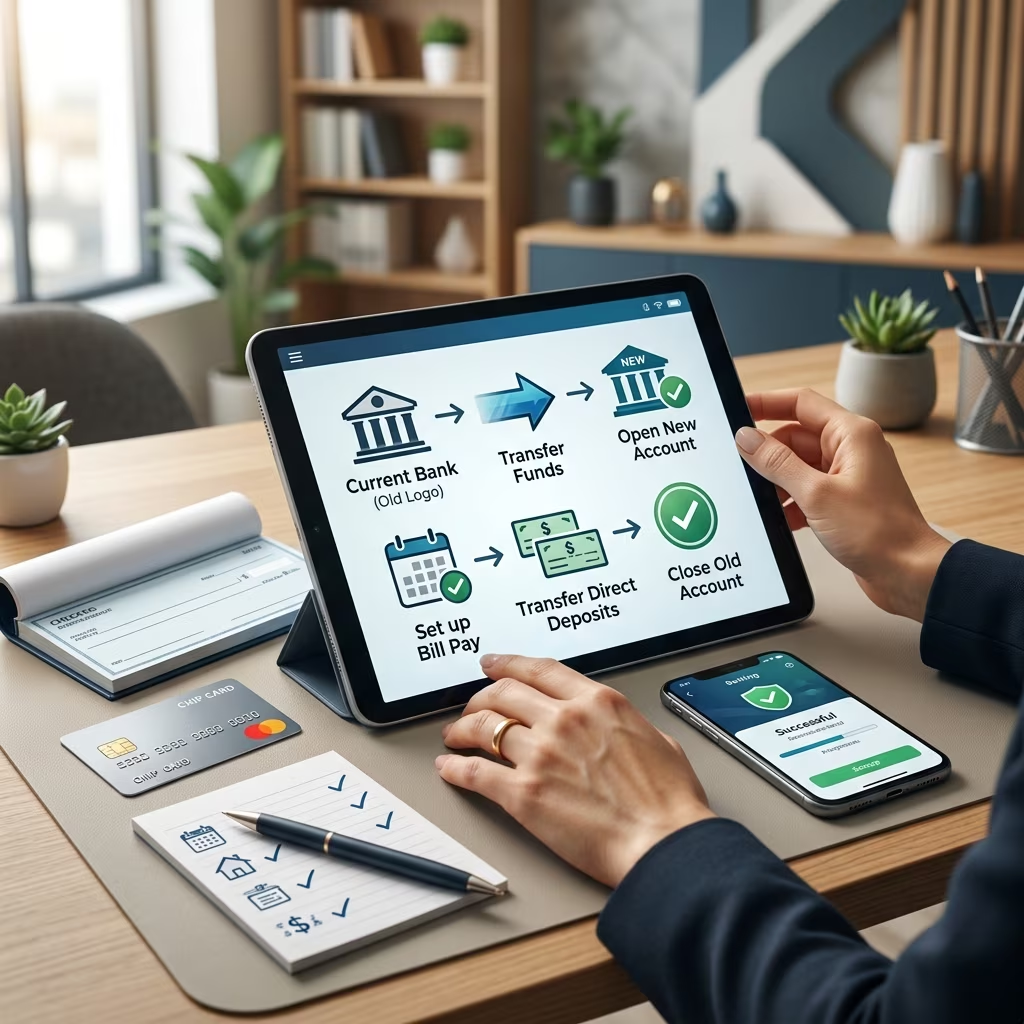
Switching your checking account to a new bank or credit union can help you get better features, lower fees, or more convenient service. But if you rush the process, you risk overdrafts, missed payments, and headaches. This guide walks you through a safe, orderly way to move your checking account while keeping every bill and deposit on track.
Why People Move Their Checking Accounts
Before you start, it helps to understand why many consumers change banks. Common reasons include fee changes, poor customer service, limited branch access, or the desire for better digital tools such as mobile banking and budgeting features.
- Lower fees: Many banks charge monthly maintenance fees, overdraft fees, and ATM fees that can add up quickly.
- Better interest or rewards: Some checking accounts offer interest or cash‑back on purchases.
- Improved convenience: More ATMs, better mobile apps, extended hours, or nearby branches.
- Stronger customer support: Faster problem resolution and clearer communication.
Whatever your reason, the goal is the same: move your account in a way that preserves access to your money and keeps every transaction flowing smoothly.
Step 1: Evaluate Your Current and Potential New Accounts
The safest moves start with good research. Review your current checking account and compare it to accounts at banks and credit unions you are considering. Focus on costs, features, and convenience.
Compare Fees and Requirements
Checking account fees can significantly affect your budget. Many banks list their full schedule of fees for services such as overdrafts, wire transfers, and out‑of‑network ATM use.
- Monthly maintenance or service fees
- Minimum balance requirements to avoid fees
- Overdraft and non‑sufficient funds (NSF) fees
- ATM withdrawal fees, especially at other institutions
- Paper statement or check‑ordering fees
Ask your current bank for a list of fees, then compare those charges to the accounts you are considering. Also ask potential new institutions how you can avoid fees, such as by direct deposit or maintaining a certain balance.
Check Convenience and Access
Fee savings matter, but day‑to‑day convenience is equally important. Consider how you use your checking account and what access you need.
- Number and location of branches and ATMs
- Hours of operation and customer service availability
- Quality of online and mobile banking tools
- Availability of services like mobile check deposit and bill pay
By weighing fees and convenience together, you can select a new checking account that fits both your budget and your daily routine.
Step 2: Open Your New Checking Account First
Never close your old account before the new one is open and tested. Opening the new account first ensures that you have a place for incoming deposits and outgoing payments as you transition.
What You Need to Open a New Account
Banks and credit unions typically require identification and basic personal information to open a checking account.
- Government‑issued ID (such as a driver’s license or passport)
- Social Security number or taxpayer identification number
- Contact information, including address and phone number
- Minimum opening deposit, if required
Ask the institution which forms of ID it accepts and whether a specific minimum deposit is needed. Once the account is open, enroll in online and mobile banking so you can monitor activity during the transition.
Set an Initial Balance
Funding your new account early gives you a cushion for incoming and outgoing transactions. Aim to keep enough money in the new account to cover bills as you begin shifting automatic payments and debits, while still maintaining a balance in your old account to prevent overdrafts there.
Step 3: Map All Your Automatic Activity
A smooth move depends on knowing every automatic deposit and withdrawal that touches your account. Reviewing a full year of transaction history can help you catch infrequent items like annual subscriptions or insurance premiums.
Create a Complete Transaction Checklist
Look at your statements and online activity to find every recurring or automated transaction.
- Automatic deposits: Paychecks, government benefits, tax refunds, and transfers from other accounts.
- Automatic bill payments: Utilities, rent or mortgage, loan payments, insurance premiums, and subscriptions.
- Linked transfers: Regular transfers to savings, investment accounts, or other banks.
- Bank services: Safe deposit boxes, overdraft protection links, or bill‑pay services tied to your checking account.
Record each item with the company name, amount, frequency, and typical date. This checklist will guide the order of your changes and help you confirm that nothing is left behind.
Step 4: Move Your Direct Deposits Safely
Direct deposits are usually the foundation of your cash flow. Update them before changing automatic payments so the new account has funds to cover upcoming bills.
Update Payroll and Other Deposits
For employer paychecks, request the appropriate form or online update to change your bank routing number and account number. For government payments like Social Security or benefits, use official channels to change your deposit information.
Once you submit changes, ask when the first deposit to the new account will occur. Track this date carefully so you can schedule outgoing payments from the new account after that deposit arrives.
| Deposit Source | Action Needed | Confirmation Step |
|---|---|---|
| Employer payroll | Submit new account details through HR or payroll portal | Verify first paycheck posts to new account |
| Government benefits | Update deposit information via official government system | Confirm benefit payment appears in new account |
| Transfers from other banks | Revise recurring transfer settings to point to new account | Check that transfers reach the new account on schedule |
Only after you see the first deposits successfully land in your new account should you begin moving automatic debits and bill payments.
Step 5: Shift Automatic Payments and Subscriptions
Once deposits are flowing into your new account, you can start changing automatic payments. To avoid missed or duplicate charges, update each biller and subscription carefully, then monitor both accounts for at least one billing cycle.
Prioritize Essential Bills First
Begin with bills that affect your housing, utilities, debt obligations, and insurance. These payments usually have serious consequences if missed, such as late fees or service interruptions.
- Rent or mortgage
- Electric, gas, water, and internet
- Auto, student, or personal loans
- Health, auto, and property insurance
Update each provider with your new routing and account numbers or switch payments to your new bank’s bill‑pay service. Avoid changing due dates or amounts during the transition unless absolutely necessary.
Move Discretionary and Subscription Payments
After confirming that essential bills are successfully drafting from your new account, shift discretionary items like streaming services, memberships, and other subscriptions.
- Streaming platforms
- Gym or club memberships
- Cloud storage and software subscriptions
- Charitable donations or recurring contributions
As you update each payment method, watch both accounts for duplicate charges. If you see the same bill paid from both accounts, contact the provider promptly to correct it.
Step 6: Keep Money in Your Old Account During the Transition
It may be tempting to move every dollar to your new account immediately, but doing so can lead to overdrafts and returned payments if pending transactions still hit the old account. Keeping a buffer in the old account is a key protection step.
Maintain a Safety Buffer
Leave enough money in your old checking account to cover any checks that have not cleared and automatic payments that have not yet shifted to the new account.
- Uncleared checks from the past few weeks
- Scheduled automatic debits that you have not yet updated
- Annual or quarterly charges you may have missed in your review
This buffer helps you avoid overdraft fees, minimum balance charges, and returned checks or debits.
Monitor Both Accounts Actively
For several weeks, review transactions in both accounts regularly. Many banks allow you to set alerts for large withdrawals, low balances, or other activity that can help you catch problems early.
- Check for deposits still landing in the old account
- Watch for unexpected withdrawals from the old account
- Confirm that automatic payments appear correctly in the new account
If a deposit or payment appears in the wrong account, update that source or biller again and keep sufficient funds in place until you see the change take effect.
Step 7: Move Remaining Funds and Close the Old Account
Once you are confident that every deposit and automatic payment is flowing through your new checking account, you can safely transfer any remaining money and close the old account.
Confirm the Transition Is Complete
Before closing your old account, confirm all of the following:
- All regular deposits now arrive in your new account.
- No automatic debits are drafting from your old account.
- At least one full billing cycle has passed without unexpected activity on the old account.
Review recent statements from both accounts to ensure that there are no lingering or surprise transactions.
Transfer Final Funds and Request Closure
When you are certain that the transition is complete, move the remaining balance from the old checking account to the new one. You can do this via electronic transfer, a written check, or a cashier’s check, depending on what the bank offers.
Then contact your old bank or credit union to close the account. Request written confirmation that the account has been closed, and keep that documentation with your records in case any questions arise later.
Will Moving Your Checking Account Affect Your Credit Score?
Switching banks by opening a new checking account and closing an old one generally does not directly change your credit score, because checking accounts themselves are not reported to credit bureaus. However, related activities can indirectly affect your credit.
- Overdrafts tied to credit products: If you use an overdraft line of credit and miss payments, that debt could impact your credit score.
- New credit applications: Applying for new credit cards or loans while switching banks may result in hard inquiries, which can affect your score temporarily.
By managing your move carefully and avoiding missed payments or overdrafts, you can switch checking accounts without harming your credit.
Practical Tips for a Smooth Transition
Beyond the core steps, a few practical habits can make your move even smoother:
- Use alerts: Set low‑balance and transaction alerts on both accounts so you can react quickly to unexpected activity.
- Test new links: If you set up external transfer connections, test them with small amounts before relying on them regularly.
- Keep final statements: Save your last statements from the old account for your records and for dispute resolution if needed.
- Update saved details: Remember to change stored payment information in apps, digital wallets, and online marketplaces linked to your old account.
Frequently Asked Questions (FAQs)
How long does it typically take to move a checking account?
The timeline varies, but most people complete the transition over several weeks. Direct deposit changes can take one or two pay cycles, and it is wise to keep both accounts open through at least one billing cycle to ensure all automatic payments have moved.
Can I move my account if I have outstanding checks?
Yes, but you should leave enough money in the old account to cover any checks that have not cleared yet. Closing the account too early could lead to returned checks and fees.
Is it safer to use my new bank’s bill‑pay service?
Many consumers find bank bill‑pay helpful because it centralizes payments in one place and allows easier monitoring. Whether it is best for you depends on your habits, but using a single system can simplify your move and reduce the chance of missed updates.
What if I forget a subscription or rare payment?
If a charge still appears on your old account after you expected everything to move, update that provider immediately, cover the payment, and continue to monitor both accounts until you are sure no other missed items remain.
Do I have to notify my old bank before closing the account?
Yes. Most banks require you to request closure either in person, online, or by phone. Always ask for written confirmation when the account is closed and verify that the balance is zero before you finalize the request.
References
- Moving your checking account — Consumer Financial Protection Bureau. 2013-06-01. https://www.consumerfinance.gov/consumer-tools/bank-accounts/moving-your-checking-account/
- Bank accounts and services — Consumer Financial Protection Bureau. 2024-01-05. https://www.consumerfinance.gov/consumer-tools/bank-accounts/
- Moving your checking account (CFPB008) — Consumer Financial Protection Bureau via U.S. Government Publishing Office. 2013-06-01. https://pueblo.gpo.gov/CFPBPubs/pdfs/CFPB008.pdf
- How to Switch to a New Bank or Credit Union — NerdWallet. 2023-08-10. https://www.nerdwallet.com/banking/learn/how-to-switch-banks
- Switching Banks Doesn’t Have to Be a Headache: A Checklist for Moving Your Accounts Without Missing a Beat — First Bank. 2022-11-15. https://www.firstbankweb.com/blog/post/switching-banks-doesn-t-have-to-be-a-headache-a-checklist-for-moving-your-accounts-without-missing-b
- Does Switching Banks Affect Your Credit Score? — JPMorgan Chase Bank, N.A. 2023-04-20. https://www.chase.com/personal/credit-cards/education/credit-score/does-switching-banks-affect-credit-score