
When Smart Speakers Become Witnesses: Alexa, Privacy, and Murder Trials
How Amazon Echo recordings ended up in a double homicide case, and what it means for digital privacy, police, and the law.
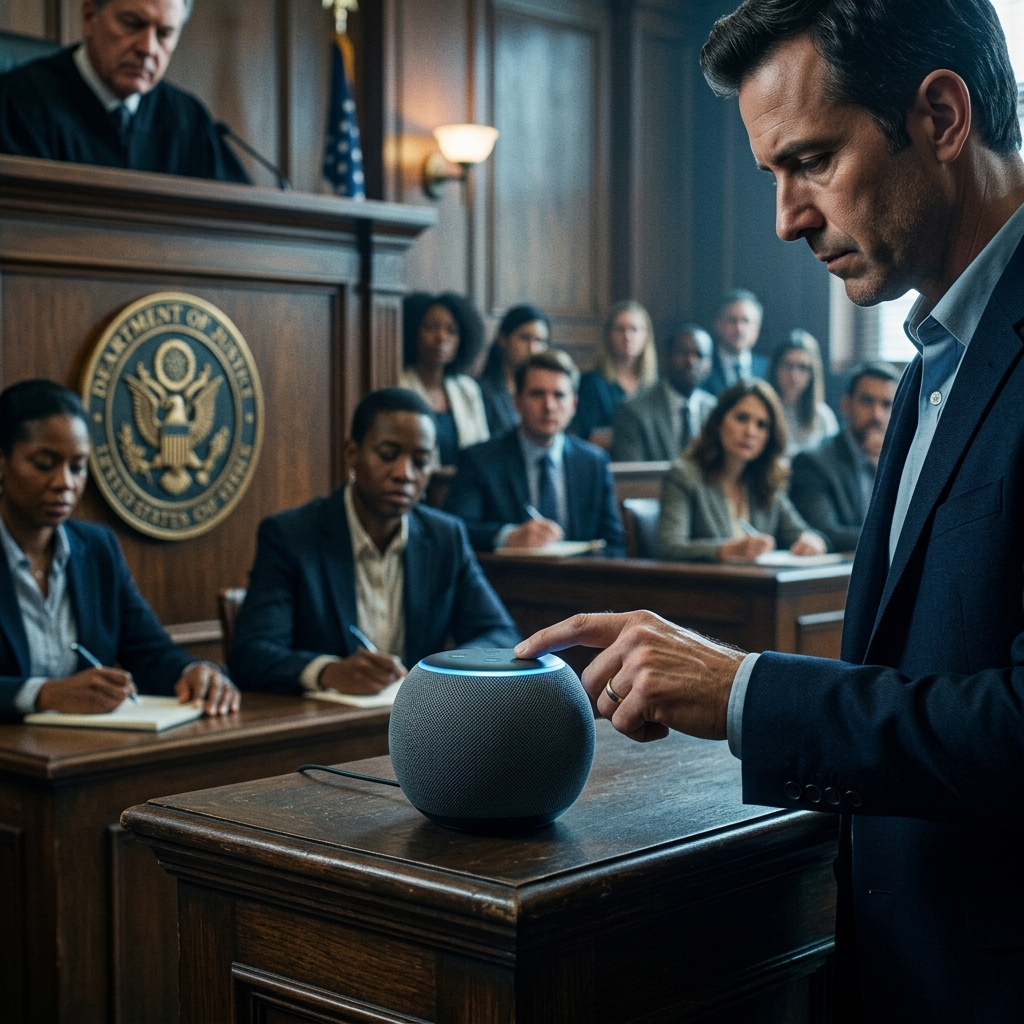
Smart speakers like the Amazon Echo were designed to dim the lights, play music, and answer trivia questions. Few people imagined they might one day be treated like witnesses in a murder trial. Yet that is exactly what happened in a New Hampshire double homicide case, where prosecutors sought access to Echo recordings they believed could shed light on the deaths of two women in 2017.
This article explores how an Amazon Echo ended up at the center of a double homicide investigation, how courts are handling requests for voice-assistant data, and what this means for privacy, law enforcement, and anyone living with an always-on listening device.
From Kitchen Gadget to Potential Witness
In early 2017, two women were found dead in a home in Farmington, New Hampshire. Prosecutors later alleged that they were killed over suspicions related to drug activity and cooperation with police. During the investigation, officers discovered an Amazon Echo smart speaker in the home, reportedly plugged in and located in or near the kitchen where at least one of the murders allegedly occurred.
Because Echo devices send recorded voice commands to Amazon’s servers for processing, investigators argued that the device might have captured audio at or near the time of the killings. A state judge ultimately agreed there was probable cause to believe the Echo data could contain evidence of the crimes and ordered Amazon to produce any relevant recordings.
- Crime: Double homicide at a private residence in New Hampshire (2017).
- Device involved: Amazon Echo smart speaker with Alexa voice command capability.
- Key legal step: Court order requiring Amazon to provide recordings and device-connection data covering several days around the murders.
Whether or not the Echo actually captured anything useful, the court’s ruling marked an important moment: it signaled that data from everyday connected devices may be treated like potential evidence in serious criminal cases.
How an Amazon Echo Listens and Records
To understand why investigators believed the Echo might hold answers, it helps to know how these devices listen. Smart speakers such as the Echo are designed to continuously monitor for a specific wake word, like “Alexa,” but only send audio to company servers after the wake word is detected.
According to Amazon’s public documentation, Echo devices generally operate in this sequence:
- The Echo’s microphones are always on, locally listening for the wake word.
- Once the wake word is detected, the device records a short audio clip capturing the command and a small amount of speech before it.
- The recording is transmitted to Amazon’s servers, processed, and often stored along with account metadata.
- Users can typically review or delete many of these stored recordings via their account controls.
Two key points raise legal questions:
- Even though the device is always listening for its wake word, it is not supposed to store everything it hears—at least in theory.
- Any recordings that are stored live primarily on Amazon’s servers, not on the device itself.
This cloud-based storage model is central to why police in the New Hampshire case needed a court order compelling Amazon to turn over data that investigators could not easily extract from the device alone.
The Court Order: What Prosecutors Wanted
In the New Hampshire double homicide case, prosecutors did not just ask for “anything helpful” from the Echo; they made a targeted request. A state judge approved an order directing Amazon to produce:
- Any recordings made by the Echo during a specific date range (January 27–29, 2017).
- Any information identifying cellular devices that were paired with or connected to that Echo during that time.
The ruling stated that there was probable cause to believe Amazon’s servers held recordings that could constitute evidence of the crimes, including the attack and possible removal of a victim’s body from the kitchen.
| Requested Data | Purpose |
|---|---|
| Echo audio recordings for a defined time window | To determine whether the device captured sounds related to the killings or movement of bodies. |
| Identifiers for paired or connected mobile devices | To help establish who might have been present and interacting with the Echo. |
| Data to be produced to the court, not directly to police | To allow judicial review and limit the scope of what investigators ultimately access. |
By requiring Amazon to deliver the data to the court rather than straight to law enforcement, the judge preserved an opportunity for further legal arguments about admissibility and privacy before the prosecution saw any recordings.
Amazon’s Response: Between Customer Privacy and Legal Demands
Amazon, like many technology companies, publicly emphasizes its commitment to user privacy while also acknowledging it must comply with lawful demands for data. In this case, the company initially took the position that it would not release Echo recordings without a valid and binding legal demand that was properly served.
Company representatives have stated in similar matters that Amazon:
- Requires law enforcement to submit formal legal process (such as a warrant, court order, or subpoena) before handing over customer content.
- Objects to overly broad or inappropriate demands as a matter of policy.
- May notify customers about data requests when possible, unless prohibited by law.
In the New Hampshire prosecution, once the judge issued a tailored order with a probable-cause finding, the legal pressure on Amazon to comply increased substantially. That tension between corporate privacy messaging and the reality of court-ordered disclosure lies at the heart of the broader smart speaker debate.
Smart Devices and the Rise of Digital Forensics
The Echo case is not an isolated incident. Around the world, investigators have begun turning to data from phones, wearables, health apps, and other connected devices to reconstruct events in criminal cases. Reports from legal analysts and news organizations describe several examples:
- In Arkansas, prosecutors sought Echo recordings in a 2015 death investigation, hoping to see whether the device captured evidence of a struggle.
- In Germany, data from a smartphone health and activity app was used to challenge a suspect’s account of his movements in a 2016 homicide case.
- Police and courts increasingly consider data from fitness trackers, GPS logs, and home security systems in both criminal and civil litigation.
What these cases share is a shift from traditional forms of evidence—eyewitnesses, physical fingerprints, confessions—to a world where digital traces from everyday devices can become central to proving or disproving an allegation.
Legal Standards: When Can Police Get Echo Data?
Courts in the United States generally apply familiar constitutional principles to new forms of digital evidence. For Amazon Echo recordings, the main questions revolve around the Fourth Amendment (searches and seizures) and the nature of the information being sought.
Key legal concepts include:
- Probable cause and warrants: As in the New Hampshire case, law enforcement often must show probable cause that Echo data contains evidence of a crime before a judge will issue a warrant or order.
- Reasonable expectation of privacy: Courts ask whether a person reasonably expects audio captured around a smart speaker to remain private. This inquiry becomes complex when the information is stored on a company’s servers rather than solely in the home.
- Third-party doctrine: Historically, information voluntarily shared with a third party (like a phone company) received less constitutional protection. However, the U.S. Supreme Court has signaled limits on this doctrine for detailed digital data, such as long-term cell-site location records.
Legal scholars note that voice-assistant recordings fall somewhere between traditional phone records and purely local data stored inside the home, forcing courts to adapt older privacy frameworks to new technology.
Privacy Risks: What Your Smart Speaker Might Reveal
Smart speakers can reveal much more than simple voice commands. Depending on how they are used and configured, Echo devices and similar products may reveal:
- Daily routines: Timelines of when people wake, sleep, or leave home based on usage patterns.
- Household composition: Different voices and recognized profiles may reveal who lives in or regularly visits the home.
- Interests and habits: Music, shopping lists, and questions asked of the device can provide insight into preferences and potentially sensitive topics.
- Physical presence: Logs of connected phones and Wi-Fi activity can help reconstruct who was present at a given time.
When law enforcement seeks such data, it is not always limited to the moments immediately surrounding a crime. Broadly worded warrants or subpoenas might, if not carefully controlled, sweep in large volumes of personal information unrelated to any offense. This fuels concerns from civil liberties groups about mission creep and mass data collection.
Balancing Safety and Civil Liberties
Proponents of accessing Echo data in serious criminal cases argue that digital evidence can exonerate the innocent, corroborate or disprove witness accounts, and help secure convictions against dangerous offenders. In homicide investigations, the stakes are extraordinarily high, and investigators feel pressure to follow every plausible lead, including data stored by tech companies.
Privacy advocates, however, emphasize several risks:
- Normalization of surveillance in the home: As smart devices proliferate, the line between personal spaces and investigatory access can blur.
- Chilling effects: People may self-censor speech or behavior at home if they fear that devices could later provide evidence against them, even in unrelated matters.
- Function creep: Data originally collected to improve services or enable voice commands might be repurposed for policing or intelligence uses not anticipated by consumers.
Courts, legislatures, and regulators are still working out where to draw the boundary between legitimate evidence gathering and overreach. The Echo homicide case is one of the early test scenarios pushing these issues into the open.
Practical Tips for Smart Speaker Users Concerned About Privacy
For people who enjoy the convenience of voice assistants but worry about privacy and potential legal exposure, there are practical steps that can reduce risk without abandoning the technology entirely.
- Review and manage your recordings: Many platforms allow users to see and delete voice logs. Regularly clearing these can reduce the amount of historical data stored in the cloud.
- Use mute functions: Smart speakers typically have a hardware button to disable the microphone. Muting the device during sensitive conversations provides an added layer of control.
- Adjust privacy settings: Explore options to limit data retention, disable certain analytics, or restrict which services can access your voice history.
- Be selective with placement: Consider where you install smart speakers. Keeping them out of bedrooms or other highly private spaces can limit what they might inadvertently capture.
- Understand your account sharing: Recognize who has access to the associated account and what information linked devices—like smartphones—might reveal about your activity.
While these steps do not eliminate legal risks, they can help users make more informed choices about what kinds of data their smart-home ecosystem generates and stores.
How Courts Might Evolve on Smart Speaker Evidence
The legal system is still in the early stages of grappling with smart speaker evidence. Based on current trends in digital privacy law, several developments seem possible:
- More detailed warrants: Judges may increasingly require narrow, time-limited requests specifying exactly what types of Echo data can be accessed, rather than broad fishing expeditions.
- Heightened standards for in-home data: Courts may treat recordings captured inside a private residence as especially sensitive, drawing on existing case law that affords strong protection to the home.
- Transparency from tech companies: Pressure from users and regulators could push companies to publish clearer transparency reports detailing how often they receive and comply with voice-assistant data requests.
- Legislative reforms: Lawmakers might enact specific statutes governing access to smart-home data, similar to how some jurisdictions have adopted rules for email, cloud storage, or geolocation tracking.
The New Hampshire Echo case functions as a kind of testbed. The more such disputes arise, the more likely it becomes that higher courts—or legislatures—will set clearer rules governing how and when law enforcement can turn Alexa, Siri, or other voice assistants into witnesses.
Frequently Asked Questions
Can an Amazon Echo really record a crime without anyone saying “Alexa”?
Echo devices are designed to actively record and transmit audio only after detecting their wake word. However, false activations can occur when a sound is misheard as “Alexa” or another chosen wake word. If that happens at the wrong time, the device might capture a snippet of nearby conversation or background noise that was never intentionally directed at it.
Does law enforcement need a warrant to get Echo recordings?
In serious criminal investigations, police typically seek a warrant or court order based on probable cause before requesting Echo recordings from Amazon. The exact legal process can vary depending on jurisdiction and the type of data requested, but courts are increasingly treating such voice logs as content requiring stronger protections than basic subscriber information.
Can I prevent my Echo history from being used as evidence?
There is no absolute guarantee that Echo data will never be used as evidence. However, regularly deleting stored recordings, muting the microphone when privacy is critical, and reviewing privacy settings can reduce the volume of data that might later be subject to legal process. That said, once data has been transmitted to and retained on company servers, it may become accessible through lawful court orders.
Do other smart devices raise similar legal issues?
Yes. Smartphones, fitness trackers, home security cameras, connected cars, and even smart thermostats can all generate data that might be relevant in criminal and civil cases. Courts have already relied on data from phone health apps and other sensors to test suspects’ statements and reconstruct timelines.
What should lawyers and investigators keep in mind with Echo evidence?
Legal professionals must understand both the technical and legal limits of Echo data. They should be precise in drafting requests to avoid overbreadth, be prepared to address privacy concerns, and carefully assess the reliability of any recordings, including the possibility of mishearing the wake word or incomplete audio context.
References
- Judge orders Amazon to hand over Echo recordings in double murder case — ABC News. 2018-11-09. https://abcnews.go.com/US/judge-orders-amazon-hand-echo-recordings-double-murder/story?id=59100572
- Judge OKs Examination of Amazon Echo in Double Homicide Case — Government Technology (via The New Hampshire Union Leader). 2018-11-15. https://www.govtech.com/public-safety/Judge-OKs-Examination-of-Amazon-Echo-in-Double-Homicide-Case.html
- Alexa, Testify — State Bar of Texas. 2019-01-01. https://www.texasbar.com/AM/Template.cfm?Section=articles&Template=/CM/HTMLDisplay.cfm&ContentID=46469
- Alexa, who killed these women? U.S. judge orders Amazon to provide recordings — Global News. 2018-11-12. https://globalnews.ca/news/4661963/amazon-alexa-homicide-new-hampshire/
- Alexa, Are You Listening? — Wolf & Shore Law. 2019-03-28. https://www.wolfandshorelaw.com/alexa-are-you-listening/
Similar Articles








Read full bio of Sneha Tete


