
Smart Social Media Habits During a Personal Injury Lawsuit
Learn how to protect your personal injury claim by managing posts, privacy settings, and online interactions carefully throughout your lawsuit.
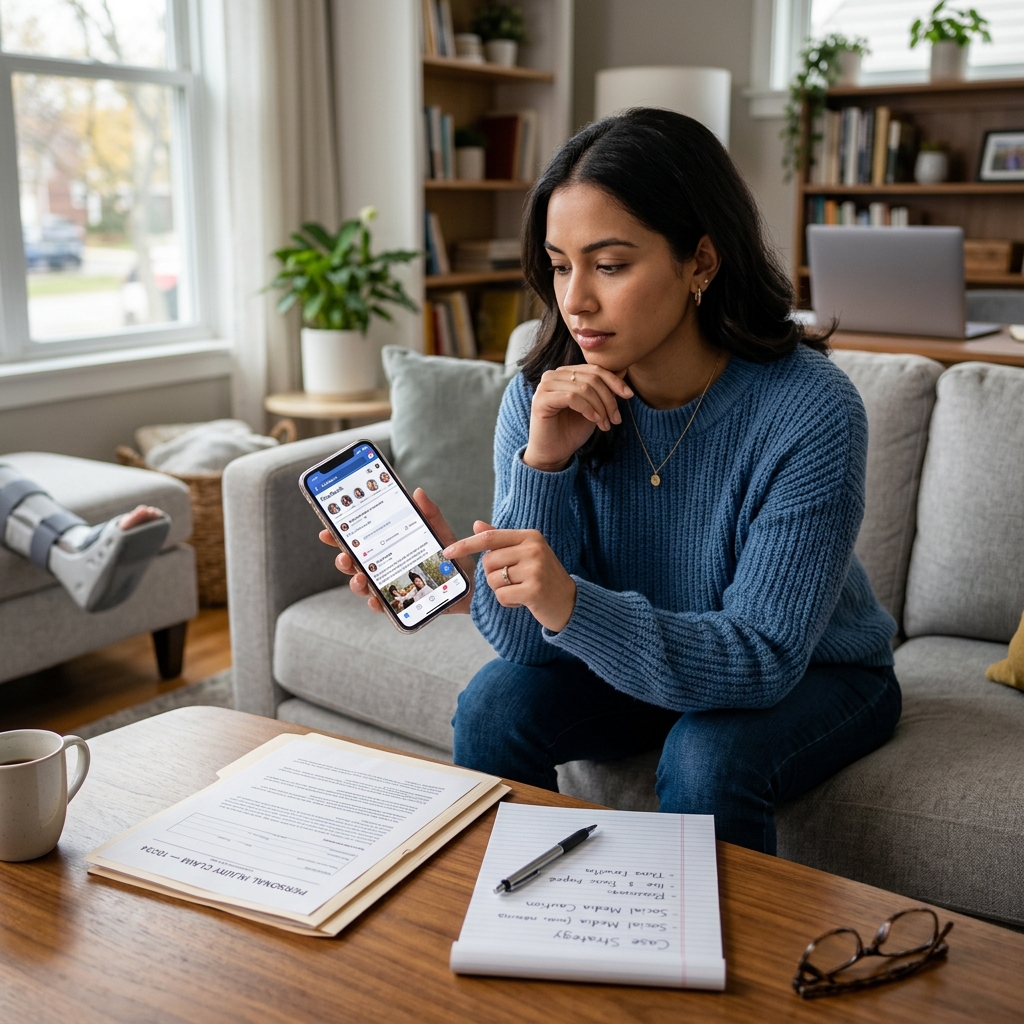
Social media makes it easy to update friends, share photos, and document major events. After an accident, it can be tempting to talk about what happened, your medical care, or how your recovery is going online. However, if you are involved in a personal injury claim, nearly everything you post can potentially be reviewed, saved, and used by insurance companies or defense attorneys to challenge your case. Insurance carriers and opposing counsel routinely monitor public profiles, and in many situations they may lawfully request access to relevant posts and messages through discovery.
This article explains why social media can affect your personal injury lawsuit, how insurers and defense lawyers use online content, and specific steps you can take to protect yourself without disappearing from the internet entirely.
Why Social Media Matters in a Personal Injury Case
Social media evidence has become a routine part of civil litigation. Photos, videos, status updates, and even comments on other people’s posts can be introduced to question an injured person’s credibility or the seriousness of their injuries. Courts in multiple jurisdictions have recognized that public posts are generally fair game if they are relevant to the issues in dispute.
For example, if you claim that an accident left you unable to walk long distances, but your profile shows recent images of you hiking or dancing at events, the defense may argue that your injuries are not as severe as you say. Even a single out-of-context post can create doubt.
- Public nature: Many platforms default to public or broad visibility. Once shared, content can be copied, screenshot, or archived by others.
- Permanent record: Even if you delete a post, older versions or backups may remain accessible, and removal can raise questions if litigation is underway.
- Behavior patterns: Check-ins, tagged photos, and activity logs can paint a picture of your day-to-day life and level of functioning that may be compared to your claims.
How Insurers and Defense Attorneys Use Social Media
Insurance companies and defense lawyers do not rely on your posts for entertainment—they review them strategically. Investigators may search your name, follow your public profiles, and look through content shared by your friends and family. Their goal is to find inconsistencies they can highlight during negotiations or trial.
| Type of Social Media Content | How It Can Be Used Against You |
|---|---|
| Photos or videos of physical activities | May be cited as proof that you are more active than your medical records or testimony suggest. |
| Posts saying you feel “fine” or “okay” | Can undermine claims that you are in significant pain or struggling with daily tasks. |
| Comments about the accident or fault | May be interpreted as admissions or contradictions regarding how the incident occurred. |
| Vacation or event check-ins | Used to argue that you are not homebound or limited by your injuries. |
| Posts about settlement negotiations | Can jeopardize confidentiality and complicate resolution discussions. |
Investigators may also create timelines of your online activity, comparing it to medical appointments or claimed limitations. This is why many attorneys recommend minimizing social media use or avoiding it entirely while your case is pending.
Foundational Rule: Post Less, Think More
While every situation is unique, a simple guiding principle helps in most cases:
- Post as little as possible. The safest course is to take a break from social media until your claim is fully resolved.
- Pause before you share. If you do use social media, consider how a judge, jury, or opposing lawyer might interpret every photo, comment, or reaction.
This does not mean you can never express yourself online again. It does mean that you should temporarily treat social platforms as potential evidence, not private diaries.
Essential Privacy Steps for Social Media During Litigation
Adjusting your privacy settings cannot fully shield your posts from being discovered, but it can reduce casual access and limit unnecessary risk. Platforms change frequently, so review settings on each account rather than relying on defaults.
1. Make Your Profiles As Private As Possible
Most major platforms allow you to restrict who can see your posts, photos, and stories. During a personal injury case:
- Set your profile visibility to friends only or the most restrictive option.
- Limit who can see past posts and tagged photos.
- Turn off public searchability when the platform offers that feature.
Remember that privacy settings do not stop friends from sharing screenshots or courts from ordering limited access if the content is relevant.
2. Review Old Content and Tags
Before your case progresses, take time to understand what is already visible about you:
- Scroll through older posts that show physical activities, travel, or high-energy events.
- Check photos where others have tagged you and remove tags when possible.
- Ask close contacts to avoid tagging you in new posts and to respect your request for privacy.
Do not rush to delete content without legal advice, especially after a lawsuit has been filed. Courts may view mass deletion as an attempt to hide evidence.
3. Limit Location Sharing and Check-ins
Location data can be surprisingly revealing. Automatic check-ins, GPS stamps on photos, and location tags can show where you have been and how often.
- Disable automatic location services for social media apps where possible.
- Avoid using features that broadcast your presence at events, gyms, or travel destinations.
- Be cautious with third-party apps that post activity logs to your profiles.
What Not to Share While Your Claim Is Pending
Content about your accident, health, or activities is particularly sensitive while you are in active litigation. Many attorneys advise clients to treat these topics as off-limits online.
Topics to Avoid Completely
- Details about the accident or incident. Do not discuss how it happened, who was at fault, or what you think the other party did wrong.
- Descriptions of injuries or medical treatment. Avoid posting about pain levels, diagnoses, procedures, or therapy sessions.
- Updates about physical activity or travel. Posts showing exercise, recreation, or trips can be compared to your claimed limitations.
- Comments about your case or settlement. Sharing opinions about your lawyer, court process, or negotiations can complicate strategy and confidentiality.
- Emotional outbursts about the opposing party. Venting online may feel cathartic but can harm perceptions of your credibility and professionalism.
Be Careful With “Positive” Posts
Even seemingly harmless updates can create challenges. Saying you are “doing great” or that your recovery is “going better than expected” might be used to suggest that your damages are lower than claimed.
- Use private, offline channels (phone calls, in-person conversations) to share emotional updates.
- If you wish to focus on gratitude or resilience publicly, speak in general terms and avoid linking posts to the accident or your injuries.
Managing Friend Requests and Messages
During a personal injury lawsuit, you may receive new friend requests or messages from people you do not recognize. Investigators sometimes rely on open networks or mistakenly accepted requests to view more of your content.
- Do not accept friend or follower requests from unfamiliar accounts. It is safer to decline or ignore these until your case concludes.
- Avoid discussing your case in private messages. Direct messages are not necessarily protected from discovery and can be forwarded or screenshot.
- Be cautious with emails asking for personal information. Some may be phishing attempts or efforts to gather details relevant to your claim.
Working With Your Lawyer on Social Media Issues
Your personal injury attorney is your best resource for case-specific guidance. Lawyers who regularly handle injury claims understand how judges in your jurisdiction view social media evidence and can advise you accordingly.
- Tell your lawyer about any existing posts, photos, or videos related to the accident or your physical activities.
- Ask for instructions before removing older content so you do not inadvertently create issues around potential evidence.
- Share concerns about posts made by friends or family and discuss whether any corrective steps are appropriate.
Being transparent with your attorney allows them to anticipate how the other side might use online materials and build your case accordingly.
Healthy Alternatives to Posting Online
Stepping back from social media can feel isolating, especially when you are dealing with pain, financial stress, and uncertainty about the outcome of your case. You can still seek support and document your experience in other ways that do not create legal risk.
- Use a private journal. Writing down your symptoms, limitations, and appointments can both support your memory and serve as useful information for your lawyer.
- Connect through direct, offline contact. Phone calls, video chats, or small in-person gatherings can provide emotional support without leaving a public record.
- Document for medical purposes, not social validation. Keep copies of treatment plans, pain scales, and functional assessments for your health providers and legal team.
Frequently Asked Questions
Can I delete posts about my accident now?
Do not remove anything without first speaking to your attorney. Once you anticipate or become involved in litigation, courts in some jurisdictions may treat deliberate deletion of relevant materials as potential destruction of evidence. Your lawyer can help you decide what steps are lawful and appropriate.
Is it safe to keep using social media for unrelated topics?
Using social media for completely unrelated matters—such as sharing neutral news articles or liking friends’ posts—may be less risky than posting about your accident, medical care, or activities. However, every action is context-dependent, and minimizing use is generally safer. Ask your attorney what level of activity they recommend.
What if my friends post photos of me without my consent?
Politely request that close contacts avoid posting or tagging you during your case, explaining that it is to protect your legal rights. If something appears online anyway, you can ask to be untagged or to have the content removed, but do not attempt to hide the existence of such posts from your lawyer.
Are private messages and “stories” immune from review?
No. While private messages and limited-time stories are less visible, they can still be saved, screenshot, or requested in discovery if relevant. You should assume that anything you type or record online might someday be seen by someone involved in your case.
Who can I safely talk to about my case?
Generally, you should reserve substantive case discussions for your lawyer and medical providers. Brief factual updates for close family are best delivered through secure, offline channels rather than social media platforms. If you are unsure whether a conversation is appropriate, ask your attorney.
Key Takeaways for Protecting Your Claim Online
- Social media is routinely monitored and can be used to challenge your credibility or the severity of your injuries.
- Public posts, location data, and tags from friends are all potential sources of evidence.
- Set accounts to private, limit posts, and disable location features to reduce casual access.
- Avoid posting about the accident, your medical treatment, your physical activities, and your lawsuit while your case is pending.
- Work closely with your lawyer on any decisions about removing content or responding to concerning posts.
Thoughtful, cautious social media use can help you focus on recovery and allow your legal team to pursue fair compensation without avoidable complications created by online activity.
References
- Social Media Tips for Personal Injury Victims During a Lawsuit — FindLaw. 2023-05-01. https://www.findlaw.com/legalblogs/personal-injury/social-media-tips-for-personal-injury-victims-during-a-lawsuit/
- How Social Media Can Harm Your Personal Injury Claim — Werner, Hoffman & Greig. 2022-09-15. https://wernerhoffman.com/blog/how-social-media-can-harm-your-personal-injury-claim/
- Social Media Tips for Personal Injury Victims — Enjuris. 2022-03-10. https://www.enjuris.com/blog/resources/social-media-tips/
- How Social Media Can Impact Your Personal Injury Case — Ask Adam Kutner. 2021-11-01. https://www.askadamskutner.com/las-vegas-personal-injury-lawyers/social-media-can-impact-personal-injury-case/
- Do Insurance Companies Use Social Media for Personal Injury Claims? — The Law Offices of John G. Runion. 2023-04-20. https://protectingohio.com/blog/do-insurance-companies-use-social-media-for-personal-injury-claims/
- Can Social Media Hurt My Personal Injury Case? — Kanner & Pintaluga. 2022-01-05. https://kpattorney.com/blog/https-kpattorney-com-blog-can-social-media-hurt-my-personal-injury-case/
- Tips of Using Social Media During a Personal Injury Case — Rob Levine & Associates. 2020-09-30. https://roblevine.com/faqs/tips-of-using-social-media-during-a-personal-injury-case/
Similar Articles








Read full bio of medha deb


