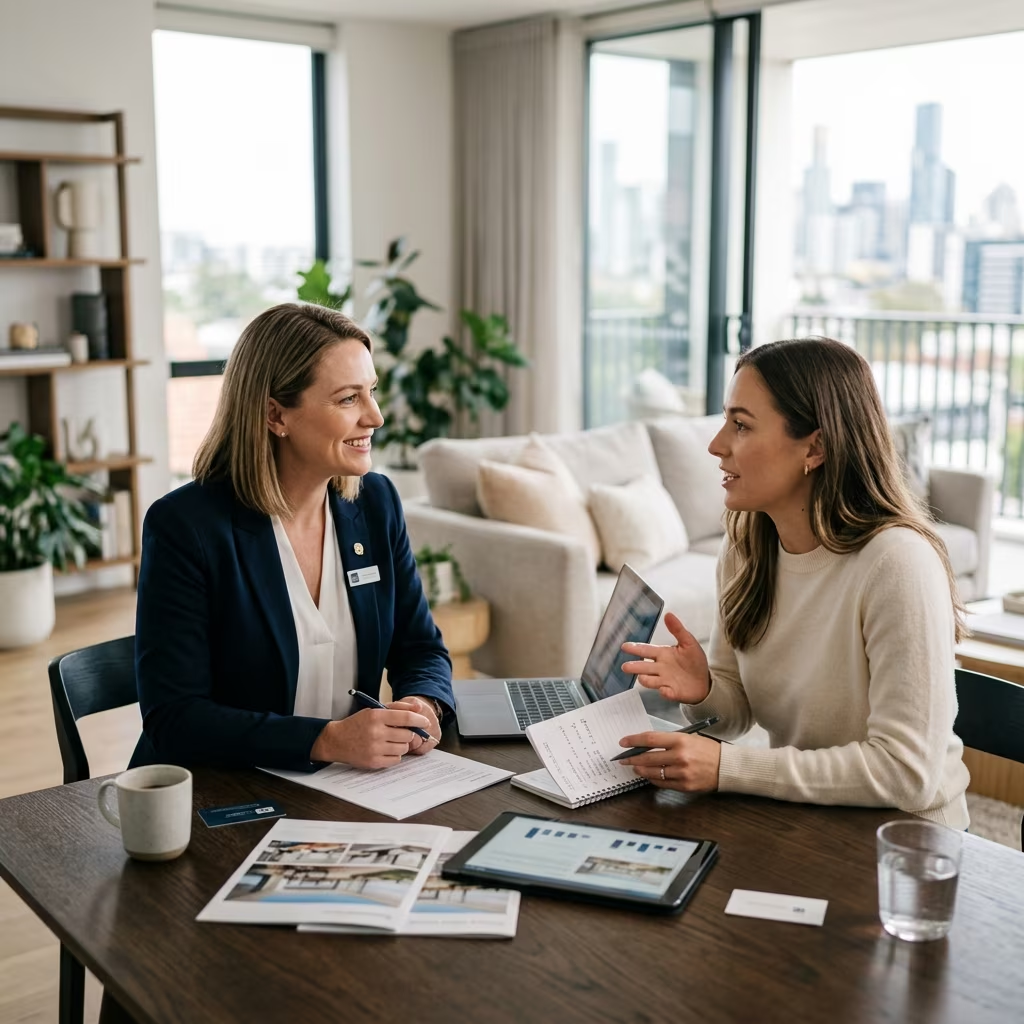
Choosing a real estate agent is one of the most important decisions you will make when buying a home. The right agent can help you understand the market, avoid costly mistakes, and guide you smoothly from your first home tour to closing. The wrong fit can lead to missed opportunities, confusion, or even financial loss. Asking thoughtful questions up front is the best way to evaluate whether an agent is the right partner for your home-buying journey.
This guide explains which questions to ask, why they matter, and how to interpret the answers. It is designed for buyers, especially first-time homebuyers, who want to interview agents and compare their approaches before signing any agreement.
Why Interviewing Your Real Estate Agent Matters
In most areas, real estate agents are licensed professionals who must follow state regulations and ethical standards. However, agents differ widely in experience, communication style, negotiation skill, and local market knowledge. Asking targeted questions helps you:
- Understand the agent’s experience and track record.
- Confirm they know your target neighborhood and price range.
- Clarify fees, contracts, and expectations before you start working together.
- Assess whether their communication style aligns with yours.
- Evaluate their strategy for finding properties and negotiating offers.
Most buyers do not pay the agent directly; instead, buyer’s agent commissions are typically paid from the seller’s side at closing, as described in many industry explanations of real estate compensation. Even so, you should understand how your agent is compensated and any agreements you may be expected to sign.
Foundational Questions About Experience and Credentials
Your first set of questions should focus on whether the agent is qualified and experienced enough to handle your purchase.
1. How long have you been a real estate agent?
Experience does not guarantee quality, but it often affects how well an agent can navigate complex situations such as appraisal issues, inspection problems, or multiple-offer scenarios. A newer agent may be energetic and highly available, while a veteran may have deeper market insight and stronger relationships with other professionals.
- Follow-up: How many buyers did you help purchase homes in the past year?
- Follow-up: Can you share examples of challenging transactions you successfully resolved?
2. Are you licensed and do you belong to any professional associations?
Every agent must hold a valid state license, which ensures minimum education and regulatory compliance. Many agents also belong to local and national trade associations, which typically grant access to the Multiple Listing Service (MLS) and require adherence to additional ethical codes.
- Ask for: License status and any additional designations or certifications.
- Ask: Do you work full-time or part-time in real estate? Full-time agents may provide more consistent availability.
3. Do you mostly represent buyers, sellers, or both?
Some agents focus on buyers, some on sellers, and many represent both. Buyer-focused agents tend to be more familiar with financing options, buyer protections, and strategies for making competitive offers.
Ask whether they will represent only you in a transaction or potentially both you and the seller (called dual agency in many states), which can restrict their ability to advocate solely for your interests depending on local law and brokerage policy.
Evaluating Local Market Knowledge
Real estate is intensely local. Conditions can vary significantly between neighborhoods or even between streets. A knowledgeable agent should understand recent sales, price trends, school zones, commuting patterns, and planned developments in your target area.
4. What is your experience in my target neighborhood?
Ask specifically how many transactions they have completed in the areas where you hope to buy, and in what price ranges.
- Have they recently helped buyers purchase similar homes (type, size, price)?
- Can they describe typical days-on-market and competition level for comparable properties?
- Are they familiar with local amenities, schools, and zoning rules?
5. How will you help me understand current market conditions?
A skilled agent should explain whether your market is favoring buyers, sellers, or is relatively balanced, using real data such as inventory levels and recent sale-to-list price ratios.
Ask how often they will provide you with:
- Recent comparable sales (“comps”) in your desired area.
- Updates on price changes and new listings that meet your criteria.
- Insight on whether homes are commonly receiving multiple offers or selling below list price.
Understanding Their Home Search Strategy
One of an agent’s main responsibilities is to filter the market and present homes that truly fit your needs, budget, and timing. Strong agents use a structured process to clarify your priorities and then identify suitable properties.
6. How will you determine which homes are right for me?
A good agent will start by asking detailed questions about your lifestyle, must-haves, nice-to-haves, and financial limits. Then they should explain how they will translate that information into a search strategy.
- Do they rely only on public listing platforms, or do they also use the MLS and internal office networks?
- Will they alert you to off-market or pre-market opportunities when available?
- How often will they review and refine your search criteria as you see properties?
7. How do you handle scheduling showings and tours?
Coordination is essential, especially in fast-moving markets where homes can sell quickly. Ask how they plan to schedule showings around your availability and how much notice they typically need.
- Can they accommodate evenings or weekends?
- Will they attend all showings with you or sometimes send a team member?
- What is their plan if a property you want to see is only available at a difficult time?
Communication Style and Availability
Miscommunication is one of the most common sources of frustration in real estate transactions. Before you commit to an agent, you should understand how often you can expect updates and through which channels.
8. What is your preferred way to communicate?
Some agents rely heavily on phone calls, while others prefer text or email. Communication incompatibility can create delays or misunderstandings.
- Ask which methods they use most: call, email, text, messaging apps.
- Clarify typical response times during weekdays and weekends.
- Ask whether they provide regular status updates, even when there is no new development.
9. How many clients are you working with right now?
Active client load affects availability. An agent with many simultaneous clients may need more time to respond or schedule showings, while an agent with few clients may be more flexible.
Ask whether they personally handle all communication or if a team assists with scheduling, paperwork, and follow-up.
Negotiation, Offers, and Pricing Strategy
When you find a home you love, your agent’s negotiation skills become critical. The way they structure your offer, respond to counteroffers, and handle inspections can significantly impact price and terms.
10. How do you determine an appropriate offer price?
Competent agents will conduct a comparative market analysis (CMA), reviewing recent sales of similar properties to estimate a fair price range. They should also consider:
- Current competition, such as multiple offers or low inventory.
- Home condition and any known defects.
- How long the home has been listed and any price reductions.
11. What is your strategy in a multiple-offer situation?
In competitive markets, buyers often face bidding wars. Ask how the agent will help your offer stand out without unnecessarily overpaying.
- Will they suggest escalation clauses, limited contingencies, or flexible closing dates when appropriate?
- How do they balance protecting your interests with making a strong offer?
- Can they explain common contingencies (inspection, financing, appraisal) and when to adjust them?
12. How will you advocate for me during negotiations?
Ask the agent to describe their general negotiation approach: are they aggressive, collaborative, or conservative? Different styles may fit different buyers and markets.
You might ask for examples where they successfully negotiated:
- Price reductions after inspections revealed issues.
- Seller-paid closing costs or concessions.
- Flexible move-in dates or repairs completed before closing.
Fees, Contracts, and Legal Basics
Although the seller typically pays commissions in many markets, you should still understand how your agent is compensated and what agreements you may be asked to sign. Laws and practices vary by state, so an agent should clearly explain local norms.
13. What will this cost me and how are you paid?
Ask the following to avoid surprises:
- What is the commission rate, and who pays it?
- Are there any additional fees you charge to buyers (admin fees, transaction fees)?
- Do you receive compensation from preferred lenders, inspectors, or other professionals you recommend, and how is that disclosed?
| Cost Category | What to Ask | Why It Matters |
|---|---|---|
| Commission | Who pays, standard percentage, any flexibility | Impacts overall transaction cost and seller expectations. |
| Closing Costs | Estimated total, typical buyer vs. seller responsibilities | Helps you budget for funds needed at closing. |
| Upfront Expenses | Inspection, appraisal, earnest money deposit | Some costs are paid before closing and may be non-refundable in some scenarios. |
14. Do I need to sign a buyer representation agreement?
Many brokerages use written agreements to define the relationship between you and your agent, including responsibilities, duration, and any exclusivity. Ask:
- Is the agreement exclusive (you work only with this agent) or non-exclusive?
- How long does the agreement last, and can you end it early if the relationship is not working?
- What happens if you find a home on your own or through another source?
Support Network and After-Closing Service
Home purchase does not end at closing. Many buyers need reliable professionals for repairs, improvements, or future refinancing. An established agent often maintains a network of trusted contacts.
15. Which other professionals can you recommend?
Ask whether the agent can connect you with:
- Mortgage lenders and loan officers.
- Home inspectors, appraisers, and surveyors.
- Contractors, electricians, plumbers, and other trades.
- Real estate attorneys or title companies where appropriate.
Ask how they choose which professionals to recommend and whether they receive any referral benefits that should be disclosed to you.
16. What support do you offer after closing?
Some agents stay involved and offer ongoing help, while others conclude their services at closing. Ask whether they:
- Provide guidance if issues arise after move-in (for example, undisclosed defects).
- Share market updates that may help you decide when to refinance or sell.
- Remain available for questions about property taxes, local regulations, or neighborhood changes.
Sample Checklist: Key Questions to Bring to Your Agent Meeting
To keep your interview organized, use a written checklist. Below is a sample you can adapt:
- Experience
– How long have you been in real estate?
– How many buyers did you help purchase homes last year? - Local Knowledge
– What is your experience in my target neighborhood?
– Can you explain recent price trends for homes like the one I want? - Search & Strategy
– How will you identify homes that fit my needs and budget?
– How do you advise buyers in multiple-offer situations? - Communication & Availability
– What is your preferred communication method and typical response time?
– How many clients are you actively working with now? - Costs & Agreements
– How are you compensated, and what costs will I face as a buyer?
– Will I need to sign a buyer representation agreement, and can I cancel it? - Support Network
– Which other professionals can you recommend?
– How do you stay involved after closing?
FAQs: Questions About Questioning Your Agent
Do I really need to interview more than one real estate agent?
It is generally wise to speak with at least two or three agents before choosing one, especially if you are a first-time homebuyer. Comparing responses helps you distinguish between different levels of experience, communication styles, and strategies. It also gives you a sense of how comfortable you feel with each person, which is critical in a process that may last weeks or months.
What if an agent refuses to answer my questions clearly?
If an agent avoids direct answers or seems impatient with reasonable questions, consider this a warning sign. You are hiring a professional to guide you through a major financial decision, and clear, respectful communication is essential. It may be better to keep looking rather than accept a relationship that feels uncomfortable.
Are all of these questions necessary for every buyer?
Not necessarily. If you are buying in a familiar area or have worked successfully with the same agent before, you may focus on only a subset of questions. However, buyers in unfamiliar markets or those taking out significant mortgages often benefit from a more thorough interview. Customize the list according to your comfort level and the complexity of your situation.
Should I ask about an agent’s past client reviews?
Yes. Many agents can provide references or point you to verified reviews that describe past clients’ experiences. Pay attention to comments about responsiveness, honesty, and ability to solve problems, not only about final sale price. You can also ask to speak with one or two recent buyers they represented, with permission.
Is it appropriate to ask about market risks or long-term value?
It is reasonable to ask agents about general market conditions and potential resale considerations, such as location stability and local development plans. However, agents are not financial advisers, and future property values are uncertain. Use their insight as one input among others, including your own research and, if needed, professional financial advice.
References
- 22 Questions to Ask a Real Estate Agent — Zillow. 2023-06-01. https://www.zillow.com/learn/questions-to-ask-real-estate-agents/
- Top 10 Questions To Ask Your Real Estate Agent When Selling — Realtor.com. 2023-04-15. https://www.realtor.com/advice/sell/questions-to-ask-real-estate-agents-when-selling/
- Questions to Ask Your Real Estate Agent — City National Bank. 2022-09-20. https://www.cnb.com/personal-banking/insights/real-estate-agent-questions.html
- 10 Questions Every Home Buyer Should Ask Their Real Estate Agent — Not Your Ordinary Agent. 2022-05-10. https://www.notyourordinaryagent.com/blog/questions-buyers-should-ask-real-estate-agents/
- 10 Essential Questions to Ask a Real Estate Agent When Selling — Independent Property Group. 2021-11-30. https://independent.com.au/insights-advice/10-questions-to-ask-a-real-estate-agent