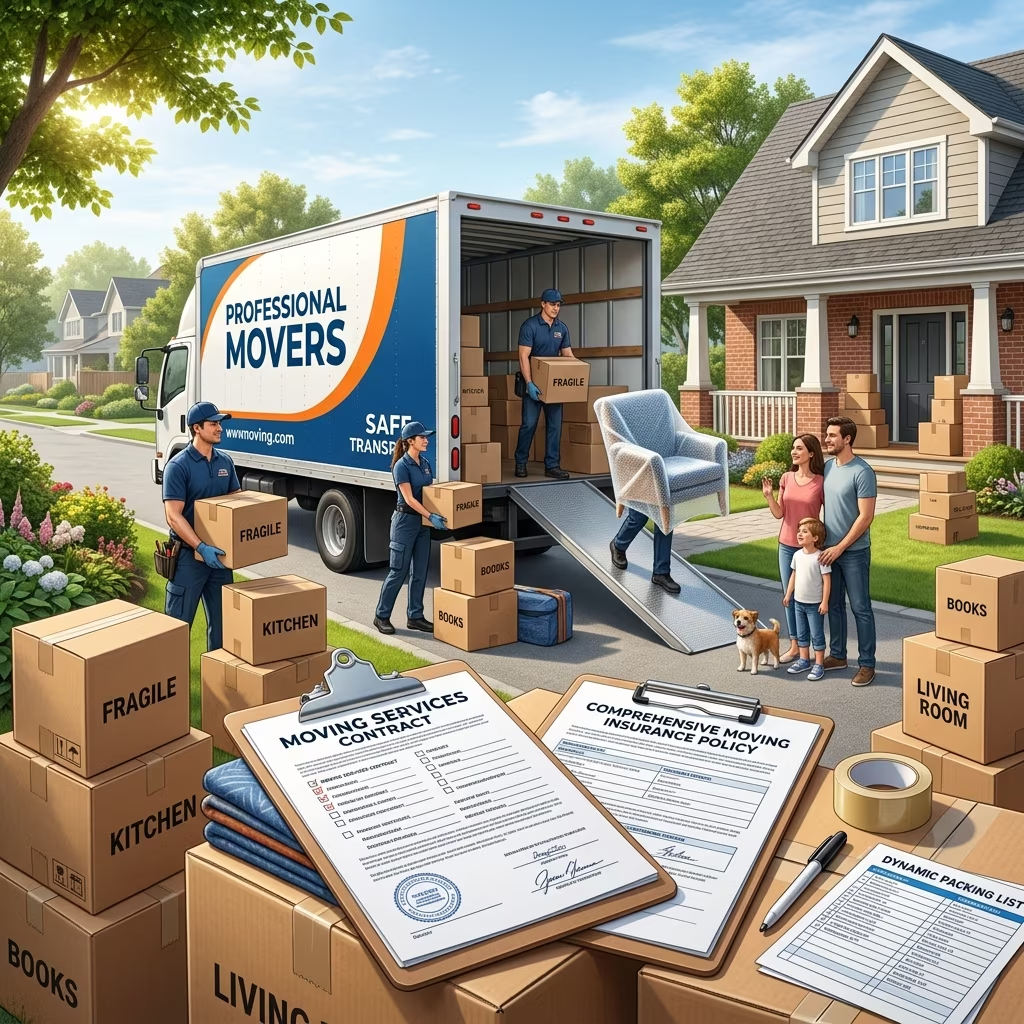
Hiring a **moving company** and deciding whether to buy **moving insurance** are two of the most important choices you make when relocating. Both decisions determine how well your belongings are protected if something is lost, damaged, or destroyed during the move.
This guide explains how mover liability works, how separate insurance fits into the picture, and what practical steps you can take to safeguard your property from the moment packing starts until the last box is unpacked.
Why Protection During a Move Matters
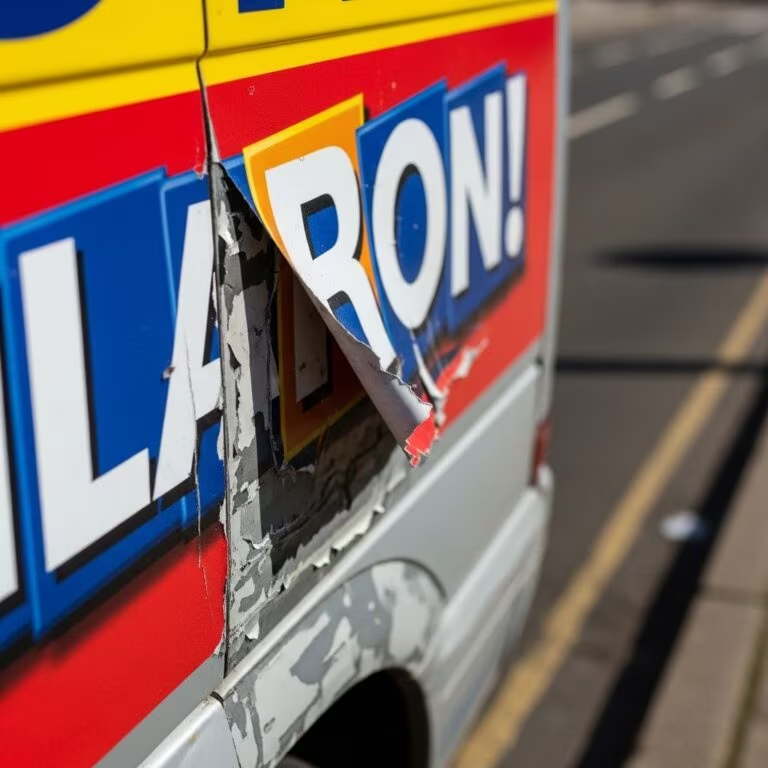
Even with careful planning, moving introduces risks: boxes can be dropped, furniture may be scratched, or items can be lost in transit. Trucks cover long distances, weather can change quickly, and multiple people handle your belongings. Moving insurance and mover liability exist to help you absorb these unexpected events without bearing the full financial loss yourself.
- Physical risks: Breakage, dents, scratches, water damage, and loss in transit.
- Logistical risks: Shipment delays, mix-ups between loads, or mis-labeled boxes.
- Financial risks: Replacing damaged items out-of-pocket if you lack adequate coverage.
Understanding your options ahead of time allows you to choose coverage that matches the value of your belongings and your tolerance for risk.
How Moving Company Liability Works
In the United States, **licensed interstate movers** are required by federal law to offer two levels of liability for the goods they transport: **Released Value Protection** and **Full Value Protection**. These are often called valuation options rather than traditional insurance, but they function in a similar way by compensating you if your items are damaged or lost.
Released Value Protection: The Basic Free Option
Released Value Protection is the default, no-cost liability coverage that interstate movers must offer. Under this option, the mover’s responsibility is limited to a small amount per pound of each item, typically **$0.60 per pound per article**.
This means that if a 50-pound item is damaged, your compensation would be calculated using its weight, not its actual price. For example:
- 50-pound sofa × $0.60 per pound = $30 maximum compensation
- 10-pound flat-screen TV × $0.60 per pound = $6 maximum compensation
Released Value Protection can be adequate for low-value or easily replaceable items, but it is usually insufficient for electronics, fine furniture, or collectibles.
Full Value Protection: Higher Coverage for a Fee
Full Value Protection (FVP) is a more robust liability option that you pay extra to obtain from your mover. With FVP, the mover is generally responsible for the **current market value** of the items in your shipment if they are lost or damaged.
When you select Full Value Protection, the moving company has several ways to satisfy a claim for a covered item:
- Repair: Fix the damaged item to restore it to its pre-move condition, when possible.
- Replace: Provide a similar item of like kind and quality.
- Reimburse: Pay you the fair market value (usually the depreciated value, not the new purchase price).
Full Value Protection often comes with a deductible and a minimum shipment value you must declare. The cost of FVP depends on factors such as the declared value of your household goods and the distance of your move.
Key Differences Between the Two Liability Options
| Feature | Released Value Protection | Full Value Protection |
|---|---|---|
| Cost | Included at no additional charge | Additional fee based on shipment value |
| Basis of payment | Weight-based (e.g., $0.60 per pound) | Current market value of item |
| Best for | Low-value or easily replaced items | High-value, fragile, or irreplaceable items |
| Risk level for you | Higher financial risk | Lower financial risk but higher upfront cost |
Choosing between these options is a central part of planning your move. Many people choose Full Value Protection for interstate moves with valuable contents and rely on Released Value for smaller, local moves where the risk feels more manageable.
What Moving Insurance Adds Beyond Mover Liability
Movers’ valuation coverage is not the same thing as a traditional insurance policy. To get broader protection, you can purchase **third-party moving insurance** from an insurance company or specialized provider.
Third-party moving insurance typically offers coverage for events that may fall outside the mover’s liability or exceed the limits of Released Value Protection. Depending on the policy, it may cover:
- Damage or loss during transit in a truck, container, or freight carrier.
- Damage while items are in short-term or long-term storage.
- Losses from theft, fire, certain natural disasters, or other specified perils.
- Mechanical and electrical damage for appliances or electronics in transit, where allowed.
When you buy third-party moving insurance, the mover’s basic liability usually applies first. If you chose Released Value Protection, the insurer may pay the difference between the mover’s payment and the actual loss, up to the policy’s limit.
Common Sources of Moving Insurance
- Standalone moving insurance companies: Specialized providers that focus on relocation coverage.
- Homeowners or renters insurance endorsements: Some policies allow you to add riders or endorsements that cover belongings during a move or while in storage; you must check your specific policy terms.
- Relocation or transit trip policies: Policies specifically designed to cover personal property during a single move.
Always confirm what is and is not covered, as exclusions and deductibles can vary widely among insurers.
How to Evaluate Your Coverage Needs
Deciding how much protection you need begins with understanding the value of your belongings and the nature of your move.
Step 1: Create a Detailed Inventory
Before you talk to movers or insurers, make a list of the items you plan to move. Include estimated replacement values for high-cost belongings like furniture sets, electronics, jewelry, artwork, and specialty equipment.
- Walk room-by-room and note major items.
- Keep receipts or appraisals where available.
- Take photos or videos of valuable pieces and electronics.
This inventory helps you decide whether the default Released Value Protection is enough or whether Full Value Protection or third-party insurance is more appropriate.
Step 2: Consider Your Move Type
Different moves carry different levels of risk, and that can change the coverage you should consider:
- Local moves: Short-distance moves often entail fewer hours in transit, reducing some risks. However, stairs, elevators, and repeated loading/unloading can still cause damage.
- Long-distance or interstate moves: Longer trips, highway travel, and multiple transfer points increase the chance of loss or damage, making stronger coverage more attractive.
- Moves with storage: If you plan to store belongings in a warehouse or a container, you need to know whether storage is covered by mover liability, your homeowners policy, or a separate insurer.
Step 3: Balance Cost and Risk
Think about your budget and the consequences of replacing expensive items out-of-pocket. For many households, a mix of released value coverage, Full Value Protection on particularly valuable shipments, and third-party insurance for specific risks provides a balanced approach.
Choosing a Moving Company With Adequate Coverage
Insurance and liability options only help if the moving company itself is reputable and properly licensed. Federal regulations require interstate movers to register with the Federal Motor Carrier Safety Administration (FMCSA) and comply with consumer protection rules, including offering valuation options.
When evaluating movers, consider the following:
- Licensing: Interstate movers should have a U.S. Department of Transportation (USDOT) number and be listed with FMCSA. Intrastate movers must meet state-level requirements.
- Written estimates: Request a written estimate that clearly describes the services offered and the valuation option selected.
- Explanation of liability: Ask the mover to explain the differences between Released Value and Full Value Protection and show how each option appears in your contract.
- Claim process: Inquire how to file a claim, how long you have to do so, and typical timelines for resolution.
Reputable movers will answer questions, provide documentation, and encourage you to read the fine print before you sign.
Certificate of Insurance: When Buildings Require Proof
If you are moving into or out of an apartment building, condominium, or managed property, the management may require the moving company to provide a **Certificate of Insurance (COI)**. A COI is a document issued by the mover’s insurer that confirms the mover’s coverage and policy limits.
Property managers use COIs to ensure that if common areas, elevators, or building structures are damaged during the move, the mover’s insurance can respond. As a customer, a COI offers additional peace of mind.
- Ask your property manager what coverage limits and types they require.
- Request the COI from your moving company well in advance of your move date.
- Verify that the building’s name and address are correctly listed on the certificate.
Most established movers are familiar with COI requirements and can coordinate this documentation directly with management while providing you a copy for your records.
Practical Steps to Protect Your Belongings
Insurance and liability are only part of a comprehensive protection strategy. The way you pack, label, and document your items has a big impact on the outcome if something goes wrong.
Before Moving Day
- Use quality packing materials: Sturdy boxes, cushioning, and appropriate wrapping reduce damages.
- Label boxes clearly: Mark fragile items and identify rooms to make handling easier.
- Photograph high-value items: Take photos from multiple angles, noting any existing damage for comparison.
- Review contracts and policies: Confirm the valuation option chosen and read any exclusions in your third-party policy.
During Delivery
- Inspect items promptly: As boxes are unloaded, check fragile and high-value pieces first.
- Note damage in writing: Record any visible damage on delivery receipts or inventory forms.
- Keep all documents: Save contracts, estimates, inventories, photos, and correspondence.
If You Need to File a Claim
Each mover and insurance provider has its own claims process, but it generally involves documenting the loss, submitting forms, and providing proof of value.
- Contact the mover or insurer as soon as you notice damage.
- Provide photos, inventory references, and receipts when available.
- Follow instructions for timelines; many policies require claims to be filed within a specific window.
FAQs About Moving Companies and Moving Insurance
Do movers automatically insure my belongings?
Licensed interstate movers must provide at least Released Value Protection, which is a basic form of liability coverage rather than traditional insurance. You can choose stronger options, like Full Value Protection, or purchase separate moving insurance from an insurer.
Is Full Value Protection always worth the cost?
Full Value Protection offers significantly more coverage than Released Value Protection, but it comes with an added fee and may include deductibles. It is most useful when you are transporting high-value items or making a long-distance move where the risk of loss or damage is higher.
Will my homeowners policy cover a move?
Some homeowners and renters policies provide limited coverage for personal property during transit, while others require a specific endorsement or rider. Because terms vary, you should check your policy or speak to your insurer before relying on it for moving coverage.
What is a Certificate of Insurance, and do I need one?
A Certificate of Insurance (COI) is proof of a moving company’s insurance coverage, often required by apartment or building management before movers can operate on the property. If your building requires one, your mover should be able to obtain it from their insurer and send it to management.
How can I reduce the chances of damage during my move?
Use appropriate packing materials, clearly mark fragile boxes, choose a reputable mover with proper licensing, and consider enhanced valuation or third-party insurance for high-value items. Document your belongings with photos and inventories so you have evidence if you must file a claim.
References
- How do I insure my belongings during a move? — Federal Motor Carrier Safety Administration (FMCSA). 2023-05-01. https://www.fmcsa.dot.gov/consumer-protection/protect-your-move/how-do-i-insure-my-belongings-during-move
- Comprehensive Guide to Moving Insurance: Coverage, Costs, & Tips — Extra Space Storage. 2023-04-10. https://www.extraspace.com/moving/guides/tips/guide-to-moving-insurance/
- Moving Insurance Guide: How To Protect Your Property During a Move — PODS. 2022-07-15. https://www.pods.com/blog/moving-insurance-guide-protecting-your-property-during-a-move
- Moving Insurance Guide | Cost, Coverage, and Companies — moveBuddha. 2023-08-20. https://www.movebuddha.com/blog/moving-insurance/
- Do You Need Moving Insurance? — U.S. News & World Report. 2023-02-17. https://www.usnews.com/insurance/homeowners-insurance/do-you-need-moving-insurance
- Essential Guide to Certificate of Insurance Moving: Do You Need One? — 3 Men Movers. 2022-09-05. https://www.3menmovers.com/blog/certificate-of-insurance-moving/