Understanding Your Small Claims Court Options
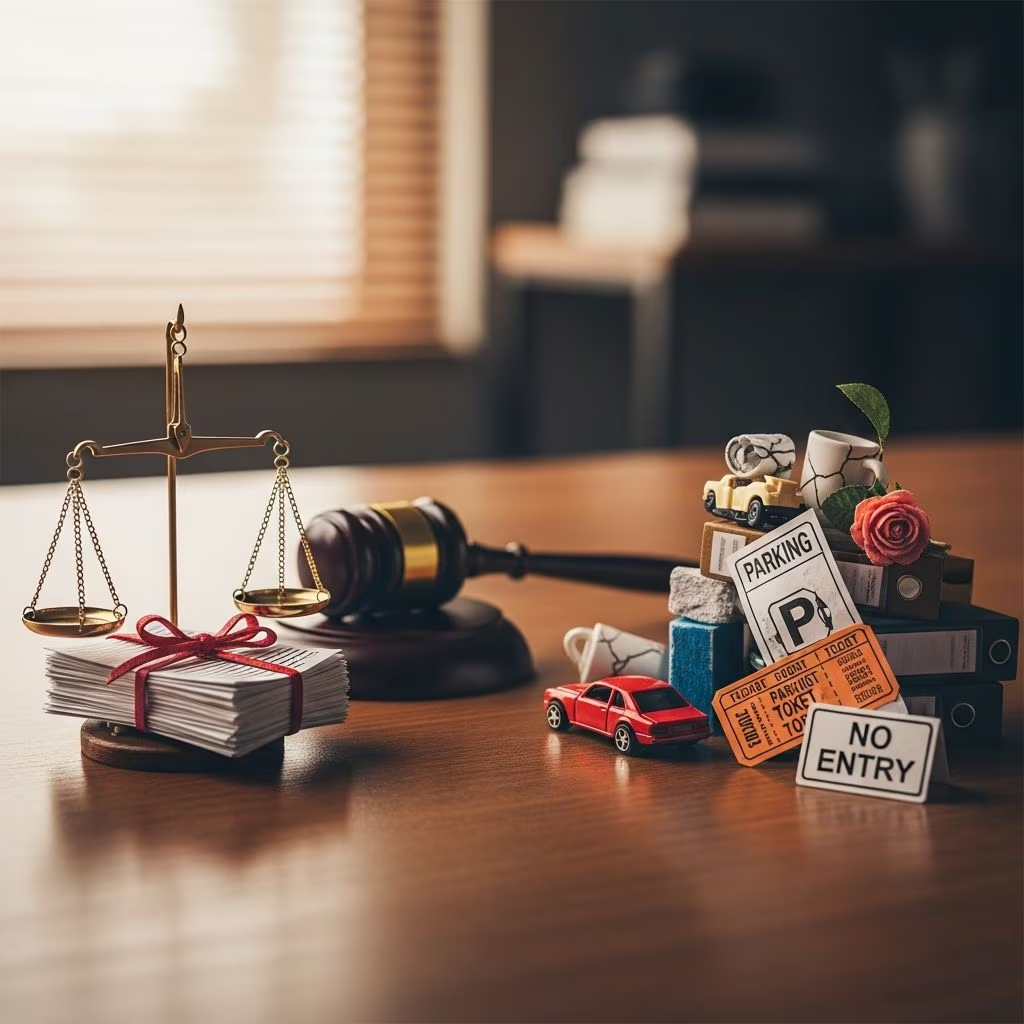
When faced with a legal dispute, many people hesitate to pursue formal court action. The complexity of traditional litigation, combined with the substantial costs of hiring an attorney, often discourages individuals from seeking justice for smaller disputes. Small claims court addresses this challenge by providing an accessible, streamlined alternative for resolving disagreements involving modest monetary amounts.
Small claims courts operate as specialized divisions designed to handle civil disputes without requiring legal representation. These forums have significantly lower barriers to entry than traditional courts, allowing ordinary citizens to present their cases directly to a judge or magistrate. The simplified procedures and reduced formality make it possible for people to navigate the legal system independently, even without prior legal knowledge.
However, small claims courts come with important limitations. Not all types of disputes can be resolved through this forum, and monetary caps vary by jurisdiction. Understanding which cases qualify and which ones must be filed elsewhere is essential for anyone considering this avenue.
Common Monetary Disputes Eligible for Small Claims
The most straightforward cases for small claims courts involve disputes over money owed. These financial disagreements represent the core of small claims litigation and are among the easiest cases to resolve in this setting.
Unpaid debts form a significant portion of small claims filings. Whether someone borrowed money directly, obtained goods or services on credit without paying, or owes money from other financial transactions, small claims court provides an efficient mechanism to recover these amounts. Creditors appreciate small claims procedures because presenting evidence of an outstanding debt is relatively straightforward—documentation like loan agreements, invoices, or bank records typically suffice to establish liability.
Disputes arising from consumer transactions also fit well within small claims jurisdiction:
- Defective products or items that fail to perform as advertised
- Services rendered incompletely or below agreed standards
- Refunds owed by businesses or individuals
- Charges disputed on invoices or payment arrangements
- Compensation for costs incurred due to another party’s actions
Property-Related Claims and Personal Injury Cases
Beyond simple debt collection, small claims courts handle numerous disputes involving physical property and personal harm. Property damage claims constitute a substantial category of small claims litigation, particularly those stemming from accidents or negligence.
Vehicle-related incidents frequently lead to small claims filings. When property damage from a car accident exceeds insurance coverage or when disputes arise about liability, small claims court offers a practical forum for resolution. Similarly, damage to personal belongings—whether caused by another person’s actions, a contractor’s negligence, or circumstances involving shared spaces—can be pursued through small claims procedures.
Neighbor disputes often center on property concerns. Boundary issues, damaged fences, landscaping problems, or other damages caused by a neighboring property owner’s actions frequently find their way to small claims court. These cases are particularly common in residential areas where property lines and shared responsibilities sometimes create friction.
Personal injury claims with modest medical expenses or property damage costs also qualify for small claims resolution. However, the available remedies focus exclusively on monetary compensation rather than other forms of relief.
Landlord-Tenant and Housing-Related Disputes
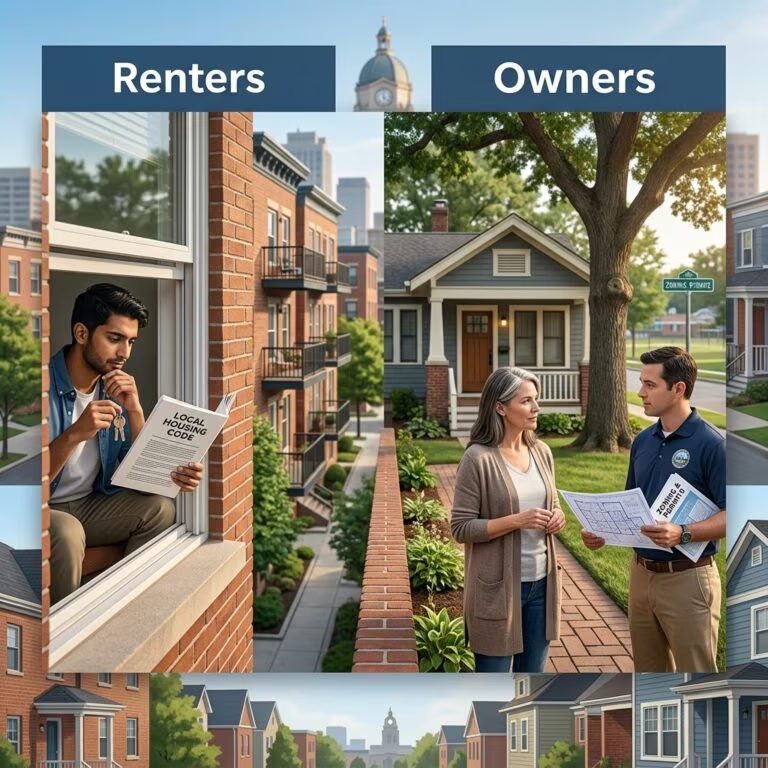
Housing-related disagreements constitute another major category of small claims cases. Rental relationships frequently generate disputes that are well-suited to small claims resolution.
Security deposit disputes represent one of the most common types of small claims cases filed nationwide. When landlords retain deposits improperly or fail to return them as required by law, tenants can pursue recovery through small claims court. These cases are straightforward because they typically involve documented transactions and clear contractual obligations.
Beyond security deposits, small claims courts address various landlord-tenant matters:
- Withholding of rent when repairs or maintenance issues exist
- Damage assessments and tenant liability for unit damage
- Disputes over utility costs or shared expenses
- Breaches of lease terms involving money obligations
- Disputes regarding move-out cleaning charges or damage claims
Housing courts in some jurisdictions provide specialized handling for these matters, though they typically operate within the same simplified framework as general small claims courts.
Contract and Service-Related Claims
Disagreements arising from contractual relationships form another significant segment of small claims litigation. These cases involve situations where one party believes the other failed to fulfill agreed-upon obligations.
Home improvement and repair disputes commonly end up in small claims court. Homeowners who hire contractors for renovations, repairs, or installations sometimes experience incomplete work, substandard quality, or disputes about payment terms. When a contractor fails to finish a job properly or a homeowner refuses payment for claimed defects, small claims court provides a forum for resolution without the expense and complexity of traditional litigation.
Similar disputes arise in other service contexts:
- Automobile repair disagreements about charges or quality of work
- Appliance repair claims when equipment remains unrepaired despite payment
- Professional services disputes with landscapers, plumbers, electricians, or similar service providers
- Agreement violations where one party seeks compensation for the other’s failure to perform
The common thread in these cases is that they involve breach of contract principles applied to relatively modest sums of money.
Product Liability and Warranty Claims
When consumers purchase items that fail to meet promised standards or cause harm through defects, small claims court may provide recourse. Warranty breach cases—situations where products fail to perform as advertised or guaranteed—frequently appear on small claims dockets.
These cases rely on the legal theory that manufacturers or sellers make implicit or explicit promises about their goods. When products fail to meet those promises within a reasonable timeframe, consumers can recover the purchase price or seek compensation for resulting damages. For instance, if purchased goods prove defective shortly after purchase and cause secondary damage or loss, the buyer can pursue compensation through small claims procedures.
Product liability claims involving injuries from defective products can also proceed in small claims court if the monetary damages remain within jurisdictional limits. However, claims seeking compensation for severe injuries or extensive damages typically exceed small claims monetary caps.
Monetary Limitations by Jurisdiction
One of the most critical factors determining whether a case qualifies for small claims court is whether the disputed amount falls within the jurisdiction’s monetary limit. These caps vary significantly across states and regions:
- Some jurisdictions cap claims at $5,000
- Others allow claims up to $7,000 or $10,000
- A few states, like Texas, permit claims reaching $20,000 in limited circumstances
- California allows individual claims up to $10,000, while business entities face a $5,000 limit
Understanding your local jurisdiction’s monetary cap is essential. If your dispute exceeds the limit, you must file in a higher court, where attorney representation becomes necessary and costs increase substantially. However, some jurisdictions allow plaintiffs to voluntarily reduce their claim amount to fit within small claims parameters, though this means forfeiting any amount above the threshold.
Cases Categorically Excluded from Small Claims Court
Despite small claims court’s broad reach for monetary disputes, certain case types are absolutely prohibited regardless of the amount involved. These exclusions exist because small claims courts lack jurisdiction over particular legal matters or because these cases require specialized procedures unavailable in small claims forums.
Family law matters fall outside small claims jurisdiction entirely. Divorce proceedings, child custody disputes, spousal support determinations, and related family law questions cannot be handled in small claims court, regardless of monetary considerations. These cases require specialized family law courts equipped with procedures designed for complex personal relationships and ongoing obligations.
Similarly, matters involving personal status or identity cannot be resolved in small claims courts. Name changes, guardianship appointments, adoptions, and bankruptcy filings require proceedings in specialized courts with authority over these distinct legal questions.
Cases seeking injunctive relief—orders directing someone to stop an illegal activity or compelling specific non-monetary actions—cannot be pursued in small claims court. These requests require different procedures and judicial authority not available in small claims forums.
Disputes involving defamation present another categorical exclusion. Cases alleging slander (spoken defamation) or libel (written defamation) cannot proceed in small claims court. Despite potentially involving monetary damages, these cases require specialized procedures, evidence standards, and constitutional protections that exceed small claims court scope.
Federal government matters also fall outside small claims jurisdiction. Disputes with federal agencies, federal employees regarding their employment duties, or other federal matters must be pursued in federal courts. Tax disputes, for example, proceed through the Tax Court rather than state small claims forums.
Limitations on Available Remedies and Procedures
Even when a dispute type qualifies for small claims court, important limitations exist regarding available remedies. Small claims courts can award only monetary compensation—cash damages. They cannot order the return of specific items, mandate performance of certain actions, or provide other non-monetary relief.
If you need a court order requiring someone to return a specific object, you cannot achieve that goal through small claims procedures. Similarly, if you seek performance of particular contractual obligations (such as completing a home renovation according to specifications) rather than compensation for breach, small claims court cannot provide this remedy.
Discovery procedures—the formal mechanisms used in traditional litigation to compel disclosure of evidence and information from the opposing party—are severely limited or unavailable in many small claims courts. This restriction means you cannot force the other party to produce documents or answer detailed questions before trial. Instead, both parties present whatever evidence they’ve independently gathered at the hearing.
Frequently Asked Questions
Can I file a small claims case if my dispute is partially about money and partially about other relief?
No. Small claims courts handle only monetary claims. If part of your desired relief involves non-monetary remedies (like requiring someone to perform work, return a specific item, or obtain an injunction), you must file in traditional court rather than small claims. You must choose to pursue only the monetary portion in small claims or pursue the entire case elsewhere.
What happens if I file a small claims case but my damages later exceed the court’s monetary limit?
If your actual damages prove to exceed the jurisdictional limit, you’ll be capped at whatever the maximum is in your jurisdiction. You cannot refile the same case in a higher court seeking additional damages. This makes careful calculation of damages before filing crucial.
Can a small claims judgment be appealed if I disagree with the outcome?
Appeal rights vary by jurisdiction, but many small claims judgments can be appealed to higher courts. However, appealed cases often proceed under different procedures and may require attorney representation. The appeal process can become nearly as expensive as traditional litigation.
Are there any limitations on who can sue in small claims court?
Generally, any adult can file in small claims court, though some jurisdictions allow businesses and organizations to sue as well. However, the defendant must be someone you actually sued—you cannot add additional defendants to your claims if they weren’t originally sued.
How do I know if my contract dispute qualifies for small claims?
Contract disputes qualify if your claim involves monetary damages within the jurisdictional limit and you’re seeking compensation for breach rather than specific performance. If you want the court to compel the other party to perform the contract (like completing a service) rather than pay money, you must file in a higher court.
References
- Small Claims General Information — County of San Bernardino Courts. Accessed 2026. https://sanbernardino.courts.ca.gov/self-help/self-help-small-claims/small-claims-general-information
- Small Claims Court — Massachusetts Government. Accessed 2026. https://www.mass.gov/info-details/small-claims-court
- Guide to Small Claims Court — Arkansas Attorney General. Accessed 2026. https://arkansasag.gov/divisions/public-protection/legal-resources/guide-to-small-claims-court/
- An Overview of Small Claims Court — Michigan Legal Help. Accessed 2026. https://michiganlegalhelp.org/resources/money-debt-and-consumer-issues/overview-of-small-claims-court
- Understanding Small Claims Court — National Center for State Courts. Accessed 2026. https://www.ncsc.org/resources-courts/understanding-small-claims-court
- General Information – Small Claims Cases — Texas State Law Library. Accessed 2026. https://guides.sll.texas.gov/small-claims
- Small Claims Frequently Asked Questions — Connecticut Judicial Branch. Accessed 2026. https://www.jud.ct.gov/faq/smallclaims.html