
Small Business Scam Threats You Can’t Ignore
Learn how scammers target small businesses with fake invoices, phishing, impostor schemes, and deepfake fraud—and how to stay a step ahead.
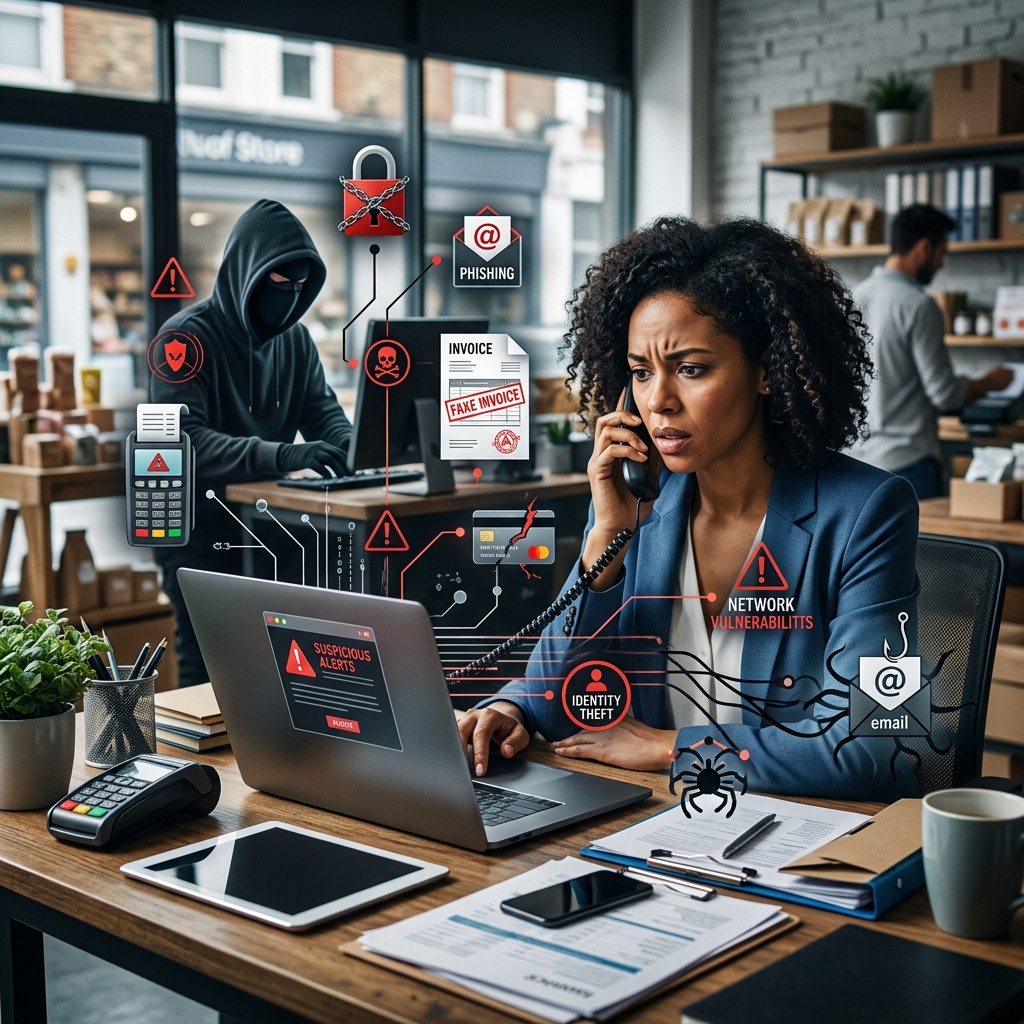
Small businesses are prime targets for fraudsters. Limited staff, lean budgets, and informal processes make it easier for scammers to slip through the cracks with fake invoices, phishing emails, bogus directory listings, and even sophisticated deepfake schemes. Understanding how these scams work and building simple safeguards into your operations can dramatically reduce your risk.
Why Small Businesses Are Attractive Targets
According to guidance from the U.S. Federal Trade Commission (FTC) and the Better Business Bureau (BBB), scammers consistently focus on small organizations because they often lack dedicated compliance or fraud-prevention teams and rely heavily on trust and speed in everyday transactions.
Common vulnerabilities include:
- Single-person approval for invoices and payments
- Limited IT security, including older email systems and weak authentication
- Informal vendor vetting and onboarding practices
- Time pressure on owners and managers, who may not scrutinize every request
The Major Scam Categories Targeting Small Businesses
While scam tactics evolve, most attempts against small businesses fall into a few recognizable categories. Below is an overview to set the stage before we dive deeper.
| Scam Type | Primary Goal | Common Red Flags |
|---|---|---|
| Phony invoices & office supply fraud | Get your business to pay for goods or services you never ordered | Unexpected invoices, vague descriptions, urgent payment demands |
| Phishing & business email compromise | Steal login credentials or redirect payments | Links or attachments from unknown senders, unusual payment requests |
| Directory & advertising scams | Sell fake or worthless listings and ads | Unclear audience metrics, high-pressure sales, vague contracts |
| Impostor & government-related scams | Collect fees or data by posing as authorities | Threatening tone, demand for fast payment via wire, gift cards |
| Fake checks & overpayment schemes | Get you to send real money back after a bogus check “clears” | Overpayments, requests to forward money elsewhere, urgency |
| Deepfake & AI-enabled fraud | Simulate executives to approve unauthorized payments | Unusual payment requests via video or voice, new accounts |
Fake Invoices and Office Supply Traps
One of the most persistent scams is the phony invoice or bogus office supply bill. Fraudsters send what looks like a legitimate invoice for printer toner, directory listings, maintenance services, or other routine expenses and hope it gets paid without review.
How These Schemes Work
Typical patterns include:
- Sending invoices for products your business never ordered
- Disguising promotional mailers as bills with payment coupons
- Calling to “confirm” an existing order, then shipping unordered merchandise followed by an aggressive bill
- Using small-dollar amounts, betting the expense will slide through without questioning
Prevention Strategies
To reduce your exposure:
- Centralize purchase authorization. Require purchase orders or documented approval before any order is placed.
- Implement two-person invoice review. The FTC recommends clear procedures for approving invoices and cross-checking them against real orders.
- Verify unfamiliar vendors. Confirm the company’s identity using official contact details, not information supplied on the invoice.
- Refuse to pay for unordered merchandise. U.S. law generally allows businesses to treat unordered goods as a gift; you do not have to pay.
Phishing Emails and Business Email Compromise
Phishing scams use deceptive emails, texts, or websites to steal credentials or trick staff into sending money to criminal accounts. When scammers successfully take over email accounts, they can carry out what is known as business email compromise (BEC).
Typical Phishing Tactics
- Emails mimicking banks, payment processors, or well-known software providers
- Urgent messages claiming your account will be closed unless you click a link
- Fake login pages designed to harvest usernames and passwords
- Malicious attachments that install malware and keyloggers
Business Email Compromise Patterns
Once the attacker controls an inbox, they may:
- Send realistic messages from a compromised or spoofed executive account
- Redirect payroll deposits or vendor payments to new account numbers
- Order staff to buy gift cards and send the codes electronically
Phishing Defense Measures
FTC guidance for businesses emphasizes basic digital hygiene:
- Enable multi-factor authentication (MFA). Make it harder for stolen passwords alone to grant access.
- Use unique passwords for business accounts and require periodic changes.
- Train staff to hover over links, inspect sender addresses carefully, and avoid opening unexpected attachments.
- Establish verification rules. Require phone or in-person confirmation for any unusual payment or payroll change request.
Directory Listings and Advertising Scams
Another long-running fraud involves directories and advertising packages that do not deliver real value. Scammers sell placements in a “business directory,” online listing, or coupon book that is fake, poorly distributed, or vastly misrepresented.
How Bogus Marketing Offers Look
- Cold calls promising exclusive placement in a high-traffic directory
- Promoters unable to clearly identify where and how your ad will appear
- Contracts loaded with fine print and automatic renewals
- Pressure to sign documents immediately, sometimes with blank sections
Evaluating Marketing and Directory Offers
To distinguish legitimate opportunities from scams:
- Demand detailed audience metrics. Ask about traffic, distribution, and how results are measured.
- Request full contracts upfront. The FTC warns that scammers may change terms after the fact or refuse to provide copies immediately.
- Research the provider. Check online reviews, official registries, and BBB profiles where available.
- Avoid signing under pressure. Pause and review legal obligations with counsel when needed.
Impostor Scams and Fake Government Contacts
Impostor scams rely on fear and urgency. Fraudsters pose as government agencies, utility providers, or major partners, warning that your business faces penalties, disconnection, or legal trouble unless you pay immediately.
Common Impostor Scenarios
- Calls claiming to be from tax authorities demanding instant payment
- Messages saying your business license is expiring and must be renewed through a special portal
- Utility shutoff threats unless you wire funds within hours
- Fake security alerts urging payment for “urgent system remediation”
Key Red Flags
Authoritative sources highlight several warning signs:
- Untraceable payment methods. Demands to pay via wire transfer, cryptocurrency, reloadable cards, or gift cards are typical of scams.
- Threatening language. Claims that something terrible will happen immediately if you don’t comply.
- Caller ID spoofing. Apparent government or utility numbers that cannot be trusted on their own.
Smart Responses to Impostor Attempts
- Hang up and independently verify. Call the official number listed on a real bill or government website, not the one provided by the caller.
- Slow down. Scammers exploit urgency; insist on written documentation and review.
- Refuse suspect payment methods. The FTC explicitly warns that requests for payment using wire transfers or gift cards are strong indicators of fraud.
Fake Check and Overpayment Scams
In a fake check scam, a scammer sends your business a check that looks genuine and may even appear to “clear” in your account. They ask you to send part of the funds to a third party or back to them, often via wire transfer. When the bank later recognizes the check as counterfeit, you are liable for the entire amount, including what you forwarded.
How Overpayment Scams Unfold
- The scammer overpays on purpose for goods or services
- They offer a plausible explanation—taxes, fees, emergency costs, overseas issues
- They instruct you to send the “extra” amount elsewhere quickly
- The check is ultimately rejected, leaving your business with the loss
Best Practices Around Checks and Refunds
- Wait for final clearance. Do not disburse funds against a check until your financial institution confirms it is fully cleared.
- Be skeptical of overpayments. Treat overpaid checks from new or unknown customers as potential fraud.
- Use safer, traceable payment options. Employ ACH transfers and traditional checks where you have established processes and records.
Deepfake and AI-Driven Executive Impersonation
As highlighted by the BBB, sophisticated scammers now use deepfake technology—AI-generated audio, video, or text—to imitate your executives or trusted partners. A realistic voice message or video call might instruct staff to urgently approve large payments or share sensitive documents.
Recognizing Deepfake Risks
- Uncharacteristic payment requests from senior leaders, especially for new beneficiaries
- Instructions to bypass normal approval rules because of a “special situation”
- Calls or videos originating from unfamiliar accounts or platforms
Organizational Controls Against Deepfake Fraud
- Hard-code approval workflows. Require multi-person verification for large or unusual transfers regardless of who appears to request them.
- Out-of-band confirmation. Verify high-risk instructions through a separate channel (for example, an internal phone number you already know).
- Educate executives and staff. Explain how deepfakes work and the need to treat unexpected digital communications cautiously.
Charity, Disaster, and Cause-Related Scams
Many businesses support charitable causes and disaster relief campaigns. Scammers exploit this goodwill by posing as charities or fundraising organizers, especially after high-profile events or natural disasters.
Charity Scam Warning Signs
- Charities that cannot clearly explain their mission or how funds are used
- Lack of registration or independent evaluation by reputable watchdogs
- Pressure to give immediately, often through untraceable payment methods
Safe Corporate Giving Practices
- Check charity credentials. Use trusted evaluation tools and official registries to verify organizations before donating.
- Document giving policies. Set internal rules defining who can authorize donations and under what circumstances.
- Prefer traceable payments. Use checks or bank transfers that create clear records of where your contributions go.
Core Fraud-Prevention Habits for Small Businesses
Across all scam types, the most effective defenses are consistent habits and clear procedures rather than complex technology. FTC and BBB materials emphasize foundational controls any small business can adopt.
Financial Controls
- Two-step approval for payments. Require at least two people to review and sign off on invoices or transactions above a set threshold.
- Routine reconciliation. Compare bills against purchase orders and delivery records weekly.
- Restricted payment methods. Minimize use of wire transfers, cryptocurrency, and gift cards; these are preferred tools for scammers.
Information Management
- Limit data sharing. Do not provide business bank details, EINs, or personal information unless you fully understand why they are needed.
- Maintain vendor records. Keep up-to-date files on approved suppliers and service providers for quick verification.
Staff Training and Culture
- Regular briefings. Explain common scam tactics to employees and update them as new patterns emerge.
- Encourage questions. Foster a culture where workers feel empowered to slow down and ask for help when something seems off.
- Document procedures. Clear, written steps for handling invoices, payments, and external requests reduce split-second guesswork.
What To Do If Your Business Is Targeted or Hit
Even well-prepared businesses can encounter scams. Quick, decisive action can limit losses and help enforcement agencies build cases against bad actors.
Immediate Steps When You Spot a Scam
- Stop communication. Cease contact with the suspected scammer and do not pay.
- Secure accounts. Change passwords, enable MFA, and review recent transactions.
- Notify your bank. Ask about reversing or blocking fraudulent transfers.
Reporting and External Support
- File a complaint with the FTC. The FTC encourages businesses to report scams, which contributes to investigations and consumer education.
- Share your experience with the BBB. BBB’s Scam Tracker allows you to record incidents and help other businesses recognize similar attempts.
- Alert your state Attorney General. State AG offices often have dedicated consumer and business protection divisions that track patterns and pursue enforcement.
- Consult legal counsel. For significant losses or contractual disputes, speak with an attorney about recovery options and liability.
FAQs: Small Business Scams
How can I tell if an invoice is legitimate?
Verify the invoice against your own internal records: confirm there is a corresponding purchase order, a documented request from staff, or signed agreement. Check that the vendor is on your approved list and that contact details match official information from your previous interactions or their verified website.
Are all unsolicited sales calls suspicious?
Not all unsolicited calls are scams, but they deserve extra scrutiny. Avoid making decisions on the spot, request written materials, research the company, and refuse high-pressure tactics. Legitimate providers should willingly supply contracts and measurable performance information.
What payment methods are riskiest in a business context?
Wire transfers, cryptocurrency, reloadable cards, and gift cards are particularly risky because they are hard to reverse and attractive to scammers. Official guidance advises treating any demand for these payment forms as a red flag.
Should small businesses invest in specialized fraud software?
Security tools can help, but core safeguards—clear approval rules, staff training, strong password practices, and verification of unusual requests—often deliver the greatest benefit for the lowest cost. Start with these fundamentals before considering advanced solutions.
What if my employee unknowingly cooperates with a scammer?
Focus first on containment: secure systems, contact financial institutions, and report the incident. Treat it as a learning opportunity and strengthen procedures so individuals aren’t placed in situations where a single mistake can cause major losses.
References
- BBB Business Tip: Top 10 scams targeting small businesses — Better Business Bureau. 2023-03-23. https://www.bbb.org/article/news-releases/19932-bbb-warning-businesses-dont-fall-for-that-scam
- Scams and Your Small Business: A Guide for Business — Federal Trade Commission. 2018-11-01 (guidance still cited as core resource). https://www.ftc.gov/business-guidance/resources/scams-your-small-business-guide-business
- Scams – and Your Small Business — Texas Office of the Attorney General (FTC & BBB brochure). 2018-04-01. https://www.oag.state.tx.us/sites/default/files/files/press/BBB_FTC-Flier-Brochure.pdf
- Top 10 Scams Targeting Small Businesses — GoLocalProv (summarizing BBB warnings). 2016-05-09. https://www.golocalprov.com/business/top-10-scams-targeting-small-businesses-warns-bbb
- Scams Against Your Small Business — Federal Trade Commission Consumer Alert. 2018-11-01. https://www.ftc.gov/media/71364
- Small Business – BBB Scam Prevention Guide — BBB Institute for Marketplace Trust. 2022-06-01. https://bbbmarketplacetrust.org/small-business/
- Find and Report a Scam — Better Business Bureau Scam Tracker. 2025-01-01. https://www.bbb.org/scamtracker
Similar Articles








Read full bio of Sneha Tete




