
Small Business Bankruptcy Paperwork Guide
A practical overview of the financial records and forms businesses need before filing bankruptcy.
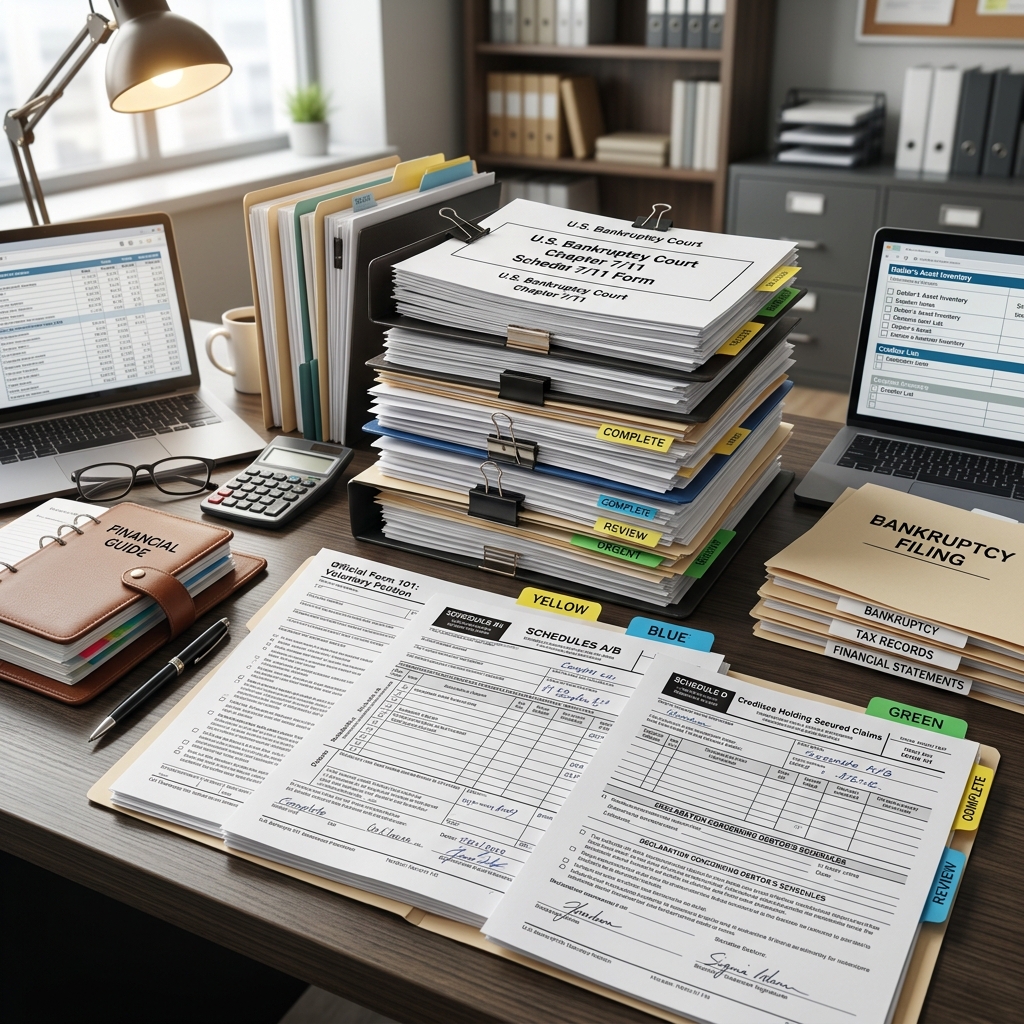
Before a small business can file for bankruptcy, it needs more than a court form and a payment plan. It must assemble a detailed financial snapshot that explains what the business owns, what it owes, how it earns money, and which people or companies are involved in its operations. That documentation helps the court, creditors, and the business itself understand whether a reorganization or liquidation makes sense.
The exact forms vary depending on the type of bankruptcy, but the preparation process is often similar. A business owner usually needs tax returns, bank records, payroll information, debt statements, contracts, leases, and a clear list of assets and liabilities. Getting organized early can reduce mistakes, avoid delays, and make it easier to choose the right bankruptcy chapter for the business structure and financial condition.
Why bankruptcy preparation starts with records
Bankruptcy is not just about asking for relief from debt. It is a legal process that requires the debtor to disclose financial reality in a structured way. For a business, that means identifying all property, creditors, income sources, and ongoing obligations. Courts and trustees rely on those disclosures to determine how the case should proceed and whether the debtor is complying with the law.
Well-prepared records also help business owners make better decisions before filing. If the business is a sole proprietorship, the owner may need to consider personal and business debts together. If the business is a corporation or LLC, the filing may focus only on entity debt and property, unless the owner has signed personal guarantees. The paperwork helps answer those threshold questions.
Key information a business should gather
A strong bankruptcy file usually begins with a master list of financial and operational information. The goal is to create a complete picture of the business, not just a partial list of debts.
- Full legal name of the business and any trade names
- Business structure, such as sole proprietorship, LLC, partnership, or corporation
- Employer identification number or Social Security number, depending on the structure
- Business address and mailing address
- Names and contact details for owners, officers, and partners
- List of all current and former bank accounts
- Recent tax returns and payroll records
- Monthly income and expense records
- All debts, including secured, unsecured, and disputed claims
- Inventory, equipment, vehicles, receivables, and other assets
This basic information becomes the foundation for the formal bankruptcy schedules and supporting statements. Missing items can create confusion later, especially if a creditor or trustee asks why a debt or asset was omitted.
Documents that show what the business owns
Asset documentation is one of the most important parts of bankruptcy preparation. The business must identify property with enough detail that a trustee or court can determine value and ownership. That includes property owned outright, property subject to loans or liens, and property held in another person’s name but used by the business.
Common asset records include purchase invoices, equipment lists, depreciation schedules, vehicle titles, lease agreements, and appraisals. If the business owns intellectual property, such as trademarks or copyrights, those records should also be included. Accounts receivable, prepaid expenses, and security deposits may count as assets too, so they should not be overlooked.
| Asset type | Helpful records | Why it matters |
|---|---|---|
| Equipment | Purchase receipts, serial numbers, loan documents | Shows ownership and any secured debt |
| Vehicles | Titles, registration, insurance, financing paperwork | Establishes value and lien status |
| Cash and bank accounts | Recent statements, reconciliations | Reveals available funds and transactions |
| Receivables | Invoices, aging reports, customer contracts | Identifies money owed to the business |
| Intangible property | Trademark records, licenses, domain ownership | May affect asset value and transfer rights |
Documents that show what the business owes
A complete debt list is just as important as a complete asset list. Bankruptcy forms typically ask for every creditor, the amount owed, the nature of the claim, and whether the debt is secured or unsecured. The business should not rely only on memory. It is better to collect records from lenders, suppliers, landlords, tax authorities, and service providers.
Business owners should also identify contingent liabilities, such as pending lawsuits, lease disputes, and personal guarantees. Even if a debt is contested, it may still need to be disclosed. The point is transparency, not selectivity.
- Loan statements and financing agreements
- Credit card statements
- Vendor invoices and statements
- Lease or rental obligations
- Tax notices from federal, state, or local agencies
- Collection letters and demand notices
- Lawsuit paperwork or arbitration claims
- Personal guarantees signed by owners
Accurate debt records help determine which bankruptcy chapter may be available. They also assist in evaluating whether reorganization is realistic or whether liquidation is the more practical path.
Income and expense records the court may expect
Bankruptcy is not filed in a vacuum. The court usually wants to understand how the business operates financially. That means income and expense documentation should be current, organized, and easy to review. If the business is still operating, the record set should show what comes in and what goes out each month.
Common documents include profit and loss statements, balance sheets, bank statements, payroll reports, sales summaries, and accounts payable aging reports. If the business has seasonal swings, the owner should be ready to explain them. If revenue has dropped suddenly, supporting records can help show why.
These materials are especially important in a reorganization case, where the business may need to propose a plan based on projected cash flow. Reliable numbers make the plan more believable and reduce the risk of later objections.
Tax records and compliance materials
Tax records are central to most bankruptcy filings. Businesses may need several years of tax returns, proof of payroll tax deposits, and records showing whether sales taxes or employment taxes are current. Tax issues often receive special treatment in bankruptcy, so the court and creditors may examine them closely.
Owners should gather filed returns, IRS transcripts if available, state tax correspondence, and proof of estimated tax payments. If a return was not filed on time, that problem should be identified early rather than discovered during the case. Delays and omissions can complicate eligibility and create trust issues with the court.
Operational paperwork that supports the filing
Beyond financial records, many businesses need operational documents that show how the company is structured and what obligations it has assumed. These records can help explain the source of debt and whether a bankruptcy filing is likely to preserve value.
- Organizational documents such as articles of incorporation or organization
- Partnership agreements or operating agreements
- Commercial leases
- Equipment financing contracts
- Supplier agreements
- Customer contracts
- Insurance policies
- Licenses and permits
These documents matter because they may affect who has authority to file, what property belongs to the debtor, and whether certain contracts can be assumed, rejected, or modified in bankruptcy.
How the paperwork differs by business structure
The type of business entity changes what must be disclosed and who is affected by the filing. A sole proprietor usually reports both personal and business finances in one case because the business and owner are legally connected. An LLC or corporation generally files separately from the owner’s personal finances, though personal guarantees may still create individual exposure.
Partnerships may have additional complications because more than one owner can be responsible for records, debts, and authority issues. When the business is a separate legal entity, owners should be careful not to assume that the company filing protects their own assets automatically. The paperwork should reflect the real ownership and liability structure, not an informal understanding.
A simple pre-filing checklist
Business owners often benefit from using a practical checklist before they meet with counsel or file. The goal is to avoid scrambling for documents at the last minute.
- Collect three to six months of bank statements
- Assemble recent tax returns and payroll filings
- List every creditor, even if the amount is disputed
- Identify all real estate, equipment, vehicles, and inventory
- Gather all lease, loan, and security agreement paperwork
- Review personal guarantees and related owner obligations
- Prepare monthly income and expense summaries
- Save court papers, collection notices, and demand letters
Once these records are organized, it becomes much easier to complete formal bankruptcy paperwork accurately.
Common mistakes to avoid
One of the most frequent mistakes is incomplete disclosure. Business owners sometimes leave out small debts, old accounts, or assets they think are not important. In bankruptcy, however, small items can matter because the court expects a full accounting.
Another common problem is mixing personal and business records without explanation. That can be especially confusing in sole proprietorships, where both kinds of obligations may be addressed in the same case. Owners should also avoid estimating values without support if records exist that can provide better evidence.
Finally, filing too early can be a mistake if the business has not yet gathered the basic numbers needed to make an informed decision. Taking a short period to organize documents can improve the quality of the filing and reduce the risk of corrections later.
Frequently asked questions
Do all small businesses need the same paperwork?
No. The exact documents depend on the entity type, the bankruptcy chapter, and whether the owner is filing personally or on behalf of the business. Still, most cases require asset, debt, income, tax, and ownership records.
Can a business file if some records are missing?
Sometimes yes, but missing documents can make the process harder. If records are lost or incomplete, the business should try to reconstruct them through bank statements, vendor statements, tax transcripts, and other secondary sources.
Should personal guarantees be included?
Yes, if the owner signed them. Personal guarantees can create individual liability even when the company is the debtor, so they should be identified early and reviewed carefully.
Why is tax information so important?
Tax compliance can affect eligibility, trustee review, and the structure of a repayment plan. Accurate tax records also help show whether the business is current or behind on key obligations.
What is the best time to start gathering documents?
As soon as financial trouble becomes serious enough that bankruptcy is being considered. Early preparation gives the owner more time to compare options and avoid rushed mistakes.
References
- Chapter 11 – Bankruptcy Basics — United States Courts. 2025-12-01. https://www.uscourts.gov/court-programs/bankruptcy/bankruptcy-basics/chapter-11-bankruptcy-basics
- Small Businesses & Bankruptcy: How to File & What to Know — Debt.org. 2025-01-15. https://www.debt.org/bankruptcy/small-business/
- Filing Chapter 11 Bankruptcy for Small Businesses — Johnson May. 2025-03-10. https://www.johnsonmaylaw.com/blog/filing-chapter-11-bankruptcy-small-businesses
- Small Business Bankruptcy: Which Chapter Is Best? — Nolo. 2025-02-20. https://www.nolo.com/legal-encyclopedia/chapter-7-chapter-13-bankruptcy-small-business-owners.html
- Small Business Bankruptcy: Options and What to Expect — LegalShield. 2025-04-08. https://www.legalshield.com/blog/small-business-bankruptcies
Similar Articles








Read full bio of Sneha Tete




