
SIM Swap Fraud: How Phone Number Hijacking Leads to Massive Theft
A deep dive into SIM swap scams, how they enable high‑value account takeovers, and the practical steps you can take to stay protected.
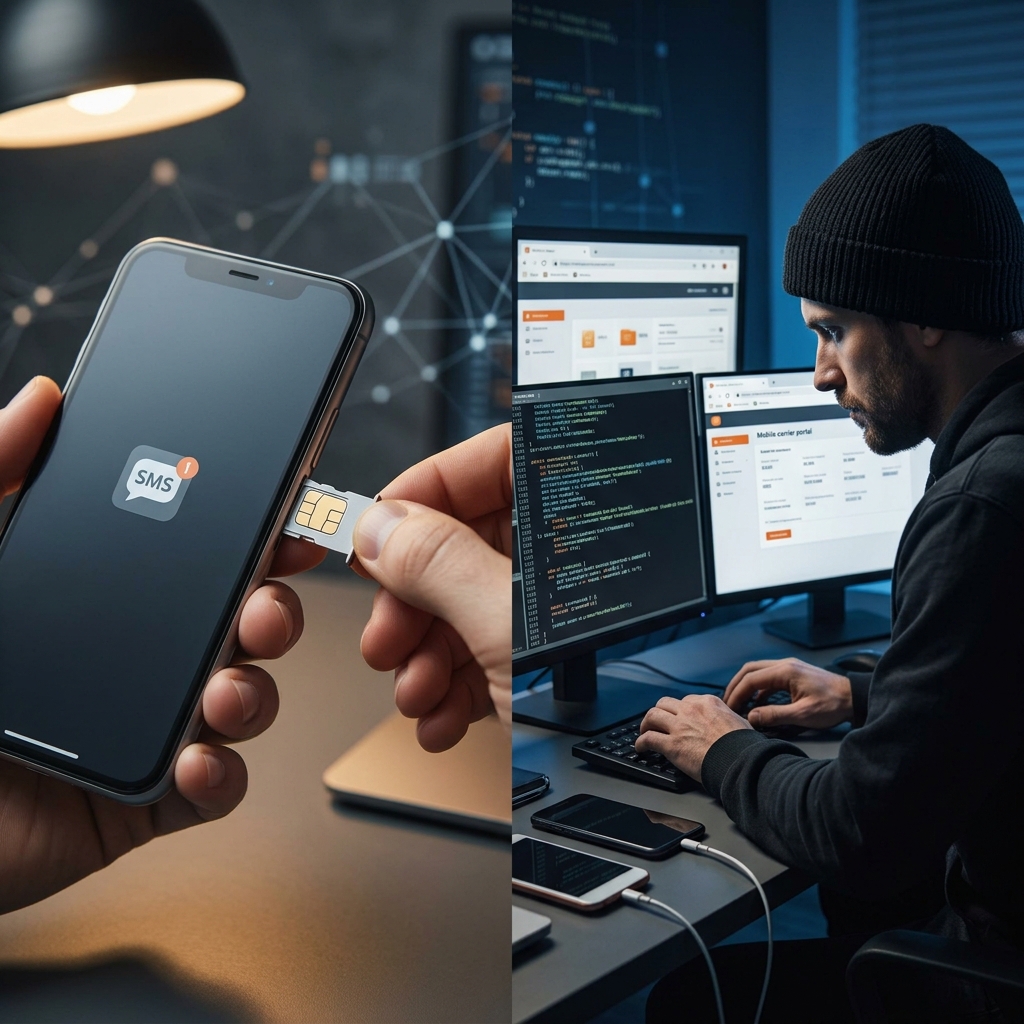
SIM swap fraud has quietly become one of the most dangerous forms of modern cybercrime. By hijacking a single phone number, attackers can intercept text messages, reset passwords, and walk straight into bank accounts, cryptocurrency wallets, and email inboxes. In high‑value cases, this can translate into losses reaching hundreds of thousands or even millions of dollars. This article explains how SIM swap attacks work, why they are so effective, and what you can do to reduce your risk.
What Is SIM Swap Fraud?
SIM swap fraud (also called SIM hijacking or SIM card swap fraud) is a type of identity theft in which a criminal tricks or manipulates a mobile carrier into transferring your phone number to a SIM card they control. Once the number has been moved, your phone loses service, while the attacker’s device starts receiving your calls and text messages, including security codes used for two‑factor authentication (2FA) and account recovery.
This attack exploits the trust placed in phone numbers as a convenient identity and verification tool. Many services assume that if you can receive a text on a number, you are the rightful owner of that account. SIM swap fraud turns that assumption into a weapon.
Key Characteristics of SIM Swapping
- Identity theft component: Attackers impersonate you using stolen personal data such as date of birth, address, and account details.
- Carrier interaction: Fraudsters contact the mobile provider and claim the phone was lost, stolen, or damaged, requesting a transfer to a new SIM.
- Control of SMS‑based security: Once the number moves, attackers can intercept one‑time passcodes and reset passwords for many services.
- Account takeover and theft: With access to messages and codes, criminals can log into banking, email, and social media accounts and drain funds or steal data.
How SIM Swap Attacks Typically Unfold
Most SIM swap incidents follow a recognizable sequence of steps. Understanding this sequence helps explain why the attack is so dangerous and why traditional defenses like passwords and security questions can be undermined.
1. Gathering Personal and Account Data
Attackers begin by collecting as much information as they can about the target. According to cybersecurity guidance, common sources include phishing emails, data breaches, social media profiles, and public records. This data allows them to convincingly impersonate the victim when dealing with the mobile carrier.
- Full name and address
- Date of birth and partial Social Security number (where applicable)
- Mobile account numbers or billing details
- Answers to security questions, sometimes gleaned from social media posts
2. Contacting the Mobile Carrier
Next, the criminal reaches out to the mobile operator via phone, online chat, or an in‑store interaction. They pretend to be the account holder and claim that the original phone is lost, broken, or otherwise unusable.
If the carrier’s identity verification is weak—for example, relying solely on easily guessed or stolen information—the attacker may successfully convince the provider to authorize a SIM replacement or port the number to a new SIM card or eSIM profile under the attacker’s control.
3. Transferring the Phone Number
Once the request is approved, the carrier deactivates the victim’s SIM and activates the number on the attacker’s SIM. From this moment:
- The victim’s phone begins showing no service, emergency calls only, or fails to receive calls and texts.
- The attacker’s phone now receives all SMS messages and calls intended for the victim, including banking alerts and one‑time passcodes.
4. Account Takeover and Financial Exploitation
With control of the number, attackers move rapidly. Guidance from financial and security organizations describes common next steps:
- Password resets: Using “forgot password” flows that send codes via SMS to email, banking, and social media accounts.
- Login approvals: Satisfying SMS‑based 2FA prompts to sign into online banking, crypto exchanges, or payment apps.
- Funds transfer: Moving money to mule accounts, purchasing cryptocurrency, or exploiting overdraft facilities.
- Data theft: Accessing email history, stored documents, or cloud backups for additional identity theft and blackmail.
Because these steps often happen quickly after the SIM swap, even a short delay in noticing the attack can result in substantial losses.
Why SIM Swap Fraud Is So Dangerous
SIM swap attacks are particularly harmful for three reasons: the central role of phone numbers in digital life, the speed at which attackers can act, and the difficulty of proving what happened after the fact.
Phone Numbers as a Central Security Hub
Many organizations still rely on text messages to deliver authentication codes, alerts, and account recovery instructions. Industry and government guidance cautions that this reliance makes SMS an attractive target for criminals.
- Banking and financial services frequently use SMS for sign‑in or transaction verification.
- Email providers and social networks often send recovery codes to a phone number on file.
- Some cryptocurrency platforms, trading sites, and online wallets depend on SMS‑based 2FA.
Once a number is compromised, these protections can be turned into pathways for unauthorized access rather than barriers.
Rapid, High‑Impact Theft
Because criminals often target people with significant online balances—such as cryptocurrency holders, active traders, or business owners—the value of a single successful SIM swap can be extremely high. Cases reported in legal commentary and news accounts have involved losses reaching or exceeding seven figures, particularly where crypto assets are involved. While exact amounts vary by case, consumer protection bodies note that SIM swaps are a known vector for major account takeover fraud.
Challenges in Accountability and Recovery
Even when the victim can show that a SIM swap occurred without authorization, it may be difficult to recover losses or assign clear liability. Mobile carriers and financial institutions may argue that they followed existing procedures, and disputes can arise about whether security measures were adequate or whether the victim shared information that enabled the fraud.
This reality makes prevention and rapid response crucial. Victims are often left to pursue remedies through customer service channels, regulatory complaints, or civil litigation, which may be time‑consuming and uncertain.
Recognizing the Warning Signs of a SIM Swap
Several organizations highlight common indicators that you may be experiencing a SIM swap attack. Learning these signs can help you act before serious damage occurs.
| Warning Sign | What It May Mean |
|---|---|
| Sudden loss of mobile service | Your SIM may have been deactivated and your number moved to a different device. |
| Stop receiving calls and texts | Incoming messages and verification codes are likely being delivered to someone else’s phone. |
| Carrier messages about new SIM or device activation | You receive notifications about a SIM change or new device that you did not authorize. |
| Unusual account alerts | Emails or app notifications show password reset requests, login attempts, or new device sign‑ins. |
| Suspicious financial activity | Unrecognized transactions, locked accounts, or inability to log in could indicate ongoing account takeover. |
How to Reduce Your Risk of SIM Swap Fraud
Although no single measure can fully eliminate the risk, a combination of technical safeguards and cautious behavior can significantly lower the chances that a SIM swap attack succeeds.
Strengthen Security with Your Mobile Carrier
Industry groups and carriers recommend that consumers take advantage of available account protections.
- Set up a strong account PIN or passcode: Use a unique PIN for your mobile account that is hard to guess and not reused elsewhere.
- Ask about SIM‑swap protection features: Some carriers offer tools that lock SIM changes until you explicitly unlock the feature or complete additional verification.
- Keep contact information up to date: Ensure your carrier has current email and backup contact details to reach you about suspicious activity.
- Be cautious with unsolicited contact: Treat unexpected calls, texts, or emails asking for account details as potential phishing attempts.
Limit Dependence on SMS for Security
Multiple security advisories encourage using authentication methods that do not rely on SMS when possible.
- Use authentication apps: Apps that generate one‑time codes on your device (such as those based on time‑based one‑time passwords) are less vulnerable to SIM hijacking.
- Enable device‑based or hardware security keys: Where available, use biometric logins or physical security keys for critical accounts.
- Prefer app‑based prompts over text messages: Many services offer in‑app approval rather than SMS; choosing these options reduces exposure.
Improve General Cybersecurity Hygiene
Because SIM swap scams often begin with stolen personal data, broader cybersecurity practices play an important role.
- Be wary of phishing: Do not click on suspicious links or provide login details in response to unsolicited messages.
- Limit public sharing of sensitive information: Details like your birthdate, address, or pet names can help attackers answer security questions.
- Use unique, strong passwords: Avoid reusing passwords across accounts and consider a reputable password manager.
- Monitor accounts regularly: Review bank statements, credit reports, and important account activity for signs of unauthorized access.
What to Do If You Suspect a SIM Swap
If you recognize one or more warning signs, immediate action can limit the damage. Government and financial sector guidance recommends taking several steps right away.
Immediate Response Checklist
- Contact your mobile carrier without delay: Use another phone if necessary. Inform them you suspect a SIM swap and request that they:
- Restore your number to a secure SIM
- Review recent account changes
- Strengthen verification and add or change your account PIN
- Secure critical accounts as soon as your number is back under your control:
- Change passwords for banking, email, and social media
- Review account settings for unknown devices, forwarding rules, or recovery options
- Enable stronger authentication methods that do not rely solely on SMS
- Notify financial institutions that you may have been targeted:
- Ask them to watch for unusual transfers or place temporary controls on accounts
- Dispute unauthorized transactions promptly
- Report the fraud to relevant authorities:
- In the United States, guidance suggests reporting to the Federal Communications Commission (FCC) and Federal Trade Commission (FTC), as well as using identity theft resources where personal data was exposed.
- Depending on the circumstances, you may also wish to file a report with local law enforcement.
SIM Swap Risk for Businesses and Organizations
SIM swap fraud is not only a consumer problem. Organizations that rely on SMS‑based authentication or phone‑centric account recovery can be affected when employees or high‑privilege users are targeted. Cybersecurity guidance for organizations highlights several mitigation strategies.
- Review authentication policies: Reduce or eliminate reliance on SMS for administrative and financial accounts.
- Collaborate with carriers: Work with mobile providers to enforce stronger identity verification for SIM changes affecting key personnel.
- Provide staff training: Educate employees about social engineering, phishing, and the signs of SIM swap fraud.
- Implement layered defenses: Combine device‑based authentication, security keys, and robust monitoring of abnormal login behavior.
Frequently Asked Questions (FAQs) About SIM Swap Fraud
Is SIM swap fraud the same as phone theft?
No. Traditional phone theft involves physically stealing a device. SIM swap fraud focuses on transferring your phone number to an attacker’s SIM, often without any physical access to your phone. In many cases, the victim still has their device—but it suddenly stops receiving calls and texts.
Can SIM swap attacks happen even if I never lost my phone?
Yes. Attackers usually do not need your device. They rely on social engineering and stolen personal data to convince the carrier that a legitimate SIM replacement is needed, even though your phone is still in your possession.
Are certain people more likely to be targeted?
Anyone can be targeted, but people with visible online wealth (such as cryptocurrency traders), business owners, public figures, and individuals with large social media followings may face higher risk because compromising their accounts can yield greater rewards for criminals. Financial sector guidance notes that SIM swaps are a known vector for accessing bank and payment accounts.
Is SMS‑based two‑factor authentication still safe to use?
SMS‑based 2FA is generally safer than using a password alone, but it is more vulnerable to SIM swap and certain interception attacks than app‑based or hardware token methods. Where possible, choose authentication apps or physical security keys for your most sensitive accounts.
What legal or regulatory protections exist?
Regulators and consumer protection agencies encourage carriers and financial institutions to improve safeguards and offer guidance for dealing with SIM swap fraud. Victims may have options to file complaints, seek remediation of unauthorized charges, or pursue legal remedies, but outcomes depend on the specific facts and local law.
Can I completely prevent SIM swap fraud?
No method offers absolute protection, but combining strong carrier security settings, reduced reliance on SMS for authentication, careful management of personal information, and ongoing account monitoring can significantly reduce your risk and help you respond quickly if an attack occurs.
References
- How Scammers Can Use SIM Swapping to Steal Your Phone While You Still Have It — Synovus Bank. 2023-06-01. https://www.synovus.com/personal/resource-center/fraud-prevention-and-security-hub/fraud-hub-education-and-prevention/featured/sim-card-swap/
- Understanding and Preventing SIM Swapping Attacks — Bitsight. 2024-03-15. https://www.bitsight.com/blog/what-is-sim-swapping
- What is SIM Swapping Fraud and How to Prevent It — Trend Micro. 2023-05-10. https://www.trendmicro.com/en_us/what-is/cyber-attack/types-of-cyber-attacks/sim-swapping-scams.html
- What is a SIM Swapping Scam? Protect Your Device — Verizon. 2022-11-20. https://www.verizon.com/about/account-security/sim-swapping
- Why You Need To Protect Yourself Against SIM Mobile Scams — TD Bank Group. 2023-09-01. https://stories.td.com/us/en/article/why-you-need-to-protect-yourself-against-sim-mobile-scams
- SIM Swapping Scams — American Bankers Association. 2022-08-30. https://www.aba.com/advocacy/community-programs/consumer-resources/protect-your-money/sim-swapping-scams
- Protecting Your Wireless Account Against SIM Swap Fraud — CTIA. 2021-12-01. https://www.ctia.org/protecting-against-sim-swap-fraud
Similar Articles








Read full bio of Sneha Tete


