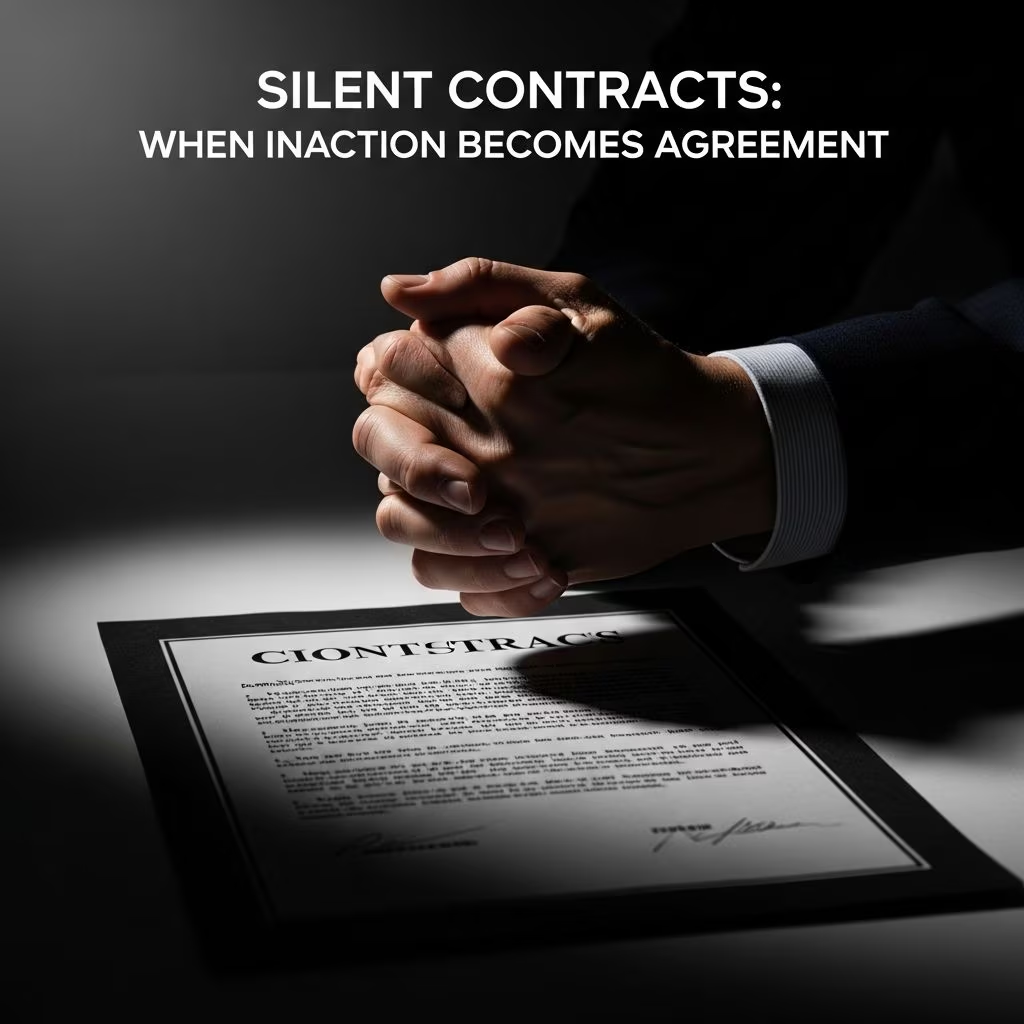
The Paradox of Silence in Contract Formation
In the realm of contract law, few concepts generate as much confusion and litigation as the question of whether remaining quiet can actually bind a party to a legal agreement. At first glance, this seems counterintuitive. How can doing nothing create an obligation? Yet the intersection of business practice, commercial custom, and legal precedent reveals a nuanced landscape where silence sometimes speaks louder than words.
The fundamental principle underlying contract law is mutual assent—both parties must intend to be bound by the agreement. This intent can be expressed through explicit statements, written signatures, or documented affirmations. However, courts have increasingly recognized that silence, under specific circumstances, can demonstrate the requisite intent to accept an offer. Understanding when and how this occurs is essential for business owners, entrepreneurs, and anyone engaged in commercial transactions.
The General Rule: Silence Does Not Equal Acceptance
As a baseline principle, the common law tradition holds that silence or inaction alone does not constitute acceptance of a contract offer. This rule protects potential offerees from unwanted obligations. If a merchant could impose contracts simply by making an offer and waiting for silence to confirm acceptance, commerce would become unmanageable. Parties could find themselves unexpectedly bound to unfavorable terms simply by failing to respond promptly.
Legal systems have therefore established a protective presumption: an offeror cannot unilaterally impose a duty on an offeree to speak up or face contractual consequences. The burden falls on the offeror to establish that the specific circumstances justify treating silence as acceptance. This foundational rule prevents what might otherwise become coercive commercial tactics.
Exceptions to the Silence Rule
Prior Course of Dealing Between Parties
One of the most significant exceptions to the anti-silence rule emerges when the parties share a history of conducting business in a particular manner. When two parties have repeatedly transacted using certain methods or patterns, subsequent silence may be interpreted as acceptance if it aligns with their established practices. For instance, if a supplier and buyer have consistently exchanged monthly orders where the buyer simply fails to respond to indicate rejection (rather than affirmatively accepting), their pattern could justify treating continued silence as acceptance of the next order.
This exception recognizes commercial realities. Experienced business partners often develop efficient workflows where constant reaffirmation becomes unnecessary. The parties understand their relationship sufficiently to infer acceptance from continued participation in the established process.
Express Agreement to Accept by Silence
The parties may explicitly agree in advance that silence will constitute acceptance. This contractual arrangement overrides the general presumption against silence-based acceptance. For example, a service provider might state: “If you do not respond within 5 business days, we will consider your order confirmed and proceed with delivery.” When both parties consciously agree to this term, silence becomes a valid acceptance mechanism.
Circumstances Implying an Obligation to Respond
Certain commercial contexts create an implicit duty to reject if one disagrees. In these situations, failure to object may constitute acceptance. This typically occurs in industries with established customs or when goods or services are delivered on a trial or conditional basis with an understanding that the recipient must actively reject unsatisfactory items.
Performance or Conduct Following the Offer
When a party begins performing under an offer or uses goods that were delivered, their conduct may demonstrate acceptance regardless of explicit verbal or written acknowledgment. If a business receives a shipment of materials and immediately incorporates them into production, their actions communicate acceptance far more clearly than words could.
Legal Framework for Evaluating Silence
Intent to Be Bound
For silence to constitute valid acceptance, the offeree must have intended to be legally bound by the acceptance. Courts examine whether the party’s inaction reflects a conscious decision to accept the terms or merely indifference or oversight. This subjective element can be challenging to establish and often requires corroborating evidence of conduct, statements, or established business practices.
Communication and Notification Requirements
Even when silence might constitute acceptance, the offeree must have had knowledge of the offer. Additionally, accepted custom or agreement must specify how the offeror will be notified of the acceptance through silence. If an offeror cannot demonstrate that the offeree knew of the offer and understood the terms under which silence would constitute acceptance, courts will likely reject the silence-as-acceptance argument.
Timing and Reasonableness
The period during which silence can constitute acceptance must be defined clearly or understood as reasonable given the circumstances. An offeree cannot be expected to maintain perpetual awareness of old offers. If an offer is made orally in a face-to-face meeting and the offeree says nothing in the moment, this likely does not create acceptance days or weeks later when they suddenly fail to reject it.
Practical Implications for Business Contracts
Risk Management Strategies
Business leaders should implement several protective measures when drafting contracts or establishing commercial practices. First, explicitly specify whether silence constitutes acceptance. If your business model relies on silence-based acceptance (such as automatic renewals or recurring service agreements), make this crystal clear in writing. The Federal Trade Standards Commission and various state laws have increasingly mandated explicit opt-in or opt-out provisions for such arrangements, requiring affirmative customer action rather than relying on silence.
Second, document all communications regarding offers and responses. When disputes arise about whether acceptance occurred through silence, contemporaneous records become crucial evidence of what the parties understood about the terms and conditions of acceptance.
Automatic Renewal Clauses and Opt-Out Provisions
Many modern contracts include automatic renewal provisions where continuing silence (failure to cancel) results in contract continuation. However, regulatory frameworks in most jurisdictions now require that such provisions meet strict disclosure requirements. Companies must provide clear and conspicuous notices of renewal terms, simple cancellation mechanisms, and explicit confirmation of consent before charging customers for automatic renewals.
Industry Customs and Trade Usage
Different industries have developed varying customs regarding when silence constitutes acceptance. Securities trading, commodities markets, and international commercial transactions each have established practices that courts recognize. A party claiming that silence constitutes acceptance based on industry custom must demonstrate that this practice is genuinely recognized within the relevant trade and that both parties participated in that industry.
Common Fact Scenarios and Their Outcomes
The Unsolicited Goods Scenario
A supplier ships merchandise to a business without an explicit purchase order. The recipient remains silent and continues with normal operations. Does silence constitute acceptance? Generally, no. The Uniform Commercial Code and consumer protection laws specifically prohibit treating receipt and non-rejection of unsolicited goods as acceptance. The recipient may use the goods and remain entitled to return them or treat the sender as making a gift.
Ongoing Relationships with Standing Orders
A distributor and retailer have maintained a monthly ordering relationship for three years. The distributor sends a standard order form, and the retailer historically places orders by either signing the form or sending a brief confirmation. One month, the retailer receives the order form and says nothing. Under the course-of-dealing exception, this silence might constitute acceptance if the parties’ pattern clearly established that non-rejection equals acceptance.
Electronic Communications and Digital Transactions
Modern commerce increasingly occurs through electronic platforms where traditional silence concepts become complicated. A customer receives an email offer with a 48-hour response deadline. They read the email but do not respond within the period. Did their silence constitute acceptance? The answer depends on whether the parties previously agreed to such terms, whether industry practice supports this interpretation, and whether the offeree’s silence genuinely demonstrated intent to be bound.
Regulatory Considerations and Consumer Protection
Federal regulations, particularly the Telephone Consumer Protection Act and regulations governing automatic renewals, have substantially limited the ability of businesses to rely on silence as acceptance in consumer contracts. The Restore Online Shoppers Confidence Act specifically prohibits negative option features (where the consumer must take affirmative action to cancel) unless the merchant obtains prior express informed consent and provides clear, conspicuous disclosures.
These regulations reflect a policy judgment that silence-based acceptance, particularly in consumer contexts, creates an asymmetrical bargaining situation where sophisticated merchants exploit consumer inattention. State laws have increasingly mirrored these federal protections, creating a landscape where relying on silence as acceptance is risky for most commercial enterprises unless explicitly authorized by clear contractual language and regulatory compliance.
Comparative Analysis: Express Versus Implied Acceptance Methods
| Acceptance Method | Legal Clarity | Enforceability | Business Risk | Best Use Cases |
|---|---|---|---|---|
| Written/Signed | Very High | Strongest | Minimal | Major transactions, consumer contracts, regulated industries |
| Explicit Verbal | High | Strong | Low | Established business relationships, time-sensitive deals |
| Performance/Conduct | Moderate | Moderate | Moderate | Service agreements, supply arrangements, ongoing relationships |
| Silence | Low | Weakest | High | Established trading relationships, with clear prior agreement |
Strategies for Business Owners
Clear Contract Drafting
The foundation of avoiding disputes lies in precise contract language. Specify exactly what actions or inactions constitute acceptance. Rather than leaving this ambiguous, state: “Acceptance occurs upon written confirmation by email” or “Acceptance is deemed to occur if Customer does not notify Vendor of rejection within 5 business days, provided Vendor sends notice of this acceptance mechanism.”
Documentation Practices
Maintain detailed records of all communications regarding contract formation. Email chains, order confirmations, delivery receipts, and customer interactions all serve as evidence of what the parties understood about acceptance requirements. This documentation becomes invaluable if disputes arise about when or whether acceptance occurred.
Consent Mechanisms for Recurring Charges
If your business model involves recurring billing or automatic renewals, implement affirmative opt-in procedures. Obtain explicit written or electronic consent before charging customers. Provide straightforward cancellation mechanisms and periodic reminders about renewal terms. These practices comply with regulations and reduce customer disputes.
Industry-Specific Compliance
Research whether your industry has established customs regarding acceptance through silence. Determine whether any regulations apply to your acceptance mechanisms. Financial services, insurance, telecommunications, and direct marketing all face specific regulatory requirements regarding how acceptance may occur and what disclosures are required.
Frequently Asked Questions
Q: Can a company force me to accept a contract through silence?
A: No, with narrow exceptions. Generally, silence alone does not constitute acceptance unless you previously agreed that it would, you have an established pattern of conducting business that way, or specific circumstances create an obligation to reject affirmatively. Protective laws prevent companies from imposing contracts through consumer silence.
Q: What if I receive goods I didn’t order?
A: You are generally not obligated to pay for unsolicited goods. Remaining silent does not constitute acceptance. You can refuse delivery, return the items, or treat them as a gift. The Uniform Commercial Code protects recipients from being bound to unwanted contracts through non-rejection.
Q: How long can silence last before it becomes acceptance?
A: This depends entirely on the circumstances. If the parties agreed on a specific timeframe, that applies. Otherwise, courts consider what is reasonable given the nature of the offer and industry practice. A reasonable period might be days in fast-moving markets but weeks or months in other contexts.
Q: Does email silence differ legally from written letter silence?
A: Not fundamentally, though electronic communications can complicate matters. If parties agree that email constitutes an acceptable communication method, silence via email is treated similarly to other forms. However, spam filters and delivery issues can affect whether the recipient actually received and saw the offer.
Q: Are automatic renewal subscriptions valid if based on silence?
A: Automatic renewal terms based on consumer silence face significant regulatory challenges. Federal law and most state laws require explicit opt-in consent, clear disclosures, and simple cancellation mechanisms. Companies cannot rely on consumer silence to trigger automatic billing.
Q: What should I include in my contract to clearly define acceptance?
A: Specify the exact method of acceptance (written email, signed document, performance of specific acts). Define any timeframes. If silence could constitute acceptance, state this explicitly and describe the circumstances. Include notice provisions and confirmation procedures to document when acceptance occurred.
References
- Accepting a Contract: Contract Acceptance Explained: Methods, Rules & Validity — UpCounsel. 2024. https://www.upcounsel.com/accepting-a-contract
- Acceptance in Contract Law: Key Points and Insights — ZM Law Group. 2024. https://zmatlaw.com/acceptance-in-contract-law-key-points-and-insights/
- Contract Corner: Acceptance Requirements in Service Agreements — Morgan Lewis. January 2021. https://www.morganlewis.com/blogs/sourcingatmorganlewis/2021/01/contract-corner-acceptance-requirements-in-service-agreements
- Contract Acceptance: What It Means and How It Works — Sirion. 2024. https://www.sirion.ai/library/contract-management/contract-acceptance/
- The Essential Elements of a Contract — Thomson Reuters Legal. 2024. https://legal.thomsonreuters.com/blog/the-essential-elements-of-a-contract/
- 3 Elements of a Business Contract — Davis Business Law. 2024. https://davisbusinesslaw.com/what-three-elements-must-i-include-in-a-business-contract/