
Disability Buyout: 6 Key Questions To Ask Before Accepting It
Understand how lump-sum disability buyouts work and what you may give up.
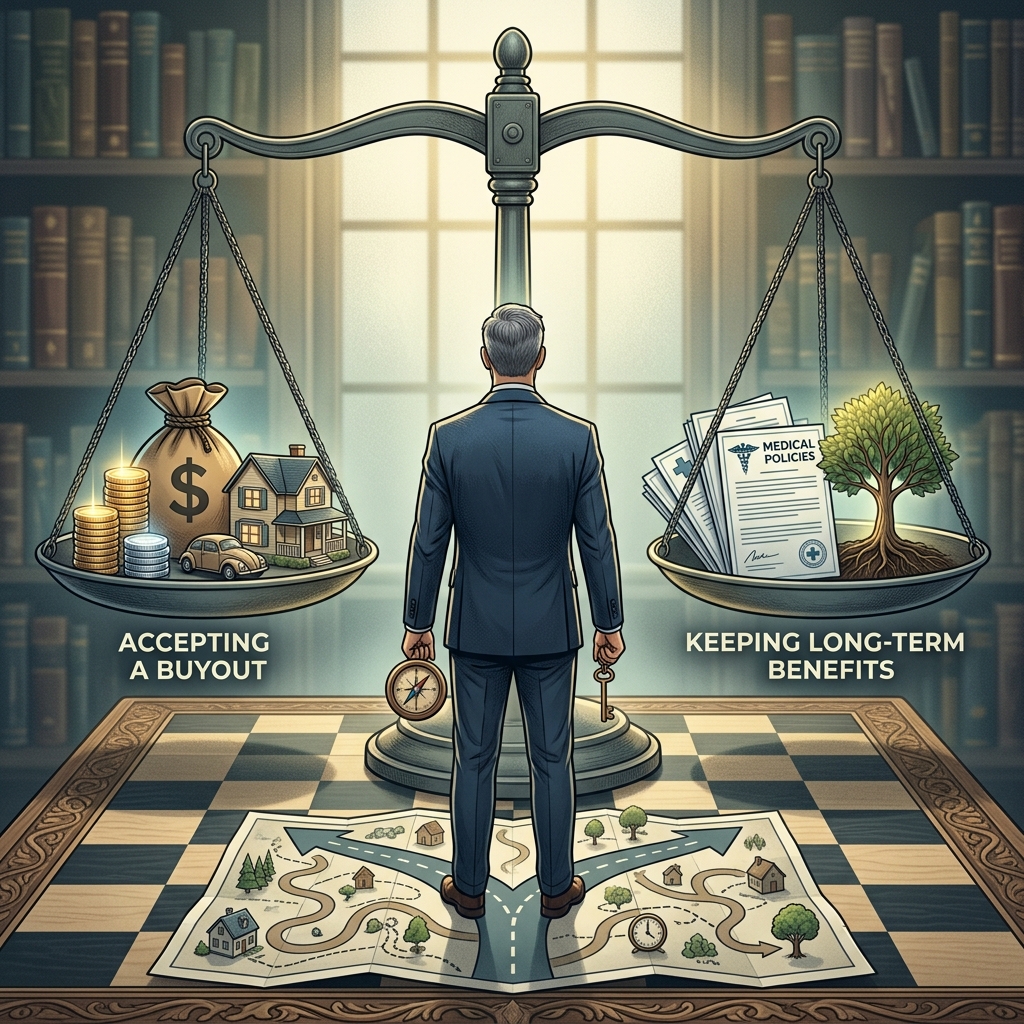
Understanding a Disability Buyout
A disability buyout is a one-time payment offered in exchange for ending future disability benefits under a policy. Instead of receiving monthly checks for as long as you remain eligible, you accept a single lump sum and close the claim. In practical terms, the insurer is asking to settle your rights now rather than continue making payments over time.
These offers usually arise in long-term disability cases, where the monthly benefit stream could last for years. The insurer may prefer certainty and reduced administrative costs, while the claimant may be attracted by immediate cash. But the tradeoff is significant: once the agreement is signed, the ongoing claim generally ends, and the policyholder loses the chance to seek future benefit payments for that claim.
Because the decision affects both present finances and long-term protection, a buyout should be viewed as a permanent legal and financial choice rather than a simple payout.
Why an Insurer Might Offer a Lump Sum
Insurance companies do not usually offer buyouts out of generosity. A lump-sum settlement often benefits the insurer by reducing uncertainty and limiting the total amount it may ultimately pay. A future stream of monthly payments can be expensive to administer and difficult to predict, especially if the claim could continue for a long period.
From the insurer’s perspective, a discounted buyout can make sense when the company expects that the claim may remain open for years. The insurer may also consider factors such as the claimant’s age, medical condition, expected duration of disability, and the likelihood of disputes over ongoing eligibility. The result is an offer that may be less than the total amount you would receive if benefits continued month by month.
That does not mean every buyout is a bad deal. In some cases, a lump sum can provide flexibility, pay off debt, or create a financial buffer. But the offer should be tested against the true value of the benefits you are giving up.
What You Give Up When You Accept
The biggest issue with a buyout is finality. Once you accept the settlement and sign the release, you generally cannot revive the claim later if your condition worsens or if you later realize the offer was too low. You also lose the right to continue receiving monthly disability payments under that policy.
Depending on the policy and the circumstances, accepting a buyout may also affect related coverage or benefits tied to the disability plan. In employer-sponsored plans, disability benefits can sometimes connect to health, dental, life insurance, or retirement-related protections. If the buyout ends the underlying disability status or policy relationship, additional benefits may be impacted as well.
Another important consequence is the loss of inflation protection or future increases that might have applied to your monthly payments. If the policy includes cost-of-living adjustments or other enhancements, those future advantages may disappear once you settle.
Key Questions to Ask Before You Decide
A lump-sum offer should be reviewed carefully and from several angles. The right question is not just whether you need money now, but whether the offer is fair compared with the value of the benefits you are surrendering.
- How much longer could benefits realistically continue under the policy?
- What is the total projected value of those monthly payments over time?
- Does the policy include cost-of-living increases or other future adjustments?
- Will accepting the buyout affect other employer benefits?
- Are there taxes, medical expenses, or debt obligations that should be considered?
- Do you have other income sources if the lump sum is exhausted?
These questions matter because a large payment today may look attractive even when it is financially weaker than the value of a long benefit stream. The timing of the offer also matters. An offer made early in a claim can be very different from one made after years of monthly benefits.
How Buyout Amounts Are Often Calculated
Buyout offers are usually based on expected future payments discounted to present value. In plain English, the insurer estimates what it would likely pay in the future, then reduces that amount to reflect the fact that you are receiving the money now instead of later. Actuarial assumptions about life expectancy, claim duration, and discount rates often shape the final number.
This method can produce an offer that is meaningfully lower than the sum of all future benefits. Insurers may also build in a margin that further lowers the offer. As a result, the headline number may feel substantial while still falling short of the policy’s long-term value.
The following table illustrates the basic idea:
| Factor | How It Affects the Offer |
|---|---|
| Future monthly benefits | Sets the starting value the insurer expects to avoid paying |
| Discount rate | Reduces the value because the money is paid now instead of later |
| Life expectancy | May lower the offer if the insurer expects fewer years of payments |
| Policy terms | Can raise or lower value depending on duration and adjustments |
Because the calculation is not always transparent, it is wise to compare the offer against a conservative estimate of what the benefits would have been over time.
Advantages of Taking a Buyout
For some people, a lump sum can solve immediate problems that monthly checks cannot. The money may be used to pay medical bills, reduce high-interest debt, modify a home, cover caregiving costs, or invest in a more stable long-term plan. A single payment can also create peace of mind by removing the need to wait each month for the next benefit check.
A buyout can be especially helpful when a person has urgent expenses or no reliable alternative source of income. It may also appeal to those who want to manage their own finances rather than remain tied to an insurance company’s claim process. In the right situation, certainty and flexibility can have real value.
Still, the advantage is only meaningful if the money is managed carefully. A lump sum that is spent too quickly can leave a claimant worse off than a steady monthly income would have.
Risks That Are Easy to Overlook
The main danger is underestimating how long disability benefits might have lasted. A person may accept a settlement because it seems generous in the moment, only to later realize that the monthly payments would have been worth much more over time. That risk is even greater if the disability is permanent or long-term.
Another overlooked issue is the loss of future protection if the medical condition becomes more serious. Monthly benefits can function as a safety net if the claimant’s needs grow. A buyout removes that safety net entirely.
There is also the risk of poor money management. A person who is used to receiving monthly income may not have a plan for investing, budgeting, or preserving a larger one-time payment. Without discipline, the money may disappear before it can replace the value of the surrendered claim.
Who Should Review the Offer
Because a buyout affects both legal rights and personal finances, it is sensible to get input from more than one professional. An attorney familiar with disability claims can help interpret the policy, identify hidden tradeoffs, and evaluate whether the insurer’s proposal is fair. A financial professional can help estimate how long the money may need to last and what return would be required to replace future benefits.
Medical information also matters. If a doctor believes the condition is likely to improve, or if the claim may face challenges in the future, those facts can influence whether a buyout is attractive. On the other hand, if the disability is likely to continue for many years, a settlement may be easier to measure against the value of the remaining policy benefits.
In short, no claimant should treat a lump-sum offer as a routine form to sign. It is a negotiated resolution with lasting consequences.
Signs a Buyout Deserves Extra Caution
Some offers deserve especially close scrutiny because the long-term value may be greater than it first appears. A cautious review is important when the policy includes lifetime or retirement-age benefits, when cost-of-living adjustments are available, or when the claim has many years left to run.
Extra care is also needed if the disability affects someone’s ability to earn again in the future, or if the household depends on the monthly check for essential living expenses. In those situations, the guaranteed income stream may be more valuable than a one-time payment, even if the payment looks substantial.
Before agreeing to any settlement, it helps to compare the offer with three possible scenarios: best case, expected case, and worst case. That comparison can reveal whether the offer truly compensates for the loss of continued coverage.
Common Decision Factors at a Glance
| Factor | Why It Matters |
|---|---|
| Current cash needs | Shows whether immediate funds solve urgent problems |
| Future benefit length | Measures how much income is being surrendered |
| Other household income | Determines whether the family can absorb losing the monthly check |
| Tax treatment | Affects the actual value of the settlement |
| Related benefits | May change whether health or life coverage continues |
Frequently Asked Questions
Is a disability buyout required?
No. A buyout is generally an offer, not an obligation. You are usually free to reject it and continue with the claim if the policy and facts support ongoing benefits.
Can I negotiate the amount?
Often, yes. Some buyout offers may be negotiable, especially if the claimant can show that the proposed amount undervalues the remaining benefit stream or overlooks related coverage.
Will I still have coverage after I accept?
Usually not for the disability claim itself. Accepting the buyout typically ends the ongoing right to monthly benefits, and related coverage may also be affected depending on the policy structure.
Should I sign quickly if the offer seems fair?
Even a fair-looking offer deserves review. Once a release is signed, the decision is usually permanent, so the offer should be checked for hidden consequences before any deadline expires.
What if I am not sure how to compare the numbers?
A lawyer or financial advisor can help estimate the present value of future benefits and compare that figure with the lump sum. That comparison is often the clearest way to evaluate the deal.
Making a Measured Decision
The right answer depends on the details of the policy, the person’s medical condition, and the household’s financial needs. A lump-sum disability buyout can be useful when it solves urgent problems and provides a realistic path forward. It can also be a costly mistake if the payment is too low or if the claimant gives up years of dependable income too quickly.
Before choosing, review the policy, think through the long-term consequences, and compare the offer with the likely value of continued benefits. A careful decision now can protect both financial stability and legal rights later.
References
- Should I Take a Lump-Sum Disability Insurance Buyout? — FindLaw. 2026. https://www.findlaw.com/injury/accident-injury-law/lump-sum-disability-insurance-buyouts-overview.html
- Long-Term Disability Lump-Sum Buyouts — Ortiz Law Firm. 2026. https://www.nickortizlaw.com/practice-areas/long-term-disability-insurance-erisa-lawyer/lump-sum-buyouts-disability-claim/
- Lump Sum Settlements: What to Know for Your Disability Claim — Seltzer Legal. 2026. https://www.seltzerlegal.com/blog/what-to-consider-before-accepting-a-lump-sum-settlement-for-a-disability-claim/
- Should You Accept a Long Term Disability Policy Buy-Out? — Debofsky Law. 2026. https://www.debofsky.com/articles/long-term-disability-buyout/
- FAQs — Victor Peña Law PLLC. 2026. https://www.disabilitybuyoutlawyer.com/faqs/
Similar Articles








Read full bio of Sneha Tete




