Serving Alcohol Under 21: State Laws Guide
Navigate U.S. state laws on minimum age for serving alcohol in bars, restaurants, and events to ensure compliance.
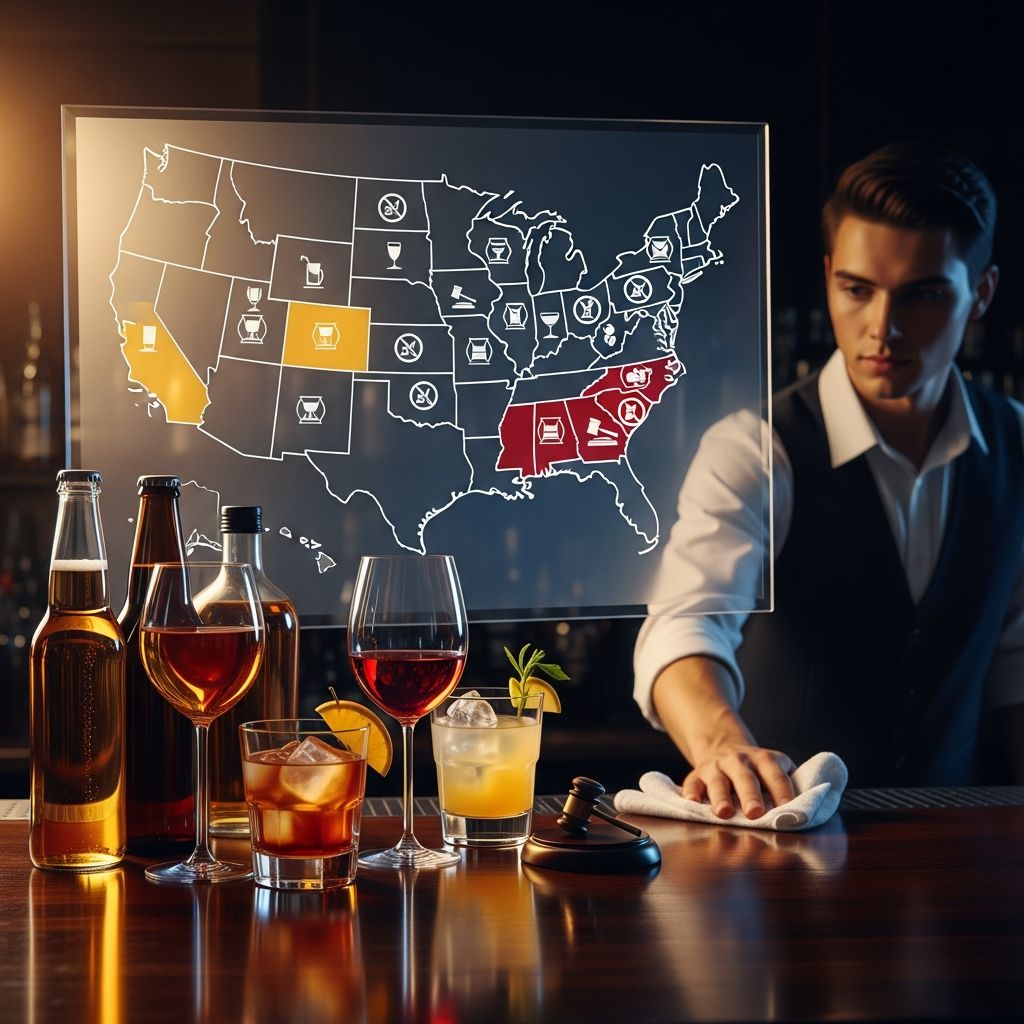
Serving Alcohol Under 21: Essential State-by-State Legal Guide
The legal drinking age in the United States is uniformly set at 21 years old under federal law, but regulations governing who can serve alcoholic beverages are far more varied. These rules hinge on state-specific statutes, which often distinguish between serving in restaurants, bars, or off-premise locations, and may impose additional requirements like supervision or certifications. Business owners in the hospitality industry must grasp these nuances to avoid hefty fines, license suspensions, or criminal charges.
Understanding Federal vs. State Frameworks for Alcohol Service
Federal guidelines, primarily through the National Minimum Drinking Age Act of 1984, prohibit the sale and public possession of alcohol by those under 21, but they leave service age details to individual states. This creates a patchwork of laws where 18-year-olds can pour drinks in many places, while others demand servers reach 21. Key distinctions include on-premise service (like restaurants where alcohol is consumed immediately) versus off-premise (liquor stores for take-home sales), with the latter often requiring higher ages.
Employers face liability under dram shop laws, which hold businesses accountable for overserving patrons who later cause harm. Hiring underage servers without verifying local rules can amplify these risks, especially in high-volume venues.
Minimum Ages Across U.S. States: A Detailed Overview
Most states permit alcohol service starting at age 18, but exceptions abound based on venue type, beverage strength, and local ordinances. For instance, 26 states explicitly allow 18-year-olds to serve, though cities like Chicago override Illinois’ state law by mandating 21. Five states align strictly with federal standards, requiring 21 without exceptions.
In a few progressive cases amid labor shortages, ages dip lower: Michigan and Maine allow 17-year-olds under supervision, Iowa permits 16-year-olds in restaurants with parental consent, and West Virginia greenlights 16-year-olds in some retail settings.
| State | Minimum Age to Serve | Key Restrictions/Exceptions |
|---|---|---|
| Alabama | 21 | No exceptions |
| Alaska | 21 | Applies to all venues |
| Arizona | 18 | Restaurants primarily |
| Arkansas | 21 | Strict compliance |
| California | 21 (bartenders); 18 in some restaurants | Food accompaniment required for 18 |
| Colorado | 18 | Supervisor present if under 21 |
| Florida | 18 | On-premise only |
| Georgia | 18 | 21 if alcohol >75% revenue |
| Hawaii | 18 | Supervision needed |
| Illinois | 18 | Chicago requires 21 |
| Maine | 17 | Under supervision |
| Michigan | 17 | As of 2023 changes |
| New York | 18 | Strict no-sale to minors |
| Texas | 18 | On-premise service |
| Washington | 18 | Food service primary |
This table summarizes select states; always verify with state alcohol boards for full details, as laws evolve.
Distinctions Between Serving, Bartending, and Selling Alcohol
Serving alcohol often means delivering drinks to tables, while bartending involves mixing and pouring at the bar counter. Twenty-three states plus D.C. mandate 21 for bartenders due to perceived higher responsibility. Only three states require all servers to be 21 outright.
- On-Premise Service: Common in eateries; 41 states/DC allow 18-year-olds, but bars/nightclubs frequently demand 21.
- Off-Premise Sales: Liquor stores often bar under-21s entirely.
- Beverage Types: Some locales permit 18-year-olds to handle beer/wine but not liquor.
Venue matters hugely: Restaurants with substantial food sales enjoy leniency, unlike pure alcohol-focused spots.
Required Certifications and Training Programs
Beyond age, many states enforce training. TIPS (Training for Intervention Procedures) or state-specific courses teach responsible service, ID checking, and recognizing intoxication. Not all states require bartending licenses, but 26 do for servers under 21. For example, Alabama allows 18 in certified programs. These programs reduce liability and are often mandatory in high-risk areas.
Businesses benefit from uniform training: Employees learn to refuse overservice, cutting dram shop lawsuit risks. Costs are low—typically $20-50 online—with certification lasting 2-3 years.
Local Ordinances and City-Level Overrides
State laws set baselines, but municipalities can tighten them. Chicago’s 21 minimum trumps Illinois’ 18; Baltimore varies by jurisdiction. Stadiums, concerts, and events follow special permits, sometimes allowing 18-year-olds under strict oversight.
Employers must consult city alcohol boards alongside state agencies like the Alcohol Policy Information System (APIS) for layered compliance.
Consequences of Violating Age Restrictions
Non-compliance invites severe penalties. Servers face fines up to $1,000 or jail time; businesses risk license revocation, civil suits, or closure. New York’s SLA deems underage sales a crime with disciplinary action. Dram shop violations compound this, with payouts reaching millions if overserved patrons crash vehicles.
Insurance often excludes non-compliant venues, leaving owners personally liable. Proactive checks—age verification, training—mitigate these.
Recent Changes and Trends Influencing Age Rules
Labor shortages post-COVID prompted relaxations: Michigan dropped to 17 in 2023, Iowa to 16 with consent. As of 2026, expect ongoing tweaks amid hospitality staffing crunches. Track via state liquor authorities or APIS for updates.
Best Practices for Hospitality Employers
To thrive legally:
- Review state and local laws annually.
- Mandate training for all staff.
- Segregate duties: 18-year-olds serve table drinks; 21+ handle bars.
- Document ID checks and refusals.
- Consult attorneys for multi-location ops.
These steps safeguard operations and foster safe environments.
Frequently Asked Questions (FAQs)
Can 18-year-olds serve alcohol everywhere?
No, only in 26 states; others require 21, with local overrides common.
Is a bartending license needed nationwide?
No, but many states require server training; bartenders often need 21 regardless.
What’s the youngest age to serve alcohol?
16 in Iowa (restricted) and West Virginia; 17 in Maine/Michigan under supervision.
Do restaurants have different rules than bars?
Yes, restaurants often allow 18+ for beer/wine; bars demand 21.
What happens if I hire underage servers illegally?
Fines, jail, license loss, and lawsuits under dram shop laws.
Navigating Alcohol Service in Specialized Venues
Events, stadiums, and resorts follow hybrid rules: Temporary permits may allow 18-year-olds, but high-risk settings prefer 21+. Off-premise like grocery stores restrict youth to stocking, not sales. Understanding these ensures seamless operations.
In summary, while under-21 service is feasible in most states, precision in compliance is paramount for business success and patron safety.
References
- Legal Age To Serve Alcohol: State-by-State Guide (2026) — OysterLink. 2026. https://oysterlink.com/spotlight/legal-age-to-serve-alcohol/
- How Old do You Have to be to Serve Alcohol? — TIPS Certification (gettips.com). 2025. https://www.gettips.com/blog/age-serve-alcohol
- What’s the Legal Minimum Age for Serving Alcohol? — Seller Server Online. 2025. https://www.sellerserveronline.com/how-old-must-you-be-to-serve-alcohol/
- What You Need to Know if You’re a Licensed Retailer — New York State Liquor Authority (sla.ny.gov). 2025. https://www.sla.ny.gov/what-you-need-know-if-youre-licensed-retailer
- Understanding Age Requirements for Serving and Bartending — Liquor Exam. 2025. https://www.liquorexam.com/blog/understanding_age_requirements_for_serving_and_bartending
Similar Articles






Read full bio of Sneha Tete