Service Refusal Laws: Sexual Orientation & Gender Identity
Navigate the complex legal landscape of service refusal based on protected characteristics.
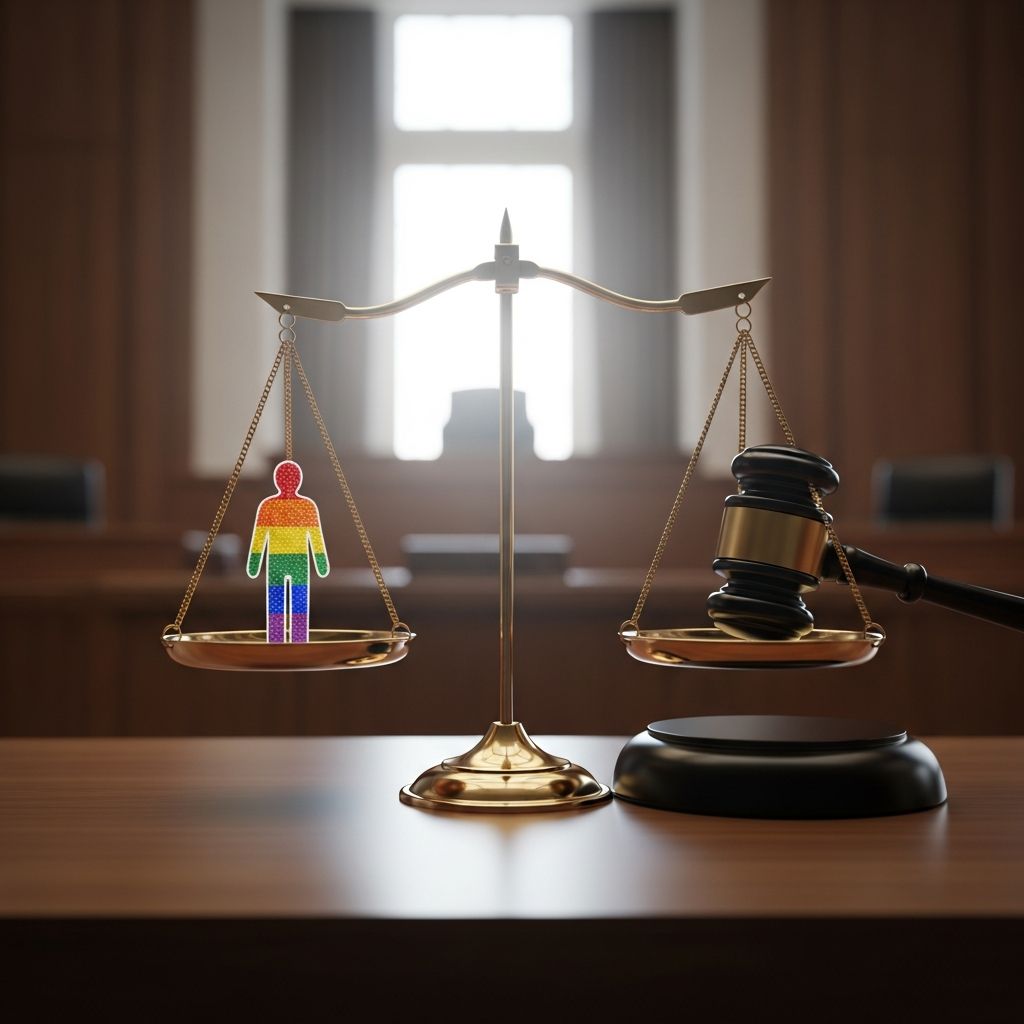
Understanding the Legal Framework for Service Refusal
The intersection of business autonomy and consumer protection has become increasingly complex in recent years, particularly when examining questions about whether service providers can decline business based on a customer’s sexual orientation or gender identity. This legal landscape is shaped by overlapping federal statutes, state legislation, and landmark court decisions that continue to evolve. Business owners and consumers alike must understand the patchwork of protections and limitations that define these transactions.
The fundamental tension in this area stems from competing interests: businesses claiming rights to refuse service based on personal beliefs, and consumers seeking protection from discrimination. Different jurisdictions handle this balance differently, creating a complicated framework that requires careful navigation.
Federal Employment Protections and Their Scope
At the federal level, the most significant protection comes from Title VII of the Civil Rights Act of 1964. For many years, this statute did not explicitly address sexual orientation or gender identity discrimination. However, a transformative Supreme Court decision fundamentally altered this landscape. In the case of Bostock v. Clayton County, the Supreme Court unanimously ruled that employment discrimination based on sexual orientation or gender identity constitutes unlawful sex discrimination under Title VII.
The Court’s reasoning focused on statutory interpretation rather than expanding the definition of “sex.” Justice Neil Gorsuch, writing for the majority, argued that an employer cannot discriminate against an employee for being gay or transgender without simultaneously discriminating based on sex. To illustrate this principle, the Court provided a practical example: if an employer terminates an employee for being transgender while retaining another employee who was assigned the same sex at birth but does not identify as that sex, the employer has inherently discriminated based on sex.
This protection applies to private sector employers and covers various employment decisions, including hiring, firing, compensation, and working conditions. The Equal Employment Opportunity Commission (EEOC) enforces these protections and investigates complaints of discrimination.
State and Local Public Accommodations Laws
Beyond federal employment law, many states and localities have enacted specific protections for public accommodations. New York’s Sexual Orientation Non-Discrimination Act (SONDA) exemplifies comprehensive state-level protection. SONDA prohibits discrimination based on actual or perceived sexual orientation across multiple domains, including employment, housing, credit, education, and public accommodations.
The scope of public accommodations protections varies significantly by jurisdiction. Some states provide broad protections that explicitly cover sexual orientation and gender identity in all public accommodations contexts, while others offer more limited protection or none at all. This creates a fragmented legal landscape where the same conduct might be legal in one state but illegal in another.
Types of Covered Activities
Public accommodations laws typically protect access to:
- Restaurants, bars, and hospitality establishments
- Retail businesses and shops
- Hotels and lodging facilities
- Entertainment venues and recreational facilities
- Professional services
- Transportation services
The Creative Services Dilemma and First Amendment Considerations
A critical tension emerged in the landmark case 303 Creative v. Elenis, where the United States Supreme Court addressed whether a graphic designer could refuse to create wedding websites for same-sex couples based on religious objections. The plaintiff, Lorie Smith, operated her business in Colorado, a state with comprehensive public accommodations laws prohibiting service refusal based on sexual orientation.
Smith argued that creating custom websites for same-sex weddings would require her to create speech expressing support for same-sex marriage, thereby violating her First Amendment right to refuse to create speech with which she disagrees. The Supreme Court’s majority accepted this argument, holding that the application of Colorado’s public accommodations law to compel her services violated her free speech rights.
The majority’s decision focused on the inherently expressive nature of custom creative work. By distinguishing between services that involve created speech and more transactional services, the Court suggested that some service providers might have greater latitude to refuse customers based on the expression involved. However, the Court did not explicitly define the boundary between protected creative speech and ordinary commercial transactions.
This decision immediately generated significant controversy and practical uncertainty. Justice Sonia Sotomayor warned in dissent that the ruling would “mark gays and lesbians for second-class status,” and noted that the principle could extend beyond public accommodations into the employment context.
The Harassment and Workplace Environment Standard
Beyond hiring and firing decisions, Title VII protects employees from harassment based on sexual orientation or gender identity. Harassment can occur when supervisors, coworkers, or clients engage in unwelcome conduct that creates a hostile work environment. The standard applies when a reasonable person would find the conduct sufficiently severe or pervasive to alter employment conditions.
Examples of actionable harassment include:
- Repeated derogatory comments about an employee’s sexual orientation or gender identity
- Deliberate misgendering of a transgender employee
- Exclusion from workplace activities or social events based on protected characteristics
- Display of offensive materials targeting LGBTQ individuals
- Retaliation for reporting discrimination or refusing to tolerate harassment
Employers bear responsibility for maintaining workplaces free from such harassment and can face liability for the actions of supervisors and, in some circumstances, coworkers or third parties if the employer knew or should have known about the conduct and failed to take remedial action.
Current Limitations and Gaps in Protection
Despite significant legal progress, important gaps remain in federal protection for LGBTQ individuals outside the employment context. There is currently no federal law explicitly prohibiting discrimination based on sexual orientation or gender identity in public accommodations, housing, credit, or other areas. This means that in many jurisdictions, a business can legally refuse service to LGBTQ customers if state or local law does not provide protection.
Additionally, recent judicial interpretations have begun to narrow the scope of certain protections. In some cases, courts have declined to extend discrimination protections beyond explicit termination decisions, limiting their application to other employment practices such as grooming standards, dress codes, or bathroom access.
Practical Considerations for Business Owners
Business owners operating across multiple jurisdictions face particular challenges due to varying legal requirements. A business with locations in different states must comply with the most restrictive laws applicable to each location. Maintaining consistent policies across jurisdictions often requires following the strictest standard to ensure uniform compliance.
Key considerations for businesses include:
- Identifying applicable federal, state, and local anti-discrimination laws in each jurisdiction where the business operates
- Developing clear non-discrimination policies that extend to customer service, employment, and all business interactions
- Training managers and staff on legal requirements and appropriate conduct
- Establishing procedures for handling complaints and addressing discrimination
- Consulting legal counsel when facing requests to refuse service that may involve legal complexities
- Understanding how creative speech protections might apply to their specific services
The Evolving Nature of Case Law
The legal landscape continues to shift as courts interpret existing statutes and legislatures enact new protections. Some courts have extended Title VII protections beyond explicit termination decisions to cover other employment practices, while others have taken narrower interpretations. This variation means that protections available in one federal circuit may differ from those in another.
Statutory interpretation also plays a crucial role. Courts have sometimes relied on the plain language of existing laws like Title VII to find protections that were not explicitly stated in the statute’s text. This approach contrasts with other interpretative methods that focus on legislative intent or the original understanding of statutory language.
Comparison of Protections Across Jurisdictions
The level of protection for LGBTQ individuals varies dramatically depending on location:
| Jurisdiction Type | Sexual Orientation Protection | Gender Identity Protection | Public Accommodations Coverage |
|---|---|---|---|
| Federal (Title VII) | Employment only | Employment only | Not covered |
| Comprehensive State Laws | Employment, housing, public accommodations, credit | Employment, housing, public accommodations, credit | Extensive |
| Limited State Laws | Employment only or selective areas | May not be covered | Variable |
| No State Protection | Not protected at state level | Not protected at state level | Only federal employment protections apply |
Religious Freedom and Conscience Exemptions
An increasingly significant area of law involves the intersection between anti-discrimination protections and religious freedom or conscience-based objections to service. The 303 Creative decision represents a major development in this area, recognizing that free speech concerns can override public accommodations requirements in certain circumstances.
Some jurisdictions have enacted religious exemptions to their public accommodations laws, typically for specific categories of service providers such as clergy or religious organizations. However, the scope and validity of these exemptions remain contested legal issues, with some courts narrowing their application and others expanding them.
Businesses considering whether religious or conscience-based objections might justify service refusal should understand that this remains a rapidly evolving area of law with significant jurisdictional variation. The 303 Creative decision did not provide a clear rule applicable to all service providers or all circumstances, leaving substantial uncertainty about when such objections will be recognized.
Frequently Asked Questions
Q: Can a restaurant refuse service to a customer based on sexual orientation?
A: This depends on jurisdiction. In states and localities with public accommodations laws protecting sexual orientation, refusal would violate the law. In areas without such protections, federal law does not prohibit such refusal. Some jurisdictions have carve-outs for religious organizations or expressive activities, though the scope of these exemptions remains contested.
Q: Are employers required to use preferred pronouns for transgender employees?
A: While deliberate and repeated misgendering could constitute harassment creating a hostile work environment under Title VII, recent court decisions have narrowed requirements for employers to accommodate pronoun preferences as a matter of law. Employers should consult jurisdiction-specific law, as state and local requirements vary significantly.
Q: What should a business do if asked to refuse service based on a customer’s sexual orientation?
A: Businesses should first determine what laws apply in their jurisdiction. Consulting with an employment or business law attorney familiar with local law is advisable. Generally, implementing a non-discrimination policy and training staff on legal requirements provides the safest approach.
Q: Does the 303 Creative decision mean businesses can now refuse service to LGBTQ customers?
A: The 303 Creative decision was narrowly focused on custom creative services and First Amendment free speech protections. It does not establish a blanket right to refuse service, and its application to other types of businesses remains uncertain. Jurisdictional protections continue to apply, and the decision’s practical scope is still being litigated.
Q: What is the difference between federal and state protections for LGBTQ individuals?
A: Federal law (Title VII) protects employees from discrimination based on sexual orientation and gender identity in employment decisions. State and local laws often extend protection to public accommodations, housing, credit, and other areas. State protections can be more or different from federal protections, creating complex compliance requirements for multi-state businesses.
References
- Sexual Orientation Discrimination Laws in Employment — Justia. 2024. https://www.justia.com/lgbtq/employment-discrimination/sexual-orientation/
- Did the Supreme Court Say Businesses Can Now Discriminate Against LGBT People? — Prinz Law Firm. 2023. https://www.prinz-lawfirm.com/our-blog/2023/july/did-the-supreme-court-say-businesses-can-now-dis/
- Title VII: What Constitutes Discrimination on the Basis of Sex? — Maynard Nexsen. 2024. https://www.maynardnexsen.com/publication-title-vii-what-constitutes-discrimination-on-the-basis-of-sex
- LGBTQ Employment Discrimination in the United States — Wikipedia. Accessed 2025. https://en.wikipedia.org/wiki/LGBTQ_employment_discrimination_in_the_United_States
- The Sexual Orientation Non-Discrimination Act (SONDA) — New York Attorney General. 2024. https://ag.ny.gov/resources/individuals/civil-rights/sexual-orientation-non-discrimination-act-sonda
- Sex Discrimination — U.S. Equal Employment Opportunity Commission. 2024. https://www.eeoc.gov/youth/sex-discrimination
- Prohibited Employment Policies/Practices — U.S. Equal Employment Opportunity Commission. 2024. https://www.eeoc.gov/prohibited-employment-policiespractices
Similar Articles








Read full bio of Sneha Tete