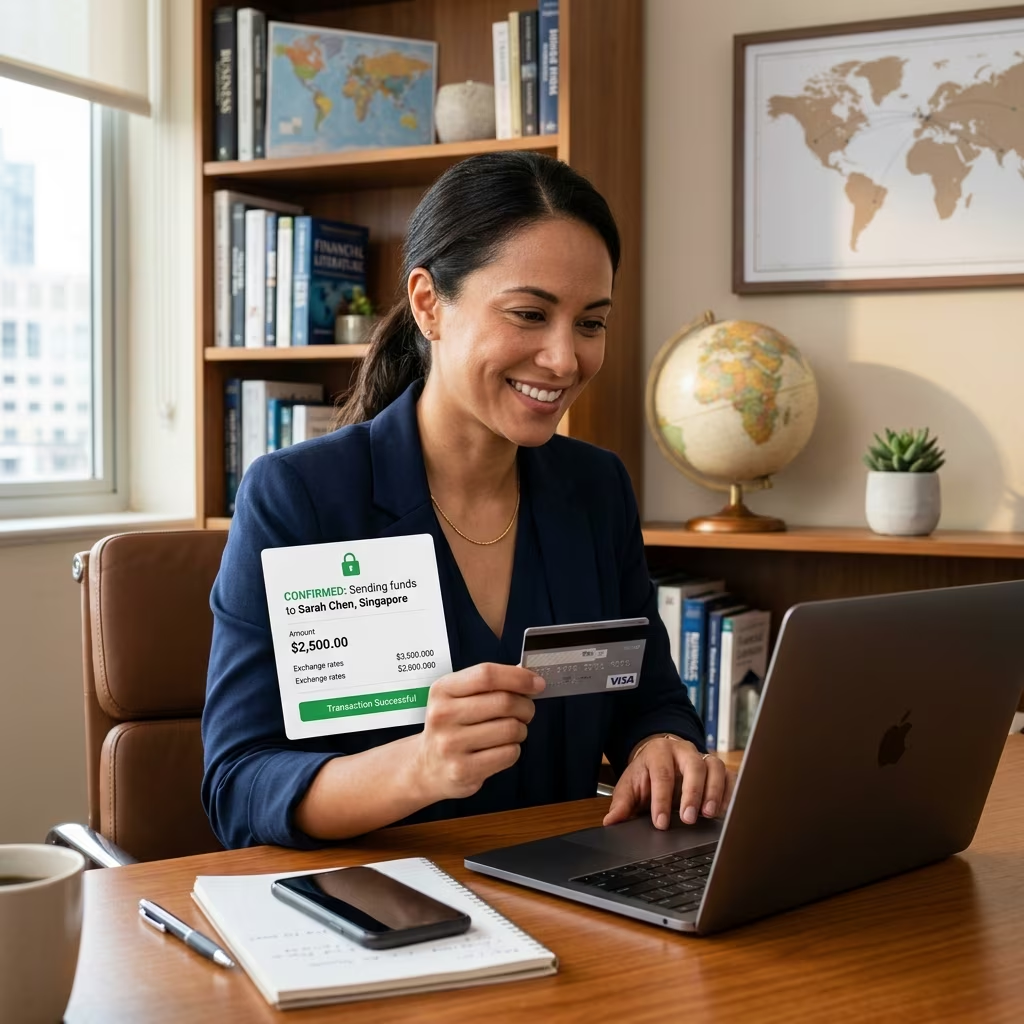
Millions of people send money overseas every year to support family, pay for services, or manage finances between countries. Choosing the right service, understanding the true cost, and knowing your protections can make the difference between a smooth, affordable transfer and an expensive mistake.
This guide explains how to send money abroad more confidently. You will learn how international transfers work, what to look for before you pay, how to compare providers, and what to do if something goes wrong.
Why People Send Money Abroad
International money transfers are used for many different purposes, and your goal often shapes which service is best for you.
- Family support and remittances – Regular transfers to help relatives with everyday expenses, education, housing or medical bills.
- Business and freelance payments – Paying overseas suppliers, contractors, or receiving income from international clients.
- Education and living costs – Funding tuition fees or living expenses for students studying abroad.
- Property and large purchases – Sending money to buy real estate, cars, or other high-value items in another country.
- Travel and temporary stays – Covering costs while working, studying, or travelling overseas for an extended period.
Knowing your purpose helps you decide how fast the money must arrive, how much you will send, and which combination of speed, cost and convenience matters most.
Common Ways to Send Money Internationally
There is no single best method to transfer money abroad. Each option has trade-offs in terms of speed, convenience, fees and exchange rates.
| Method | Typical Use | Speed | Pros | Cons |
|---|---|---|---|---|
| Bank wire transfer | Larger amounts, direct bank-to-bank payments | Same day to several days | Secure, familiar, suitable for high values | Can carry high fees and weaker exchange rates |
| Online money transfer services | Personal remittances, paying invoices | Minutes to a few days | Often cheaper; transparent online tools; app-based | Transfer limits; may not serve every country |
| Cash pickup services | Recipient without bank account or needing cash | Minutes to a day | Receiver can collect cash at local agents | Fees can be higher; travel to agent required |
| Mobile wallets | Countries with strong mobile money systems | Near instant in many corridors | Convenient; accessible via phone; useful in unbanked areas | Availability depends on country; limits may apply |
Before choosing a method, clarify whether your recipient needs cash, can receive funds in a bank account, or prefers a mobile wallet. This basic information immediately narrows your options.
Key Factors to Compare Before You Send
Costs and conditions vary widely between providers. To send money abroad confidently, compare several aspects instead of focusing only on one advertised fee.
1. Fees and Exchange Rates Together
Providers typically earn money in two ways: explicit transfer fees and the margin built into the exchange rate.
- Transfer fees – Fixed or percentage charges for processing the transaction. These may differ by payment method (bank account, debit card, credit card, cash) and delivery method (bank deposit, cash pickup, mobile wallet).
- Exchange rate margin – Many services do not use the “mid-market” rate you might see on public currency converters. Instead, they mark up the rate to earn a spread on the conversion.
Focus on the total cost of the transfer: the amount you pay and the final amount the recipient receives, after all fees and currency conversion. Regulators and consumer agencies widely recommend comparing the effective rate, not just headline fees.
2. Speed of Delivery
Transfer speed can range from seconds to several business days, depending on the service, currencies, and compliance checks.
- Urgent transfers – Same-day or near-instant options often cost more but can be critical in emergencies.
- Flexible timing – If time is not critical, slower services may offer better rates and lower fees.
Some providers let you choose between slower, cheaper transfers and faster, higher-cost options for the same transaction.
3. Transfer Limits and Recipient Country
Not all services operate in every country, and many impose minimum or maximum limits.
- Check whether the provider supports both your sending country and receiving country.
- Confirm minimum and maximum amounts; you may need a specialist provider for very large transfers.
If the recipient lives in a region with limited financial infrastructure, cash pickup or mobile money services may be more accessible than traditional bank transfers.
4. Payment and Delivery Methods
The way you fund the transfer and how the recipient gets the money affect both cost and convenience.
- Your payment method – Bank transfers are often cheaper than card-funded or cash-funded transfers.
- Recipient’s delivery method – Bank deposits can be cheaper; cash pickup or home delivery usually involve higher costs.
Choose the combination that balances price with practical needs. For example, a recipient without a bank account may rely on cash pickup from a global operator.
Information You Should Have Before You Pay
Accurate details are essential for a successful transfer. Errors can lead to delays, extra fees or money going to the wrong account.
- Recipient’s full name as shown on their ID or bank records.
- Address and contact information for the recipient (often required for verification).
- Bank account details – Account number, routing number, IBAN or SWIFT/BIC code, depending on the countries and banking system.
- Destination currency and desired amount the recipient should receive.
Financial institutions and consumer agencies consistently recommend double-checking all information before confirming the transaction, particularly account numbers and recipient details.
Understanding Provider Disclosures
Responsible providers offer clear disclosures before you commit to a transfer. Reading these carefully helps avoid surprises.
Essential Disclosures to Review
- Total fees – All charges that you, and sometimes the recipient, will pay for the transfer.
- Exchange rate applied – The exact rate the provider will use, not just a reference or example rate.
- Estimated delivery time – When the money should reach the recipient, expressed in hours or business days.
- Refund and cancellation policies – Conditions under which you can change or cancel a transfer.
Comparing disclosures from multiple providers is one of the most reliable ways to find better-value transfers, according to consumer finance authorities and independent comparison tools.
Checking Provider Trustworthiness
Cost is important, but safety is essential. Before sending money abroad, verify that your provider is reputable and regulated.
- Licensing and regulation – In many countries, banks and money transfer businesses must be authorised by financial regulators (for example, central banks or financial conduct authorities).
- Security and privacy – Look for strong security measures, clear privacy policies, and secure websites or apps.
- Customer support – Check whether support is available in your language and through multiple channels (phone, email, chat).
International guidance from organisations like the World Bank encourages using authorised providers and avoiding informal, unregulated channels to reduce risks of fraud and loss.
Managing Risks and Avoiding Scams
International transfers can be targeted by fraudsters. Recognising warning signs helps protect your money.
Red Flags to Watch For
- Pressure to act quickly or secrecy around the transaction.
- Requests for passwords, full card numbers or unusual personal information.
- Offers that sound too good to be true, such as extremely low fees and unrealistic exchange rates.
- Instructions to route money through unfamiliar platforms or accounts.
Financial institutions warn that if an offer appears suspiciously cheap or complicated, it may be part of a scam, and you should verify the company’s authorisation before proceeding.
Safer Practices When Sending Money
- Use well-known, regulated banks or transfer companies.
- Keep records of confirmation numbers, receipts and correspondence.
- Do not send cash through the postal system; use traceable methods instead.
- Educate recipients about verification procedures at pickup locations so they know what to expect.
Following basic security practices significantly lowers the risk of fraudulent transfers or disputes.
What to Do If Something Goes Wrong
Even with careful planning, issues can occur: delays, incorrect amounts, or funds not arriving at all. Consumer protection agencies and ombudsman services offer options to seek redress.
Initial Steps
- Contact the provider promptly – Use official customer service channels and provide your transaction reference number.
- Clarify the issue – Explain whether the problem involves timing, amount, fees or destination account.
- Request documentation – Ask for written confirmation of any explanations or decisions.
Many countries require providers to have formal complaint processes and respond within set timeframes, often overseen by financial regulators or ombudsman schemes.
Escalation Options
- If the provider is a member of an independent complaints body or ombudsman, you can escalate the case if you are unhappy with their response.
- Regulators often publish guidance on how to file complaints and what information to include to support your case.
Keeping thorough records of your transfer and communication with the provider greatly improves your chances of a successful resolution.
Practical Checklist Before You Send
Use this quick checklist each time you send money overseas to reinforce good habits and avoid unnecessary costs.
- Define your purpose (family support, business, travel, etc.).
- Confirm the amount and currency your recipient needs.
- Collect and double-check recipient details, including bank information.
- Compare at least two or three providers on total cost, speed and delivery method.
- Verify that the provider is authorised and has clear disclosures.
- Keep copies of all confirmations and receipts.
Spending a few extra minutes on these steps can result in substantial savings and greater peace of mind.
Frequently Asked Questions
How can I know which international transfer service is cheapest?
To identify the cheapest option, compare the total amount the recipient will receive for the amount you pay, including both fees and the applied exchange rate. Independent comparison tools and consumer finance websites show that focusing only on headline fees can be misleading; the exchange rate margin often represents a significant part of the cost.
Is it safer to use a bank than an online transfer company?
Banks and reputable online transfer companies can both be safe if they are properly licensed and supervised by financial regulators. Regulatory guidance emphasises using authorised providers and checking their credentials, regardless of whether they are banks or specialised money transfer businesses.
Why do international transfers sometimes take several days?
Transfers can be delayed by time zone differences, intermediary banks, compliance checks and local payment systems. Depending on the method and countries involved, providers may need additional time to verify identities and meet anti-money-laundering requirements, which can extend delivery beyond same-day service.
Can I cancel an international transfer after I send it?
Cancellation depends on the provider’s policies and whether the funds have already been paid out or credited. Many services allow changes or cancellations within a limited window, but you should review terms and conditions or disclosures before confirming the transaction to understand your options.
What should I do if my recipient never receives the money?
If the money does not arrive within the estimated timeframe, contact the provider with your transaction reference. If you are not satisfied with their response, check whether you can lodge a complaint with an independent dispute resolution body or financial ombudsman, as recommended by consumer protection agencies.
References
- International Money Transfer Guide — Bankrate. 2024-04-16. https://www.bankrate.com/banking/international-money-transfer/
- Guide to Sending Money Abroad — Lloyds Bank. 2023-11-01. https://www.lloydsbank.com/international/products-and-services/money-transfers/guide-to-sending-money-abroad.html
- 5 Tips for Safely Sending Money Abroad — HSBC International. 2023-08-10. https://internationalservices.hsbc.com/international-banking/tips-for-sending-money-abroad/
- Sending Money Overseas — Australian Government Moneysmart. 2024-02-20. https://moneysmart.gov.au/banking/sending-money-overseas
- Send Money Abroad: Cheap Currency Transfers — MoneySavingExpert. 2023-09-05. https://www.moneysavingexpert.com/banking/foreign-currency-exchange/
- Send Money Internationally — Western Union US. 2024-03-12. https://www.westernunion.com/us/en/send-money.html
- International Money Transfer — Wise US. 2024-01-30. https://wise.com/us/send-money/