Secure Your Invention: Patent Filing Guide
Master the process of obtaining patent protection independently, from initial searches to filing strategies for inventors.
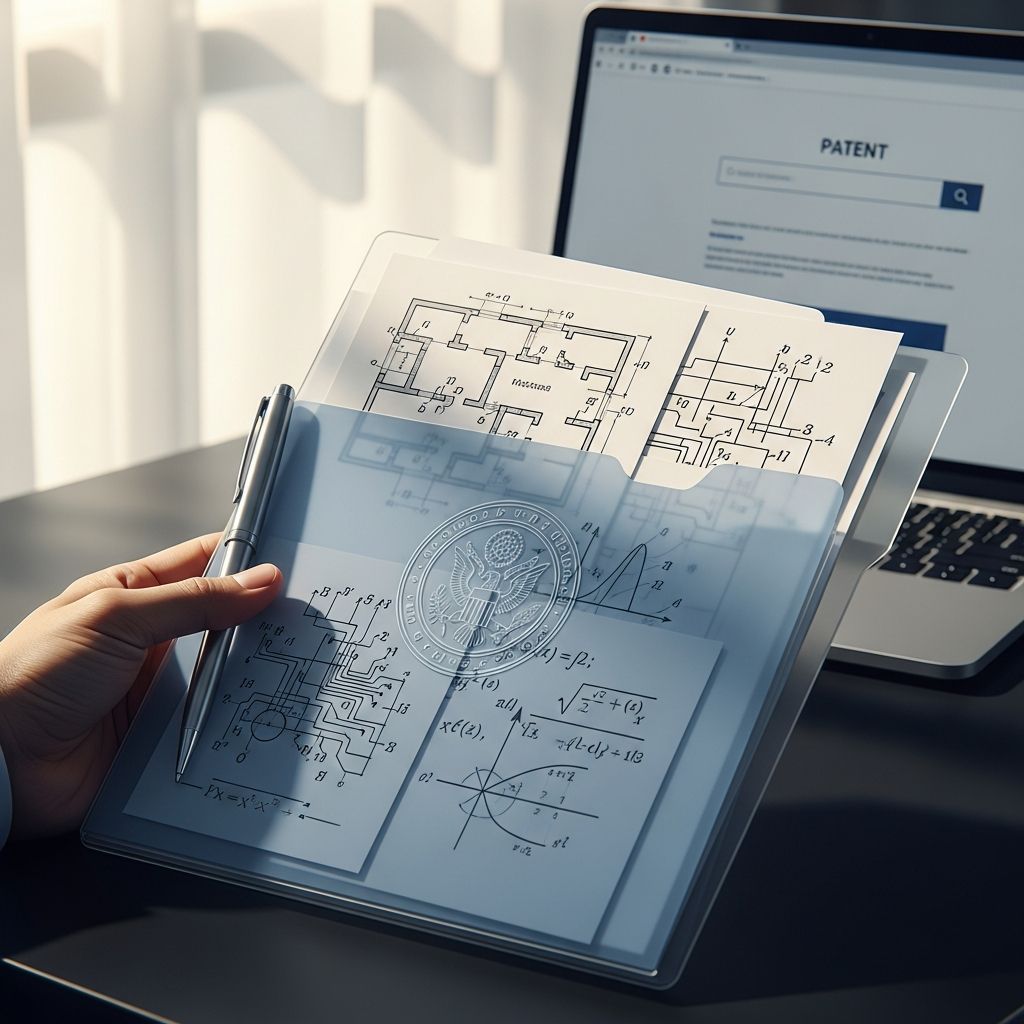
Independent inventors can successfully obtain U.S. patent protection by following structured steps, leveraging free USPTO resources, and focusing on provisional applications to achieve ‘patent pending’ status without hiring expensive legal help.
Understanding Patent Types and Your Options
Patents protect inventions by granting exclusive rights for a limited time, but the U.S. Patent and Trademark Office (USPTO) offers different application paths tailored to inventors’ needs and budgets. A
provisional patent application
stands out as the most accessible entry point for self-filers. It requires a detailed description and drawings of your invention but omits formal claims, allowing you to secure a filing date and use ‘patent pending’ status for 12 months while preparing a full non-provisional application.In contrast, a
non-provisional application
triggers a formal examination process, demanding precise claims defining the invention’s scope. This type suits inventions ready for full scrutiny but involves higher scrutiny and fees. For international ambitions, aPCT application
extends the decision timeline to 30 months, preserving filing rights in multiple countries. Micro-entity status can slash fees by 75% for qualifying individuals with limited income and few prior filings.Essential Preparation: Documenting Your Invention
Before any filing, build a robust invention record to prove originality and support your application. Start a dated inventor’s notebook capturing every development stage—from initial concept sketches to prototype tests and iterations.
- Maintain daily entries with diagrams, test results, and modifications.
- Sign each page and have two disinterested witnesses co-sign to establish a chain of custody.
- Photograph prototypes and note materials used for reproducibility.
This notebook becomes your blueprint, ensuring the application fully enables someone skilled in the field to replicate your work—a core patentability requirement.
Conducting a Thorough Prior Art Search
A critical self-filing step is searching for
prior art
—existing patents, publications, or products that might overlap with your invention. Overlooking this risks rejection or invalidation later.Free tools like Google Patents simplify keyword-based searches. Enter descriptive terms related to your invention’s function, components, and benefits to scan global databases. For deeper dives, visit a
Patent and Trademark Resource Center (PTRC)
, where trained librarians provide hands-on guidance using USPTO tools.| Method | Cost | Best For |
|---|---|---|
| Google Patents | Free | Quick keyword scans |
| USPTO Patent Full-Text Database | Free | Detailed U.S. patent reviews |
| PTRC Visit | Free | Expert-assisted searches |
| Professional Search Firm | $500+ | Comprehensive pre-filing checks |
Analyze results to articulate your invention’s unique advantages, such as improved efficiency or novel combinations, distinguishing it from prior art.
Step-by-Step: Crafting Your Provisional Application
A provisional application demands a complete written description, drawings, and cover sheet but skips claims, making it DIY-friendly. Aim for clarity: describe the invention’s structure, operation, alternatives, and best mode known to you.
- Gather Materials: Specification (text description), drawings (black ink on white paper or digital), sequence listings if applicable.
- Draft the Specification: Use plain language. Title the invention descriptively, provide background, summarize advantages, then detail components and assembly.
- Include Drawings: Label every part; multiple views enhance understanding.
- Prepare Cover Sheet: Use USPTO Form SB/16 or Application Data Sheet, listing inventors, correspondence address, and entity status.
Fees start low—around $75 for micro-entities—and filing establishes your priority date.
Navigating the USPTO Filing Portal
Register as an unregistered e-filer on the USPTO’s Patent Center portal, reserved for inventors filing their own work. Upload PDF documents, pay fees via credit card or deposit account, and receive a filing receipt instantly.
Common pitfalls to avoid:
- Ensure all pages are numbered and legible.
- Declare micro-entity status correctly to claim discounts.
- Double-check inventor names and addresses for accuracy.
Post-filing, monitor status via Patent Center and plan your non-provisional within 12 months.
Leveraging USPTO Pro Se Assistance
The USPTO’s
Pro Se Assistance Program
empowers self-represented inventors with free resources. Contact the Office of Inventor and Entrepreneur Development (OID) at 1-866-767-3848 or ProSeAssistanceCenter@uspto.gov for one-on-one help at headquarters, webinars, and guides.Additional supports include:
- Inventor Info Chats: Recorded sessions on prosecution basics.
- Forms and checklists in Patent Center.
- Patent examiners’ assistance during review (non-legal advice only).
These tools have enabled countless pro se successes, proving attorney-free filing is viable.
Cost Analysis and Fee Reduction Strategies
Self-filing minimizes expenses, but USPTO fees add up. Provisional filings suit bootstrapped inventors at minimal cost.
| Fee Type | Standard | Micro-Entity |
|---|---|---|
| Provisional Filing | $320 | $75 |
| Non-Provisional Basic | $1,820 | $455 |
| Search Fee | $760 | $190 |
| Examination Fee | $800 | $200 |
Qualify as a micro-entity by certifying low income (<$206,109 threshold, adjusted annually) and limited prior patents. This slashes costs dramatically, making protection accessible.
Transitioning to Non-Provisional and Beyond
Your provisional buys time to refine, test commercially, or seek investors. Convert to non-provisional by filing claims, adding drawings if needed, and claiming priority to the provisional date. Expect 1-3 years for examination, with opportunities to respond to office actions.
For global reach, file PCT within the 12-month window, gaining 30 months to enter national phases. Organization is key: track deadlines with calendars and backups.
Common Challenges and Pro Tips
Self-filers face hurdles like claim drafting and responding to rejections, but persistence pays off.
- Tip: Review sample applications on USPTO site for formatting.
- Avoid: Public disclosures before filing, which start a one-year U.S. clock.
- Upgrade Later: Hire counsel post-provisional for complex claims.
Success stories abound; thorough preparation trumps legal degrees.
Frequently Asked Questions
Can anyone file a patent without a lawyer?
Yes, inventors can file pro se, with USPTO support for unrepresented applicants.
How long does patent pending last?
12 months from provisional filing, after which you must file non-provisional or lose priority.
Is a prior art search mandatory?
Not required but essential to assess patentability and strengthen your application.
What if my invention changes after provisional filing?
Amendments are possible in non-provisional, but new matter can’t broaden beyond the original disclosure.
How do I qualify for micro-entity fees?
Meet income, patent filing limits, and certification requirements via USPTO forms.
References
- How to Achieve Patent Pending Status on Your Own — Alloy Patent Law. 2023. https://alloypatentlaw.com/how-to-become-patent-pending-without-a-patent-lawyer/
- Filing for a Patent Without a Lawyer — Justia Intellectual Property Law Center. 2024-01-15. https://www.justia.com/intellectual-property/patents/filing-without-a-patent-lawyer/
- Filing a Patent Without An Attorney — John Farrell (YouTube). 2022-05-10. https://www.youtube.com/watch?v=PJd6smEOhZ0
- How to Get a Patent On Your Own — Nolo. 2025-06-20. https://www.nolo.com/legal-encyclopedia/getting-patent-yourself-29493.html
- Pro Se Assistance Program — USPTO. 2025-11-01. https://www.uspto.gov/patents/basics/using-legal-services/pro-se-assistance-program
- Applying for Patents — USPTO. 2025-09-15. https://www.uspto.gov/patents/basics/apply
Similar Articles







Read full bio of Sneha Tete