
Securing Video Evidence After An Accident: A Complete Guide
Master the steps to obtain critical video footage from cameras after your accident for a stronger legal claim.
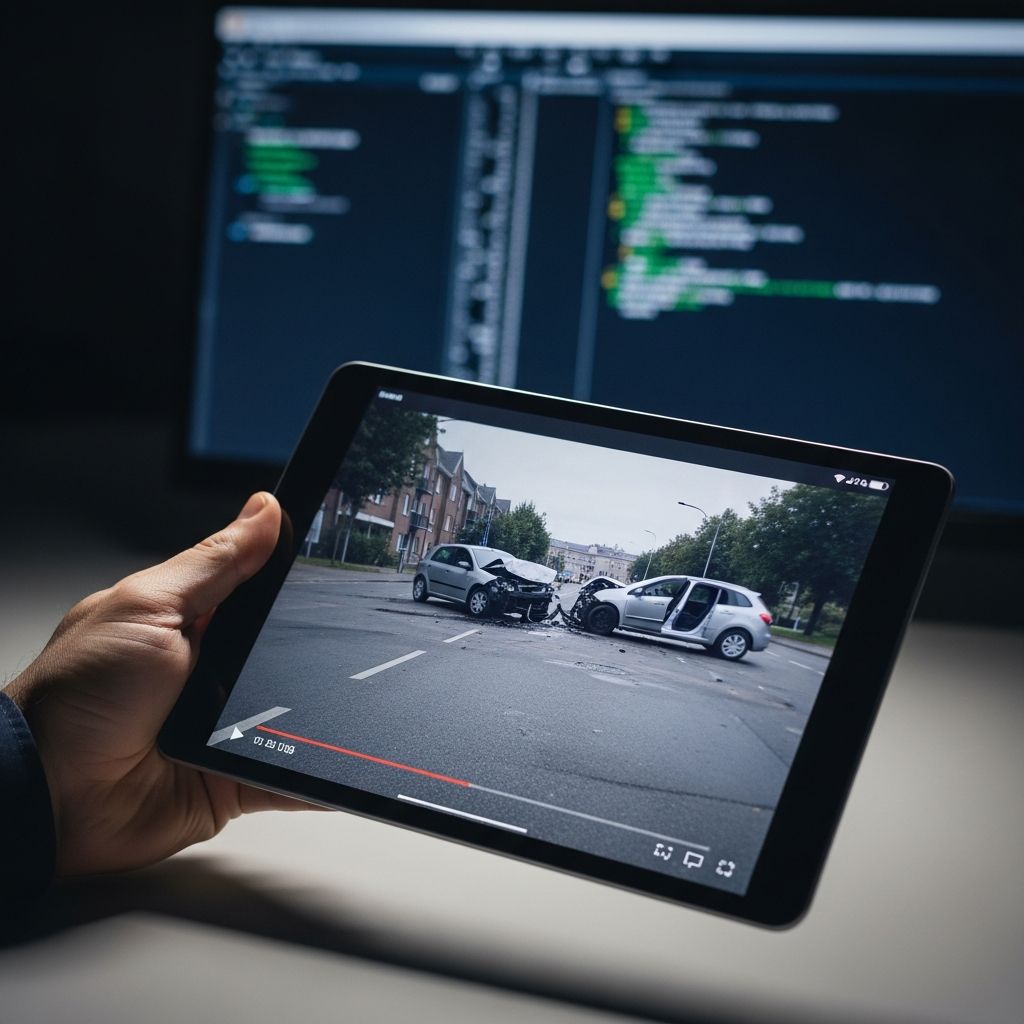
Video recordings from security cameras, traffic signals, or personal devices can dramatically strengthen a personal injury claim by visually documenting fault, injuries, and circumstances. Acting swiftly is essential, as footage is often overwritten within days or weeks. This guide outlines practical steps, legal considerations, and professional strategies to obtain this vital evidence.
Why Video Footage Matters in Accident Claims
Clear video proof can establish liability, refute false narratives, and quantify damages in accidents ranging from vehicle collisions to slips on property. For instance, it might capture a driver’s negligence or a hazardous condition ignored by a business owner. Courts value unedited videos for their objectivity, often prioritizing them over conflicting witness accounts.
In personal injury litigation, such evidence supports demands for compensation covering medical bills, lost income, and pain. Without it, claims rely heavily on subjective testimonies, which insurers frequently challenge.
Identifying Potential Video Sources Near the Scene
Immediately after an incident, scan surroundings for recording devices. Common locations include:
- Business premises: Retail stores, gas stations, and restaurants often have external cameras monitoring parking lots and entrances.
- Traffic infrastructure: Intersections with red-light cams, highway monitors, or municipal surveillance.
- Private vehicles: Dashcams in nearby cars or rideshares like Uber.
- Public spaces: ATMs, residential doorbells (e.g., Ring), or bystander smartphones.
- Government facilities: Police body cams or parking enforcement videos.
Photograph camera positions, angles, and identifiers right away, noting any visible brands or addresses. Delays risk footage loss, as systems typically retain data for 7-30 days.
Step-by-Step Process for Requesting Private Surveillance Footage
Begin with courteous, direct outreach to footage holders, escalating as needed.
Initial Informal Contact
Visit or call the property manager promptly. Provide precise details: exact date, time (down to the minute), location coordinates, and incident description. Request a copy on USB or digital link, offering to cover minor costs. Politeness increases voluntary compliance, especially if the business isn’t liable.
Formal Written Demands
If verbal requests fail, send a certified letter or email. Include:
- Your contact information and involvement in the event.
- Specific footage parameters (timestamp, camera ID).
- Intended use for insurance or legal purposes.
- Deadline for response (e.g., 10 days).
- Warning against deletion (spoliation notice).
Retain copies and delivery receipts for court admissibility.
| Request Type | Pros | Cons | Best For |
|---|---|---|---|
| Informal (Phone/In-Person) | Fast, no cost | No paper trail, easy denial | Cooperative parties |
| Formal Letter | Documented, professional | Slower response | Businesses |
| Spoliation Letter | Legally binds preservation | May alarm recipient | Suspicion of tampering |
Accessing Government and Traffic Camera Recordings
Public agencies control traffic cams under freedom of information laws. Submit a public records request via online portals, mail, or in-person to departments like police or transportation.
- Specify jurisdiction (city/county/state).
- Include crash report number if available.
- Expect fees for processing and redaction of sensitive elements.
- Timelines vary: 3-30 days, with appeals for delays.
Red-light camera footage may require subpoenas if not public. Florida examples show lawyers expediting via formal channels.
Leveraging Legal Tools: Subpoenas and Court Orders
Private owners aren’t obligated to share without compulsion. Attorneys issue subpoenas during discovery, enforceable by courts.
- File a lawsuit or preservation motion.
- Serve subpoena detailing footage scope.
- Enforce via motion to compel if ignored.
Court orders override refusals, with penalties for non-compliance like contempt fines. Small claims handle minor cases pro se.
The Critical Role of Legal Professionals
Experienced injury attorneys streamline acquisition:
- Scene investigations pinpoint cameras.
- Draft compliant requests/subpoenas.
- Send spoliation notices preventing destruction.
- Negotiate with insurers holding footage.
- Authenticate videos for trial admissibility.
DIY suits simple cases; complex ones demand counsel to avoid procedural pitfalls.
Dashcam and Personal Device Videos as Key Assets
Your dashcam provides first-party proof, admissible if unaltered and timestamped. Share copies widely but secure originals. Seek bystander videos via social media scans or police reports. Rideshare companies release via subpoena.
Preservation Strategies to Prevent Evidence Loss
Footage vanishes quickly—act within 24-72 hours. Notify all potential holders in writing of impending litigation. Courts sanction spoliation (evidence destruction) with adverse inferences against the destroyer.
Ensuring Video Authenticity and Court Admissibility
Defenses challenge edits or chains of custody. Obtain sworn affidavits from custodians verifying originality. Forensic analysis confirms integrity if disputed. Dashcams need function logs.
Frequently Asked Questions
Can businesses legally refuse my video request?
Yes, private entities can deny without court order, but subpoenas compel release if relevant.
How soon must I request footage?
Immediately—most systems overwrite in 7-30 days.
Is dashcam video always usable in court?
Generally yes, if clear, unaltered, and properly sourced.
Do I need a lawyer for traffic cam footage?
Not always, but recommended for efficiency and denials.
What if the footage holder deletes the video?
Spoliation claims may infer fault; attorney letters deter this.
Building a Stronger Case with Video Evidence
Integrate videos with photos, witnesses, and medicals for irrefutable claims. Insurers settle faster with visual proof. Consult professionals early to maximize recovery.
References
- How to Get Video Footage of a Car Accident — Clark Hartpence Law. 2023. https://tampabayfloridalawyers.com/how-to-obtain-video-surveillance-of-car-accident/
- How to Obtain Traffic Camera Video of Your Florida Car Accident — Zervos Injury Law. 2024. https://www.zervosinjurylaw.com/blog/how-to-obtain-traffic-camera-video-of-your-florida-car-accident/
- How to Request Video Footage After an Accident — Nolo. 2025-01-01. https://www.nolo.com/legal-encyclopedia/how-to-request-video-footage-after-an-accident.html
- A Guide for Obtaining Camera Footage for Your Florida Car Accident Case — TGALaw. 2023. https://www.tgalaw.com/a-guide-for-obtaining-camera-footage-for-your-florida-car-accident-case/
- Can You Request Surveillance Footage After My Florida Car Crash? — WHKPA. 2024. https://whkpa.com/can-i-request-surveillance-camera-footage-after-my-florida-car-crash/
- Video Surveillance in Personal Injury Cases — The Florida Bar Journal. 2022-01-01. https://www.floridabar.org/the-florida-bar-journal/video-surveillance-in-personal-injury-cases/
- TPD Records Division — City of Tallahassee Public Safety. 2025. https://www.talgov.com/publicsafety/tpd-records-division
Similar Articles








Read full bio of Sneha Tete


