
Securing the Ballot: Guide to Voter Registration
Master your voting rights, navigate registration, and prepare for Election Day.
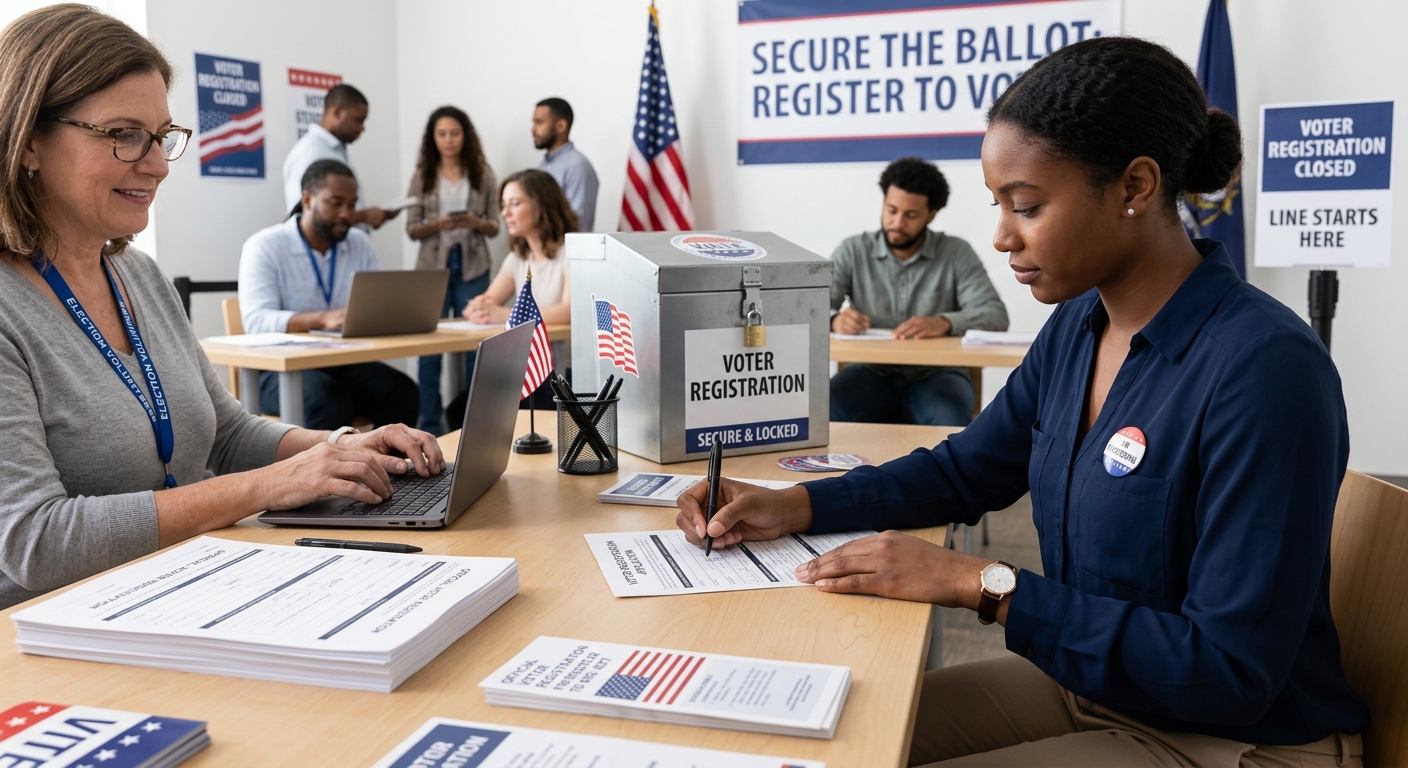
The foundation of any thriving democratic society rests unequivocally on the active participation of its electorate. The act of casting a ballot is not merely a symbolic gesture; it is the most direct mechanism through which citizens influence legislative priorities, shape public policy, and hold elected officials accountable. However, the journey to the ballot box is often fraught with bureaucratic hurdles, confusing deadlines, and systemic challenges that can inadvertently silence eligible voters. Understanding the intricate mechanics of voter registration and electoral preparedness is essential for safeguarding your constitutional rights.
As election cycles approach, the narrative surrounding political engagement often focuses heavily on candidate platforms and polling numbers. Yet, the logistical reality of voting—ensuring your name is on the rolls, understanding your state’s specific identification requirements, and physically casting a ballot—is equally critical. Without proactive measures, voters risk arriving at their polling locations only to be turned away due to administrative technicalities or systemic roll purges. This comprehensive guide explores the multifaceted landscape of voting readiness, providing actionable strategies to ensure your voice is heard and your vote is definitively counted.
The Significance of Coordinated Civic Action
To combat voter apathy and systemic barriers, grassroots organizations and national coalitions have historically mobilized to simplify the registration process. One of the most prominent examples of this coordinated effort is National Voter Registration Day. Established as a nonpartisan civic holiday, it serves as a nationwide rallying cry to ensure that every eligible citizen has the opportunity to register or update their existing voter information. By uniting thousands of community organizations, educational institutions, and corporate partners, this initiative creates a massive infrastructure dedicated to civic empowerment.
The impact of these focused civic mobilization efforts is easily quantifiable. In recent years, collaborative drives have successfully brought millions of new participants into the democratic fold. For instance, in 2025 alone, the National Voter Registration Day coalition successfully registered 300,000 voters, demonstrating the profound efficacy of nonpartisan outreach . Looking ahead, the next iteration of this civic holiday is scheduled to return on September 15, 2026, serving as a critical deadline for voters to verify their standing before the autumn elections .
Beyond simply adding names to a database, these campaigns play a vital educational role. They distribute essential literature regarding changing election laws, mail-in ballot procedures, and early voting windows. In an era where election regulations frequently shift, having a centralized, reliable push for civic education ensures that marginalized communities, young adults, and newly naturalized citizens are not left navigating a complex bureaucratic maze alone.
The Mechanics of Voter Purges: Maintenance Versus Suppression
A critical, yet often misunderstood, aspect of election administration is the process of list maintenance, commonly referred to as “voter purges.” Under federal law, election officials are required to keep voter rolls accurate and up to date. This routine maintenance theoretically involves removing the names of individuals who have passed away, relocated to a different jurisdiction, or otherwise become ineligible to vote. When executed with precision and adequate safeguards, list maintenance is a necessary function that protects the integrity and efficiency of elections.
However, when these procedures are conducted hastily, using flawed methodology or inaccurate database matching, they transform from a benign administrative task into a potent vehicle for voter disenfranchisement. The Brennan Center for Justice has extensively documented the alarming scale of inaccurate voter purges. Between 2016 and 2018 alone, at least 17 million voters were purged from rolls nationwide . The analysis revealed a deeply concerning trend: counties with a documented history of voter discrimination purged voters at significantly higher rates than other jurisdictions .
This aggressive escalation in list purging is closely tied to the Supreme Court’s 2013 decision in Shelby County v. Holder, which dismantled the “preclearance” requirement of the Voting Rights Act of 1965 . Prior to this ruling, jurisdictions with a history of discriminatory voting practices were mandated to seek federal approval before altering their election laws, including their list maintenance procedures. Without this crucial federal oversight, many states accelerated their purging activities, often relying on rudimentary interstate crosschecks that flag voters who simply share similar names .
The real-world consequence of a flawed voter purge is devastating: an eligible citizen arrives at their polling place on Election Day only to discover they are not on the list, effectively stripping them of their right to vote. Because these purges often happen without adequate notification to the voter, the burden of discovering and correcting the error falls entirely on the individual. This reality underscores the absolute necessity of independently verifying your registration status well before any electoral deadlines.
Proactive Measures: Securing and Verifying Your Voter Status
Given the persistent threat of administrative errors and aggressive roll purges, a passive approach to voter registration is no longer sufficient. Voters must take deliberate, proactive steps to establish and protect their electoral standing. The process can be broken down into three fundamental pillars: verification, registration, and continual updating.
- Routine Verification: Do not assume that because you voted in the last election, your registration remains active. Changes in postal addresses, prolonged periods of voting inactivity, or administrative clerical errors can all trigger a registration cancellation. Experts recommend checking your voter status online through your state’s official election portal at least three months before an election, and again one month prior to the registration deadline.
- Initial Registration: If you are a first-time voter, registering has never been more accessible. The vast majority of states now offer secure online voter registration portals. Alternatively, federal registration forms can be downloaded, printed, and mailed. When registering, meticulously verify that your name exactly matches the government-issued identification you plan to present at the polls, as slight discrepancies (such as omitted middle initials) can sometimes cause administrative friction.
- Diligent Updating: Your voter registration is tied directly to your current residential address. If you move—even if you simply relocate to a new apartment within the same zip code—you must update your registration. Similarly, legal name changes resulting from marriage, divorce, or personal preference require a formal update to your voter file to ensure a seamless experience at the polling station .
Strategic Electoral Participation: Crafting Your Voting Plan
Registering to vote is merely the preliminary step; the ultimate goal is successfully casting a ballot. In today’s varied electoral landscape, voters have multiple avenues for participation, each with its own set of rules, deadlines, and logistical considerations. Crafting a personal “voting plan” removes the anxiety and unpredictability from the voting process.
A comprehensive voting plan involves deciding exactly when, where, and how you will vote. Will you vote by mail, take advantage of early in-person voting, or wait for Election Day? Each method requires a different level of preparation. For instance, mail-in voting requires requesting the ballot in advance, understanding the signature verification requirements, and knowing the absolute final date for postmarking the envelope. Early voting requires locating specific early-voting centers, which often differ from traditional Election Day precinct locations.
| Voting Method | Key Advantages | Critical Considerations |
|---|---|---|
| Mail-In / Absentee | Convenience, ability to research ballot measures at home, avoids polling place lines. | Requires strict adherence to request deadlines, signature matching rules, and postmark dates. |
| Early In-Person | Flexibility in scheduling, shorter wait times, opportunity to resolve registration issues before Election Day. | Polling locations may be limited and differ from standard neighborhood precincts. |
| Election Day In-Person | Traditional experience, definitive assurance that the ballot is physically cast and accepted immediately. | Susceptible to long lines, weather disruptions, and strict time constraints (e.g., polling hours). |
Additionally, your voting plan must factor in your state’s specific Voter ID laws. Requirements range from strict photo identification (such as a driver’s license or passport) to non-photo identification (such as a utility bill), while some states simply require a signature match. Arriving without the legally mandated documentation is a primary reason voters are forced to cast provisional ballots, which may not be counted if the voter cannot subsequently prove their identity within a narrow time frame.
Navigating the Complexities of Felony Disenfranchisement
One of the most complex and heavily litigated areas of voting rights involves citizens with past criminal convictions. Historically, punitive state laws have disenfranchised millions of Americans who have already served their sentences. However, the legal landscape surrounding felony disenfranchisement is currently undergoing significant transformation, with many states taking legislative action to automatically restore voting rights upon release from incarceration.
Because these laws are entirely state-dependent, profound confusion persists among formerly incarcerated individuals regarding their eligibility. In some jurisdictions, voting rights are seamlessly restored the moment an individual re-enters society. In others, rights are restored only after the completion of parole or probation, or following the payment of specific fines and fees. This patchwork of regulations often leads to a chilling effect, where eligible voters abstain from participating out of fear of legal repercussion. It is imperative for individuals navigating the criminal justice system to consult local legal resources, civil rights organizations, or their state’s board of elections to obtain accurate, up-to-date guidance on reclaiming their constitutional right to vote.
Youth and Student Voters: Claiming Your Voice
Young adults and college students represent a massive demographic bloc with the potential to dramatically sway electoral outcomes. However, students frequently face unique logistical barriers. College students who attend school out of state must make a crucial jurisdictional decision: they can choose to maintain registration at their permanent home address (usually requiring an absentee ballot) or they can register at their campus address.
Registering at a campus address gives students a direct voice in the local politics of the community where they spend the majority of their year. However, it also means navigating new local regulations and ensuring their campus living situation meets state residency requirements. Civic organizations have heavily targeted university campuses to aid in this process, ensuring displaced students understand their rights and the mechanics of requesting absentee ballots if they choose to vote in their home state elections.
Frequently Asked Questions (FAQ)
What should I do if I discover I have been purged from the voter rolls?
If you discover that your registration has been canceled or purged, you should immediately re-register to vote if the deadline has not passed. If the registration deadline has expired, check if your state offers “Same-Day Registration” (also known as Election Day Registration), which allows you to register and cast a ballot simultaneously. If neither option is available, contact your local election authority or a nonpartisan voter protection hotline to explore possible administrative remedies or legal recourse.
What happens if my name is not on the roster at my polling place?
Never walk away from a polling place without casting a ballot. If the poll workers cannot locate your name, first ask them to check supplementary lists or verify that you are at the correct precinct. If you are in the correct location and your name is still missing, you possess the federal right to request a provisional ballot. A provisional ballot records your vote, which will be counted once election officials verify your eligibility in the days following the election.
Do I need to declare a political party to register to vote?
The requirement to affiliate with a political party depends entirely on your state’s laws and the type of election. In general elections, you can vote for any candidate regardless of your party affiliation. However, for primary elections, many states operate “closed primaries,” meaning you must be registered with a specific political party to vote in that party’s primary contests. Other states operate “open primaries” where party affiliation is not required.
Can individuals experiencing homelessness register to vote?
Yes. Citizens experiencing homelessness maintain their constitutional right to vote. In all 50 states, you can register to vote by designating a shelter, a park, a street corner, or any location where you frequently sleep as your residence. For mailing purposes, you can typically use the address of a local shelter, advocacy organization, or general delivery at a post office to receive election-related correspondence.
References
- National Voter Registration Day — National Voter Registration Day Organization. 2026. https://nationalvoterregistrationday.org/
- Voter Purge Rates Remain High, Analysis Finds — Brennan Center for Justice. 2019-08-01. https://www.brennancenter.org/our-work/analysis-opinion/voter-purge-rates-remain-high-analysis-finds
- Voter Purges: A Growing Threat to the Right to Vote — Brennan Center for Justice. 2018-07-20. https://www.brennancenter.org/our-work/research-reports/purges-growing-threat-right-vote
- Register to Vote — USAGov (Official Guide to Government Information and Services). 2026. https://www.usa.gov/register-to-vote
Similar Articles








Read full bio of medha deb


