
Secret Societies and North Carolina Criminal Law
Understanding when private organizations cross the line into prohibited secret societies under North Carolina criminal statutes.
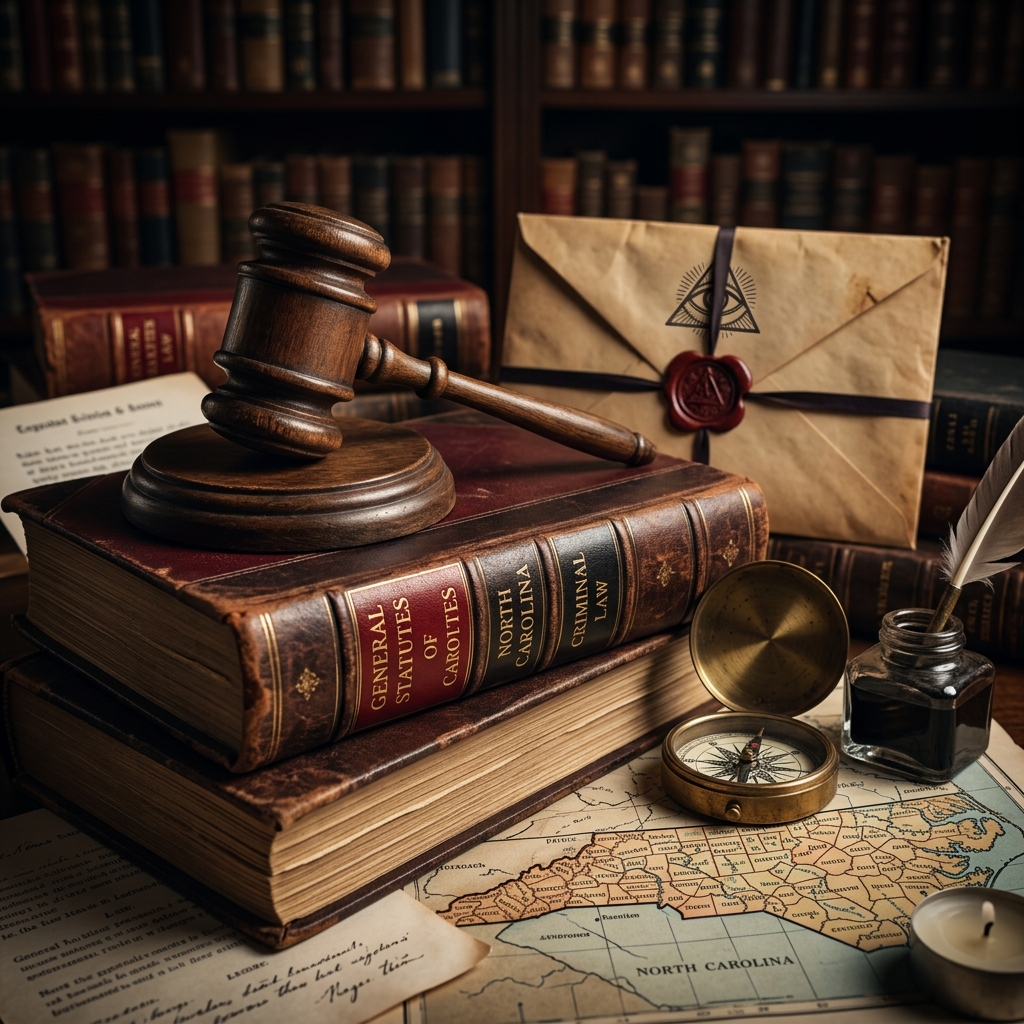
North Carolina has one of the more detailed statutory schemes in the United States addressing secret societies, masked gatherings, and clandestine organizational activity. These rules do not criminalize every private club or fraternal order. Instead, they target organizations and conduct that threaten public safety or attempt to evade the rule of law. Understanding these boundaries is crucial for anyone organizing a group, planning demonstrations, or facing criminal charges related to membership in a secret society.
This article explains how North Carolina defines a secret society, which organizations and activities are specifically prohibited, how mask and meeting regulations operate, and what practical consequences these laws can have for residents and groups operating in the state.
Overview of Article 4A: Prohibited Secret Societies and Activities
North Carolina’s rules on secret societies are codified in Chapter 14 of the General Statutes, within Article 4A, titled “Prohibited Secret Societies and Activities.” Article 4A is a cluster of provisions that collectively address:
- Definitions of secret societies and related terms.
- Prohibition of certain political, military, and unlawful secret groups.
- Restrictions on secret signs, passwords, disguises, and oaths used for illegal purposes.
- Regulation of meeting places, record-keeping, and public identification of organizations.
- Rules concerning masks, hoods, and face coverings on public ways.
- Criminal penalties for violations.
These provisions are best understood as a package: they do not simply ban “secret societies” in the abstract, but define specific forms of secrecy and conduct that are legally impermissible.
What Counts as a Secret Society Under North Carolina Law?
Article 4A begins by setting out definitions, including what constitutes a “secret society.” While the statute language is technical, it can be summarized in more practical terms.
Key elements commonly associated with a “secret society”
- Organized group: The statutes focus on groups of two or more people organized for a common purpose, rather than isolated individuals.
- Secrecy in membership or activities: Some degree of concealment of membership, meetings, or objectives is typical—for example, undisclosed membership rolls, private initiation rituals, or coded communications.
- Use of identifying signs or passwords: Groups may use signs, handshakes, passwords, or disguises to recognize one another and preserve secrecy.
- Regular meetings or established meeting places: Many secret societies hold regular gatherings, sometimes in locations not obvious to the general public.
Importantly, North Carolina does not forbid all groups that have secret elements. Instead, the law concentrates on specific purposes, methods, and risks, distinguishing between benign private organizations and dangerous secret societies that undermine lawful order.
Secret Political and Military Societies: When Purpose Becomes Illegal
One of the most direct prohibitions in Article 4A is found in Section 14-12.3, which addresses certain secret political and military societies and groups formed to violate or circumvent state law.
Core prohibition in Section 14-12.3
Under Section 14-12.3, it is unlawful for a person to:
- Join or apply for membership in a secret political society.
- Join or apply for membership in a secret military society.
- Join or assist any secret society whose purpose is to violate or circumvent the laws of North Carolina.
The statute goes further, making it illegal not only to be a member, but also to:
- Form or organize such a secret society.
- Solicit or recruit members.
- Encourage, aid, or assist in any way in its formation or operation.
This wide net reflects the state’s interest in preventing conspiratorial organizations designed to evade democratic governance or promote violence. Legal scholars have noted that North Carolina began criminalizing secret political societies after the Civil War, in part due to concerns about groups engaging in intimidation and lawlessness.
Distinguishing lawful political activity from secret political societies
Not every politically minded group is a prohibited “secret political society.” Lawful organizations typically:
- Operate openly with identified leaders and addresses.
- Comply with election, lobbying, and campaign finance laws.
- Do not organize to violate or circumvent criminal statutes.
By contrast, a secret political society might seek to wield hidden influence, coordinate unlawful acts, or undermine lawful institutions through clandestine means. It is this combination of secrecy and illegal purpose that triggers the criminal prohibition.
Signs, Passwords, Disguises, and Illegal Oaths
Article 4A also addresses the tools of secrecy—signs, passwords, disguises, and oaths—when used for unlawful ends. Section 14-12.4 restricts the use of these elements when they facilitate illegal activities.
Prohibited uses of secret signs and disguises
While the statute’s text is detailed, the core concerns include:
- Using secret handshakes, signs, or passwords to coordinate or conceal criminal conduct.
- Wearing disguises such as masks or hoods for the purpose of carrying out illegal acts.
- Taking or administering an oath that commits members to unlawful behavior or to shielding criminal activity from law enforcement.
The law does not ban all ceremonial oaths or symbolic rituals. Fraternal organizations and social clubs may have private ceremonies without violating Article 4A, as long as their oaths do not require illegal actions and their signs or dress are not used to facilitate crime.
Regulation of Meeting Places and Organizational Records
North Carolina’s regulation of secret societies extends to meeting places and organizational transparency. Section 14-12.6 and related provisions impose obligations on groups that demonstrate characteristics of a secret society.
Key meeting and record-keeping rules
Under Section 14-12.6 and companion provisions:
- Secret societies formed within the state whose members reside in North Carolina are expected to maintain a known meeting place.
- Groups holding regular meetings may be required to post identifying information at or near the meeting location, such as the organization’s name and officers.
- Organizations may be expected to maintain membership lists, including member names and addresses, available through a designated officer such as a secretary.
These rules aim to ensure that clandestine organizations cannot fully disappear from public view while coordinating activities. They serve both law enforcement interests and broader community safety concerns.
Implications for private clubs and fraternal organizations
Groups that resemble secret societies—for example, organizations with private rituals, initiation ceremonies, and restricted membership—should pay close attention to these compliance expectations. Historical examples include Masonic lodges and similar fraternal orders, which often have strong internal traditions but operate within the law by maintaining public addresses and records.
Where a group’s practices involve secrecy, but its purpose is social, philanthropic, or religious, and it complies with legal transparency requirements, it is generally not treated as a prohibited secret society under Article 4A.
Masks, Hoods, and Face Coverings on Public Ways
Another important aspect of North Carolina’s regulation of secret societies concerns the wearing of masks, hoods, or other face coverings on public streets and property. Section 14-12.7 and related provisions address this issue.
Why masks are regulated
Historically, masked gatherings have sometimes been associated with intimidation, vigilante actions, or group violence. In response, North Carolina and other states have enacted laws limiting the wearing of masks on public ways, particularly when masks are used to conceal identity for unlawful purposes.
Under these rules, it can be a criminal offense to wear a mask, hood, or device that hides a person’s face on a public street or public property, especially when associated with unlawful secret society activity.
Exceptions and modern considerations
Mask laws have been revisited in light of public health needs, such as during pandemic periods, and courts must balance public safety and constitutional rights. While Article 4A focuses on masks used for secrecy and illegal activity, there may be exceptions or separate laws allowing face coverings for health, religious practice, or other lawful purposes.
Anyone planning public demonstrations or events where participants may wear masks should be aware of these statutory limits and consult legal guidance to avoid inadvertent violations.
Penalties for Violations of Article 4A
Article 4A concludes with a provision on punishment, specifying criminal penalties for violations of its sections. Although exact penalties depend on the offense and any amendments, violations may be classified as misdemeanors or felonies, with potential consequences such as:
- Criminal conviction on a person’s record.
- Fines and court costs.
- Probation, supervised release, or jail time.
- Collateral consequences, including employment and licensing impacts.
Because these penalties can be significant, anyone accused of violating secret society or mask laws should seek advice from a criminal defense attorney familiar with North Carolina statutes and relevant case law.
Are All Secret Societies Illegal in North Carolina?
It is a common misconception that North Carolina bans all secret societies. The reality is more nuanced. The law targets specific forms of secrecy and unlawful purpose.
| Type of Organization | Key Characteristics | Likely Legal Status |
|---|---|---|
| Social or fraternal club | Private meetings, rituals, membership dues; open address; lawful aims. | Generally lawful, if not formed to violate or circumvent laws. |
| Secret political society | Hidden membership; coordinated political activity; unlawful aims. | Prohibited under Section 14-12.3. |
| Secret military society | Paramilitary structure; covert training or operations. | Prohibited under Section 14-12.3. |
| Online discussion group | Pseudonymous members; lawful discussion; no illegal coordination. | Generally lawful, absent unlawful purpose or acts. |
| Masked vigilante group | Masks in public; coordination of unlawful acts. | Likely unlawful under mask and secret society provisions. |
Thus, secrecy alone does not determine legality. Instead, North Carolina focuses on whether an organization’s purpose, methods, and activities conflict with criminal law and public safety.
Practical Considerations for Organizations in North Carolina
Groups organizing in North Carolina—whether civic, religious, social, or political—should consider the following practical points to avoid being treated as prohibited secret societies:
- Clarify your purpose: Document that your organization’s objectives are lawful and do not aim to circumvent or violate state law.
- Maintain transparency where required: Keep a known mailing address, meeting location, and officer list, and ensure records are maintained as necessary.
- Avoid unlawful oaths: Do not require members to swear to engage in or conceal criminal behavior.
- Use symbols and rituals responsibly: If you use signs, handshakes, or ceremonial dress, ensure they are not used to coordinate criminal acts.
- Know the mask rules: For public events, understand restrictions on face coverings and plan accordingly.
When in doubt, organizations may benefit from a legal review of their bylaws and practices to ensure compliance with Article 4A and related statutes.
Frequently Asked Questions (FAQs)
1. Is it illegal to belong to a private club that keeps its membership list confidential?
Not necessarily. North Carolina’s Article 4A focuses on secret societies with unlawful purposes—such as secret political or military groups or organizations formed to violate or circumvent state law. A social or fraternal club that simply prefers privacy, without engaging in or supporting criminal activity, is generally not prohibited.
2. Can a religious group meet privately without going public about its membership?
Yes, as long as the group’s activities remain lawful and do not fall under the definitions of prohibited secret societies. Religious freedom and privacy are protected, but those rights do not extend to organizing criminal conduct under the cloak of secrecy.
3. Are online secret societies covered by North Carolina’s laws?
North Carolina’s statutes were drafted in a pre-digital era, but their principles can still apply. An online group based in North Carolina that operates as a secret political or military society, or that coordinates unlawful acts, may implicate Article 4A. However, online discussion forums with pseudonymous members who do not engage in illegal activity are generally lawful.
4. What if my organization uses masks for artistic performance or cultural events?
In many cases, artistic or cultural uses of masks are lawful, particularly on private property or in controlled settings. Problems arise when masks are worn on public ways in connection with intimidation or unlawful acts, or when they conceal identity during criminal conduct. Organizations planning public events should review mask statutes and seek legal advice if uncertain.
5. How serious are the penalties for violating secret society laws?
Penalties can include criminal conviction, fines, and possible incarceration, depending on the specific provision and circumstances. Convictions may also carry long-term consequences for employment, licensing, and reputation. Anyone facing charges under Article 4A should consult a qualified criminal defense attorney.
References
- Article 4A – Prohibited Secret Societies and Activities — North Carolina General Statutes, Chapter 14. 2023-01-01. https://law.justia.com/codes/north-carolina/chapter-14/article-4a/
- § 14-12.3 — Certain secret societies prohibited — North Carolina General Statutes. 2005-01-01. https://law.justia.com/codes/north-carolina/2005/chapter_14/gs_14-12.3.html
- § 14-12.6 — Meeting places and meetings of secret societies regulated — North Carolina General Statutes. 2023-01-01. https://codes.findlaw.com/nc/chapter-14-criminal-law/nc-gen-st-sect-14-12-6/
- Secret Societies and the Right to Assemble — Journal of Free Speech Law (Ristuccia). 2022-01-01. https://www.journaloffreespeechlaw.org/ristuccia.pdf
- Are Secret Societies Legal? — Law Stack Exchange. 2018-08-01. https://law.stackexchange.com/questions/46511/are-secret-societies-legal
- Masonic Lodges, Odd Fellows, and Secret Societies — North Carolina Genealogical Society. 2019-01-01. https://www.ncgenealogy.org/masonic-lodges-odd-fellows-and-secret-societies/
Similar Articles








Read full bio of Sneha Tete




