
Second Amendment and Modern Limits on Gun Ownership
Understanding how constitutional rights, court decisions, and public safety concerns shape today’s rules on owning and carrying firearms.
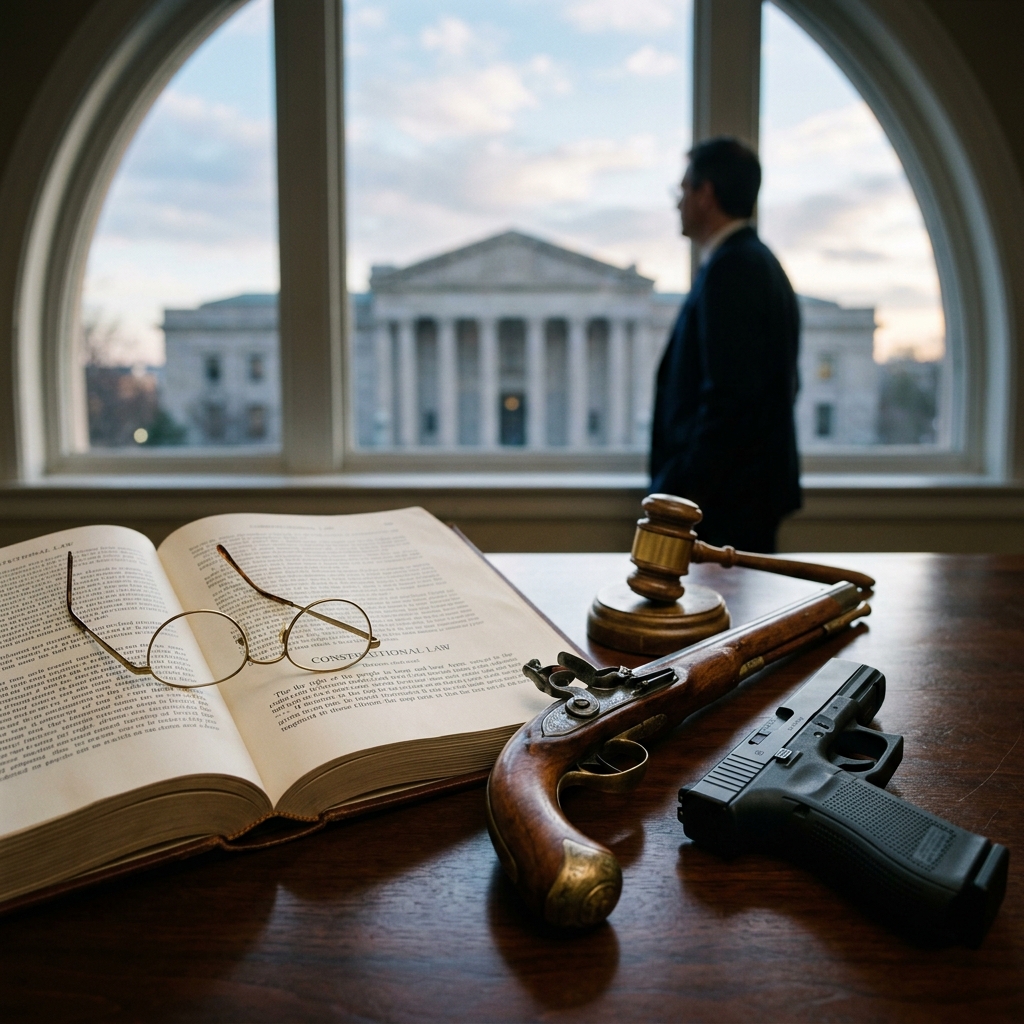
The Second Amendment guarantees an important constitutional right, but that right is not unlimited. Modern gun laws reflect a balance between individual self-defense and public safety, and courts have repeatedly confirmed that many forms of firearm regulation are constitutional. This article explains how that balance works in practice: what the Second Amendment protects, where the limits are, and what that means for gun owners and criminal cases today.
Foundations of the Second Amendment Right
The Second Amendment to the United States Constitution states: “A well regulated Militia, being necessary to the security of a free State, the right of the people to keep and bear Arms, shall not be infringed.” For much of American history, courts and scholars debated whether this language protects an individual right or a collective, militia-related right. In recent decades, Supreme Court decisions have clarified that the Amendment protects an individual right to possess firearms for lawful purposes, particularly self-defense.
Core protection: lawful possession and self-defense
At its core, the modern interpretation of the Second Amendment:
- Recognizes an individual right to own firearms.
- Emphasizes lawful purposes, especially self-defense in the home.
- Allows governments to impose reasonable regulations on ownership and use.
In District of Columbia v. Heller, the Supreme Court struck down a D.C. law that effectively banned handguns and required other firearms to be kept inoperable in the home. The Court held that the Second Amendment protects an individual’s right to possess a handgun at home for self-defense, firmly establishing the right as personal rather than purely militia-based.
Not an unlimited license to carry any weapon
Even while confirming this right, the Court made clear that the Second Amendment is not a blanket permission to own or carry any weapon in any way. The Heller decision specifically noted that the right is “not a right to keep and carry any weapon whatsoever in any manner whatsoever and for whatever purpose.” This language has become a foundation for upholding many gun safety laws.
Key Supreme Court Cases Shaping Gun Limits
Several Supreme Court cases have defined the contours of Second Amendment protection and the permissible limits on gun ownership and carrying.
District of Columbia v. Heller: Individual right in the home
Heller (2008) is the landmark case that confirmed an individual right to keep a handgun at home for self-defense. Key points include:
- The government cannot impose a total ban on operable handguns in the home.
- Self-defense is at the “core” of the Second Amendment right.
- Traditional regulations such as banning firearms for felons and the mentally ill remain presumptively lawful.
McDonald v. Chicago: Applying the right to the states
After Heller, the Court decided McDonald v. City of Chicago (2010), holding that the Second Amendment applies to state and local governments through the Fourteenth Amendment. This means cities and states cannot completely deny the core right to possess firearms for lawful purposes, but they can enact regulations consistent with constitutional limits.
New York State Rifle & Pistol Association v. Bruen: Public carry and history
In New York State Rifle & Pistol Association v. Bruen (2022), the Court addressed whether and how governments can restrict carrying handguns in public for self-defense. The Court struck down New York’s discretionary “proper cause” requirement for concealed carry permits, concluding that ordinary, law-abiding citizens cannot be forced to show a special need beyond general self-defense.
Bruen also announced a new test: when governments defend firearm regulations, they must show that the regulation is consistent with the nation’s historical tradition of firearm regulation. Post‑Bruen, courts examine whether modern laws resemble longstanding restrictions from earlier periods.
Who Can Be Prevented from Owning Guns?
Even under broad Second Amendment protection, governments can restrict certain people from possessing firearms. The Supreme Court and lower courts have upheld a variety of prohibitions aimed at individuals who pose heightened risks.
Common categories of prohibited persons
Under federal and state law, people commonly barred from owning or possessing firearms include:
- Convicted felons, especially those convicted of violent or serious offenses.
- Individuals convicted of certain domestic violence misdemeanors or subject to qualifying restraining orders.
- Persons adjudicated as mentally ill or committed to certain mental health institutions.
- Minors, who are generally barred from possessing handguns and sometimes other firearms.
- Undocumented immigrants or individuals unlawfully present in the country, under some federal regulations.
These restrictions are typically justified on public safety grounds and have been recognized as consistent with the Second Amendment’s allowance for “reasonable regulation.” The idea is that firearms are inherently dangerous and governments may act to prevent access by people who statistically present higher risks of misuse.
Criminal defense implications
For criminal defendants, prohibited‑person laws frequently appear in charges such as “felon in possession of a firearm” or “unlawful possession of a weapon by a prohibited person.” A common defense question is whether a particular law or application violates the Second Amendment. Courts generally uphold these statutes, especially when they target individuals with serious criminal histories or documented mental health adjudications.
Where and How Guns May Be Regulated
The Second Amendment protects ownership and, to a significant degree, public carry. However, governments may regulate guns in specific places and manners to protect public safety.
Location-based restrictions
Many states and localities have long restricted firearms in certain “sensitive places,” and courts have commonly approved such rules. Examples include:
- Schools and school grounds.
- Courtrooms and government buildings.
- Airports and secure transportation hubs.
- Polling places and some public meetings.
Bruen acknowledged the legitimacy of regulations in historically recognized sensitive places, but ongoing litigation continues to test the boundaries of what counts as “sensitive” under the new historical‑tradition standard.
Time, manner, and type of carrying
Governments can also regulate how firearms are carried:
- Requiring permits for concealed carry, subject to objective criteria.
- Setting training requirements, such as safety courses, for obtaining a license.
- Imposing rules on open carry versus concealed carry.
- Limiting brandishing or threatening display of firearms.
Post‑Bruen, permit systems that rely on broad official discretion (like requiring citizens to show “proper cause” or special need) are vulnerable to constitutional challenges. Systems based on clear, neutral criteria—such as background checks, age limits, and training—are more likely to survive.
What Types of Weapons Are Protected?
Another critical question is which firearms fall within Second Amendment protection. Court decisions suggest that weapons “in common use for lawful purposes like self-defense” receive stronger protection than unusually dangerous or rare weapons.
Common use and lawful purposes
Heller emphasized that ordinary handguns kept for self-defense are at the heart of the Second Amendment. Courts often consider whether a type of firearm is:
- Commonly possessed by law-abiding citizens.
- Used primarily for lawful purposes such as self-defense, hunting, or sport shooting.
Weapons that fall outside this category—such as certain military‑style arms or unusually dangerous devices—may be subject to stricter regulation or outright bans, depending on historical analogues and legislative findings.
Illustrative comparison
| Weapon type | Common use for lawful purposes? | Typical regulatory approach |
|---|---|---|
| Handguns | Yes, widely owned for self-defense. | Core Second Amendment protection; bans in the home disfavored. |
| Hunting rifles & shotguns | Common for hunting and sport shooting. | Generally protected, subject to standard licensing and safety rules. |
| Unusual or highly dangerous weapons | Often not commonly used for lawful civilian purposes. | More likely to be restricted or banned if historical analogues exist. |
Balancing Rights and Public Safety
Legal and policy debates around the Second Amendment often revolve around how to balance constitutional rights with the need to reduce gun violence and protect the public. Organizations like the American Civil Liberties Union note that the right to own and use guns has never been considered absolute; firearms are recognized as inherently dangerous and therefore subject to reasonable regulation.
Forms of regulation consistent with the Second Amendment
Courts have upheld a wide array of gun safety laws as compatible with Second Amendment rights, including:
- Background checks for purchases from licensed dealers.
- Waiting periods before transfer is completed.
- Licensing and registration requirements, especially in urban areas.
- Safe storage laws aimed at preventing unauthorized access, especially by minors.
- Restrictions on high‑risk individuals as described above.
According to analyses of post‑Heller and post‑Bruen decisions, many courts continue to reaffirm that gun safety laws can coexist with robust Second Amendment protections. The guiding principle is that regulations should target legitimate safety concerns without eliminating the core right of law‑abiding people to possess firearms for self-defense.
Impact on criminal defense and enforcement
From a criminal defense perspective, the line between lawful behavior and criminal conduct often depends on compliance with these regulations. Common enforcement scenarios include:
- Possession of a firearm by a prohibited person.
- Carrying a firearm in a restricted location such as a school or government building.
- Possession of a firearm without a required permit or in violation of licensing terms.
- Use or display of a firearm in a manner that constitutes assault, brandishing, or intimidation.
Defense counsel may challenge these charges by scrutinizing whether the law is properly applied, whether the defendant fits the prohibited category, and, in rare cases, whether the law itself is constitutional under current Second Amendment doctrine.
Frequently Asked Questions About Second Amendment Limits
Does the Second Amendment give me an unrestricted right to own guns?
No. The Supreme Court has recognized an individual right to possess firearms for lawful purposes, especially self-defense, but it has also emphasized that this right is not unlimited. Governments may impose reasonable regulations, including bans for certain high‑risk individuals and restrictions on carrying in sensitive places.
Can felons ever legally own firearms again?
Federal law generally bars convicted felons from possessing firearms. Some states offer limited mechanisms for rights restoration, such as pardons or specific court orders, but these processes are complex and must comply with both state and federal rules. Anyone considering restoration should consult a qualified attorney.
Do I need a permit to carry a handgun in public?
In many jurisdictions, yes. While Bruen limited the ability of states to require special justification beyond self-defense, it did not abolish permit systems altogether. States can still require background checks, training, and licensing, as long as they use objective criteria and avoid excessive discretion that denies ordinary, law‑abiding citizens.
Are background checks compatible with the Second Amendment?
Yes. Courts have largely upheld background check systems as lawful means of enforcing prohibitions on certain categories of individuals and screening for disqualifying factors. These systems are seen as a way to ensure that firearm purchases comply with existing laws, rather than as a denial of the core right to self-defense.
What should I do to stay compliant with gun laws?
Because gun laws vary by state and locality, it is important to:
- Review state statutes and local ordinances regarding ownership, carrying, and storage.
- Follow all licensing, registration, and training requirements.
- Understand where firearms are prohibited, such as schools or government buildings.
- Consult a criminal defense attorney if you face charges or have questions about complex situations.
References
- Second Amendment — Legal Information Institute, Cornell Law School. 2023-07-01. https://www.law.cornell.edu/wex/second_amendment
- The Second Amendment at the Supreme Court: Challenges to Firearm Regulation After Bruen — Congressional Research Service. 2022-09-21. https://www.congress.gov/crs-product/LSB11108
- Second Amendment — American Civil Liberties Union. 2018-03-01. https://www.aclu.org/documents/second-amendment
- Second Amendment — Giffords Law Center to Prevent Gun Violence. 2023-11-15. https://giffords.org/lawcenter/gun-laws/second-amendment/
- The Second Amendment in the States and the Limits of the Common Use Standard — Harvard Law & Policy Review Online. 2020-06-01. https://journals.law.harvard.edu/lpr/online-articles/the-second-amendment-in-the-states-and-the-limits-of-the-common-use-standard/
- 2nd Amendment Rights and Limitations — Lawyers.com Legal Information. 2021-04-10. https://legal-info.lawyers.com/criminal/the-second-amendment-and-the-right-to-bear-arms.html
Similar Articles








Read full bio of medha deb




