
Seat Belt and Child Restraint Violations
A practical guide to seat belt tickets, child restraint rules, and common penalties.
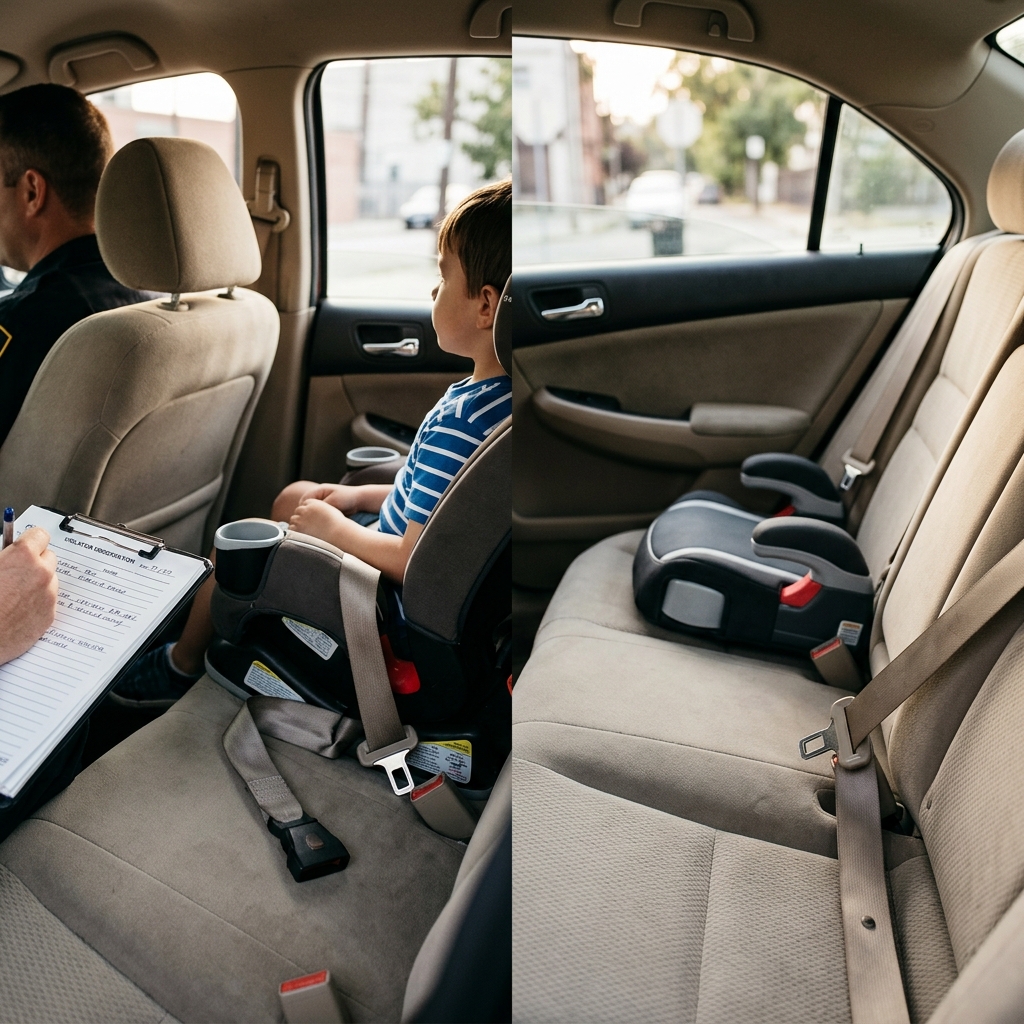
Seat belt and child restraint rules are among the most common traffic-safety laws in the United States, but they are also some of the most misunderstood. A driver may assume that a child is old enough for a regular seat belt, or that an adult passenger is responsible for their own compliance, only to learn that state law places the duty elsewhere. In many states, these violations can lead to fines, court costs, and, in some situations, additional consequences tied to child-safety enforcement.
These laws exist for a simple reason: safety belts and properly fitted child restraints reduce the risk of serious injury in a crash. Federal safety guidance from the National Highway Traffic Safety Administration emphasizes that children should ride in age- and size-appropriate restraints and that a seat belt should fit correctly before a child moves out of a booster seat. State laws vary, but the same basic idea appears again and again: the restraint must match the passenger’s body size, not just the passenger’s age.
What these violations usually cover
Seat belt and child restraint violations typically fall into two related categories. The first involves failure to wear a seat belt when one is required. The second involves placing a child in the wrong restraint system, such as using an adult belt too early or not using a booster seat when the law requires one.
Depending on the state, the rules may cover:
- Front-seat and rear-seat passengers.
- Drivers and passengers in passenger cars, pickup trucks, vans, and similar vehicles.
- Infants, toddlers, and school-age children who need rear-facing seats, forward-facing seats, or boosters.
- Older children who are allowed to use an adult belt only after meeting height, weight, or fit requirements.
Some states also require children under a certain age to ride in the back seat whenever possible, while others focus more heavily on whether the restraint is age-appropriate and properly used.
How child restraint rules are organized
Although the details differ from state to state, many child passenger laws follow a similar pattern. Infants usually must ride in rear-facing seats. Young children move to forward-facing harnessed seats once they outgrow the rear-facing limits. After that, many children must use booster seats until the adult belt fits properly.
Safety agencies explain that the adult belt is not automatically safe just because a child is older or taller than a toddler. A seat belt should lie low across the hips and upper thighs, and the shoulder belt should cross the chest and shoulder rather than the neck or face. California’s recent child passenger legislation reflects the same approach by moving toward a fit-based standard that uses a five-step test for determining whether a child is properly restrained by a safety belt.
| Typical restraint stage | General purpose | Common transition point |
|---|---|---|
| Rear-facing seat | Best support for infants and very young children | When the child reaches the manufacturer’s height or weight limit |
| Forward-facing harness seat | Provides harness support for growing children | When the child outgrows the seat’s harness limit |
| Booster seat | Positions the child so the adult belt fits correctly | When the adult belt fits properly without help |
| Adult seat belt | Suitable once the passenger is large enough for correct belt fit | When lap and shoulder belt placement is correct |
Who is responsible when a child is not restrained properly
Many states place responsibility on the driver, not on the child. Tennessee, for example, states that the driver is responsible for making sure that children under 16 are properly restrained, and the driver may be fined for a violation. Georgia likewise applies its child restraint requirements to drivers on public roads and specifies that children under eight must be properly restrained in a child passenger safety seat or booster seat.
This allocation of responsibility matters because a traffic stop often involves the adult behind the wheel, even if the child’s parent is a passenger. Some states also assign responsibility to a parent or guardian who is present in the vehicle but not driving. That means a family can face more than one potential point of accountability depending on local law and the child’s relationship to the adults in the car.
Seat belt violations for adults and older children
Seat belt laws for adults are generally simpler than child restraint laws, but they still differ by state. In some places, every occupant must wear a seat belt. In others, only front-seat occupants are covered, or certain categories of passengers are exempt. The legal consequences also vary. Some states use a standard fine, while others add court costs or points to a driver’s record.
For older children, the issue often turns on whether the adult belt fits safely. NHTSA recommends keeping children in booster seats until the seat belt fits properly, which generally means the lap belt lies snugly across the upper thighs or hips and the shoulder belt rests across the chest and shoulder. Texas guidance gives a similar description and instructs families not to place the shoulder belt under the arm or behind the back.
Why age alone is not enough
One of the most important mistakes families make is assuming that a child can move to the next restraint stage purely because of age. Age is only part of the picture. Height, weight, body proportions, and the design limits of the seat all matter.
That is why state laws and safety guidance increasingly focus on fit. California’s AB 435, for example, updates the definition of being properly restrained by a safety belt to include a fit test that looks at seating position, knee bend, shoulder-belt placement, lap-belt position, and whether the child can stay seated properly for the full trip. This reflects a broader safety principle: if the belt does not fit correctly, the passenger is not fully protected.
Common penalties and enforcement issues
Penalties for seat belt and child restraint violations are usually modest compared with other traffic offenses, but they can still be important. The Governors Highway Safety Association reports that first-offense fines can range widely across states and may be as low as $10 or as high as $500. Some states also add license points or other consequences.
Enforcement style also varies. Some laws are primary enforcement laws, which means an officer can stop a vehicle solely for the seat belt or child restraint violation. Others are secondary enforcement laws, meaning the officer must first observe another violation before issuing a citation for belt noncompliance. The enforcement model affects how often these tickets are issued and how difficult they are to challenge.
Practical ways to avoid a citation
The most reliable way to avoid a seat belt or child restraint ticket is to match the restraint to the child and use it consistently. Safety agencies recommend choosing a seat by age and size, following the manufacturer’s instructions, and using the vehicle owner’s manual to install the seat correctly. Families should also check whether the car seat has height and weight limits that have already been reached.
- Keep infants in rear-facing seats as long as the seat allows.
- Use a forward-facing harness seat only until the child reaches the seat’s upper limit.
- Move to a booster seat when the harness seat is outgrown but the adult belt still does not fit correctly.
- Use the adult seat belt only when the belt fits low and snug across the body, with the shoulder belt across the chest.
- Follow the specific law in the state where the vehicle is being driven.
What to do after getting a ticket
If you receive a citation for a seat belt or child restraint violation, the first step is to read the ticket carefully and identify the exact law listed. The next step is to check whether your state treats the offense as primary or secondary enforcement and whether the citation is against the driver, the parent, or another responsible adult.
You may also want to determine whether the ticket was based on a misunderstanding of the restraint type, the child’s size, or the vehicle setting. For example, some state laws contain exceptions for certain seating positions, special vehicle types, or age and height thresholds. If the facts are disputed, the citation may be worth reviewing with a traffic attorney or local court information service.
Frequently asked questions
Do seat belt laws apply to passengers in the back seat? In many states, yes. Several states require all occupants to be restrained, while others limit the rule to the front seat or impose special rules for children in rear seating positions.
Can a child stop using a booster seat at age eight? Not necessarily. Many states use age as only one factor, and safety agencies recommend that the child remain in a booster seat until the adult belt fits properly.
Who gets the ticket if a child is unrestrained? Usually the driver does, but some states also place responsibility on a parent or guardian who is present in the car.
Are all child restraint laws the same? No. States differ on the age cutoffs, height thresholds, rear-seat requirements, enforcement level, and penalty amounts.
Do manufacturers’ instructions matter? Yes. Federal safety guidance says car seat use should follow the manufacturer’s instructions and vehicle manual, including the limits for rear-facing, forward-facing, and tether or lower-anchor use.
When state law and safety guidance overlap
Traffic law and child passenger safety guidance are closely connected. The law sets the minimum legal standard, but the safety guidance often goes further by focusing on correct fit and best practice. A child may technically meet a legal threshold in one state and still not be in the safest possible position if the belt does not fit the body properly.
That is why many safety organizations encourage parents and drivers to think beyond the ticket issue. A properly installed seat, the right seating position, and the right restraint stage can reduce the chance of injury while also helping the family comply with traffic law.
References
- AB 435: Vehicles: child passenger restraints — California Digital Democracy. 2025-10-07. https://calmatters.digitaldemocracy.org/bills/ca_202520260ab435
- Seat belt and child seat laws — Insurance Institute for Highway Safety. 2026-07-09. https://www.iihs.org/research-areas/seat-belts/seat-belt-law-table
- Child Passengers — Governors Highway Safety Association. 2026-07-09. https://www.ghsa.org/state-laws-issues/child-passengers
- Child Passenger Safety — Tennessee Traffic Safety Resource Service. 2026-07-09. https://tntrafficsafety.org/cps
- Seat belt and car seat guidelines — Texas Department of Transportation. 2026-07-09. https://www.txdot.gov/safety/driving-laws/seat-belt-car-seat.html
- Child Passenger Safety — Georgia Governor’s Office of Highway Safety. 2026-07-09. https://www.gahighwaysafety.org/child-passenger-safety/
- Car Seat & Booster Seat Safety, Ratings, Guidelines — National Highway Traffic Safety Administration. 2026-07-09. https://www.nhtsa.gov/vehicle-safety/car-seats-and-booster-seats
Similar Articles








Read full bio of medha deb


