
School Bus Stop Laws: What Drivers Must Know
Learn when you must stop for a school bus, what exceptions apply, and the serious penalties for illegal passing in the United States.
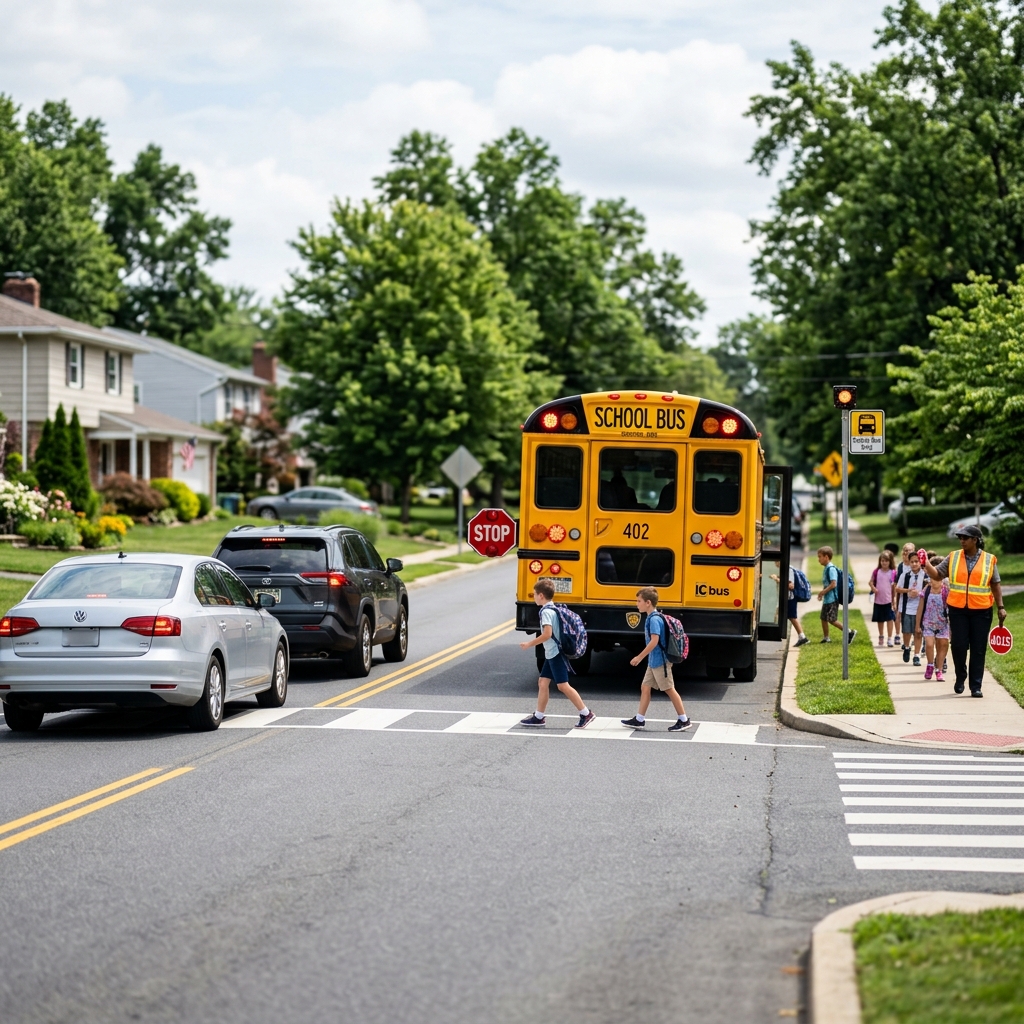
Across the United States, passing a stopped school bus is illegal in every state and is treated as a serious traffic safety offense because it directly endangers children. While specific rules and penalties differ by jurisdiction, the basic expectation is clear: when a school bus is picking up or dropping off students and its red lights and stop arm are activated, nearby drivers are almost always required to stop.
This article explains the core legal principles behind school bus stop laws, how they work on different types of roads, what penalties you may face for violations, and practical guidance to help you avoid dangerous and costly mistakes.
Why Passing a Stopped School Bus Is So Strictly Regulated
School bus laws are designed around a simple reality: children are unpredictable pedestrians. They may cross at unexpected places, step into the road quickly, or be difficult for drivers to see, especially in low light or poor weather. Because of this, legislators and safety agencies treat school bus zones as high-risk areas requiring extra caution.
- Children frequently cross the street when boarding or exiting the bus, often from multiple directions.
- Visibility is limited for drivers approaching a large bus, especially near intersections and curved roads.
- Young students may misjudge speed and distance, making them more vulnerable to traffic.
For these reasons, states use laws that require drivers to stop completely rather than simply slow down, and many impose criminal-level penalties for illegal passing to deter dangerous behavior.
Universal Basics: Lights, Stop Arms, and Required Stops
Although each state writes its own statute, most laws follow common patterns based on the bus’s warning signals. Understanding these signals is the first step to complying with school bus rules.
Amber (Yellow) Warning Lights
Amber or yellow flashing lights are advance warning that the bus will stop ahead to pick up or drop off students.
- Purpose: Alert nearby drivers to slow down and prepare to stop.
- Typical driver duties: Reduce speed, scan for children, and be ready to stop as the bus comes to a halt.
For example, Iowa’s transportation agency instructs drivers that when they see flashing red or amber warning lights, they are not permitted to pass and should be prepared to stop. Pennsylvania similarly notes that amber lights mean “caution,” and drivers should watch for children and be ready to stop.
Red Flashing Lights and Stop Arm
Once the bus is stopped and students are getting on or off, it activates red flashing lights and a stop sign arm that extends into the roadway.
- Red lights and stop arm signal that children are entering or exiting the bus and may be crossing the road.
- General rule: Traffic in most cases must come to a complete stop and remain stopped until the lights are off, the stop arm is retracted, and the bus moves again.
States such as New York, Maryland, Pennsylvania, and Iowa require drivers to stop from both directions on ordinary roads when a bus is stopped with red lights flashing and the stop arm extended.
How School Bus Stop Rules Differ by Road Type
One of the most confusing aspects of school bus rules is how they apply on different types of roads. Many state laws distinguish between two-lane roads, multi-lane roads, and divided highways with physical medians.
| Road Type | Traffic That Must Stop | Common Rule Examples |
|---|---|---|
| Two-lane roadway | All traffic in both directions | North Carolina, Pennsylvania: every vehicle approaching must stop. |
| Multi-lane undivided road (no physical median) | All lanes in both directions | Maryland and many states require full stop regardless of lane count. |
| Divided highway with physical median or barrier | Traffic following the bus; opposite direction may continue with caution | Pennsylvania, Maryland, Iowa provide exceptions for physically separated roadways. |
| Four-lane roadway with median | Usually only traffic behind the bus | North Carolina: only traffic following the bus must stop. |
Two-Lane Roads and Undivided Multi-Lane Roads
On a two-lane road, the rule is straightforward: drivers going in both directions must stop when a school bus ahead is stopped with its red lights and stop arm activated.
Many states extend this requirement to multi-lane roads that are still considered a single roadway, meaning there is no physical median or barrier separating opposing directions. For instance, Maryland explains that motorists traveling in both directions on two-lane and undivided multi-lane roads must stop and remain stopped until the bus’s red lights are off.
Divided Highways and Physical Medians
On divided highways, the rules change because opposing traffic is separated by a physical barrier such as a grassy median, concrete wall, or broad divider. In these settings, many states allow drivers on the opposite side of the median to proceed, while still requiring traffic behind the bus to stop.
- Pennsylvania’s guidance states that drivers do not have to stop on a highway with clearly defined dividing sections or physical barriers when the bus is on the opposite side of the road.
- Maryland similarly notes that motorists are not required to stop if the road is separated by a physical median, such as dirt, grass, or a barrier.
- North Carolina specifies that only traffic following the bus must stop on four-lane roads with a median or on four or more lanes with a center turn lane.
Even when the law does not require a full stop, drivers on the opposite side of a divided highway are expected to proceed with caution, recognizing the presence of children and potential crosswalks nearby.
State Examples: How Penalties and Classifications Vary
Though the duty to stop is broadly similar, states differ significantly in how they classify and punish illegal passing of a stopped school bus. Some treat the offense as a serious misdemeanor or reckless driving; others impose strict civil penalties and license consequences.
New York: Fines, Points, and Possible Jail
New York’s Governor’s Traffic Safety Committee highlights the severity of illegally passing a school bus. A first conviction may bring:
- Fine: Between $250 and $400
- License points: 5 points added
- Possible jail: Up to 30 days in jail for a first offense
Repeat offenses within three years trigger higher fines—potentially up to $1,000—and longer possible jail terms. New York also emphasizes the emotional and moral cost of injuring a child, noting that the memory of such an incident can be lifelong.
Virginia: Reckless Driving Classification
In Virginia, passing a stopped school bus can be charged as reckless driving, a criminal offense rather than a mere infraction. Virginia’s reckless driving statute requires drivers to stop when approaching from any direction a school bus stopped to load or unload students or certain vulnerable passengers, and to remain stopped until the bus moves and all persons are clear of the roadway.
- Offense level: Class 1 misdemeanor
- Potential penalties:
- Up to one year in jail
- Up to $2,500 in fines
- Permanent criminal record if convicted
Virginia’s approach underscores how seriously some states view the risk of passing a stopped school bus; the behavior is treated on par with other high-risk driving offenses.
Pennsylvania: License Suspension and Points
Pennsylvania’s school bus stopping law sets out both criminal and civil penalties for passing a bus with red lights flashing and stop arm activated.
- Criminal penalties for law-enforcement citations:
- 60-day driver’s license suspension
- Five points on the driving record
- $250 fine plus a state surcharge
- Civil penalties for automated camera violations:
- $300 fine
- No points and no license suspension
Separating camera enforcement from officer-issued citations allows Pennsylvania to address widespread noncompliance while reserving harsher penalties for more serious or contested cases.
Maryland: Monetary Penalties and Points
Maryland law requires drivers to stop at least 20 feet from a school bus with its stop arm extended and red lights flashing and prohibits passing the bus from any direction until the signals are off and the bus moves.
- Typical penalty: Up to a $570 fine
- License points: Three points may be added to the driver’s record for a violation.
Maryland’s public safety messaging stresses attention during school transit times and highlights the unpredictable behavior of students, urging drivers to “prepare for the unexpected.”
Important Exceptions and Special Situations
Though the general rule is to stop, there are narrow exceptions in many states. Misunderstanding these exceptions can lead to violations, so drivers must know when they apply—and when they do not.
Divided Roadways with Physical Barriers
As noted earlier, a common exception involves divided highways. When a school bus is stopped on one side of a divided road with a physical median, drivers traveling on the opposite side usually are not required to stop, though they must remain cautious.
Key points include:
- The median must be a physical barrier or clearly defined separation, not just painted lines.
- Drivers following the bus on the same side of the median must still stop.
- Buses typically are not allowed to load or unload children who must cross such divided roadways unless there is specific traffic control or enforcement present.
Direction from Law Enforcement or Authorized Crossing Guards
Many state laws recognize that law enforcement officers or authorized school crossing guards may override normal rules when managing traffic near buses.
- If a police officer or official crossing guard directs you to proceed past a stopped bus, you may follow those directions even when you would normally have to stop.
- Drivers must still exercise caution and be alert for children, even when law enforcement is present.
These situations may arise near complex intersections, temporary detours, or special school operations where controlled traffic movement is required.
Practical Safety Tips for Drivers Around School Buses
Legal compliance is only one part of safe driving near school buses. Adopting cautious driving habits can further reduce the risk of collisions or near misses with children.
- Slow down early: When you see a bus ahead or notice amber lights, reduce speed before reaching it.
- Increase following distance: Leave extra space behind buses to allow time to stop when their signals activate.
- Scan for pedestrians: Look for children walking along shoulders, approaching bus stops, or crossing near intersections.
- Avoid distractions: Put away mobile devices, do not eat, and minimize in-vehicle distractions in school zones and bus routes.
- Watch during peak times: Be especially alert in the early morning and mid-afternoon, when most buses run their routes.
School safety agencies emphasize that students of all ages are unpredictable, making defensive driving and anticipation essential near bus stops.
Frequently Asked Questions (FAQs)
Is passing a stopped school bus illegal everywhere?
Yes. Traffic safety messaging from school districts and state agencies confirms that passing a stopped school bus is illegal in all 50 states and widely recognized as dangerous behavior.
Do I have to stop if I am on the opposite side of a divided highway?
Not always. In many states, if the roadway is divided by a physical median or barrier and the bus is on the other side, you are not required to stop, although you should proceed with caution. However, you must still stop if you are traveling in the same direction behind the bus.
What happens if I pass a school bus with its red lights flashing?
Penalties vary by state but can include fines, license points, temporary license suspension, and in some jurisdictions, possible jail time or a criminal record. For example, New York may impose a fine of up to $400, 5 points, and up to 30 days in jail for a first offense.
How far should I stop from a school bus?
Distances differ among states, but common requirements range from about 10 feet to 20 feet away from the bus. Pennsylvania, for instance, mandates stopping at least 10 feet away, while Maryland requires at least 20 feet. Check your state’s driver handbook or code for the exact distance.
Can a camera ticket for passing a bus affect my driving record?
Some states treat automated camera violations differently from law-enforcement citations. In Pennsylvania, a camera-based school bus violation results in a $300 civil fine but does not add points to your record or suspend your license.
Do I still have to stop if an officer waves me through?
If a law enforcement officer or authorized crossing guard clearly directs you to pass a stopped bus, you may follow their instructions even though normal rules would require stopping. Nonetheless, drive slowly and watch closely for children in the area.
References
- Operation Safe Stop — New York Governor’s Traffic Safety Committee. 2023-09-01. https://trafficsafety.ny.gov/operation-safe-stop
- Stopping for School Busses — Iowa Department of Transportation. 2022-08-15. https://iowadot.gov/consultants-contractors/traffic-safety/stopping-school-busses
- Stop For School Buses: What Are The Laws In Maryland? — Maryland State Police. 2023-08-24. https://news.maryland.gov/msp/2023/08/24/stop-for-school-buses-what-are-the-laws-in-maryland/
- Pennsylvania’s School Bus Stopping Law (PUB 741) — PennDOT. 2021-06-01. https://www.pa.gov/content/dam/copapwp-pagov/en/penndot/documents/public/dvspubsforms/bdl/bdl-publications/pub%20741.pdf
- North Carolina School Bus Stop Law – What To Do — North Carolina Department of Public Safety. 2019-10-25. https://www.ncdps.gov/blog/2019/10/25/north-carolina-school-bus-stop-law-%E2%80%93-what-do
- Passing a Stopped School Bus Is Reckless Driving in Virginia — Van Hardenbergh, P.C. 2020-04-10. https://www.vanhardenbergh.com/faqs/passing-a-stopped-school-bus-is-reckless-driving-in-va.cfm
- Understanding the School Bus Law — Montgomery County Public Schools. 2018-09-01. https://www.montgomeryschoolsmd.org/siteassets/schools/elementary-schools/d-g/foxchapeles/uploadedfiles/news/bussafety.pdf
Similar Articles








Read full bio of Sneha Tete


