
Same-Sex Marriage Back at Supreme Court: Key Updates
Kim Davis's bold appeal reignites debate on Obergefell: Will the Supreme Court reconsider same-sex marriage rights amid religious freedom claims?
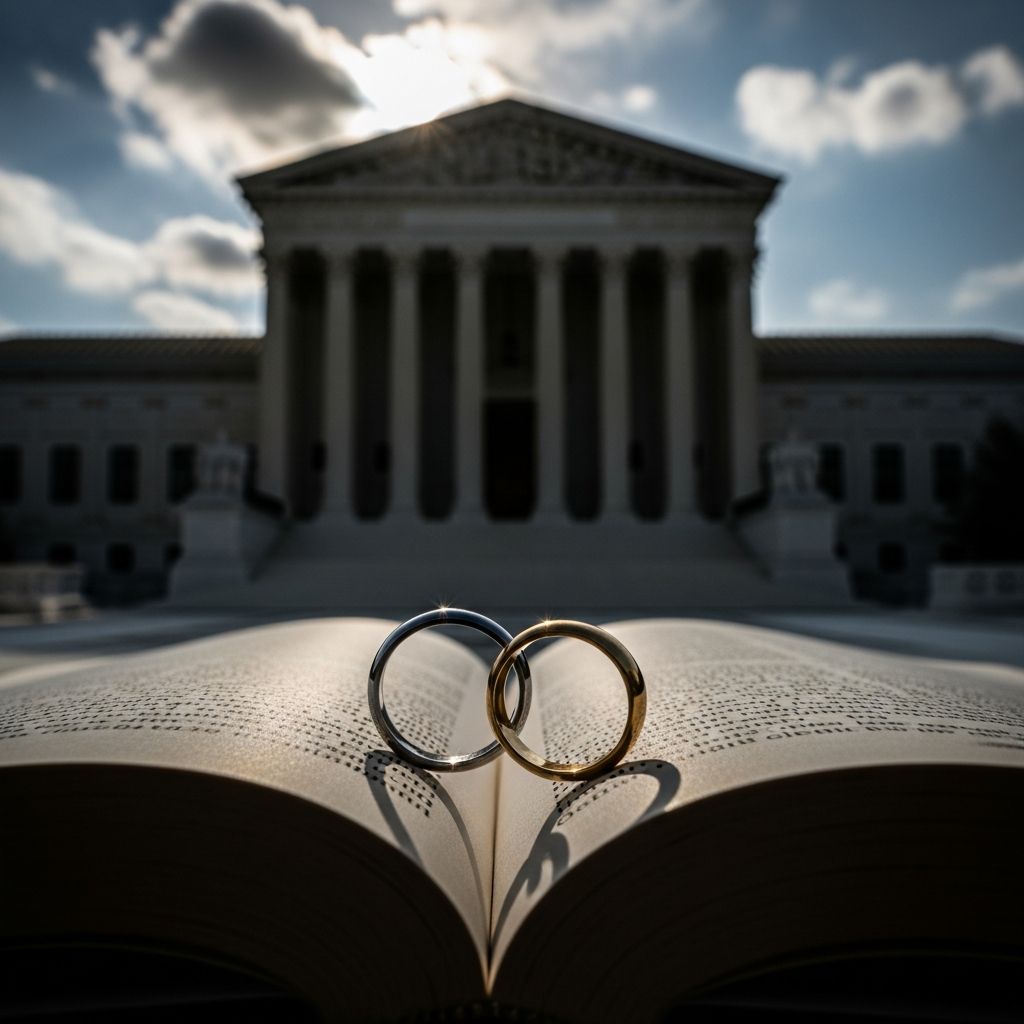
A decade after the landmark Obergefell v. Hodges decision legalized same-sex marriage nationwide, a new petition from former Kentucky clerk Kim Davis has thrust the issue back into the national spotlight. This appeal challenges the constitutionality of same-sex marriage while raising pressing questions about religious freedoms for public officials.
The Roots of the Current Legal Battle
The controversy traces back to 2015, when Kim Davis, as Rowan County Clerk in Kentucky, refused to issue marriage licenses to same-sex couples following the Supreme Court’s Obergefell ruling. Citing her Christian beliefs, Davis halted all license issuances in her office, leading to her brief jailing for contempt of court. David Ermold and David Moore, a same-sex couple denied licenses, sued Davis personally for emotional distress and violations of their rights.
In 2024, a federal jury awarded Ermold and Moore $100,000 in damages ($50,000 each) plus over $260,000 in attorney fees. Davis appealed, arguing that her First Amendment rights to free exercise of religion shield her from liability. Lower courts, including the 6th U.S. Circuit Court of Appeals, rejected this, ruling that as a government official performing state duties, her actions were not protected private conduct.
| Year | Event |
|---|---|
| 2015 | Davis refuses licenses post-Obergefell; jailed for 6 days. |
| 2019 | First Supreme Court petition denied; Justices Thomas and Alito note unresolved issues. |
| 2024 | Jury awards $100K damages to Ermold and Moore. |
| 2025 | 6th Circuit upholds verdict; Davis petitions Supreme Court. |
| 2026 | Supreme Court declines certiorari (Jan 13). |
Core Arguments in Davis’s Supreme Court Petition
Davis’s July 24, 2025, petition for certiorari directly asks the justices to overrule Obergefell, calling it an “egregiously wrong” decision with no constitutional basis. Her attorney, Mathew Staver, labels Justice Anthony Kennedy’s majority opinion a “legal fiction” that forces individuals like Davis to choose between faith and employment.
- First Amendment Defense: Davis claims personal liability without religious exemptions violates her rights, positioning her as acting individually, not as a state actor.
- Overturning Obergefell: Argues the 14th Amendment’s due process clause does not encompass same-sex marriage, urging a return to state-level definitions.
- Historical Precedent: Highlights her as the first American jailed for marriage-related religious convictions, demanding review as a matter of “exceptional importance.”
Opposing counsel William Powell dismissed the bid, noting no appellate judge showed interest and predicting Supreme Court rejection.
Supreme Court’s Response and Broader Judicial Trends
On January 13, 2026, the Supreme Court issued a brief unsigned order denying Davis’s petition, upholding the lower court’s ruling without comment. This marks the second rejection of her appeals, following the 2019 denial where Justice Clarence Thomas concurred, acknowledging Obergefell questions but finding the case unfit.
The denial aligns with the Court’s cautious approach post-Dobbs v. Jackson Women’s Health Organization (2022), which overturned Roe v. Wade and devolved abortion to states. Legal analysts like SCOTUSblog’s Amy Howe suggest justices prefer lower-court percolation for future challenges rather than rushed reconsiderations.
“This petition implicates important questions about the scope of our decision in Obergefell, but it does not cleanly present them.” — Justice Thomas, 2019 statement
State-Level Pushback Against Obergefell
Beyond Davis, conservative states are mobilizing. In 2025, at least nine introduced bills or resolutions to block same-sex licenses or petition the Court to reverse Obergefell, per Lambda Legal. Pre-2015, 35 states banned such unions; only eight permitted them.
In Texas, Waco Justice of the Peace John Hensley faced discipline for refusing same-sex ceremonies on religious grounds. A federal lawsuit filed December 2025 by his attorney asks courts to overturn Obergefell, echoing Dobbs by advocating state control. The Texas Supreme Court amended judicial canons to clarify religious refusals aren’t violations, though the State Commission on Judicial Conduct insists this doesn’t permit discrimination.
- The Southern Baptist Convention prioritized overturning Obergefell in June 2025 as defying “God’s design.”
- These efforts signal a coordinated campaign, but federal law complicates reversals.
Protections for Existing Marriages
Crucially, even if Obergefell were overturned, existing same-sex marriages would endure. The 2022 Respect for Marriage Act mandates federal and state recognition of valid same-sex and interracial unions performed anywhere, irrespective of future legal shifts. This codifies protections post-Dobbs, ensuring stability for millions.
Religious Freedom vs. Equal Rights: Ongoing Tension
Davis’s case underscores the clash between LGBTQ+ rights and religious liberty. While Obergefell (5-4) grounded same-sex marriage in due process and equal protection, dissenters like Chief Justice Roberts warned of religious coercion. Post-Dobbs, with a 6-3 conservative majority, some speculate openness to revisiting, but experts view Davis’s standing as narrow—tied to personal liability, not broad precedent.
Lower courts consistently rule public officials lack First Amendment shields for official acts. Future cases might involve private vendors or state laws, percolating upward.
Potential Future Pathways for Challenges
- Direct State Defiance: Legislation nullifying Obergefell, forcing Supreme Court intervention.
- Religious Accommodation Suits: Broader claims for exemptions in public roles.
- Analogous Rulings: Building on 303 Creative LLC v. Elenis (2023), protecting creative expression refusals.
Scholars predict no immediate reversal; the Court favors measured evolution.
Frequently Asked Questions (FAQs)
What was the outcome of Kim Davis’s 2026 Supreme Court petition?
The Court denied certiorari on January 13, 2026, upholding the $100K damages award without opinion.
Could overturning Obergefell void past same-sex marriages?
No, the Respect for Marriage Act (2022) requires recognition of existing valid marriages nationwide.
Why do lower courts reject Davis’s religious freedom claim?
As a government actor issuing state licenses, her refusals aren’t protected private speech.
Are other challenges to same-sex marriage brewing?
Yes, nine states pushed anti-Obergefell measures in 2025; Texas sees active litigation.
Will the Supreme Court revisit Obergefell soon?
Unlikely via Davis; experts expect lower-court development first.
Implications for Law and Society
This saga reflects America’s polarized views on marriage, faith, and rights. While Davis’s petition failed, it galvanizes debate, potentially foreshadowing tests of federalism in family law. For LGBTQ+ couples, Obergefell endures, bolstered by statute. Public officials must navigate duties amid convictions, with courts prioritizing equal access.
(Word count: 1678)
References
- Supreme Court formally asked to overturn landmark same-sex marriage ruling — ABC News (Devin Dwyer). 2025-08-approx. https://abcnews.go.com/Politics/supreme-court-formally-asked-overturn-landmark-same-sex/story?id=124465302
- Will the Supreme Court revisit its ruling on same-sex marriage? — SCOTUSblog. 2025-08. https://www.scotusblog.com/2025/08/will-the-supreme-court-revisit-its-ruling-on-same-sex-marriage/
- Supreme Court declines to hear case on constitutionality of same-sex marriage — SCOTUSblog. 2026-01-13. https://www.scotusblog.com/2025/11/supreme-court-declines-to-hear-case-on-constitutionality-of-same-sex-marriage/
- Waco judge asks federal courts to overturn same-sex marriage — The Texas Tribune. 2025-12-19. https://www.texastribune.org/2025/12/19/texas-judge-same-sex-marriage-supreme-court-obergefell/
Similar Articles








Read full bio of Sneha Tete


