
Same-Sex Marriage and the U.S. Supreme Court
How landmark Supreme Court decisions reshaped the legal landscape of marriage equality for same-sex couples across the United States.
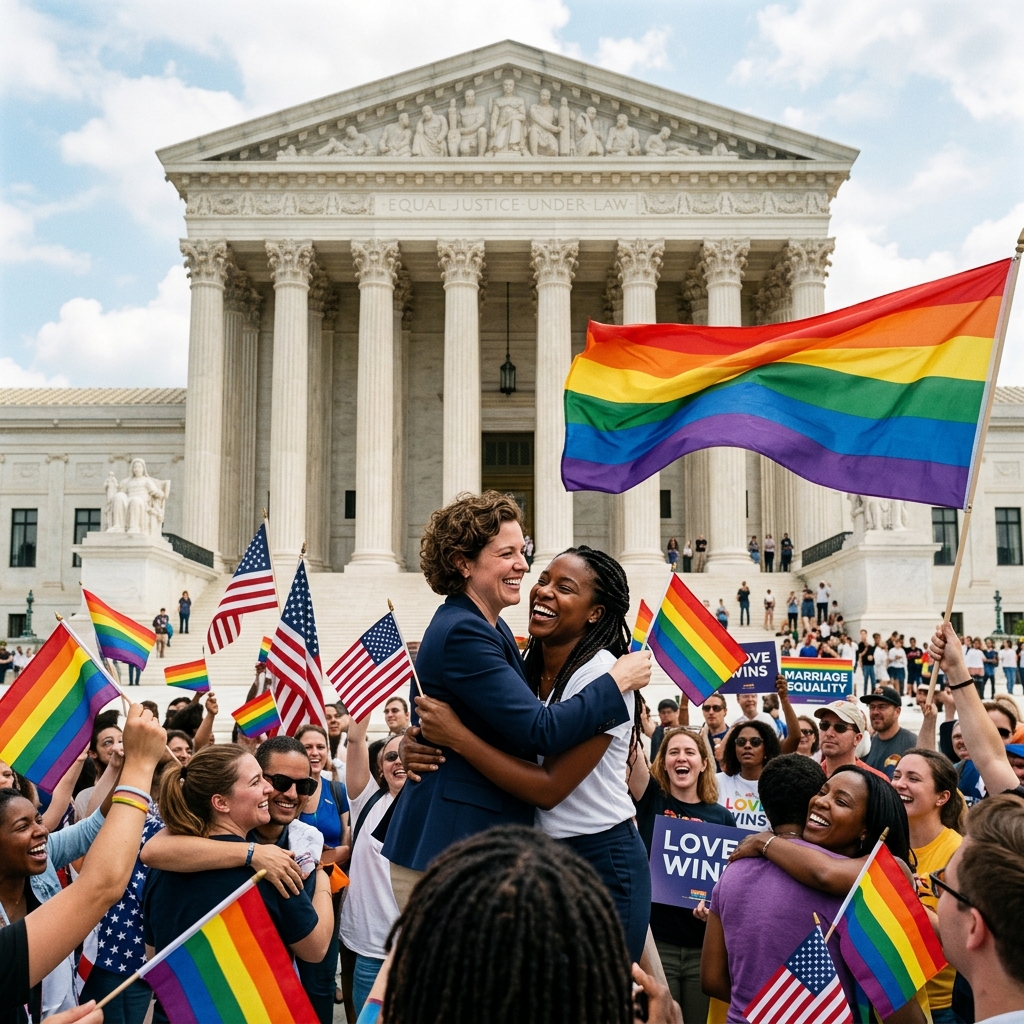
The journey toward nationwide recognition of same-sex marriage in the United States is closely intertwined with a series of pivotal rulings by the U.S. Supreme Court. Over several decades, the Court moved from allowing state-level bans to ultimately declaring that the Constitution protects the right of same-sex couples to marry on the same terms as different-sex couples. This article explains how that legal evolution unfolded, what Obergefell v. Hodges changed, and why the decisions continue to matter in everyday life.
From State Bans to Constitutional Protection
For many years, marriage in U.S. law was defined and regulated almost exclusively by individual states. Many states adopted statutes or constitutional amendments restricting marriage to one man and one woman, and federal courts initially declined to intervene. The modern story of marriage equality emerges from tensions between these state-level rules and evolving constitutional interpretations of liberty and equality.
Early Legal Landscape
Before national marriage equality, states followed a patchwork of approaches. Some jurisdictions recognized civil unions or domestic partnerships; others enacted explicit bans on same-sex marriage. As litigation expanded, advocates argued that excluding same-sex couples from civil marriage violated the Due Process Clause and Equal Protection Clause of the Fourteenth Amendment, while opponents maintained that states retained broad authority to define marriage.
- Due Process Clause: Protects fundamental liberties, including intimate decisions such as marriage.
- Equal Protection Clause: Prevents states from denying people equal treatment under the law without adequate justification.
- Many lower courts began to accept that marriage is a fundamental right and that denying it to same-sex couples required strong constitutional justification.
The Road to Obergefell v. Hodges
The Supreme Court did not reach its final position on same-sex marriage in a single decision. Instead, the Court gradually expanded protection for LGBTQ+ people, culminating in the recognition that couples of the same sex have a constitutional right to marry. By the time Obergefell v. Hodges was decided in 2015, a majority of states already allowed same-sex marriage, and only a minority still enforced bans.
Key Developments Before Nationwide Marriage Equality
Though this article focuses on Obergefell, understanding its significance requires looking at the broader trajectory. Over roughly two decades, federal and state courts issued decisions expanding rights related to privacy, intimate relationships, and equal treatment. These cases built the doctrinal foundation for recognizing same-sex marriage as part of the fundamental right to marry.
- Courts increasingly treated sexual orientation discrimination as constitutionally suspect, requiring stronger justification from governments.
- Many states voluntarily adopted marriage equality through legislation or state-court rulings, creating a divide between states that recognized same-sex marriage and those that refused to do so.
- Couples faced serious consequences when crossing state lines, including loss of spousal recognition, uncertainty over parental rights, and gaps in access to benefits.
Obergefell v. Hodges: The Landmark Decision
Obergefell v. Hodges, decided on June 26, 2015, is the watershed case that established marriage equality throughout the United States. In a 5–4 decision, the Supreme Court held that the Fourteenth Amendment requires states to both license marriages between two people of the same sex and recognize lawful same-sex marriages performed in other jurisdictions.
Background of the Case
The case consolidated multiple lawsuits from same-sex couples in Ohio, Michigan, Kentucky, and Tennessee, states that either prohibited same-sex marriage outright or refused to recognize marriages lawfully performed elsewhere.
- Plaintiffs included couples seeking the right to marry in their home states and couples whose marriages, valid where performed, were not recognized after relocation.
- They argued that the bans violated both due process and equal protection, and in some cases raised claims under federal civil rights laws.
- Federal district courts sided with the couples, but the U.S. Court of Appeals for the Sixth Circuit reversed, upholding the state bans.
- This conflict among lower courts set the stage for Supreme Court review.
The Supreme Court’s Holding
Justice Anthony Kennedy wrote the majority opinion, joined by four other justices. The Court concluded that same-sex couples are entitled to the same fundamental right to marry as opposite-sex couples.
| Legal Question | Supreme Court Answer |
|---|---|
| Must states license same-sex marriages? | Yes. The Fourteenth Amendment requires states to license a marriage between two people of the same sex. |
| Must states recognize same-sex marriages performed elsewhere? | Yes. States must recognize lawful same-sex marriages from other states; refusals violate the Fourteenth Amendment. |
| Are same-sex marriage bans constitutional? | No. Bans burden liberty and equality and are invalid to the extent they exclude same-sex couples from civil marriage. |
The Court emphasized that marriage is a profound personal choice and a fundamental right, and that same-sex couples seek not to change this institution but to participate in it on equal terms. Denying them access to civil marriage, the Court held, violates both the liberty interests protected by due process and the equality guarantees of equal protection.
The Vote and Opinions
The decision was closely divided.Five justices formed the majority, while four justices dissented.
- Justice Kennedy’s majority opinion relied heavily on the connection between liberty and equality under the Fourteenth Amendment.
- Dissenting justices argued that the Constitution did not speak directly to same-sex marriage and that states should retain authority to define marriage.
- The split reflected broader national debate, but the ruling ultimately established binding constitutional law across all states.
Practical Effects of Nationwide Marriage Equality
Obergefell’s impact is not just symbolic; it reshaped the legal rights and responsibilities of hundreds of thousands of couples. Once same-sex marriage was recognized as a constitutional right, state and federal governments could no longer treat these marriages differently than opposite-sex marriages simply because of the couple’s sex composition.
Immediate Legal Changes
After the ruling, states that had enforced bans on same-sex marriage were required to change their laws and administrative practices.
- State agencies began issuing marriage licenses to same-sex couples and updating forms and procedures.
- Existing same-sex marriages performed in other jurisdictions had to be recognized for purposes such as inheritance, healthcare decision-making, and spousal benefits.
- Couples could access legal mechanisms for divorce, property division, and child custody within marriage, just as different-sex couples do.
Everyday Rights and Protections
Marriage carries a wide range of legal consequences, many of which became newly available to same-sex couples nationwide.
- Family law protections: Rights regarding adoption, parental recognition, and custody can be linked to marital status.
- Economic and tax benefits: Joint tax filing, access to spousal Social Security benefits, and employee benefits often depend on being legally married.
- Medical and end-of-life decisions: Spouses are typically recognized as next of kin, with authority in emergencies and for estate planning.
- Immigration status: U.S. citizens and lawful permanent residents may sponsor same-sex spouses for immigration benefits on equal terms.
Liberty and Equality: Constitutional Principles Behind the Ruling
A defining feature of Obergefell is its explicit recognition that the principles of liberty and equality in the Fourteenth Amendment are deeply intertwined. The Court explained that denying same-sex couples access to marriage not only limits their liberty to make intimate personal choices but also labels them as inferior under the law.
Fundamental Right to Marry
The Court drew on longstanding precedent recognizing marriage as a fundamental right, emphasizing several reasons why this right is central to personal and social life.
- Marriage supports personal autonomy and the ability to define one’s identity and relationships.
- It provides a unique framework for two people to commit to mutual support and responsibilities.
- Marriage often serves as the foundation for family life, including parenting and economic stability.
By extending this fundamental right to same-sex couples, the Court affirmed that the Constitution’s protection of marriage is not limited solely by historical definitions but must be interpreted in light of contemporary understanding of liberty and equality.
Equal Protection and Dignity
The equal protection analysis in Obergefell highlighted the stigma and practical harms imposed when governments treat same-sex couples as second-class. The Court reasoned that excluding them from marriage denies both practical benefits and the societal recognition associated with marital status.
- Bans sent a message that same-sex relationships were less worthy of legal respect.
- Children raised by same-sex couples could experience legal uncertainty and social stigma when their parents’ relationship lacked recognition.
- The Court concluded that these harms were incompatible with the Constitution’s commitment to equal protection.
Continuing Debates and Legal Questions
Obergefell resolved the question of whether states can ban same-sex marriage, but it did not end all legal and political disputes involving LGBTQ+ rights. Subsequent cases and policy debates have addressed issues such as religious objections, discrimination in services, and the scope of protections for LGBTQ+ people in employment, housing, and public accommodations.
Religious Liberty and Civil Marriage
The Court in Obergefell recognized that many religious traditions define marriage in ways that may not include same-sex unions, but it distinguished between civil marriage and religious doctrine.
- Religious organizations retain the freedom to teach and practice their beliefs regarding marriage.
- At the same time, government officials responsible for civil marriage may not deny licenses based solely on a couple’s sex.
- This balance continues to be explored in later cases involving religious objections to participating in or recognizing same-sex marriages in commercial contexts.
Broader LGBTQ+ Rights
Obergefell is often described as a major step in a broader movement toward eliminating laws that directly discriminate against people based on sexual orientation.
- Some courts have interpreted the reasoning in Obergefell as supporting stronger scrutiny of laws that burden LGBTQ+ individuals.
- Legal challenges have continued in areas such as adoption, foster care, and anti-discrimination statutes.
- Advocates view marriage equality as part of a larger framework of civil rights, not the endpoint of legal reform.
What Obergefell Means for Families Today
For families, the Obergefell decision has concrete and lasting consequences. By guaranteeing equal access to civil marriage, the ruling stabilizes legal relationships and provides clarity when families move, separate, or face unexpected life events.
Security Across State Lines
One of the most important practical effects is the assurance that a marriage legally performed in one state is recognized everywhere in the country.
- Couples can relocate for work or family reasons without losing marital status.
- Courts in any state must treat same-sex spouses as married for purposes such as divorce, custody, and inheritance.
- This uniformity prevents many of the legal gaps and hardships families previously faced when crossing state borders.
Planning for the Future
With marriage equality in place, same-sex couples can make long-term plans with greater confidence.
- Estate planning, including wills and trusts, can rely on well-established rules about spousal rights.
- Employer benefit programs that extend coverage to spouses apply equally, which can influence financial and career decisions.
- Parents can better protect their children’s interests through joint legal recognition and shared responsibilities.
Frequently Asked Questions
Is same-sex marriage legal in all U.S. states?
Yes. Following Obergefell v. Hodges, all states are constitutionally required to allow same-sex couples to marry and to recognize valid same-sex marriages from other jurisdictions.
Can a state refuse to recognize a same-sex marriage performed in another state?
No. The Supreme Court explicitly held that because same-sex couples may exercise the fundamental right to marry, there is no lawful basis for a state to refuse recognition of a marriage validly performed elsewhere based on its same-sex character.
Does Obergefell affect religious definitions of marriage?
The ruling governs civil marriage under constitutional law. Religious organizations remain free to maintain their own doctrines and may choose whether or not to recognize same-sex marriages within their faith traditions.
What happens if new state laws attempt to restrict same-sex marriage?
Any state law that attempts to bar same-sex couples from civil marriage or to limit recognition of their marriages would conflict with Obergefell and the Fourteenth Amendment. Such laws would be subject to constitutional challenge and are unlikely to withstand judicial review.
Does the decision apply only to couples, or does it affect children as well?
While the case directly concerns couples’ right to marry, the Court noted that recognition of same-sex marriage also benefits children by providing stability, legal protection, and social acceptance for their families.
References
- Obergefell v. Hodges, 576 U.S. 644 (2015) — Supreme Court of the United States / Justia summary. 2015-06-26. https://supreme.justia.com/cases/federal/us/576/644/
- Obergefell v. Hodges — Oyez Project, IIT Chicago-Kent College of Law. (accessed 2024). https://www.oyez.org/cases/2014/14-556
- Obergefell v. Hodges — GLAD (GLBTQ Legal Advocates & Defenders). 2015-06-26. https://www.gladlaw.org/cases/obergefell-v-hodges/
- Obergefell v. Hodges – A Brief History of Civil Rights in the United States — Howard University School of Law Library. (accessed 2024). https://library.law.howard.edu/civilrightshistory/lgbtq/obergefell
- Obergefell v. Hodges — U.S. Supreme Court decision summary (educational article, PDF). Atlanta History Center. 2015-06-26. https://www.atlantahistorycenter.com/app/uploads/2021/01/EDU_SchoolTours_Cyclo_TeacherGuide_Components_-Supreme-Court-makes-history-with-5-4-gay-marriage-equality-ruling-.pdf
Similar Articles








Read full bio of Sneha Tete


