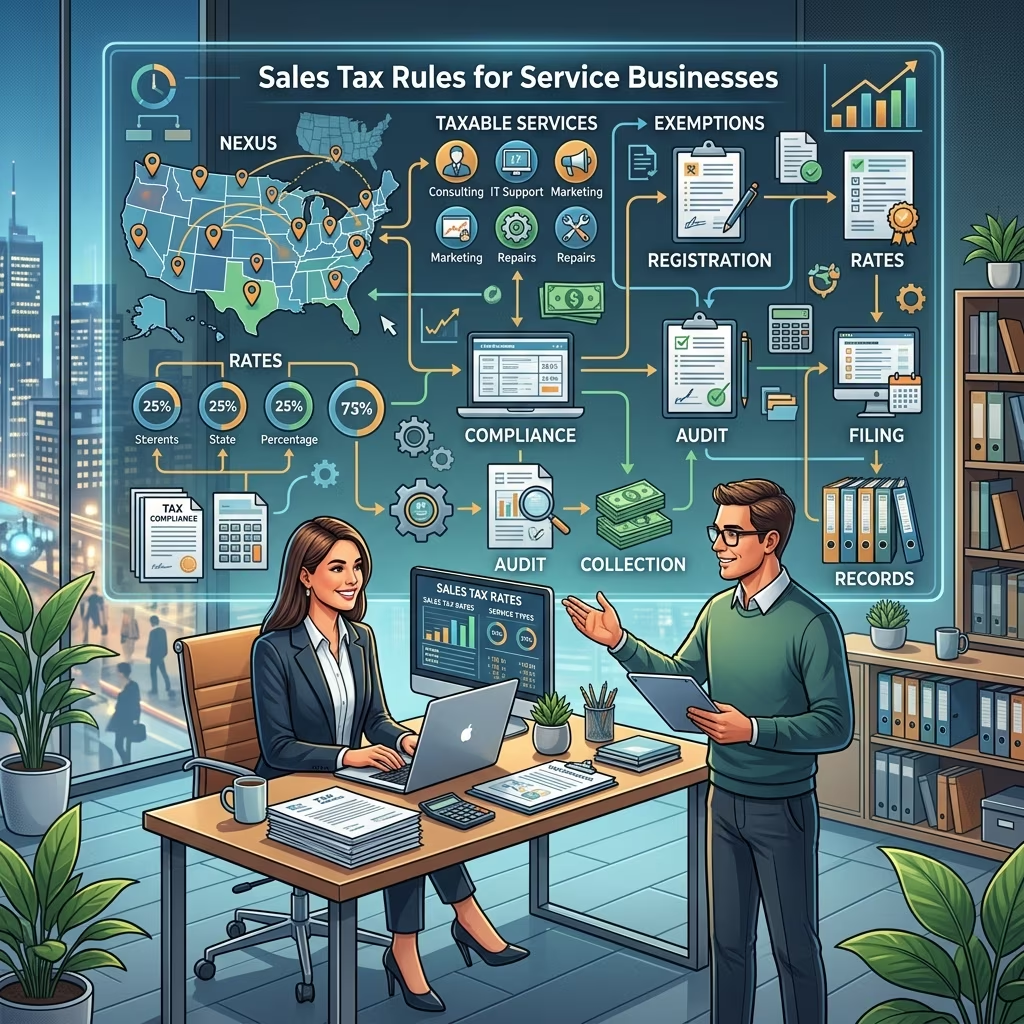
Running a service-based business does not automatically exempt you from sales tax. In many U.S. states, services are largely exempt, but a growing number of jurisdictions tax specific services or even broad categories of service activity. Understanding when you must charge, collect, and remit sales tax is essential for avoiding penalties and protecting your business.
This guide explains how sales tax applies to services, highlights differences among states, and outlines practical steps to stay compliant. It is designed for small business owners, freelancers, and professional service providers who need a clear, plain-language overview of this complex topic.
Why Sales Tax Matters for Service Businesses
Sales tax is a transaction-based tax imposed by states and local governments on certain sales of goods and services. While product-based retailers expect to deal with sales tax, many service providers mistakenly assume they are exempt. That assumption can be costly.
- Financial risk: If you fail to charge tax where it is required, states can still demand payment from you, plus interest and penalties.
- Licensing issues: Some states can suspend or revoke your sales tax license for non-compliance.
- Client relationships: Retroactively billing customers for unpaid tax damages trust and may be impractical.
Sales tax collected from customers is not income. It is money you hold in trust for the state and must remit according to filing deadlines. Treating it correctly in your accounting system is crucial.
Key Concept: Goods vs. Services
Most sales tax laws distinguish between tangible personal property (physical items) and services (labor, expertise, or activities performed for a customer). Many states tax goods broadly, but tax services only when the law specifically says so.
How States Typically Classify Transactions
| Type of transaction | Common sales tax treatment | Example |
|---|---|---|
| Sale of tangible goods | Usually taxable unless specifically exempt | Retail sale of equipment or supplies |
| Pure service (no goods provided) | Often exempt, unless listed as taxable by statute | Consulting, coaching, legal advice |
| Service to property | Frequently taxable when it alters, repairs, or improves property | Repairing machinery, installing equipment |
| Mixed transaction (goods + services) | Taxability depends on state rules and tests like the “true object” test | Custom design plus sale of finished product |
Some states treat the buyer as the true taxpayer and focus on the nature of the transaction itself rather than the item alone. That means how your service is structured and billed can affect whether tax applies.
State Approaches to Taxing Services
Every state with a sales tax has its own statutes and regulations defining which services are taxable. Broadly, you will see three main patterns:
- Mostly exempt with specific taxable services: Many states exempt most services but specifically tax certain types, such as utilities, telecommunications, cleaning, or entertainment.
- Targeted taxation of business and property services: States often tax services that install, maintain, or repair property, or that grant access to entertainment and recreation.
- Expanding coverage over time: A trend in some jurisdictions is to gradually expand sales tax to more services, including business support services.
Illustrative State Examples
The following examples show how different states treat services, highlighting the need to check rules where you operate:
- Colorado: Services are generally not taxable, but certain utilities and telecommunications are explicitly taxed. Service firms are treated as consumers of the tangible property they use, meaning they pay tax when buying materials but usually do not charge sales tax on the service itself.
- New York: Sales tax applies to tangible property, utilities, some services, and hotel and restaurant charges. Many personal and professional services, such as medical care and education, are exempt.
- Maryland: Only services specifically listed in the law are taxable, including manufacturing services, janitorial services, certain telecommunications, credit reporting, and security services.
- Washington: Retail sales tax covers services to tangible property (installation, cleaning, repair) and various construction and landscaping services. New legislation is making some business services taxable alongside traditional retail services.
- Ohio: Unlike goods, only services explicitly listed as taxable are subject to sales tax. If a service is not on that list, it is generally exempt.[10]
These examples demonstrate that an identical service may be taxable in one state and exempt in another. If you operate in multiple states or serve out-of-state clients, you must evaluate each jurisdiction separately.
The “True Object” Test for Mixed Transactions
Many service businesses provide a mix of labor and goods—such as a contractor who both designs and installs equipment or a designer who delivers both concepts and printed materials. When a single invoice covers both goods and services, some states use the true object test to decide if the entire transaction is taxable.
Under the true object test:
- If the customer’s primary goal is to obtain taxable property, the whole transaction may be taxed.
- If the customer’s primary goal is the service itself, the transaction may be exempt, even if some taxable property is incidentally involved.
Documenting your scope of work and itemizing invoices can help demonstrate the nature of the transaction, which may support your tax treatment if questioned by a tax authority.
Are You a Retailer or a Consumer of Tangible Property?
Service businesses frequently use materials or equipment while performing services. Laws often distinguish between businesses that sell those items to customers and those that simply use them to provide a service.
In many states:
- Service providers are consumers of materials: They pay sales tax when purchasing goods used in providing services but generally do not charge sales tax on the service fee.
- Businesses that resell goods are retailers: If you regularly sell tangible property (e.g., products, parts, or equipment), you may need a sales tax license and must collect tax from customers on those sales.
Clarifying whether you are acting mainly as a service provider or a retailer helps determine if and when you must collect sales tax.
Practical Steps to Determine Your Sales Tax Obligations
Because rules are state-specific, every service business should follow a systematic process for determining its obligations. A typical approach includes:
1. Identify Where You Have Tax Nexus
Nexus is the level of connection a business has to a state that creates a tax obligation. Traditionally, this meant having a physical presence—such as an office, employees, or inventory. Today, economic thresholds (like a certain level of sales into a state) can also establish nexus.
Once you know where you have nexus, you can focus your research on those jurisdictions.
2. Check State Rules for Your Type of Service
Next, review whether your service category is taxable in each relevant state:
- Look up official state tax department guidance on sales and use tax.
- Search for lists of taxable and exempt services or guides specific to service industries.[10]
- Determine whether your services fit under categories like entertainment, telecom, janitorial, repair, or professional services.
States often provide detailed publications explaining how their sales tax applies to common business activities.
3. Apply the True Object Test if You Provide Goods and Services
If you offer packages that include both goods and services, consider whether the primary purpose of the transaction is the service or the product. Where applicable, apply the true object test and follow your state’s guidance on mixed transactions.
4. Register Before Collecting Any Tax
In most states, you must register with the state taxing authority before charging customers sales tax. Registration typically results in a sales tax license or permit and instructions regarding filing frequency and methods.
- Do not collect tax without a valid registration—states can treat this as improper behavior.
- Once registered, you may be required to file returns even in periods with no taxable sales (zero returns).
5. Set Up Systems to Calculate, Collect, and Track Tax
Sales tax rates often include both state and local components and may change based on the location where the service is delivered or where the customer uses the product. To manage this:
- Configure your invoicing or point-of-sale tools: Ensure they apply the correct combined state and local rate.
- Keep detailed records: Maintain invoices, receipts, and sales reports showing tax collected by jurisdiction.
- Monitor filing deadlines: Many states require monthly or quarterly filings depending on your annual tax collected.
Common Service Business Scenarios
While specifics vary by state, certain service categories frequently raise sales tax questions:
- Professional services: Legal, medical, accounting, and many consulting services are often exempt, but always verify in your state.[10]
- Cleaning and maintenance: Commercial cleaning, building maintenance, and janitorial services may be taxable in some states.
- Entertainment and recreation: Admission to places of amusement, games, and recreational activities is commonly taxed.
- Telecommunications and utilities: Business telephone services, gas, and electricity for commercial use are often subject to sales tax.
- Construction and repair: Services that build, improve, or repair real property or tangible personal property frequently fall under taxable categories.
Best Practices to Stay Compliant
To reduce risk and simplify ongoing compliance for your service business, consider the following practical steps:
- Use written policies: Document how your company handles sales tax for its services and train staff accordingly.
- Consult professionals: Engage a tax advisor or accountant familiar with multi-state sales tax, especially if your business operates online or across borders.
- Review changes annually: State legislatures may add or remove taxable service categories. Periodic reviews help keep you current.
- Separate goods from services on invoices: Clear itemization can make it easier to apply the correct tax and defend your treatment if audited.
- Maintain good records: Retain documentation for the statutory period required by your state, often several years.
Frequently Asked Questions (FAQs)
Do all service businesses have to charge sales tax?
No. Many states exempt most services from sales tax and only tax those listed in their statutes or regulations.[10] However, because the list of taxable services is expanding in some jurisdictions, you must check rules in each state where you operate.
What happens if I collect sales tax without registering?
States generally require registration before you collect sales tax from customers. Collecting tax without a license can expose you to enforcement actions and may complicate remittance. Register first, then begin collecting.
Is sales tax considered business income?
No. Sales tax is a pass-through liability. You collect it from customers and remit it to the state or local tax authority. It should be recorded separately from revenue in your accounting system.
How do I handle services that include materials or equipment?
If your service includes both labor and tangible property, the tax treatment depends on your state. Some treat you as a consumer of materials (taxed when purchased), while others may require you to charge sales tax on the goods sold to customers. The true object test can help determine whether the transaction is primarily a service or a sale of property.
Do I need to file sales tax returns if I have no taxable sales?
Often, yes. Many states require registered businesses to file returns for each period, even if no tax was collected (a “zero return”). Failing to file can lead to penalties or administrative issues.
References
- Sales Tax Guide — Colorado Department of Revenue. 2024-01-01. https://tax.colorado.gov/sales-tax-guide
- Products, Services, and Transactions Subject to Sales Tax — New York State Department of Taxation and Finance. 2023-06-01. https://www.tax.ny.gov/bus/st/subject.htm
- Maryland Sales and Use Taxes — People’s Law Library of Maryland. 2022-09-15. https://www.peoples-law.org/maryland-sales-and-use-taxes
- Retail Sales Tax — Washington State Department of Revenue. 2024-10-01. https://dor.wa.gov/taxes-rates/retail-sales-tax
- Sales and Use Taxability — Ohio Department of Taxation. 2023-05-01. https://tax.ohio.gov/business/sales-and-use-tax/taxability
- Sales & Use Tax — Utah State Tax Commission. 2023-03-01. https://tax.utah.gov/business/sales-tax/sales
- How to Pay Sales Tax for Your Small Business — Thomson Reuters. 2024-03-15. https://tax.thomsonreuters.com/en/insights/how-to-pay-sales-tax-for-small-business