
Rolling Down Your Window at a Traffic Stop: What the Law Expects
Understand when, why, and how much you must lower your window during a traffic stop, and how to protect both your safety and your legal rights.
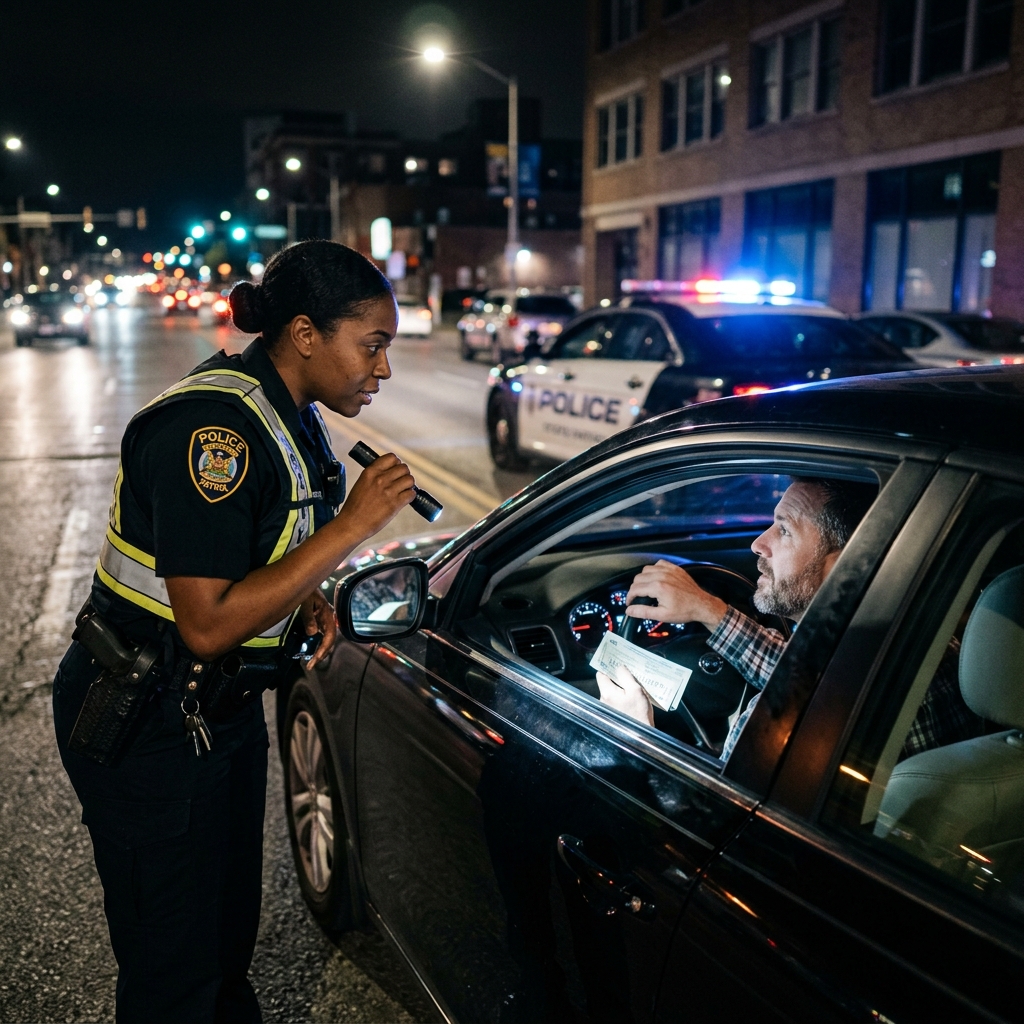
Being pulled over can be stressful, especially when you are unsure what the law actually requires you to do. One question that often comes up is how far you have to roll down your car window when a police officer stops you. While the rules can vary from state to state, there are common legal principles that apply across the United States. This guide explains what officers may lawfully demand, what you must do, and how to balance officer safety with your own rights and personal safety.
Core Legal Basics: Identification and Communication
Regardless of where you drive in the United States, you are generally required to identify yourself during a lawful traffic stop and provide certain documents to the officer. These typically include:
- Your valid driver’s license
- Vehicle registration
- Proof of insurance (where required by state law)
To provide these items and answer basic questions, you must open the window at least enough for clear communication and the easy passage of documents. Many jurisdictions, and legal commentators, describe this as a minimum level of compliance: you do not usually have to roll the window all the way down, but you must open it far enough to allow normal interaction and to hand over papers without obstruction.
Some states provide more specific guidance. For example, traffic materials in several states instruct drivers to lower the window to communicate safely and keep their hands visible on the steering wheel. These materials are often advisory rather than strict statutes, but they closely reflect how officers and courts view reasonable behavior during a stop.
Why Officers Care About Your Window: The Safety Perspective
Much of the legal framework around traffic stops is built on officer safety. The U.S. Supreme Court has held that police may order drivers out of the vehicle during a legitimate stop because that intrusion is considered small compared with safety concerns. If officers can lawfully require occupants to exit the car, many courts and legal practitioners reason that requiring a window to be rolled down is also a minimally intrusive step related to safety.
Lowering your window serves several purposes for the officer:
- It allows the officer to clearly see your hands and overall movements.
- It makes it easier to hear and understand your responses to questions.
- It permits quick transfer of documents without repeated reaching or awkward movements.
- It can help the officer detect potential safety threats, such as weapons or aggressive behavior.
Court decisions that emphasize officer safety often describe measures like asking occupants to exit the vehicle or roll down windows as reasonable precautions in light of the risks officers face during roadside stops. As a result, refusing to lower your window can be interpreted as refusing a lawful order, especially if the officer can explain why the order relates to safety or proper identification.
How Far Must You Roll Down the Window?
There is no single nationwide rule specifying an exact number of inches. Instead, the question is usually framed in terms of what is reasonable under the circumstances and what local law requires. In many places:
- You must open the window sufficiently to talk clearly with the officer.
- You must be able to pass your license, registration, and insurance documents through the opening.
- You do not typically have to open the window completely unless ordered to do so for a safety-related reason.
Some states impose more specific obligations. For example, legal commentary has noted that Florida law not only requires stopped drivers to identify themselves and provide documents, but also to open the window enough to allow those documents to be passed easily. In such states, failing to open the window adequately could risk additional charges, such as obstructing an officer.
The practical takeaway is simple: rolling the window down a few inches might be enough in some situations, but if an officer insists on a wider opening and connects that request to safety, courts are likely to treat the order as lawful. Disputes about the exact amount of opening are rarely resolved on the roadside; they are resolved later in court, which means refusing a direct order about the window can create legal problems even if you ultimately disagree with the officer.
State Differences: Statutes vs. Practice
Traffic stop rules are shaped by both state statutes and everyday practice. Many state motor vehicle agencies, law enforcement training materials, and driver handbooks provide detailed guidance on how drivers should behave.
| Aspect | Typical Requirement | Source Type |
|---|---|---|
| Identification | Provide name and driver’s license during lawful stop. | State statutes and case law |
| Window opening | Open enough to communicate and pass documents; some states specify “easy passage” of documents. | State law, practice guides |
| Officer safety measures | Officer may order occupants to exit vehicle and comply with safety-related commands. | Supreme Court precedent |
| Hand placement | Hands visible on steering wheel; avoid sudden movements. | Driver handbooks |
Driver handbooks from state departments of public safety often stress that you should slow down, pull over safely, turn off the engine, and lower the driver’s window if you feel safe to do so. While these materials are not criminal statutes, they reflect expectations that officers and courts may consider when deciding whether your behavior was reasonable.
When Officers Can Order You to Exit the Vehicle
In addition to asking you to roll down the window, officers may lawfully order you to step out of the vehicle during a lawful traffic stop. The U.S. Supreme Court has affirmed this authority, explaining that the risk of harm to officers during roadside encounters justifies such orders.
What this means in practice:
- If you refuse to roll your window down, an officer can instead tell you to get out of the car.
- Once outside, you will still be required to provide identification and documents.
- Refusing to exit the vehicle when ordered may create greater legal consequences than refusing to lower the window.
Many defense attorneys advise that while you can use a partially open window to reduce how much the officer can see or hear inside the car, you should not turn a simple window request into a confrontation. If an officer links the window request to safety and then orders you out of the vehicle, complying with the exit order while calmly asserting that you do not consent to searches is generally safer than arguing on the roadside.
Practical Tips for Drivers During a Traffic Stop
Understanding your rights is important, but so is staying safe and avoiding unnecessary escalation. Here are practical steps that align with both legal expectations and safety guidance:
- Pull over promptly and safely. Use your turn signal, slow down, and stop on the right side of the road or in a well-lit area when possible.
- Turn off your engine. Place the vehicle in park, set the emergency brake, and keep your hands on the steering wheel where they are visible.
- Lower the window sufficiently. Open the driver’s window enough to communicate clearly and pass your documents. If you are uncomfortable, you can explain your concern while still complying with reasonable requests.
- Wait for instructions before reaching. Do not search for your license or registration until the officer asks, and inform the officer where those items are before reaching.
- Remain calm and courteous. You can choose to remain largely silent beyond identification and required documents, but politeness often reduces tension.
- Record details after the stop. When the encounter ends, write down the officer’s name, badge number, and the reason for the stop in case you later challenge a ticket or complaint.
These behaviors are consistent with guidance from law enforcement agencies and legal practitioners and help signal that you are not a threat, which can influence how officers exercise their discretion.
Balancing Your Privacy and Your Legal Rights
Many drivers worry that lowering the window gives officers more opportunity to look inside the vehicle or start conversations that may lead to further investigation. You have important rights that remain intact even when you roll your window down.
- Right to remain silent: Beyond providing your name and required documents, you usually have no obligation to answer additional questions about where you are going, what you have done, or what is inside the car.
- Right to refuse consent to search: Even if you roll your window down or step out of the vehicle, you can clearly say, “I do not consent to searches.” An officer generally needs a warrant, probable cause, or other legal justification to search your car without consent.
- Right against unreasonable seizures: A traffic stop must be justified by a legitimate reason, such as a traffic violation or reasonable suspicion. If a stop is prolonged without justification, courts may later find that your rights were violated.
Rolling your window down does not equal consent to anything beyond the minimal interaction required by law. Many defense lawyers suggest compling with basic physical requests tied to safety—like exiting the vehicle or lowering the window—while calmly declining searches and unnecessary questioning, and saving any legal challenges for court.
Common Mistakes to Avoid
Drivers sometimes unintentionally make a traffic stop more difficult or risky. Being aware of common pitfalls can help you avoid them.
- Arguing about inches of window opening. Debating whether two inches or four inches is enough rarely ends well at the roadside. If the officer insists and mentions safety, the argument is unlikely to benefit you in that moment.
- Reaching suddenly into compartments. Quick movements toward a glove box or center console before the officer understands what you are doing can be perceived as threatening.
- Refusing basic commands. Declining to open the window at all or refusing to exit the vehicle when ordered can transform a minor traffic matter into a more serious confrontation with potential charges.
- Speaking in a hostile or sarcastic manner. While you have free speech rights, hostile comments often escalate tension and may influence how an officer exercises discretion on citations or arrests.
- Assuming all advice from social media is correct. Online videos or posts sometimes encourage extreme refusal tactics that do not reflect actual law in most jurisdictions and may expose you to legal risk.
FAQs: Window Rules and Traffic Stops
Do I have to roll my window all the way down?
In many jurisdictions, you do not have to roll the window all the way down. You must open it far enough to communicate clearly and hand over required documents. However, if an officer orders the window fully down and ties that order to safety or identification, refusing may be treated as failure to obey a lawful command.
Can I keep my window barely cracked and still comply?
Keeping your window only slightly cracked often makes communication difficult and complicates the transfer of documents. While some drivers attempt this to limit visibility into the car, it can prompt officers to view your behavior as non-cooperative and may lead them to issue stronger orders, including stepping out of the vehicle.
What happens if I refuse to roll down the window at all?
If you refuse to lower the window, the officer still has to carry out the stop. In many cases, they will order you to exit the vehicle so they can interact with you outside. Ignoring lawful orders, especially after the officer explains they relate to safety, can lead to additional charges or arrest.
Is lowering my window the same as consenting to a search?
No. Opening your window is a physical step that allows communication and document exchange. It does not mean you consent to a search of your person or vehicle. You may still clearly state, “I do not consent to searches,” and the officer must rely on legal grounds beyond consent if they wish to search.
Can I film the traffic stop while my window is down?
In most places, you are allowed to record interactions with police as long as you do not interfere with their duties or create a safety risk. If you choose to record, keep the camera or phone in a stable position and avoid sudden movements. You should still comply with orders to provide documents and, where required, lower the window sufficiently.
References
- Pennsylvania v. Mimms, 434 U.S. 106 — U.S. Supreme Court. 1977-12-05. https://supreme.justia.com/cases/federal/us/434/106/
- Maryland v. Wilson, 519 U.S. 408 — U.S. Supreme Court. 1997-02-19. https://supreme.justia.com/cases/federal/us/519/408/
- Driving Handbook: When Stopped by Law Enforcement — Texas Department of Public Safety. 2023-01-01. https://www.dps.texas.gov/docs/dlHandbook.pdf
- How Far Do I Have To Roll Down My Window at a Traffic Stop? — FindLaw Legal Blog. 2024-06-01. https://www.findlaw.com/legalblogs/criminal-defense/how-far-do-i-have-to-roll-down-my-window-at-a-traffic-stop/
- Do You Have to Roll Down Your Window for a Cop? — Southern Maryland Criminal Defense. 2023-05-10. https://somdcriminaldefense.com/do-you-have-to-roll-down-your-window-for-a-cop/
- If Cops Demand Your Window Down, DO THIS! — YouTube (Criminal Defense Attorney analysis). 2023-09-01. https://www.youtube.com/watch?v=y-a-hvlhsi8
Similar Articles








Read full bio of Sneha Tete




