
The Architects of Democracy: State Election Chiefs
Discover how the Secretary of State shapes U.S. elections and voting rights.
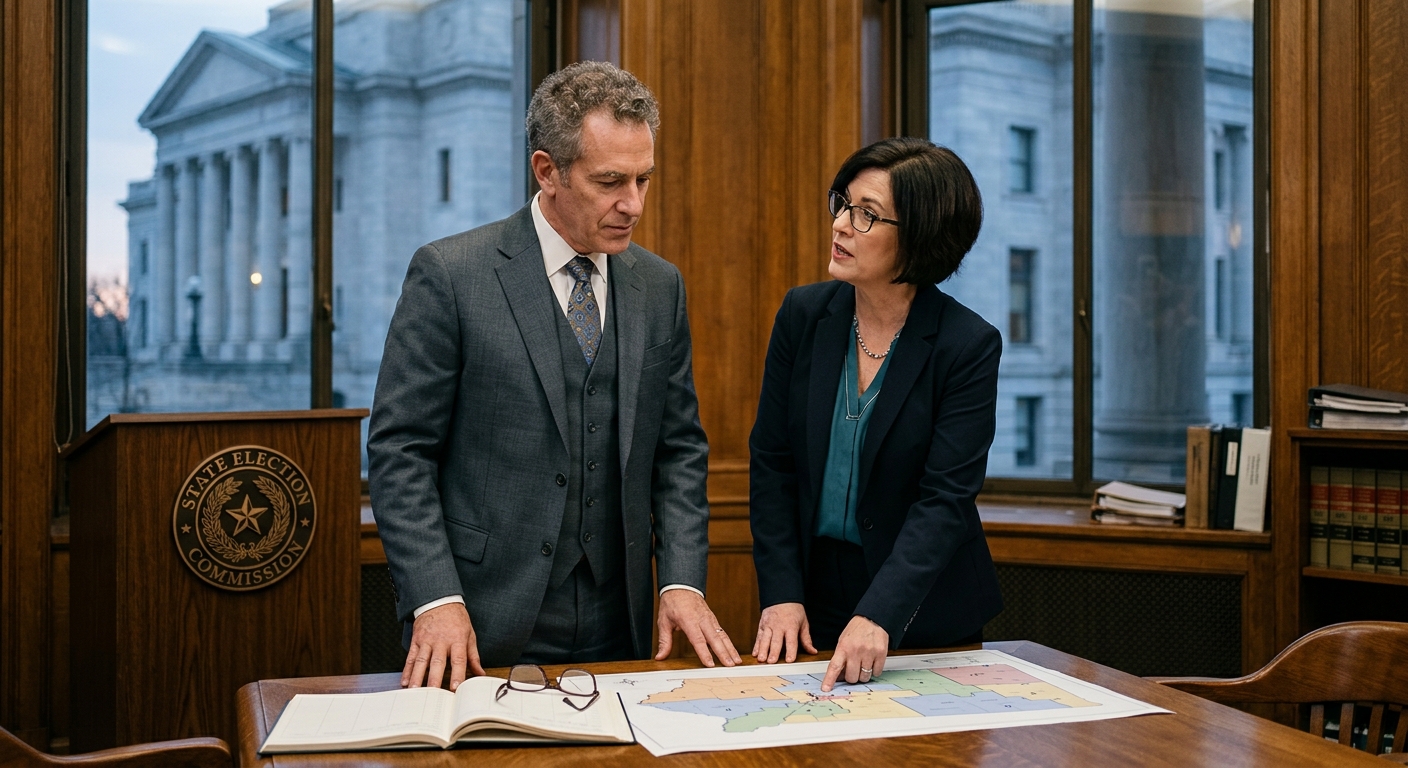
When Americans prepare to head to the polls, the intense glare of the media spotlight typically falls on the names at the very top of the ticket. Presidential hopefuls, congressional contenders, and high-profile gubernatorial candidates dominate the national conversation, capturing the vast majority of political donations and public attention. However, nestled further down the ballot is an office that wields an extraordinary amount of influence over the actual mechanics of American democracy: the Secretary of State. In the majority of U.S. states, this elected official serves as the chief election officer, carrying the immense responsibility of ensuring that the electoral process is executed with fairness, security, and precision. Without a competent, dedicated official in this role, the very foundation of the electoral system can become unstable.
For decades, the role of the Secretary of State was largely viewed as an administrative, bureaucratic, and highly technocratic position. These officials were the quiet custodians of public records, business registrations, corporate charters, and election machinery. But the political landscape has shifted dramatically in recent years. As elections have become subject to razor-thin margins and intense national scrutiny, the people who administer these contests have found themselves thrust into the center of fierce partisan battles. Today, the administrative decisions made by a Secretary of State can shape voter turnout and influence the trajectory of an entire election. Understanding the deep responsibilities and the evolving nature of this office is essential for any voter who cares about the future and integrity of the democratic process.
The Unsung Heroes of the Electoral Process
The administration of elections in the United States is famously decentralized. Unlike many other advanced democracies that rely on a single, unified national election commission to set uniform rules for the entire country, the U.S. system is a complex patchwork of state and local jurisdictions. At the very top of this state-level hierarchy sits the chief election official. While a handful of states appoint boards or assign this duty to the Lieutenant Governor, in the vast majority of states, the Secretary of State holds the reins. This unique structure places an enormous amount of power in the hands of a single statewide official, effectively making them the definitive architect of how democracy functions within their state borders.
This decentralized structure means that a Secretary of State has sweeping authority to interpret election laws passed by the legislature, draft comprehensive administrative rules, and set the overriding tone for how voting is conducted across hundreds of counties or municipalities. They are the individuals who draft the complex manuals that local county clerks use to train the thousands of volunteer poll workers who staff precincts on Election Day. They are the ones who establish the technological standards for voting machines, ensuring that systems are reliable and secure. By holding the power to shape the rules of engagement, the Secretary of State effectively determines how easily a citizen can cast their ballot and how that ballot is counted and protected. They represent the crucial bridge between abstract state election laws and the reality of a voter’s experience at the polling place.
What Does a Secretary of State Actually Do?
While the specific duties of the office vary significantly from state to state based on legislative frameworks and state constitutions, the core responsibilities related to election administration generally fall into several critical categories. The U.S. Election Assistance Commission outlines these vast responsibilities, noting that state election chiefs are integral to everything from managing voter registration rolls to overseeing the final certification of election results. Here is a much closer look at what these officials actually do behind the scenes, far from the glare of the campaign trail.
Overseeing Voter Registration Systems
A fundamental pillar of any election is an accurate and up-to-date voter roll. Secretaries of State are typically tasked with managing the state’s centralized voter registration database. This involves highly complex data management to ensure that eligible voters are added seamlessly when they register, whether they do so through the Department of Motor Vehicles, via secure online state portals, or through traditional paper forms mailed to local clerks.
Moreover, they are responsible for what is known as list maintenance—a process often referred to in political circles as “voter purges.” List maintenance is federally and legally required to remove deceased individuals or those who have permanently relocated to other states. However, the aggressiveness, timing, and methodology by which a Secretary of State conducts this maintenance can be highly controversial. Ensuring that valid voters are not erroneously removed is one of the most critical tests of an election chief’s commitment to fairness.
Determining Voting Methods and Access
The Secretary of State plays a pivotal role in dictating the practical realities of how a ballot is cast. They frequently have the authority to implement or expand early voting periods, establish secure drop boxes for absentee ballots, and design the physical layout of the ballot itself to ensure clarity and prevent voter confusion. Their guidance helps local jurisdictions allocate resources, effectively deciding how many polling locations are open and where they are placed to prevent hours-long lines in densely populated areas. A Secretary of State who prioritizes accessibility will often work proactively with county clerks to ensure sufficient resources are directed toward high-traffic precincts.
Certifying Election Results
Once the polls close and the grueling work of counting begins, the Secretary of State’s job is far from over. After local county boards canvass the votes, meticulously reviewing provisional ballots and resolving discrepancies, those localized tallies are transmitted up to the state level. The Secretary of State is responsible for aggregating these results, verifying the mathematics, and officially certifying the statewide outcome. This certification is the legal mechanism that finalized the election, turning unofficial projections into documented reality.
Historically, certification was viewed as a mandatory, ministerial duty—a simple rubber stamp confirming the mathematical and democratic will of the people. Recently, however, it has become a massive flashpoint for litigation and intense political pressure. If local officials attempt to delay or refuse certification based on unfounded claims of fraud or mere dissatisfaction with the result, the Secretary of State often serves as the crucial legal guardrail. They may use the power of their office or seek court mandates to compel compliance and ensure the results are formalized without partisan delay.
The Partisan Shift in Election Administration
For much of American history, the role of the chief election officer was shielded from the harshest and most aggressive partisan warfare. Candidates for the office typically campaigned on their managerial competence, their commitment to modernizing office technology, and their ability to run efficient bureaucracies that saved taxpayer money. Today, that paradigm has been completely shattered, fundamentally altering the nature of the office.
From Technocrats to Political Lightning Rods
The intense polarization of modern politics has transformed the Secretary of State into a highly visible, highly scrutinized political figure. The rhetoric on the campaign trail has shifted aggressively. Instead of discussions about server upgrades, archival preservation, and ballot design, debates now center on deeply ideological clashes regarding election integrity, voter suppression, and the fundamental legitimacy of the electoral process itself.
This shift poses a unique and alarming challenge to the democratic system. When the referee of the election is simultaneously an active player in partisan politics, maintaining public trust requires an extraordinary commitment to transparency and ethical governance. Voters are increasingly alert to the fact that the person who sets the rules for the election can indirectly influence the outcome. The politicization of the office means that voters must be far more vigilant about the underlying philosophies of the candidates they elect.
Evaluating Candidates for Chief Election Official
Because the Secretary of State exercises such profound control over the democratic process, it is strictly vital that voters thoroughly evaluate candidates running for this office. Rather than simply voting along party lines down the ballot without a second thought, informed citizens should scrutinize the specific platforms, past behaviors, and stated philosophies of these contenders.
Key Questions for Voters to Ask
When researching candidates for Secretary of State, voters should seek clear, unambiguous answers to several defining questions before casting their ballot:
- What is their stance on voting access? Do they enthusiastically support policies that make it easier for eligible citizens to vote, such as no-excuse absentee voting, automatic voter registration, and extended early voting periods?
- How do they approach election security? Are their proposals based on evidence-based risk assessments, or do they rely on exaggerated claims of widespread fraud? Do they advocate for rigorous, statistically sound post-election audits?
- Will they respect the will of the voters? Has the candidate committed unconditionally to certifying election results, regardless of whether their preferred political party wins or loses? Have they ever participated in efforts to unlawfully overturn or cast doubt on certified results?
- How do they plan to conduct list maintenance? What specific protocols will they implement to ensure that valid, active voters are not mistakenly swept up in aggressive voter roll purges?
Frequently Asked Questions (FAQs)
Are all Secretaries of State elected by the public?
No. While the majority of U.S. states elect their Secretary of State in statewide, partisan elections, some states operate under entirely different systems. In a few states, such as Florida and Texas, the governor appoints the Secretary of State. In states like Maine and New Hampshire, they are chosen by the state legislature. Additionally, states like Alaska, Hawaii, and Utah do not have an official titled “Secretary of State”; their election duties are instead handled by the Lieutenant Governor or a similarly appointed director of elections.
Can a Secretary of State overturn an election result?
Legally, no. The Secretary of State does not have the constitutional or statutory authority to unilaterally overturn or alter election results. Their role is to officially certify the aggregated vote totals provided by local election officials. While they can mandate recounts under specific legal thresholds or launch investigations into irregularities, the power to adjudicate disputed elections and invalidate votes generally rests exclusively with the judicial system.
Conclusion: Your Vote for the Voting Process
The office of the Secretary of State is the literal engine room of American democracy. The individuals who occupy this role hold immense, unparalleled sway over who gets to vote, how they vote, and how those votes are protected and ultimately tallied. As the national political climate grows increasingly volatile and polarized, the stakes for these down-ballot races have never been higher. By recognizing the critical importance of the chief election official, voters can ensure that the fundamental right to cast a ballot remains secure, accessible, and meaningful for generations to come. When you cast your vote for a Secretary of State, you are not just selecting a politician; you are quite literally casting a vote for the survival and integrity of the voting process itself.
References
- Helping America Vote: Election Administration in the United States | 2024 — U.S. Election Assistance Commission. 2025-12-23. https://www.eac.gov/election-officials/helping-america-vote-election-administration-united-states-2024
- Who is in charge of elections in my state? — U.S. Election Assistance Commission. 2025-04-10. https://www.eac.gov/voters/who-charge-elections-my-state
- How Elections Are Certified in Battleground States — Brennan Center for Justice. 2024-10-10. https://www.brennancenter.org/our-work/research-reports/how-elections-are-certified-battleground-states
- Officials Can’t Go Rogue on Election Certification — Brennan Center for Justice. 2024-09-24. https://www.brennancenter.org/our-work/analysis-opinion/officials-cant-go-rogue-election-certification
Similar Articles








Read full bio of medha deb


