
Rochester Workers and Unpaid Overtime: Know Your Rights
A practical guide for Rochester employees facing unpaid overtime, off‑the‑clock work, and wage theft tactics in New York.
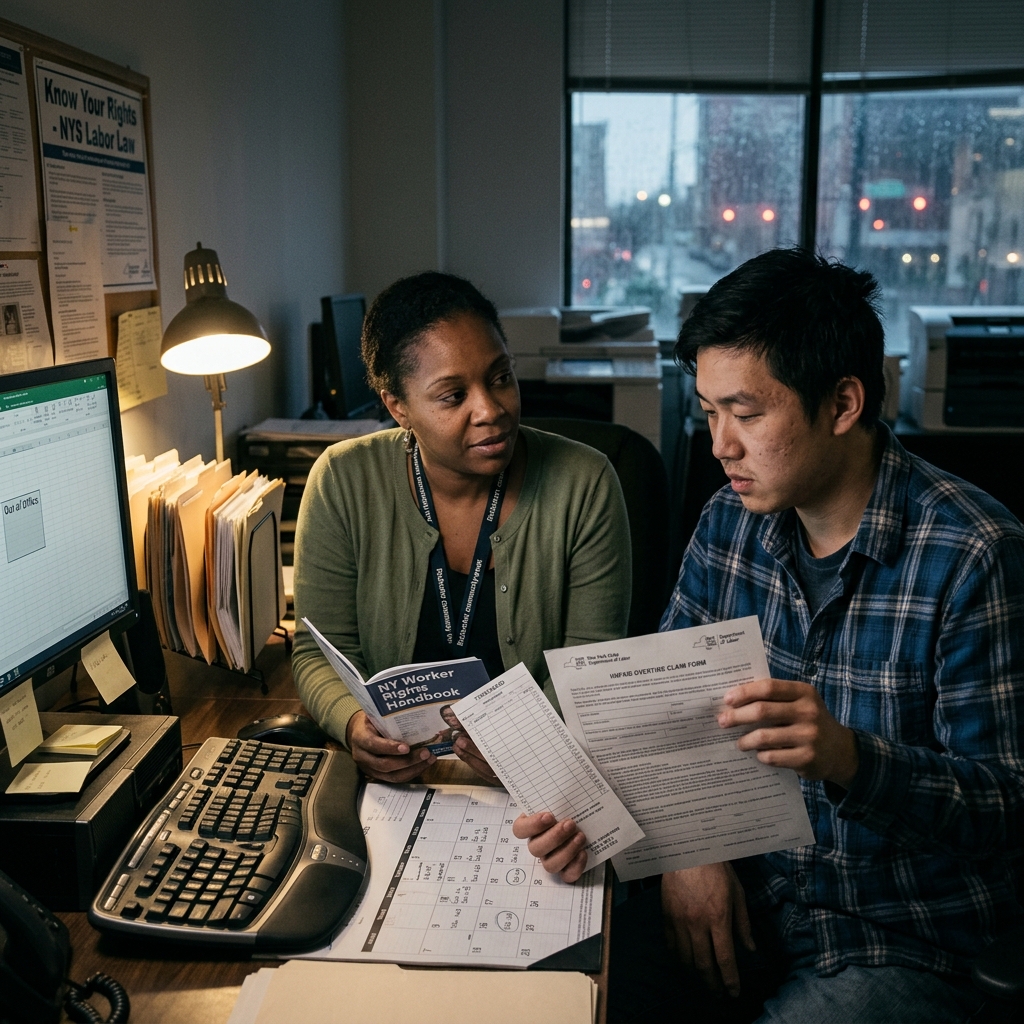
Across Rochester, many employees put in long hours only to discover their paychecks do not reflect the overtime they earned. Unpaid overtime is a form of wage theft, and both federal law and New York labor law give workers strong tools to fight back.
This guide explains how overtime is supposed to work, the common tactics some employers use to dodge fair pay, and what Rochester workers can do to recover lost wages.
Understanding Overtime Pay in New York and Rochester
Under the federal Fair Labor Standards Act (FLSA) and New York labor law, most non‑exempt employees must receive time‑and‑a-half, or 1.5 times their regular rate of pay, for every hour worked over 40 in a workweek.
- Standard overtime threshold: Overtime usually begins after 40 hours in a single workweek.
- Overtime rate: One and one‑half times the regular rate (for example, $16/hour becomes $24/hour for overtime hours).
- Coverage: Federal law sets the baseline, and New York law generally mirrors and may expand these protections for more categories of workers.
In New York, including Rochester, these rules apply whether you are paid hourly or receive a salary, as long as you are classified as a non‑exempt worker.
Who Is Entitled to Overtime?
Not every worker receives overtime, but most do. The key distinction is between exempt and non‑exempt employees.
| Category | Typical Characteristics | Overtime Rights |
|---|---|---|
| Non‑exempt hourly workers | Paid by the hour; manual, clerical, service, and many office jobs | Must receive overtime for hours over 40 per week. |
| Non‑exempt salaried workers | Paid a salary but do not meet executive, administrative, or professional exemption tests | Still entitled to overtime based on their regular rate. |
| Exempt executive, administrative, professional | Higher‑level duties, certain salary thresholds, and independent decision‑making | Generally not entitled to overtime under New York or federal law. |
Employers in Rochester must follow the same exemption rules as employers elsewhere in New York, and misclassifying workers as exempt to avoid overtime is unlawful.
How Rochester Employers Dodge Fair Overtime Pay
Despite clear legal standards, some employers use subtle and not‑so‑subtle methods to avoid paying overtime. These practices can occur in restaurants, retail stores, offices, warehouses, health care facilities, and other workplaces throughout the Rochester area.
Common Wage Theft Tactics
- Off‑the‑clock work: Requiring or encouraging workers to perform tasks before clocking in or after clocking out, such as preparing workstations, closing registers, or answering emails without pay.
- Automatic meal deductions: Automatically subtracting unpaid meal breaks even when employees work through lunch or remain on duty.
- Time shaving: Editing time records to remove small increments of time, like arriving early, staying late, or short breaks that turn into unpaid work.
- Misclassification as exempt: Labeling employees as “managers” or “salary” without genuine managerial authority or meeting exemption tests, to deny overtime pay.
- Improper use of comp time: Offering informal “comp time” instead of legally required paid overtime, particularly in the private sector where this is generally not allowed.
- Pressure not to report overtime: Telling employees to “keep hours under 40,” discouraging accurate timekeeping, or punishing those who report overtime.
Under both FLSA and New York law, employers must pay for all hours worked if they knew or should have known the work was being performed, even if the time was off the clock.
Real‑World Impact on Rochester Workers
For many workers living in Rochester City or surrounding communities, unpaid overtime means:
- Lost income that should help cover rent, utilities, and transportation.
- Longer hours for the same pay, resulting in burnout and stress.
- Lower retirement savings and reduced contributions to Social Security.
Because New York’s minimum wage and overtime rules are meant to provide a floor of protection, violating these standards places law‑abiding employers at a competitive disadvantage and undermines workers’ economic security.
How Overtime Should Be Calculated
Correct overtime pay calculation is essential to spotting violations. In New York, overtime is calculated on a workweek basis, not per day.
Basic Overtime Formula
- Determine the regular rate of pay (including hourly wages and certain bonuses or commissions).
- Count all hours worked in the week, including off‑the‑clock work the employer knew or should have known about.
- Identify hours over 40; these are overtime hours.
- Multiply overtime hours by 1.5 times the regular rate to find overtime wages due.
Special Rules for Certain Workers
New York has additional overtime rules for particular groups:
- Farm workers: As of 2026, overtime generally starts after 52 hours in a week, with the threshold scheduled to gradually decrease to 40 hours by 2032.
- Live‑in domestic workers: Different overtime thresholds may apply compared with standard 40‑hour rules.
These exceptions are narrowly defined; most Rochester workers are under the standard 40‑hour rule.
Spotting Signs You Are Being Cheated on Overtime
If your pay does not match the hours you work, you may be experiencing an overtime violation. Watch for these red flags:
- Your timesheets show fewer hours than you actually worked.
- You are told to “clock out” but keep working.
- You regularly work more than 40 hours but never see overtime pay on your paycheck.
- You are paid a fixed salary with no explanation of why you are exempt from overtime.
- You are called a “manager” but spend most of your time doing the same work as hourly staff.
New York’s enforcement agencies and courts look closely at what you actually do on the job and how you are paid, rather than just the job title your employer uses.
Legal Protections for Rochester Employees
Workers have strong protections under both federal and state law. In New York, most hourly and many salaried employees qualify for overtime, and employers must protect those rights.
What You Can Recover in an Overtime Case
- Unpaid overtime wages: The difference between what you were paid and what you should have received.
- Liquidated damages: Often an additional amount equal to unpaid wages in many cases, effectively doubling the recovery.
- Attorney’s fees and costs: If you bring a successful claim, the employer may be required to cover reasonable legal fees.
- Civil penalties: State enforcement agencies can impose penalties on employers who violate wage laws.
These remedies are designed to discourage employers from underpaying workers and to make it worthwhile for employees to challenge unlawful practices.
Deadlines for Filing Claims
Acting promptly is important because overtime claims are subject to strict time limits.
- Federal FLSA: Generally a two‑year limit, extended to three years for willful violations.
- New York Labor Law: Workers typically have up to six years to file a wage claim, including unpaid overtime.
The longer filing period under New York law allows Rochester workers to seek recovery for older violations that federal law might no longer cover.
Steps Rochester Workers Can Take to Protect Themselves
If you suspect unpaid overtime, careful documentation and strategic action can significantly strengthen your case.
1. Document Your Hours and Pay
- Keep a personal log of hours worked, including start and end times each day.
- Save pay stubs and any timesheets or electronic timeclock records you can access.
- Record any instructions from supervisors about working off the clock or not reporting overtime.
- Note down coworkers who may have witnessed unpaid work or similar treatment.
Even if the employer’s records are incomplete or inaccurate, your own detailed notes can be powerful evidence in a wage dispute.
2. Raise the Issue Internally
Some overtime problems stem from misunderstanding rather than deliberate misconduct. The first step may be to speak with:
- Your direct supervisor or manager.
- The payroll or human resources department.
- A union representative, if you are covered by a collective bargaining agreement.
Employers sometimes correct errors once they are pointed out, especially if they realize the legal risk of non‑compliance.
3. File a Government Complaint
If internal efforts fail, you can file a formal complaint.
- New York State Department of Labor (NY DOL): Handles state wage and overtime violations, including unpaid overtime.
- U.S. Department of Labor, Wage and Hour Division: Enforces FLSA overtime requirements nationwide.
- New York Attorney General’s office: Provides worker rights information and can take action in certain wage theft investigations.
These agencies can investigate your claim, review records, and seek back wages and penalties on your behalf.
4. Consider a Private Lawsuit
In some situations, especially when many workers are affected or large sums are at stake, a private lawsuit may be the most effective way to recover unpaid wages.
- Individual lawsuit: You sue your employer directly for your own unpaid overtime.
- Collective or class actions: Workers join together if the employer’s practices harmed many employees in similar ways.
- Legal representation: Employment law attorneys in New York and Rochester regularly handle wage and overtime disputes.
Successful lawsuits can result in unpaid wages, double damages, and coverage of attorney’s fees, making it possible for workers to enforce their rights even if they cannot afford upfront legal costs.
Protection Against Retaliation
Many workers worry that complaining about unpaid overtime could cost them their job. Both federal and New York laws include anti‑retaliation provisions to address this concern.
- Employers may not fire, demote, reduce hours, or otherwise punish employees because they complained about overtime violations or participated in an investigation.
- Retaliation itself can be grounds for additional legal claims and remedies, independent of the underlying overtime dispute.
- Workers who experience retaliation should carefully document events and seek legal advice promptly.
These protections exist to encourage workers to speak up without fear of losing their livelihood.
Frequently Asked Questions (FAQs)
Do I qualify for overtime if I am paid a salary in Rochester?
Yes, you may. Being paid a salary does not automatically make you exempt from overtime. If your job duties and salary level do not meet specific exemption tests, you are considered non‑exempt and must receive overtime for hours over 40 per week.
Can my employer refuse to pay overtime because I did not get prior approval?
Employers can require advance approval for overtime, but they still must pay for all hours worked they know or should know about. Discipline for working unauthorized overtime is separate from the obligation to pay overtime wages.
What if my employer keeps no accurate records of my hours?
Employers are legally required to maintain accurate time and pay records. When they fail to do so, courts may rely on reasonable evidence from employees, such as personal logs and testimonies, to estimate hours worked and calculate damages.
How far back can I claim unpaid overtime in New York?
Under New York Labor Law, workers generally have up to six years to file a wage claim, including unpaid overtime. Federal FLSA claims typically reach back two years, or three for willful violations.
Where can I get help if I suspect wage theft in Rochester?
You can contact the New York State Department of Labor, the U.S. Department of Labor, or consult with an employment law attorney experienced in wage and overtime disputes in New York. These resources can help you understand your options and file a claim if needed.
Taking Action to Protect Your Earnings
Workers in Rochester deserve to be paid fully and fairly for the time they spend on the job. Understanding how overtime works, recognizing common employer tactics, and knowing how to assert your rights are critical steps toward securing the wages you have earned.
If you believe you have been denied overtime, start documenting immediately, seek information from trusted government sources, and consider speaking with a qualified employment attorney. New York and federal law provide meaningful remedies—and strong protections against retaliation—so that workers can challenge unfair practices and recover their unpaid wages.
References
- Overtime Pay — University of Rochester Policies & Procedures. 2022-03-01. https://www.rochester.edu/policies/policy/overtime-pay/
- Wages and Pay — New York Attorney General. 2026-01-01. https://ag.ny.gov/resources/individuals/workers-rights/wages-pay
- Overtime Pay Laws — Blitman & King LLP Employment Law Resources. 2023-06-15. https://bklawyers.com/employment-law-resources/overtime-pay/
- New York Unpaid Overtime Attorneys — Horn Wright, LLP. 2024-02-10. https://www.hornwright.com/employment-law/overtime-violations/
- How to Initiate an Unpaid Overtime Claim in New York — Levy Ratner. 2023-11-05. https://levyratner.com/unpaid-overtime-in-new-york-how-to-spot-violations-and-recover-wages/
- Wage & Overtime Disputes — The Glennon Law Firm, P.C. 2022-09-20. https://www.glennonlawfirm.com/employment-law/for-employees/wage-and-overtime-disputes/
Similar Articles








Read full bio of medha deb




