
The Risks of Chaplains in Public Education
Examining the risks of religious chaplains in secular public schools.
The Intersection of Faith and Public Education: A Shifting Landscape
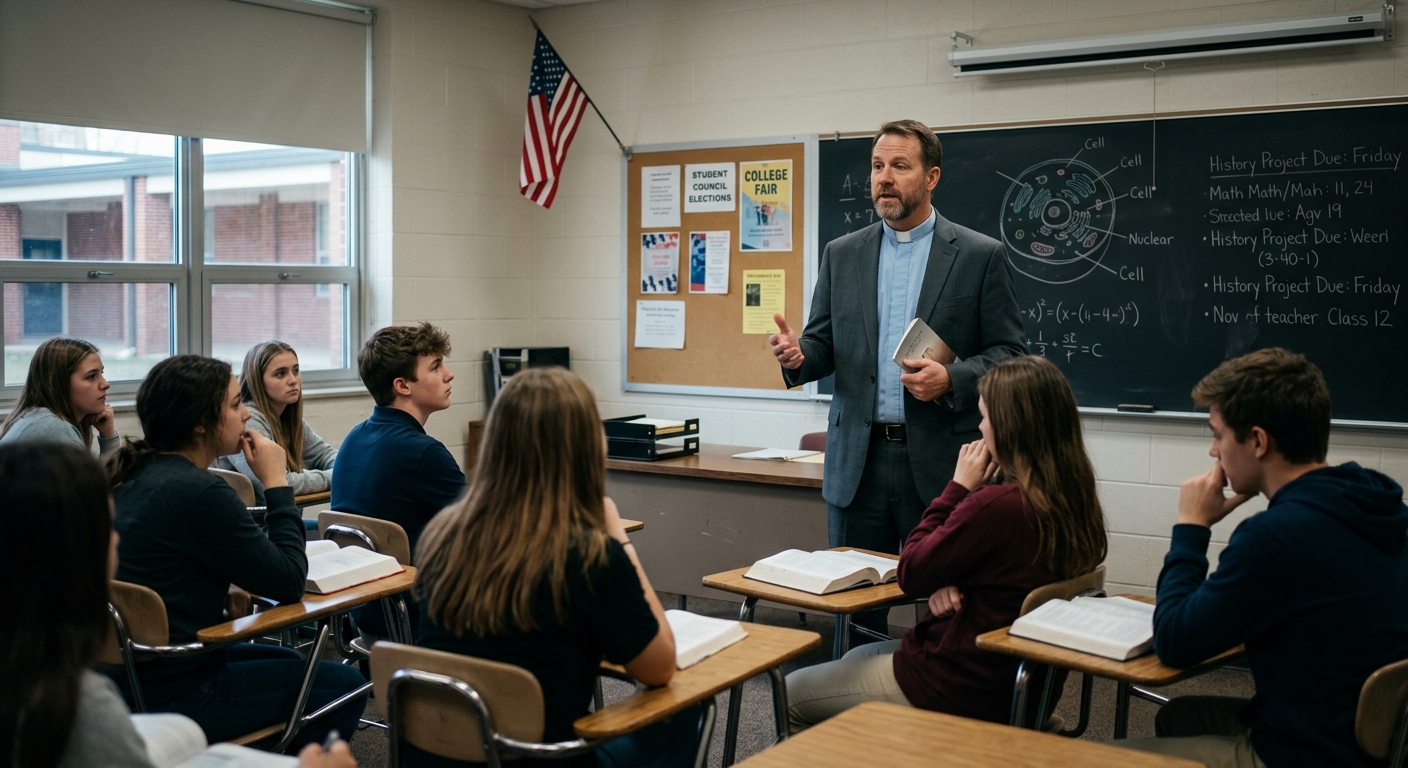
The landscape of American public education is currently navigating a profound and highly controversial legislative shift. Across various state legislatures throughout the country, a new movement is gaining unprecedented momentum: the integration of religious chaplains into public school systems. Marketed by proponents as a zero-cost, community-driven solution to the escalating youth mental health crisis, these bills aim to allow chaplains to act in the capacity of school counselors. However, constitutional experts, mental health professionals, and civil rights advocates are raising severe alarms. The introduction of religious figures into secular educational environments is not merely a benign offering of spiritual comfort. Instead, it presents profound legal, ethical, and psychological risks that fundamentally threaten the well-being of students and the core integrity of the public school system.
Public schools have historically functioned as secular sanctuaries where students of all backgrounds can receive an education free from state-imposed religious doctrines. The push to employ chaplains in these spaces threatens to erode the delicate boundaries established by decades of constitutional jurisprudence. As we examine this trend, it becomes evident that swapping trained educational professionals for religious volunteers compromises student safety, civil liberties, and educational standards.
Professional School Counseling vs. Spiritual Guidance
To understand the gravity of replacing or supplementing school counselors with chaplains, one must first examine the rigorous standards governing professional educational counseling. The American School Counselor Association (ASCA) mandates strict requirements for those who wish to practice in educational settings. These standards ensure that students are receiving care from highly vetted, competent professionals bound by a strict code of ethics.
The Rigorous Standards of Educational Counseling
Certified school counselors are required to undergo extensive academic and clinical preparation. In virtually all states, these professionals must hold, at a minimum, a master’s degree in school counseling, psychology, or a closely related field. Their intensive education includes comprehensive coursework in child and adolescent psychology, human development, trauma-informed care, behavioral intervention, and crisis management. Furthermore, prospective counselors must complete hundreds of hours of supervised practicum and internship experiences within school environments. Before they can independently practice, they must pass comprehensive state licensure exams and commit to strictly adhering to the ASCA Ethical Standards for School Counselors, which demand secular, inclusive, and evidence-based practices. These professionals are also bound by strict confidentiality laws and mandatory reporting requirements tailored to child welfare.
The Legislative Loophole for Chaplains
In stark contrast, the legislative proposals seeking to introduce chaplains into public schools frequently require absolutely no such qualifications. Many of these bills explicitly bypass standard educational licensing requirements, demanding only that a chaplain possess some form of endorsement or certification from a religious organization. There is often no mandate for a college degree, let alone specialized clinical training in adolescent psychology or mental health triage. This glaring disparity in professional qualifications is not a minor oversight; it is a fundamental flaw that compromises the educational system. By allowing individuals without secular, evidence-based training to assume the role of mental health professionals, state legislatures are effectively lowering the standard of care for the most vulnerable demographic in our society: developing children.
The Risks of Unqualified Mental Health Interventions
The United States is undeniably in the grip of a severe youth mental health crisis. According to recent data from the Centers for Disease Control and Prevention (CDC), the past decade has seen alarming spikes in the number of high school students reporting persistent feelings of sadness, hopelessness, and suicidal ideation. Addressing this complex crisis requires delicate, scientifically backed, and highly skilled clinical interventions based on the fundamental medical tenet of doing no harm.
When a student approaches a school counselor actively experiencing a mental health emergency—such as acute suicidal thoughts, the onset of an eating disorder, or the aftermath of physical abuse—the counselor must rely on established clinical protocols to ensure the student’s immediate physical and psychological safety. They are trained to perform psychological triage, de-escalate crises, and seamlessly connect students with specialized psychiatric care when necessary.
Chaplains, whose primary training is theological and spiritual rather than clinical, are generally not equipped to navigate these high-stakes psychological emergencies. While spiritual care has unquestionable value in private, voluntary settings, relying on it as a substitute for psychological healthcare in schools is actively dangerous. Unqualified individuals may inadvertently mishandle severe trauma, fail to identify subtle clinical signs of clinical depression, or attempt to treat complex psychiatric conditions with religious counseling. In the worst-case scenarios, an untrained chaplain might attribute a student’s mental health struggles to a lack of faith or a moral failing. This approach can severely exacerbate feelings of guilt and isolation, thereby deepening the psychological distress. Mental health professionals universally agree that misdiagnosing or improperly treating psychological trauma can be significantly more harmful than providing no treatment at all.
Constitutional Boundaries: The First Amendment in Schools
Beyond the immediate mental health risks, the integration of chaplains into public education represents a massive collision with constitutional law, specifically the Establishment Clause of the First Amendment.
The Captive Audience Dilemma
The Establishment Clause explicitly prohibits the government from making any law respecting an establishment of religion. The U.S. Supreme Court has long interpreted this to mean that public schools—which are government entities—cannot endorse, promote, or favor one religion over another, nor can they favor religion over non-religion. Students within public schools are considered by the courts to be a “captive audience.” Unlike adults in public spaces, children are legally compelled by truancy laws to attend school, and they are highly susceptible to the authority of the adults placed in charge of them. Introducing a government-sanctioned religious figure into this environment inherently risks state endorsement of religion and coercive spiritual influence.
The Flawed Military and Prison Comparison
Proponents of chaplaincy bills frequently point to the historical existence of chaplains in the military, hospitals, or federal prisons as justification for placing them in schools. However, constitutional scholars quickly point out the fatal legal flaw in this comparison. In the military or the prison system, adults are physically displaced from their home communities and actively cut off from their own religious institutions. The government provides chaplains in those specific settings to accommodate the Free Exercise Clause of the First Amendment, ensuring that isolated individuals can still practice their faith.
Public school students do not fit this exception. They go home at the end of the school day and have unfettered access to their own community churches, mosques, synagogues, and temples. There is no government-imposed physical barrier to their religious practice that requires state-sponsored clergy to resolve. Therefore, placing chaplains in public schools does not accommodate religious freedom; rather, it imposes religion in a space that is legally and morally mandated to remain entirely secular.
The Impact on Student Well-being and Inclusivity
One of the core tenets of American public education is that it must be universally accessible, safe, and welcoming to all students, regardless of their racial background, socioeconomic status, or religious affiliation. The presence of state-sponsored chaplains threatens to shatter this necessary inclusivity.
Even if a chaplain claims to offer non-denominational or entirely secular guidance, their very title and professional role are deeply rooted in specific religious traditions. This inherently alienates students who belong to minority religions, such as Islam, Judaism, Hinduism, or Buddhism. It also isolates the rapidly growing demographic of young students who identify as non-religious, atheist, or agnostic. A school environment should be a neutral ground where every child feels equally valued, not a space where some students feel like outsiders due to the theological presence of the counseling staff.
Furthermore, this dynamic is especially threatening to LGBTQ+ students, who already face disproportionately high rates of bullying, discrimination, and mental health challenges. Certain conservative religious denominations hold strict doctrines that are actively hostile to LGBTQ+ identities and rights. If a queer or transgender student seeks guidance from a school chaplain whose religious tenets fundamentally condemn homosexuality or gender transition, the resulting counseling could be profoundly damaging. Public schools must serve as safe havens for all children, and introducing figures whose core professional identity may be tied to exclusive or discriminatory religious doctrines jeopardizes that foundational safety.
Alternative Solutions to the Mental Health Crisis in Schools
If the ultimate goal of state legislatures is truly to address the youth mental health crisis and support struggling students, the solution is emphatically not to bypass professional standards by hiring religious chaplains. The legitimate, evidence-based solution is to adequately fund public schools so they can hire certified, licensed mental health professionals.
Currently, the national student-to-counselor ratio far exceeds the ASCA-recommended optimal ratio of 250-to-1. Many underfunded public school districts are operating with dangerous ratios of 500-to-1 or worse, leaving professional counselors overwhelmed and students without adequate support. State governments should be investing heavily in comprehensive grant programs to recruit, train, and retain licensed school psychologists, clinical social workers, and certified educational counselors. Furthermore, districts can explore utilizing Medicaid billing for school-based health services to sustainably fund these vital positions. Attempting to solve a systemic healthcare and educational crisis on the cheap by relying on unqualified religious volunteers is a severe dereliction of governmental duty that ultimately harms the students it claims to protect.
Frequently Asked Questions (FAQs)
- Are chaplains in public schools constitutional?
Historically, the Establishment Clause of the First Amendment has strictly prohibited public schools from endorsing or promoting religion, making the employment of school chaplains highly legally suspect. Civil rights organizations heavily argue that using government resources to place clergy in schools violates the foundational separation of church and state. - Can parents just opt their children out of interacting with a school chaplain?
While many proposed legislative bills include opt-out clauses, mental health advocates argue this is insufficient. A student in acute crisis might bypass parental consent and approach the nearest trusted adult on campus. Furthermore, the burden should not be placed on parents to constantly monitor and shield their children from state-sponsored religious figures in a legally mandated public school setting. - Why are chaplains allowed in the military but opposed in public schools?
Military personnel are frequently deployed far from their home communities, making them unable to access their own chosen religious institutions. The government provides military chaplains to ensure these adults can freely exercise their religion. Public school students, however, go home daily and can freely attend their family’s chosen place of worship, entirely negating the legal need for state-provided clergy. - Do school chaplains possess any clinical mental health training?
While a rare few chaplains may pursue counseling degrees independently, the specific bills being introduced in many states explicitly do not require chaplains to hold any recognized mental health credentials, state licensure, or degrees in psychology. This drastically differs from the strict, scientifically backed requirements placed on professional school counselors. - Could the use of chaplains lead to increased legal liabilities for school districts?
Yes. School districts that choose to employ chaplains instead of licensed professionals may open themselves up to expensive civil rights lawsuits. If a chaplain violates a student’s First Amendment rights through proselytization or negligently mishandles a severe mental health crisis due to a lack of clinical training, the district could be held legally and financially responsible.
Conclusion
The legislative movement to place religious chaplains in public schools represents a dangerous intersection of inadequate mental healthcare and severe constitutional overreach. While the desire to support struggling, vulnerable students is a universally shared goal, the specific methods we choose to implement matter deeply. Trading evidence-based, professional clinical counseling for unregulated, professionally unqualified religious guidance threatens both the mental well-being of America’s youth and the foundational constitutional principle of religious freedom. To truly protect and uplift students, state legislatures must prioritize adequate funding for certified school counselors and fiercely respect the vital boundary between church and state.
References
- Guidance on Constitutionally Protected Prayer and Religious Expression in Public Elementary and Secondary Schools — U.S. Department of Education. 2023-05-15. https://www2.ed.gov/policy/gen/guid/religionandschools/prayer_guidance.html
- The School Counselor and Credentialing and Licensure — American School Counselor Association (ASCA). 2022-01-01. https://www.schoolcounselor.org/Standards-Positions/Position-Statements/ASCA-Position-Statements/The-School-Counselor-and-Credentialing-and-Licensu
- Mental Health | Adolescent and School Health — Centers for Disease Control and Prevention (CDC). 2024-11-29. https://www.cdc.gov/healthyyouth/mental-health/index.htm
- Establishment Clause — Legal Information Institute (LII), Cornell Law School. 2023-01-01. https://www.law.cornell.edu/wex/establishment_clause
Similar Articles








Read full bio of medha deb


