
Understanding Your Right to Adequate Legal Representation
How the Sixth Amendment protects your right to a competent lawyer and what happens when representation falls short.
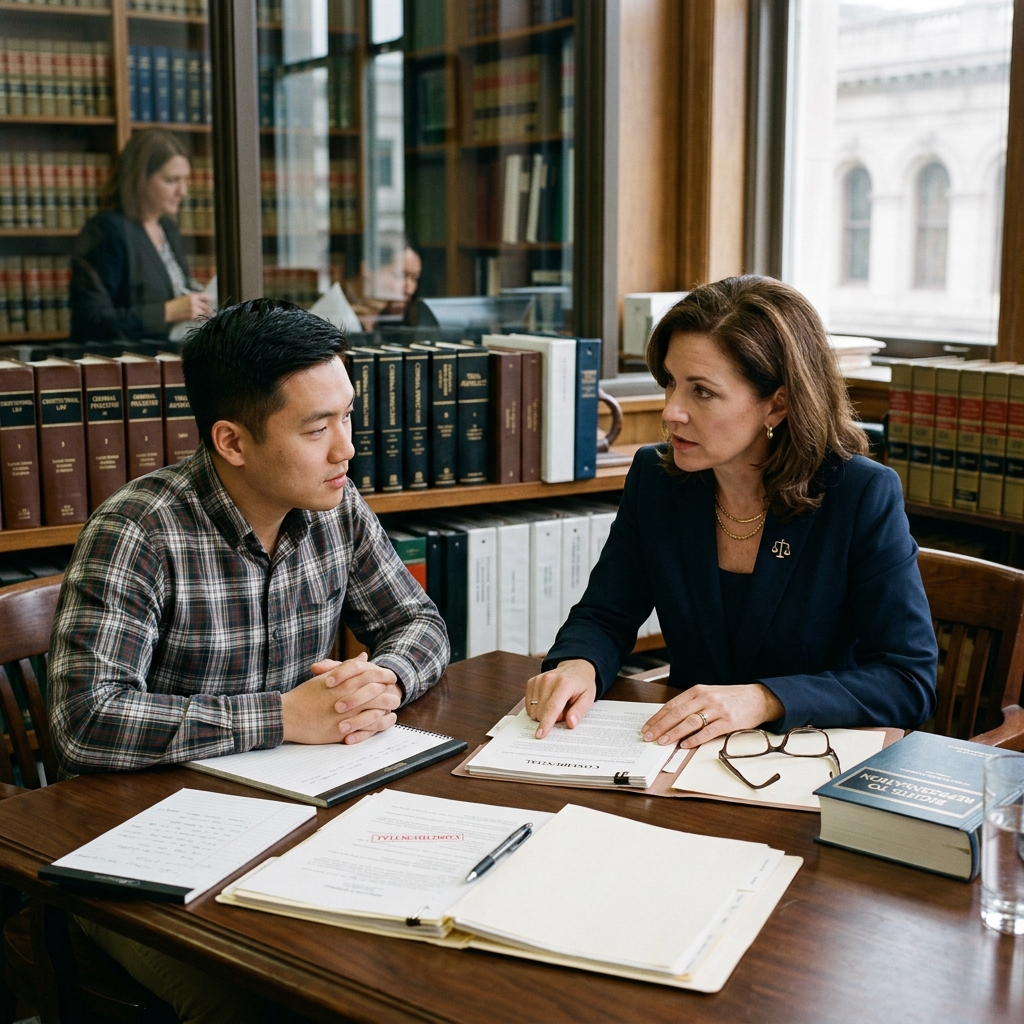
The United States Constitution guarantees that anyone accused of a crime has the right to have a lawyer and to receive adequate legal representation. This right does not promise a perfect defense, but it does require that your attorney's performance meet a basic standard of competence so that you receive a fair trial.
This article explains where the right to counsel comes from, what courts mean by “adequate” or “effective” assistance of counsel, when the right applies, and what can happen if a lawyer's performance is so poor that it undermines the fairness of a criminal case.
1. Constitutional Foundations of the Right to Counsel
The primary source of the right to legal representation in criminal cases is the Sixth Amendment to the U.S. Constitution. It provides that in all criminal prosecutions, the accused has the right “to have the Assistance of Counsel for his defence.”
Over time, the U.S. Supreme Court has interpreted this short phrase in far-reaching ways:
- It applies in all criminal prosecutions where a person faces possible imprisonment, not just serious felonies.
- It requires that the government provide a lawyer at public expense to individuals who cannot afford to hire one, in cases where jail or prison is a potential punishment.
- The right is not merely to have a lawyer's name on the file; it is the right to the effective assistance of counsel—representation sufficient to make the adversary process work as intended.
Initially, the right to appointed counsel applied only in federal courts, but landmark decisions later extended it to state criminal courts as well, ensuring that poor defendants across the country are entitled to a lawyer at government expense.
2. What “Adequate” or “Effective” Representation Really Means
Courts distinguish between a lawyer who is merely imperfect and one whose performance is so deficient that it violates the Constitution. The law recognizes that attorneys are human and tactical choices can vary; the Sixth Amendment does not guarantee the best possible lawyer or a favorable verdict. It guarantees representation that meets a meaningful standard of competence.
2.1 Core Elements of Adequate Representation
Although definitions vary slightly by jurisdiction, the concept of effective assistance generally includes:
- Basic legal competence – Knowledge of criminal law and procedure sufficient to advise and defend the client.
- Reasonable investigation – Making appropriate efforts to gather facts, review evidence, and interview witnesses.
- Informed strategic choices – Making tactical decisions after proper preparation, not out of ignorance or neglect.
- Communication with the client – Explaining options, risks, and potential outcomes so the client can make informed decisions.
- Active advocacy – Presenting arguments, challenging the prosecution's evidence where appropriate, and participating at critical stages of the case.
When these components are reasonably present, even if mistakes occur, representation is usually considered constitutionally adequate. When they are absent in serious ways, courts may find a violation of the right to counsel.
2.2 The Two-Part Ineffective Assistance Test
To overturn a conviction based on ineffective assistance of counsel, courts typically use a two-part test developed by the Supreme Court in a leading case interpreting the Sixth Amendment. In most jurisdictions, the defendant must show both:
- Deficient performance – The lawyer's work fell below an objective standard of reasonableness under prevailing professional norms.
- Prejudice – There is a reasonable probability that, but for the lawyer's errors, the result of the proceeding would have been different, or the fairness and reliability of the outcome was undermined.
This is a demanding standard: courts give significant deference to attorneys’ strategic decisions, and not every error will qualify as constitutional ineffective assistance.
3. When the Right to Counsel Attaches and What It Covers
The Sixth Amendment right to counsel is offense-specific and stage-specific. It does not apply to every interaction with law enforcement, but rather to certain key points in a criminal case.
3.1 Attachment of the Right
According to Supreme Court doctrine and authoritative commentary:
- The right to counsel attaches when formal judicial proceedings begin—such as an indictment, the filing of charges, or the first appearance before a judge.
- From that point on, the accused is entitled to counsel at all critical stages of the prosecution where substantial rights may be affected.
3.2 Critical Stages Requiring Counsel
Examples of stages where the right to effective assistance applies include:
- Initial appearance and arraignment
- Bail hearings
- Plea negotiations and entry of a guilty plea
- Pretrial motions and hearings
- Trial, including jury selection and witness examination
- Sentencing proceedings
- Some post-conviction and direct appeal proceedings, depending on the jurisdiction
An accused person is not required to navigate these stages alone; the constitutional design assumes that a trained lawyer is essential for the adversarial system to function fairly.
4. Appointed Counsel vs. Private Counsel: Same Standard
The Sixth Amendment does not distinguish between defendants who hire their own attorneys and those who rely on government-appointed lawyers. Courts have made clear that the same standard of adequacy applies to both public defenders and privately retained counsel.
| Feature | Appointed Counsel (Public Defender / Panel Attorney) | Privately Hired Counsel |
|---|---|---|
| Who pays? | Government pays all or most of the cost. | Client pays fees directly. |
| Eligibility | Available to indigent defendants facing possible imprisonment. | Available to anyone who can afford private counsel. |
| Constitutional standard | Must provide effective assistance under the Sixth Amendment. | Must provide effective assistance under the same standard. |
| Remedy for serious inadequacy | Possible reversal of conviction if ineffective assistance is proven. | Same: conviction may be overturned if constitutional standards are violated. |
Thus, a defendant cannot be told that lower-quality representation is acceptable simply because the lawyer was free or court-appointed; the constitutional guarantee is to adequate and effective counsel for everyone facing criminal prosecution.
5. Examples of Potentially Inadequate Representation
Because each case is unique, there is no single checklist that automatically proves a lawyer was ineffective. Courts look at the totality of circumstances. However, the following kinds of failures often raise concerns about constitutional adequacy:
- Failure to investigate
Not interviewing key witnesses, neglecting to review available records, or ignoring obvious leads that could support the defense can support a claim of deficient performance.
- Ignorance of fundamental law
Misunderstanding basic sentencing rules, the elements of the charged offense, or obvious defenses can fall below professional norms.
- Not communicating plea offers
If defense counsel fails to inform the accused of a formal plea offer from the prosecution, and the defendant misses out on a more favorable outcome, courts may find ineffective assistance.
- Refusing to advocate at critical stages
Standing mute at trial, failing to cross-examine key witnesses, or failing to present any argument at sentencing without a sound strategic reason can demonstrate inadequate representation.
- Conflicts of interest
When a lawyer's personal or financial interests conflict with the client's, and that conflict harms the defense, courts may find that the right to effective assistance has been violated.
Not every error or unfavorable outcome proves ineffective assistance; defendants must still show that the lawyer's shortcomings likely affected the result or undermined the reliability of the proceeding.
6. Remedies When Representation Falls Short
When a defendant believes their lawyer's performance was constitutionally inadequate, the legal system provides specific mechanisms to challenge the conviction or sentence.
6.1 Direct Appeal
In some cases, claims of ineffective assistance can be raised on direct appeal, especially when the alleged errors are clear from the trial record—such as failing to object to plainly improper evidence. Appellate courts review these claims under the established constitutional standards.
6.2 Post-Conviction or Habeas Proceedings
Many ineffective-assistance claims require evidence outside the trial record—such as what the lawyer did or did not investigate, or what advice was given regarding plea offers. These issues are often raised in:
- State post-conviction proceedings (sometimes called collateral review)
- Federal habeas corpus petitions, after state remedies have been exhausted
If a court finds that counsel was ineffective and that the defendant was prejudiced, it may:
- Order a new trial
- Vacate (void) a conviction
- Require a new sentencing hearing
- In some plea cases, reinstate a prior plea offer or provide other tailored relief
7. Practical Tips for Defendants and Families
Understanding your right to adequate representation can help you participate more effectively in your defense. While only a court can formally decide whether counsel was constitutionally ineffective, defendants and their families can take steps to protect their rights.
7.1 Questions to Ask Your Lawyer
Consider asking:
- What are the charges and potential penalties I face?
- What evidence has the prosecution disclosed?
- What investigations or expert consultations are you planning?
- What plea offers, if any, have been made?
- What are the pros and cons of accepting a plea versus going to trial?
Clear communication can help ensure that you understand the strategy and that your lawyer is addressing your concerns.
7.2 Documenting Concerns About Representation
If you believe your representation is inadequate, it can be helpful to keep organized notes, such as:
- Dates of meetings and phone calls
- Issues you asked your lawyer to investigate
- Important witnesses or evidence you mentioned
- Any plea offers and how they were explained
These records may become important if your case later involves a formal challenge based on ineffective assistance.
7.3 Seeking a Second Opinion
If possible, consulting another attorney about your concerns may help you assess whether your current lawyer's performance appears reasonable under professional norms. However, only a court can make a binding determination that the Sixth Amendment has been violated.
8. Frequently Asked Questions (FAQs)
Does the right to counsel apply if I cannot afford a lawyer?
Yes. If you are facing a criminal charge that carries possible imprisonment and you genuinely cannot afford an attorney, the court must appoint one for you. This right applies in both federal and state courts and is a core part of the Sixth Amendment guarantee.
Can I waive my right to an attorney and represent myself?
Defendants may choose to represent themselves, but courts require that any waiver of the right to counsel be knowing, intelligent, and voluntary. Judges typically question defendants to ensure they understand the dangers and disadvantages of self-representation before allowing it.
Is a bad result enough to prove my lawyer was ineffective?
No. Losing a case or receiving a harsh sentence does not automatically mean your attorney was constitutionally ineffective. You must show both that the lawyer's performance was seriously deficient and that this deficiency likely affected the outcome or undermined the fairness of the proceedings.
Do I have a right to the specific lawyer I want?
Defendants who hire private counsel may generally choose their attorney, subject to ethical and scheduling limits. Indigent defendants have the right to competent appointed counsel, but usually not to a particular lawyer of their choosing. The constitutional guarantee is to adequate representation, not to a specific individual.
Does the right to counsel apply to juveniles?
Yes. Courts and legal authorities recognize that minors accused of delinquent acts that could result in confinement have the right to counsel, and that effective legal representation is essential to protect their due process rights.
References
- The Right to Adequate Representation — FindLaw. 2023-05-01. https://www.findlaw.com/criminal/criminal-rights/the-right-to-adequate-representation.html
- Effective Assistance of Counsel — Sixth Amendment — Justia U.S. Constitution Annotated. 2022-01-15. https://law.justia.com/constitution/us/amendment-06/15-effective-assistance-of-counsel.html
- Overview of the Right to Effective Assistance of Counsel — Constitution Annotated, Library of Congress. 2021-09-17. https://constitution.congress.gov/browse/essay/amdt6-6-5-1/ALDE_00013429/
- Right to Counsel — EBSCO Research Starters. 2020-06-10. https://www.ebsco.com/research-starters/law/right-counsel
- Right to Counsel — National Association of Criminal Defense Lawyers (NACDL). 2022-04-20. https://www.nacdl.org/Landing/Right-to-Counsel
- The Right to an Attorney: Theory vs. Practice — Brennan Center for Justice. 2016-03-15. https://www.brennancenter.org/our-work/analysis-opinion/right-attorney-theory-vs-practice
- Court Shorts: The Right to Counsel — U.S. Courts (YouTube). 2017-09-06. https://www.youtube.com/watch?v=d89WyKPgczY
Similar Articles








Read full bio of medha deb




