
Riding a Motorcycle Without a License: Risks, Penalties, and Safer Alternatives
Learn what really happens if you ride a motorcycle without a license, from fines and impoundment to criminal charges and insurance fallout.
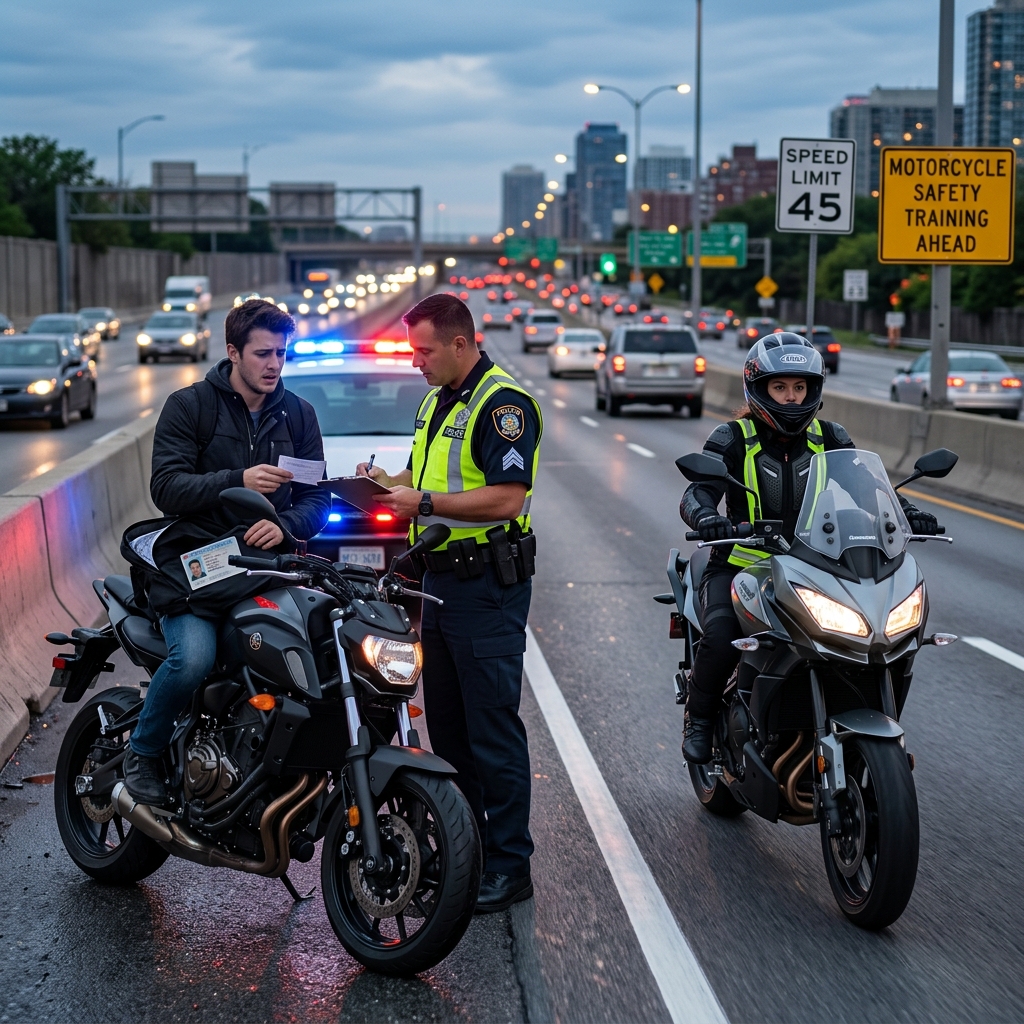
Motorcycles offer freedom, speed, and convenience, but they also demand more skill and awareness than most passenger vehicles. Because of this, nearly every U.S. state requires a specific motorcycle license or endorsement, not just a standard driver’s license. Riding without that license is more than a minor mistake: it can trigger fines, criminal charges, insurance problems, and serious financial liability if an accident occurs.
This article explains what happens when someone rides a motorcycle without a license, the range of penalties they may face, how it affects accidents and insurance, and practical steps to get legal and stay safe on the road.
Why a Motorcycle License Is Different From a Regular Driver’s License
A motorcycle behaves very differently from a car. Riders must balance, lean, counter-steer, and manage a vehicle that is far less forgiving of surface hazards like gravel, wet leaves, or potholes. Recognizing this, state motor vehicle agencies typically use a separate license class for motorcycles.
- Special license class: Most states require a motorcycle-specific license or endorsement (often called Class M or similar) to operate a motorcycle on public roads.
- Additional testing: Applicants usually must pass a written exam on motorcycle rules and safety, then a road test demonstrating practical riding skills.
- Age and training rules: Some states require younger riders to hold permits longer, complete driver education, or attend an approved motorcycle safety course before receiving a full license.
The underlying legal logic is simple: a person who has not demonstrated basic motorcycle skills and knowledge is more likely to be involved in a crash and less able to manage emergency situations.
Core Legal Consequences of Riding Without a Motorcycle License
Riding without the appropriate license is usually treated as a traffic offense, and in many jurisdictions it can also be a misdemeanor crime. While exact penalties vary by state, several common themes appear.
| Type of Consequence | Typical Impact |
|---|---|
| Fines | Monetary penalties that increase for repeat offenses. |
| Criminal charges | Often a misdemeanor; may include potential jail time. |
| License record points | Points that can lead to license suspension and higher insurance premiums. |
| Vehicle impoundment | Police may tow and store the motorcycle at the rider’s expense. |
| Court costs and fees | Additional costs on top of base fines for processing and surcharges. |
Fines and Escalating Penalties
Many states use a tiered approach, starting with relatively modest fines for a first offense and increasing penalties for repeat violations. This is intended to discourage riders from treating unlicensed riding as a harmless habit.
- First offense: Often involves a fine, sometimes in the range of a few hundred dollars, and may carry no jail time if the rider has no prior record.
- Second offense: Fines usually increase, and in some jurisdictions, limited jail time becomes a possibility.
- Third and subsequent offenses: Courts may impose significantly higher fines and longer potential jail sentences, reflecting a pattern of disregard for licensing laws.
On top of the base penalty, courts frequently add surcharges or mandatory fees, which can make the real out-of-pocket cost substantially higher than the advertised fine.
Criminal Charges and Possible Jail Time
In some states, driving any vehicle without a valid license—including motorcycles—is classified as a misdemeanor offense. While jail is not guaranteed, it is often available as a penalty option, especially when the rider has prior convictions.
For example, Tennessee law requires drivers to hold a valid license for the class of vehicle they operate, and riding without that license can result in a Class C misdemeanor charge, punishable by fines and up to 30 days in jail for a first offense. This provides a concrete illustration of how states can treat unlicensed motorcycle operation as a criminal matter rather than a minor infraction.
Points, Suspensions, and Long-Term License Problems
Many Departments of Motor Vehicles assign points for traffic offenses. Accumulating too many points over a short period can lead to license suspension or other administrative sanctions.
- Riding without a motorcycle license may add points to the driver’s record, depending on the state’s point system.
- These points can remain on the record for years, affecting future insurance costs and eligibility for license upgrades.
- A suspended license can make daily life more difficult and complicate efforts to obtain a motorcycle endorsement later.
Impoundment of the Motorcycle
Police officers who stop an unlicensed rider often have the authority to impound the motorcycle—that is, have it towed and stored until certain conditions are met.
In practical terms, this can mean:
- Immediate loss of the vehicle at the roadside.
- Towing and storage fees that accumulate daily until the rider can legally reclaim the motorcycle.
- Potential difficulty retrieving the motorcycle if the rider remains unlicensed or cannot pay the charges.
Impoundment costs can quickly exceed the original fine, creating a significant financial burden.
When an Accident Happens: Civil Liability and Insurance Problems
Riding without a license becomes even more serious when an accident occurs. The lack of a license can influence fault determinations, damages awards, and insurance coverage.
Comparative Fault and Recovery of Damages
In states that use comparative fault rules, a court or jury assigns percentages of blame to each party in an accident. The injured party’s compensation may be reduced in proportion to their share of fault, and in some states, crossing a specific threshold (for example, 50%) can bar recovery entirely.
According to legal analysis of Tennessee law, an injured rider who was operating a motorcycle without a license may have that fact used as evidence of negligence, potentially increasing their share of fault in a civil case. If a court finds the rider more than 49% responsible for their own injuries, they may not recover any damages; if less than 49%, their damages can be reduced accordingly.
This illustrates how licensing status, while not the sole determinant of fault, can significantly influence the outcome of accident litigation.
Insurance Coverage and Premium Impacts
Insurance companies price risk based on driving history, license status, and compliance with the law. Riding without a motorcycle license can affect both coverage and cost.
- Higher premiums: Points on a driving record and a history of unlicensed riding can make the rider appear riskier, leading to higher insurance rates.
- Coverage disputes: While having a policy is usually required, an insurer may scrutinize a claim more closely if the rider lacked a proper license at the time of a crash.
- Policy cancellation or non-renewal: Serious or repeated violations may cause insurers to decline future coverage, forcing the rider into high-risk pools.
Because proof of insurance is typically required to register a motorcycle and operate it legally on public roads, poor compliance can ripple across every part of a rider’s legal and financial situation.
Aggravating Circumstances: When Penalties Become Severe
Not all cases of unlicensed riding are treated equally. Certain factors can dramatically increase legal exposure and penalties.
- Serious injury or death: If an unlicensed rider causes an accident that results in serious bodily harm or fatalities, they may face felony charges and very large fines.
- Reckless or impaired driving: Combining unlicensed riding with intoxication or reckless behavior can lead to harsher sentencing and potential incarceration.
- Multiple prior violations: Repeated disregard for licensing rules may convince courts to impose the maximum available penalties.
In some jurisdictions, statutes explicitly increase fines and allow felony charges when great bodily injury or death occurs while riding without a license, reflecting a strong policy judgment that untrained riders pose heightened risks.
How to Get Legal: Safer Paths to a Motorcycle License
Instead of risking fines, impoundment, and liability, riders have several lawful ways to gain experience and obtain a motorcycle license.
Applying for a Motorcycle Learner Permit
Most states offer a motorcycle learner permit, allowing new riders to practice under specific conditions before taking a road test.
- Visit the state Department of Motor Vehicles (or equivalent agency) and apply for a permit.
- Present acceptable identification and any required residency or citizenship documents.
- Take and pass a written test covering motorcycle rules, signage, and safety principles.
Permits often come with restrictions—for example, no night riding, passenger limits, or bans on high-speed roads—designed to let new riders build skills in reduced-risk environments.
Taking a Motorcycle Safety Course
Structured training can make a significant difference in both safety and licensing success. Many states either require or strongly encourage riders to complete an approved motorcycle safety course.
- Courses typically include classroom instruction on hazard awareness, protective gear, and legal responsibilities.
- On-range sessions allow riders to practice braking, cornering, and emergency maneuvers on a closed course.
- Some states waive the DMV road test for riders who successfully complete a state-approved course and present a completion certificate.
Beyond licensing benefits, these courses help riders understand how quickly small mistakes can escalate on a motorcycle, reinforcing the importance of lawful, skill-based riding.
Scheduling and Passing the Road Test
After fulfilling permit and training requirements, the rider schedules a motorcycle road test with the DMV.
- The exam typically evaluates starting, stopping, turning, and hazard response in a controlled environment.
- Examiners also check for proper use of signals, lane positioning, and compliance with basic traffic rules.
- Upon passing, the rider receives a full motorcycle license or endorsement, authorizing them to ride on all permitted public roads.
Practical Tips to Avoid Unlicensed Riding Problems
Even riders who intend to stay compliant can make mistakes—forgetting to carry a license, misunderstanding permit restrictions, or assuming a standard driver’s license is enough. These practical steps reduce the risk of violations:
- Always carry your license: Many states require riders to present their license upon request by law enforcement; failure to do so can itself be an offense.
- Check license class: Confirm that your license includes the correct motorcycle endorsement or class designation (such as Class M).
- Respect permit limits: Permit holders must follow restrictions on time of day, passenger rules, and road types.
- Keep documents current: Ensure your registration, inspection, and insurance meet state requirements; missing paperwork can compound penalties.
- Consult a lawyer after a citation: Anyone facing significant fines or potential criminal charges should seek legal advice about defenses, mitigation, and long-term consequences.
Frequently Asked Questions (FAQs)
1. Is it ever legal to ride a motorcycle with only a regular driver’s license?
In most U.S. states, a regular driver’s license alone is not enough to operate a motorcycle on public roads. Riders typically need either a dedicated motorcycle license or a motorcycle endorsement added to their existing license.
2. What happens if I am stopped by police without a motorcycle license?
Depending on state law, you may receive a citation, face fines, and possibly be charged with a misdemeanor. Police may also impound the motorcycle, requiring you to pay towing and storage fees and, in many cases, show proof of a valid license before reclaiming the vehicle.
3. Can riding without a license affect my ability to recover damages after an accident?
Yes. In comparative fault states, the fact that you were riding without a license can be used as evidence of negligence, potentially increasing your share of fault and reducing or even eliminating your ability to recover damages.
4. Will my insurance cover me if I ride without a motorcycle license?
Coverage depends on the policy language and state law, but insurers generally view unlicensed riding as a sign of increased risk. Even if a claim is ultimately paid, the violation can lead to higher premiums, policy changes, or non-renewal in the future.
5. How do I get a motorcycle license if I already have a standard driver’s license?
Typically, you apply for a motorcycle learner permit, pass a written test, practice under permit rules, and then schedule and pass a motorcycle road test. Some states allow successful completion of an approved safety course to substitute for the road test, making the process more straightforward for riders who engage in structured training.
References
- Understanding the Penalties for Riding Without a Motorcycle License — Schwaba Law. 2023-05-10. https://www.schwabalaw.com/penalties-riding-without-motorcycle-license/
- What Happens If You Ride a Motorcycle Without a License in Georgia? — SteelHorse Law. 2022-08-15. https://www.steelhorselaw.com/news/what-happens-if-you-drive-a-motorcycle-without-a-license
- Can You Ride a Motorcycle Without a License in N.C.? — Whitley Law Firm. 2023-04-20. https://whitleylawfirm.com/faqs/can-you-drive-a-motorcycle-without-a-license/
- Requirements for Riding a Motorcycle in New York City — Davidoff Law. 2022-11-01. https://www.lawfirmdavidoff.com/queens-motorcycle-accident-lawyer/requirements-for-riding-a-motorcycle-in-new-york-city/
- Motorcycle Manual: Motorcycle Licenses, Ownership, Special Rules — New York State Department of Motor Vehicles. 2023-01-10. https://dmv.ny.gov/motorcycle-manual/motorcycle-manual-motorcycle-licenses-ownership-special-rules
Similar Articles








Read full bio of Sneha Tete


