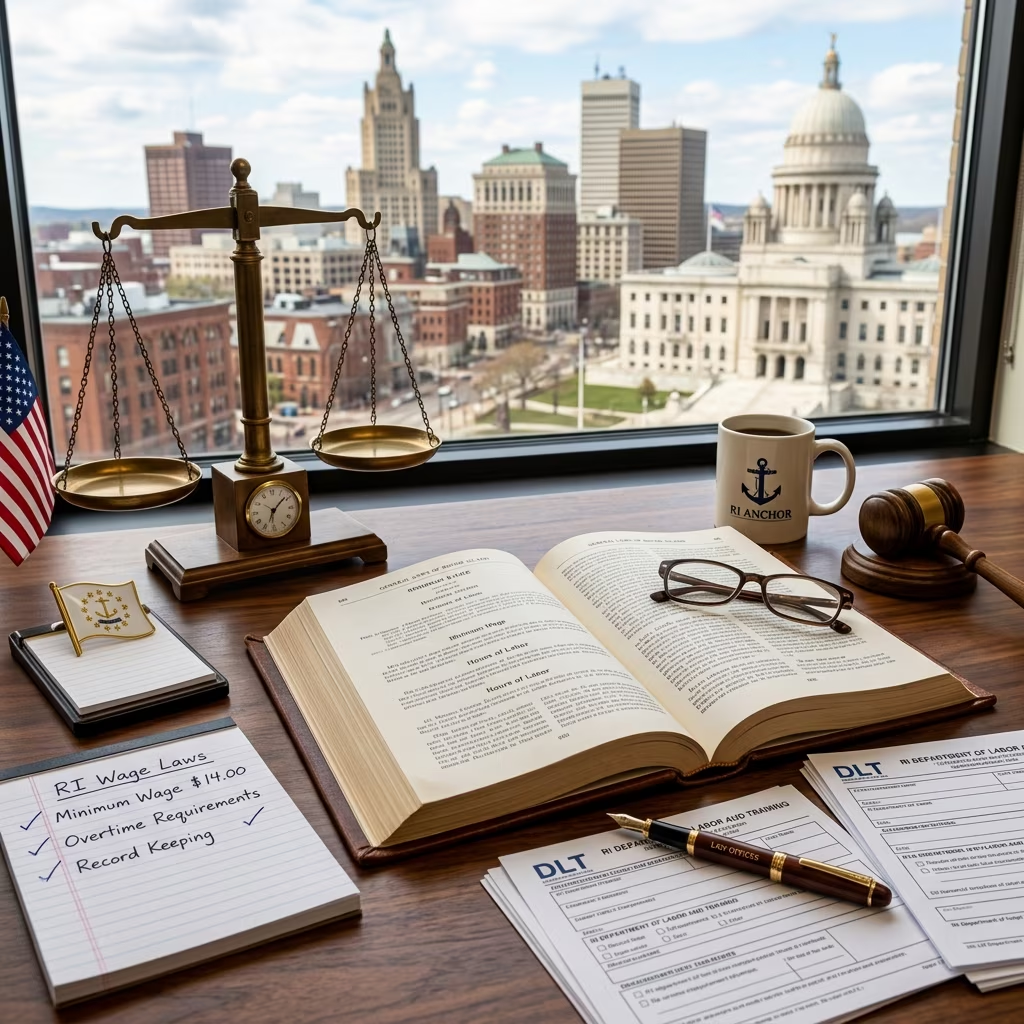
Rhode Island wage and hour law sets the baseline for how employees must be paid, when overtime applies, what kind of breaks workers are owed, and how employers must handle certain workplace pay practices. The rules are designed to protect workers while also giving employers a clear framework for payroll compliance. If you work in Rhode Island or manage a payroll there, understanding the state’s wage standards can help prevent disputes and costly mistakes.
This guide explains the core pay requirements in plain language. It covers minimum wage, overtime, special pay rules for some workers, meal breaks, pay equity, payday requirements, youth employment limits, and the state agencies that enforce workplace wage laws.
How Rhode Island Pay Law Is Structured
Rhode Island wage and hour law is built around a few central ideas: employees must receive at least the legal minimum wage, nonexempt workers must get overtime after a certain number of hours, and wages must be paid on a regular schedule. In addition, employers must follow state rules on pay transparency, wage discrimination, and required rest periods in some workplaces.
For many employers, the most important compliance question is whether a worker is classified as exempt or nonexempt. That classification affects overtime eligibility. Nonexempt employees are generally covered by minimum wage and overtime rules, while exempt employees usually are not. The job duties, salary basis, and salary threshold all matter when making that determination.
Minimum Wage Standards
Rhode Island has its own minimum wage rate, which may differ from the federal floor. State law also recognizes certain reduced rates or exceptions for limited categories of workers. Employers should not assume that one statewide rate applies to every person in every setting.
- The general minimum wage is set by Rhode Island law.
- Some younger workers may be paid a reduced rate under specific conditions.
- Special wage rules may apply in certain nonprofit, educational, or seasonal contexts.
One common exception involves very young workers. Rhode Island permits a lower wage for some 14- and 15-year-old employees, but only under narrow conditions. If those minors work beyond the permitted limit in a week, the higher applicable minimum rate must be paid for all hours worked that week. That rule is meant to prevent employers from splitting time across reduced and full wage categories in a way that defeats the purpose of the law.
Employers should also pay attention to future changes in the minimum wage. State wage floors are often revised through legislation, so current compliance requires checking the latest official guidance rather than relying on older pay rates.
Overtime Pay in Rhode Island
Rhode Island generally requires overtime pay at one and one-half times an employee’s regular rate for hours worked over 40 in a workweek. This is the standard rule for most nonexempt employees. The calculation applies to the workweek as defined by the employer, not to a daily threshold.
That means an employee can work long days without overtime if the total for the week stays at 40 hours or less, unless another rule applies. But once the weekly total crosses 40, the extra hours are usually paid at the overtime rate.
| Work Situation | Typical Pay Rule |
|---|---|
| Hours 1–40 in a week | Paid at the regular hourly rate |
| Hours over 40 in a week | Usually paid at 1.5 times the regular rate |
| Exempt employees | Often not eligible for overtime |
Some workers in retail or other covered industries may be subject to additional premium pay rules for Sundays or holidays. In some cases, those premium hours may not also count again toward overtime in the same way as ordinary weekly hours. Because these calculations can be technical, payroll systems should be configured carefully and reviewed when a schedule includes premium pay days.
Exempt and Nonexempt Employees
Whether a worker is exempt matters as much as the number of hours worked. Exempt employees are generally those in executive, administrative, or professional positions who meet both duties tests and salary-based requirements. If the employee does not meet those requirements, overtime rules usually apply.
Rhode Island employers should not rely only on job titles. Calling someone a manager does not automatically make the person exempt. The actual work performed is critical. For example, a worker who spends most of the day doing routine hourly tasks may still be nonexempt even if the employer gives them a supervisory title.
- Exempt status usually depends on job duties and salary criteria.
- Nonexempt workers are generally entitled to overtime.
- Misclassification can lead to back pay, penalties, and other liability.
Because classification errors are common, businesses often review payroll categories whenever roles change, pay changes, or job duties expand. Workers who believe they were misclassified can raise the issue with the employer or contact the state labor agency.
Pay Equity and Wage Transparency
Rhode Island law also addresses unequal pay. Employers are generally prohibited from paying different wages to employees performing comparable work because of protected traits such as race, color, religion, sex, sexual orientation, gender identity or expression, disability, age, or country of ancestral origin. Wage differences may still be lawful if they are based on legitimate factors such as seniority, experience, skill, training, duties, or shift assignment, and those factors are applied consistently.
Another important feature of Rhode Island law is wage transparency. Employees may discuss or disclose their wages, and job applicants may request salary range information. Employers are also limited in when they may ask about wage history. These rules are intended to reduce the use of past pay as a basis for continuing wage gaps.
For hiring managers, the safest approach is to focus on the pay range for the role, the job requirements, and the candidate’s qualifications rather than prior compensation. That helps align hiring practices with current state expectations.
Paydays, Pay Frequency, and Wage Statements
Rhode Island generally requires employees to be paid weekly on regular paydays unless another approved pay arrangement applies, such as biweekly, semimonthly, monthly, or yearly compensation. The point of the rule is predictability: workers should know when wages will arrive and employers should maintain a consistent schedule.
In practice, payroll timing can vary based on worker category and business structure, but wages cannot be delayed without a legal basis. Employers should also maintain clear records of hours worked, rate of pay, deductions, and any premium payments. Good records are essential if there is ever a pay dispute or government investigation.
- Paydays should follow a regular schedule.
- Employers should document hours, rates, and deductions.
- Late or missing wages can trigger enforcement action.
Meal Breaks and Rest Time
Rhode Island law requires certain meal breaks in workplaces covered by the rule. Employees who work a six-hour shift are generally entitled to a 20-minute meal break, and employees who work an eight-hour shift are generally entitled to a 30-minute meal break. These breaks are intended to give workers meaningful time away from work during a long shift.
Break obligations can depend on the size and type of employer, as well as whether the worker is a minor. Some exceptions may apply in health care or in small-shift settings. Employers should not assume a break requirement disappears just because the business is busy or the schedule is short on staff.
Rhode Island does not impose a broad statewide rule requiring paid rest breaks of a few minutes, but if an employer offers short rest periods, those breaks may still affect wage calculations under applicable wage-hour principles. Employers should define break policies clearly so employees understand whether time is paid or unpaid.
Youth Employment Rules
Rhode Island places limits on when minors can work and what tasks they may perform. These rules are meant to protect school attendance, safety, and healthy development. Age matters, but so do the hours worked, the type of business, and whether school is in session.
In general, minors under 16 face tighter limits on work hours and job types. Certain hazardous jobs are off limits for all minors, and industries such as manufacturing or mechanical operations may have additional restrictions. Employers that hire teenagers should review both wage rules and child labor rules at the same time.
- Young workers may have reduced hours during school periods.
- Hazardous occupations are restricted for minors.
- Work schedules must fit both labor law and school-related limits.
For employers, the safest practice is to keep age-verification records, schedule carefully, and train supervisors not to assign prohibited tasks informally. For families and workers, the key question is not just whether the work pays fairly, but whether the work itself is legally allowed.
Other Wage-Related Protections
Rhode Island wage rules extend beyond hourly pay. Employees may have rights related to earned sick leave, vacation payout in some situations, and reasonable accommodations for breastfeeding or milk expression. These issues do not always appear in a basic paycheck calculation, but they can affect the total compensation picture.
For example, some employers must provide paid or unpaid sick and safe leave depending on workforce size. In addition, accrued vacation may need to be paid out at separation if the employer promised it through policy or agreement. Employers should review handbook language carefully, because broad promises in a policy can become enforceable wage obligations.
Breastfeeding break rights also matter for wage and scheduling compliance. When an employee needs time to express milk, employers should consider whether existing break periods can run concurrently with that time and whether any hardship exception applies.
Where Wage Complaints Go
The Rhode Island Department of Labor and Training enforces labor standards and handles many workplace wage issues. Workers who believe they have been underpaid, denied overtime, or misclassified can seek help through the state enforcement system. Employers can also use the agency’s guidance to understand obligations before a problem develops.
If a wage issue arises, the most useful documents are usually time records, pay stubs, offer letters, handbooks, and any written policy on vacation or leave. A clear paper trail often determines whether a claim is resolved quickly or becomes a longer dispute.
Frequently Asked Questions
Do all employees in Rhode Island get overtime? No. Most nonexempt employees do, but exempt employees generally do not. Overtime usually applies after 40 hours in a workweek.
Can an employer pay less than minimum wage to a teenager? In some limited situations, yes. Rhode Island allows reduced wages for certain young workers, but the rules are narrow and depend on age and hours worked.
Are meal breaks required? In covered situations, yes. Rhode Island generally requires a meal break for six-hour and eight-hour shifts, subject to exceptions.
Can workers discuss pay with each other? Yes. Rhode Island protects employees’ ability to discuss or disclose wages, and applicants may request salary range information.
Who handles wage complaints? The Rhode Island Department of Labor and Training is the main state agency for labor standards enforcement.
What Employers Should Do Now
Employers in Rhode Island should review payroll classifications, overtime calculations, meal break policies, hiring forms, and wage transparency practices on a regular basis. A short internal audit can uncover problems before they turn into unpaid wage claims. Because wage rules can change, companies should verify current state requirements each year and whenever a role or pay policy changes.
For workers, the most practical step is to keep copies of schedules, pay stubs, and any written policies about pay or leave. If wages seem wrong, the records usually make the next step much easier.
References
- Wage and Workplace Laws in Rhode Island — Rhode Island Department of Labor and Training. 2019. https://dlt.ri.gov/sites/g/files/xkgbur571/files/documents/pdf/ls/WageHourBook.pdf
- Labor Standards — Rhode Island Department of Labor and Training. 2026. https://dlt.ri.gov/regulation-and-safety/labor-standards
- Rhode Island General Laws, Wage Discrimination and Pay Equity — Rhode Island General Assembly. 2026. https://webserver.rilegislature.gov/BillText16/HouseText16/H7515.htm
- Rhode Island Employment and Labor Laws — Paylocity. 2026. https://www.paylocity.com/resources/tax-compliance/state-laws/rhode-island/
- Quick and Easy Guide to Labor & Employment Law: Rhode Island — Baker Donelson. 2026. https://www.bakerdonelson.com/easy-guide-rhode-island
- Rhode Island Employment Law Overview — Brightmine. 2026. https://www.brightmine.com/us/resources/hr-compliance/rhode-island-employment-law/