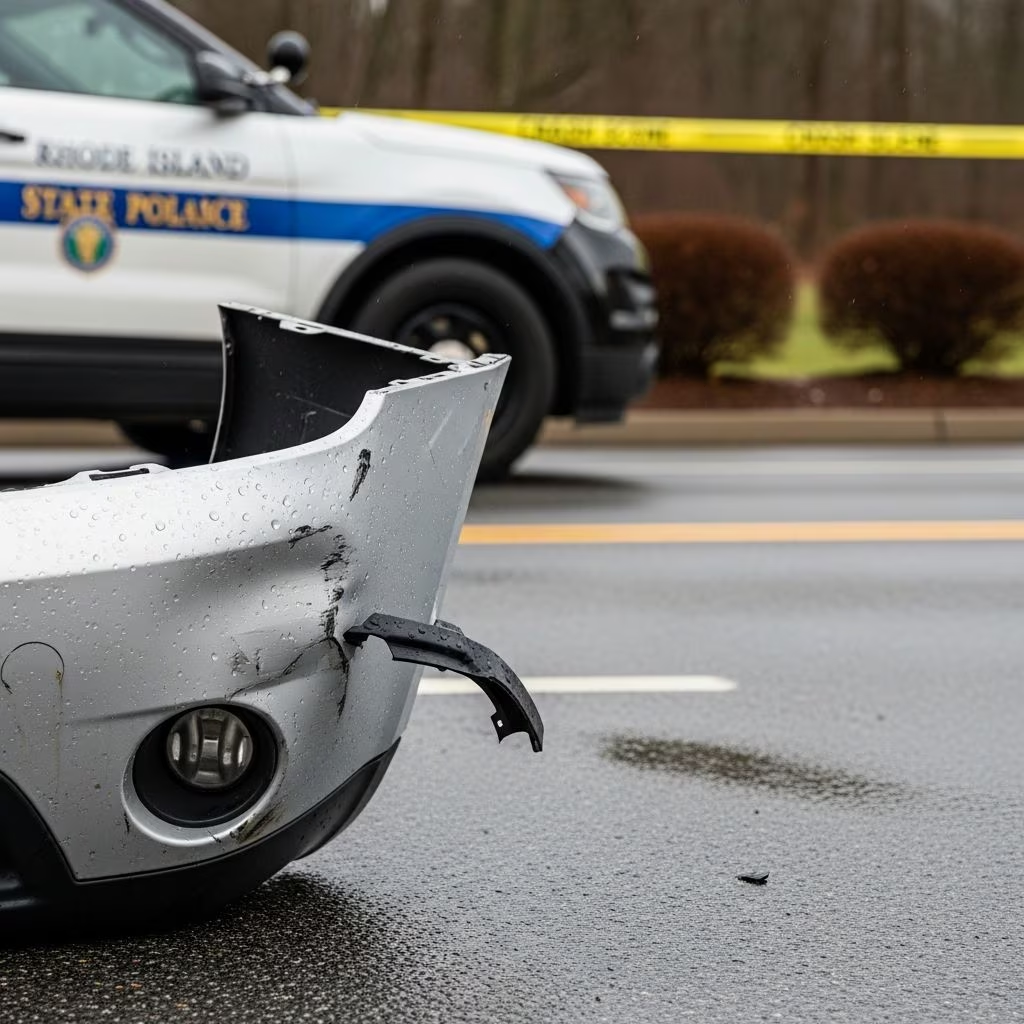
Understanding Motor Vehicle Accident Liability in Rhode Island
When a vehicle collision occurs in Rhode Island, the state’s legal framework establishes clear responsibilities for all parties involved. Unlike some states that follow no-fault insurance models, Rhode Island operates as a tort state, meaning the driver who causes the accident bears legal responsibility for compensating victims. This foundational principle shapes how accidents are handled, from immediate reporting requirements to civil litigation outcomes.
The distinction between a tort state and a no-fault state significantly impacts how accident victims pursue compensation. In Rhode Island’s tort system, the injured party typically files a claim against the at-fault driver’s insurance policy or pursues legal action directly against that driver. This approach requires establishing fault through evidence, witness testimony, and accident investigation before compensation is awarded.
The At-Fault Driver Liability System
Rhode Island’s at-fault liability model assigns financial responsibility based on who caused the collision. The driver deemed responsible for the accident must cover medical expenses, property damage, lost wages, and other related costs for injured parties and property owners. Insurance companies investigate accidents to determine fault, though disputes about liability sometimes require court intervention.
This system creates a direct connection between causation and payment. If you cause an accident, your liability coverage pays victims. If you are injured by another driver’s negligence, you pursue recovery from their insurance or through a lawsuit. Understanding this framework helps accident victims comprehend their legal options and the importance of gathering evidence at accident scenes.
Rhode Island’s Pure Comparative Negligence Doctrine
Rhode Island follows a pure comparative negligence standard that distinguishes it from many other states. Under this doctrine, injured parties can recover damages even when they bear partial responsibility for the accident. The critical difference from modified comparative negligence systems is that there is no percentage threshold that eliminates recovery eligibility.
The comparative negligence calculation works by reducing an injured party’s award proportionally to their assigned fault percentage. For example, if a jury determines total damages at $100,000 but assigns the injured plaintiff 10 percent of the negligence, the final award becomes $90,000. This reduction reflects the plaintiff’s contribution to the accident’s occurrence.
Multiple parties can share liability in complex accidents. When more than two vehicles are involved or when non-driver factors contribute to the collision, each responsible party receives a fault percentage. This allocation affects not only the injured party’s recovery but also potentially the liability of multiple defendants who may each owe a proportional share.
Examples of Comparative Negligence Application
- A driver runs a red light and hits another vehicle; the struck driver was speeding slightly—fault may be assigned as 85% to the red-light runner and 15% to the struck driver
- Three vehicles collide in a chain reaction; fault percentages might be distributed as 50%, 35%, and 15% based on each driver’s contributing actions
- A pedestrian is hit by a driver who was distracted; if the pedestrian was also jaywalking, both parties may share fault proportionally
Immediate Obligations Following a Collision
Rhode Island law imposes several immediate duties on drivers involved in accidents. The primary obligation is to stop the vehicle at the accident scene or as close as reasonably possible. Remaining at the scene is mandatory until all legal requirements are fulfilled, including providing information to other parties and law enforcement when required.
The duty to stop applies specifically to accidents involving injuries, serious bodily harm, or death of any person. Drivers must stop without unnecessarily obstructing traffic flow. This requirement reflects public policy favoring accident scene investigation and preventing hit-and-run incidents that leave victims without identification of responsible parties.
Failure to stop at an accident scene carries severe penalties. For accidents resulting in simple injury, conviction brings a mandatory license suspension of one to five years, imprisonment up to five years, and potential fines reaching $5,000. When serious bodily injury results from leaving the scene, sentences increase substantially, with enhanced penalties for repeat offenders.
Accident Reporting Requirements and Procedures
Rhode Island distinguishes between immediate reporting to law enforcement and subsequent reporting to the Department of Motor Vehicles. These requirements depend on accident severity and property damage extent.
Law Enforcement Notification Triggers
Drivers must immediately report an accident to the nearest law enforcement agency when any of the following conditions exist:
- Any person sustains bodily injury or death
- Vehicles involved cannot operate safely afterward
- The accident involves property damage sufficient to warrant police investigation
Police officers responding to accident scenes prepare official reports documenting the collision details, involved parties, vehicle information, injuries, and initial fault assessments. These reports become critical evidence in insurance claims and potential lawsuits. Drivers can typically obtain copies of police reports from their local department within 72 hours of the incident.
Department of Motor Vehicles Filing Requirements
Beyond police reporting, Rhode Island law requires written notification to the state Division of Motor Vehicles when accidents meet certain thresholds. A report must be filed within 21 days after the accident when:
- Property damage exceeds $1,000
- The collision resulted in personal injury or fatality
The Division provides specific forms for these reports, and timely submission is essential. Failure to file required reports can result in administrative penalties and complications with insurance claims or license status.
Insurance Coverage Minimums in Rhode Island
Rhode Island requires all drivers to maintain minimum liability insurance coverage protecting injured parties from financial loss. The mandatory minimum coverage limits are:
| Coverage Type | Minimum Amount |
|---|---|
| Bodily injury per person | $15,000 |
| Bodily injury per accident | $30,000 |
| Property damage | $25,000 |
These minimums represent the baseline protection required by law. Many insurance experts recommend carrying higher limits, as medical expenses and vehicle damage can easily exceed these thresholds. Drivers with assets or high income face particular risk when carrying only minimum coverage, as judgments exceeding policy limits can result in wage garnishment or property liens.
Additional coverage options include uninsured and underinsured motorist protection, which covers the policyholder’s injuries when an at-fault driver lacks adequate insurance. This optional coverage addresses the practical reality that not all drivers maintain proper insurance, creating gaps in victim compensation.
Filing Deadlines for Legal Action
Rhode Island imposes strict time limits for pursuing legal remedies following vehicle accidents. Understanding these deadlines is crucial, as missing them forfeits the right to sue regardless of claim merit.
Personal Injury Claims Timeline
The statute of limitations for personal injury claims arising from vehicle accidents is three years from the accident date. This deadline applies to lawsuits by drivers, passengers, motorcyclists, cyclists, scooter riders, and pedestrians. The clock begins running on the day of the accident, not when injuries are discovered or when medical treatment begins.
Wrongful Death Claims Timeline
When an accident results in death, the statute of limitations for wrongful death claims is also three years. However, the timing differs slightly—the three-year period begins from the date of death rather than from the accident date. This distinction becomes significant in cases where victims survive for extended periods before succumbing to injuries.
Property Damage Claims Timeline
Vehicle and property damage claims follow a more generous timeline. Rhode Island’s general property damage statute of limitations extends significantly beyond the three-year personal injury deadline, providing injured parties substantially more time to pursue property-related recovery.
Comparative Negligence Impact on Compensation
The interaction between Rhode Island’s comparative negligence law and accident claims creates important strategic considerations. Because even partially at-fault plaintiffs can recover, insurance companies and defense attorneys carefully evaluate and assign fault percentages during settlement negotiations and trials.
Juries hearing comparative negligence cases must determine both total damages and each party’s percentage of fault. If a plaintiff is assigned any responsibility whatsoever for the accident, their award is reduced proportionally. This system incentivizes thorough investigation and evidence presentation, as even small percentage differences significantly impact final compensation amounts.
Settlement negotiations in Rhode Island often focus on fault allocation as much as damage valuation. A defendant might offer higher compensation in exchange for accepting greater fault responsibility, or vice versa. Understanding how negligence percentages affect final awards helps parties evaluate settlement proposals against litigation risks.
Evidence and Documentation Importance
Successful accident claims depend on comprehensive evidence gathering. Photographs of vehicle damage, accident scene conditions, traffic signals, and road markings provide objective documentation. Police reports containing officer observations and initial fault assessments carry significant weight in subsequent proceedings.
Witness statements become particularly valuable when parties dispute fault. Independent witnesses without stake in the outcome often provide credible testimony about how the accident occurred. Contact information for witnesses should be documented at the scene whenever possible, as locating witnesses months or years later becomes increasingly difficult.
Medical records and treatment documentation establish injury causation and damage quantification. Preserving all medical bills, prescription receipts, physical therapy documentation, and records of lost wages supports damage calculations. This documentation proves especially important when comparing accident-related expenses against settlement or judgment offers.
Parked Vehicle and Unattended Property Collisions
Rhode Island’s accident reporting requirements extend to collisions with parked vehicles and unattended property. When a driver causes damage to an unoccupied vehicle or other property, they must leave written contact information securely attached to the damaged property, even if no police officer responds to the scene.
This requirement ensures owners of damaged property can identify responsible parties and pursue compensation. Failing to provide contact information constitutes a hit-and-run violation in many circumstances, carrying significant legal penalties. Drivers unsure whether property damage exceeds reportable thresholds should err on the side of compliance by documenting their contact information.
Frequently Asked Questions About Rhode Island Accident Laws
Q: Can I recover damages if I was partially at fault for the accident?
A: Yes. Rhode Island’s pure comparative negligence law allows recovery even with partial fault. Your damages award is reduced by your assigned negligence percentage, so a $100,000 claim reduced by 25% fault results in a $75,000 award.
Q: What happens if I leave an accident scene before police arrive?
A: Leaving without fulfilling legal requirements constitutes a serious offense. For injuries, you face mandatory license suspension of 1-5 years, up to 5 years imprisonment, and fines to $5,000. Leaving fatal accident scenes carries sentences of 2-15 years for first violations.
Q: How long do I have to file a lawsuit for accident injuries?
A: The statute of limitations is three years from the accident date. Missing this deadline eliminates your legal right to sue, regardless of claim strength. Acting promptly with legal counsel is essential.
Q: Do I need to report every accident to the Department of Motor Vehicles?
A: No. You must file a DMV report within 21 days only when property damage exceeds $1,000 or personal injury and fatality occurred. Minor accidents without these elements don’t require DMV notification.
Q: What insurance coverage is required in Rhode Island?
A: Minimum required coverage is $15,000 per person and $30,000 per accident for bodily injury, plus $25,000 for property damage. Many experts recommend higher limits given potential medical costs.
Q: Can multiple drivers share liability for one accident?
A: Yes. Comparative negligence applies when several parties contribute to an accident. Each party receives a fault percentage, affecting their compensation and liability exposure accordingly.
Conclusion: Navigating Rhode Island’s Accident Legal Framework
Rhode Island’s vehicle accident laws establish clear responsibilities for drivers, mandatory insurance requirements, and specific procedures for reporting and pursuing claims. The state’s comparative negligence doctrine provides broader recovery opportunities than some states while holding partially at-fault parties accountable through proportional damages reduction. Understanding these legal requirements—from immediate scene obligations to filing deadlines—enables accident victims to protect their rights and pursue appropriate compensation. Consulting with legal professionals familiar with Rhode Island accident law helps navigate the complex intersection of insurance claims, liability determination, and civil litigation.
References
- General Laws of Rhode Island Title 31 Chapter 31-26 Section 31-26-1: Duty to Stop in Accidents Resulting in Personal Injury — State of Rhode Island General Assembly. 2024. https://law.justia.com/codes/rhode-island/title-31/chapter-31-26/section-31-26-1/
- Rhode Island General Laws Section 9-20-4: Pure Comparative Negligence — State of Rhode Island General Assembly. https://law.justia.com/codes/rhode-island/
- Rhode Island Division of Motor Vehicles: What to Do After a Collision — State of Rhode Island Department of Public Safety. https://dmv.ri.gov/node/1401
- Rhode Island Car Accident Laws — Nolo Legal Encyclopedia. 2025. https://www.nolo.com/legal-encyclopedia/rhode-island-car-accident-laws.html
- Understanding Rhode Island’s Comparative Negligence Law — Bottaro Law. 2024. https://bottarolaw.com/blog/understanding-rhode-islands-comparative-negligence-law/